
Results
-
£24.95
Sinfonietta - Score only - Rob Wiffin
Program NotesSinfonietta is a challenging, extended work for symphonic wind band. It is in three movements: Dance with the Devil, A Glimpse of Paradise and Reyes Magos. The first two movements are a transition from dark to light; Dance with the Devil is aggressive and occasionally macabre whereas A Glimpse of Paradise is serene. The first and final parts of the second movement were originally written for a sequence in the Royal Military Tattoo 2000, played under the John Magee poem High Flight – ‘Oh I have slipped the surly bonds of Earth...Put out my hand, and touched the face of God’ - with videos of eagle owls in flight dramatically projected onto the buildings of Horse Guards in Whitehall, London.The last movement, Reyes Magos, is the joyous fiesta of the Three Kings. I wrote Sinfonietta while living in Spain and there January 6th, rather than Christmas Day, is the main day of present-giving, marking the Epiphany, the arrival of the Kings from the Orient at the Nativity.Sinfonietta is technically and expressively demanding but is written within the realms of tonal language.
Estimated dispatch 7-14 working days
-
 £56.00
Alpine March
A delightful German-style march with memorable tunes and full-sounding scoring that will make a young band shine. There is a classic fade-out at the end followed by a short forte in the last measure. Great fun to play, Alpine March will make an excellent contest warm-up. Duration: 2'30" Key: Bb Ranges: Trumpet - F; Horn - Bb; Trombone - F
Estimated dispatch 12-14 working days
-
 £79.95
Variations on 'Was Lebet' (Concert Band - Score and Parts) - Wainwright, Andrew
Variations on 'Was Lebet' is based on the German chorale of the same name, the first line of which translates as 'O worship the Lord in the beauty of holiness!' The opening fanfare figure in the Trumpets should be supported by bold, organ-like sostenuto chords in the lower band. Ensure that the fanfare in the Trumpets and Trombones from bars 25 to 28 is given equal articulation and volume in the antiphonal parts. After this majestic introductory section, the first of five contrasting variations is presented, although the tune is never realised in full form until the final variation, with fragments gradually being revealed as the piece progresses.Variation I is somewhat classical in approach, with its energy coming from a regular contrast between cantabile references to the theme, set against lively staccato figures. Ensuring a lightness of touch will be important here; the music should be poised and never sound frantic. As a result, careful attention should be paid to the tempo marking, being no quicker than 136 beats per minute. Snippets of the chorale come and go, with the last phrase of the hymn completing the movement. This final statement, at bar 95, should be an immediate change in tempo and a separate statement to the music that comes before.Variation II is plaintive in mood, giving the listener the chance to reflect on the following words, which form part of the second verse: 'Comfort thy sorrows and answer thy prayerfulness, Guiding thy steps as may best for thee be.' There is opportunity for rubato in this movement, at the discretion of the conductor.Variation III is somewhat quirky and volatile in nature, and takes its inspiration from the 3rd and 4th verses which describe the fearful times in life that we must entrust to the Lord. Driven by the Percussion section in particular, there are references here to Variation I with its chorale-like figures and hurtling scalic figures, and there is a feeling of a lack of resolution. A somewhat abrupt ending suggests that our sense of completeness in Christ is yet to be resolved. It is important that clarity and tempo are maintained in the bass line between sections L and M. Aim for consistency of line in the bass parts, particularly with the trade-offs between players here.There is a French romantic feel to the waltz in Variation IV, with the opportunity for various soloists to display their musicianship. A sense of ironic humour pervades throughout. The Clarinet and Bassoon duet from section U should be playful and display a lightness of touch, with that sense of style continued throughout the movement.Variation V is fugal in nature, with each section of the band being handed the theme at various points. Again it is important that a steady tempo is set at Y in order to maintain control. The sense of momentum gradually increases to a grandiose presentation of the full theme, beginning at section CC, affirming our completeness in the Lord, with the words of the first and last verses reiterated: O worship the Lord in the beauty of holiness! Bow down before him, his glory proclaim; With gold of obedience and incense of lowliness, Kneel and adore him, the Lord is his name.Duration: 11.45
Estimated dispatch 7-14 working days
-
 £15.95
Variations on 'Was Lebet' (Concert Band - Score only) - Wainwright, Andrew
Variations on 'Was Lebet' is based on the German chorale of the same name, the first line of which translates as 'O worship the Lord in the beauty of holiness!' The opening fanfare figure in the Trumpets should be supported by bold, organ-like sostenuto chords in the lower band. Ensure that the fanfare in the Trumpets and Trombones from bars 25 to 28 is given equal articulation and volume in the antiphonal parts. After this majestic introductory section, the first of five contrasting variations is presented, although the tune is never realised in full form until the final variation, with fragments gradually being revealed as the piece progresses.Variation I is somewhat classical in approach, with its energy coming from a regular contrast between cantabile references to the theme, set against lively staccato figures. Ensuring a lightness of touch will be important here; the music should be poised and never sound frantic. As a result, careful attention should be paid to the tempo marking, being no quicker than 136 beats per minute. Snippets of the chorale come and go, with the last phrase of the hymn completing the movement. This final statement, at bar 95, should be an immediate change in tempo and a separate statement to the music that comes before.Variation II is plaintive in mood, giving the listener the chance to reflect on the following words, which form part of the second verse: 'Comfort thy sorrows and answer thy prayerfulness, Guiding thy steps as may best for thee be.' There is opportunity for rubato in this movement, at the discretion of the conductor.Variation III is somewhat quirky and volatile in nature, and takes its inspiration from the 3rd and 4th verses which describe the fearful times in life that we must entrust to the Lord. Driven by the Percussion section in particular, there are references here to Variation I with its chorale-like figures and hurtling scalic figures, and there is a feeling of a lack of resolution. A somewhat abrupt ending suggests that our sense of completeness in Christ is yet to be resolved. It is important that clarity and tempo are maintained in the bass line between sections L and M. Aim for consistency of line in the bass parts, particularly with the trade-offs between players here.There is a French romantic feel to the waltz in Variation IV, with the opportunity for various soloists to display their musicianship. A sense of ironic humour pervades throughout. The Clarinet and Bassoon duet from section U should be playful and display a lightness of touch, with that sense of style continued throughout the movement.Variation V is fugal in nature, with each section of the band being handed the theme at various points. Again it is important that a steady tempo is set at Y in order to maintain control. The sense of momentum gradually increases to a grandiose presentation of the full theme, beginning at section CC, affirming our completeness in the Lord, with the words of the first and last verses reiterated: O worship the Lord in the beauty of holiness! Bow down before him, his glory proclaim; With gold of obedience and incense of lowliness, Kneel and adore him, the Lord is his name.Duration: 11.45
Estimated dispatch 7-14 working days
-
 £179.99
Spartacus (Concert Band - Score and Parts) - Van der Roost, Jan
Spartacus is a "Symphonic Tone Poem" with 3 joints. Each section has its own melodical materials, however: in the final movement the main theme from the second section returns in a 'grandioso'-tutti. The last bar but one recaptures the 'oriental' atmosphere of the very beginning. The first section (= from the beginning till J) builds up a climax by repeating and accumulating some melodical and rhythmical structures. The oriental character of the melodical fragments refers to the origin of the Roman slaves. The second section evokes the love between Spartacus and his love by giving a peaceful atmosphere. The mean theme (presented the first time at letter L) has a broad and wide character and refers slightly to film music. In this part of the composition, a special attention is given to the orchestration. The final section is more aggressive and martial and refers to the revolt of the slaves against the Roman oppressors. In the middle of this movement, an accumulation of the 12 tones symbolises the crucifixion of the slaves: the english horn resumes partly the cadenza of the flute (at letter J), as if he wants to show again the eternal love between Spartacus and his love a very last time ... The theme at the third bar of letter T is actually based on the 2nd theme of this section (which starts at the fifth bar of letter R), but has been worked out rhythmically.Duration: 13:50
Estimated dispatch 7-14 working days
-
 £79.99
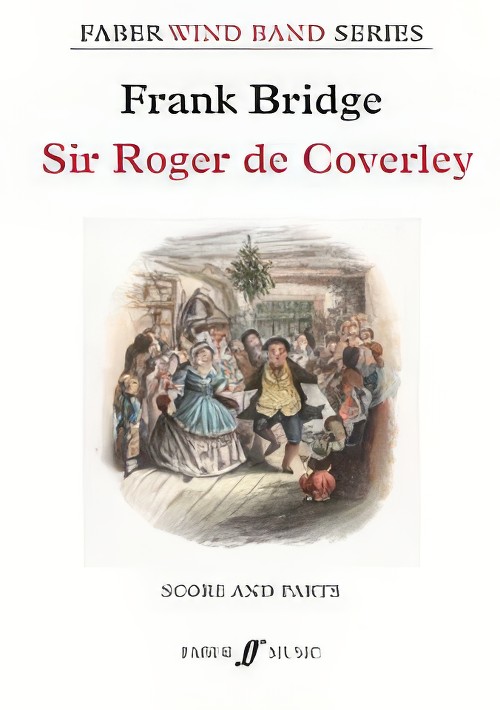
Sir Roger de Coverley (Concert Band - Score and Parts) - Bridge, Frank - Wheeler, Alastair
Frank Bridge (1879 - 1941) was one of the leading English composers of his time. In October 1922 he adapted his popular string quartet Sir Roger de Coverley for full symphony orchestra and Sir Henry Wood agreed, at the last minute, to include it in the last night of the Queen's Hall Promenade Concerts at the end of that month. This elaborate and colourful orchestral version has never been widely performed, but has now been brilliantly transcribed by Alastair Wheeler to provide a miniature dance poem for grade 5 level concert band. Bridge's lively treatment of one of England's most famous traditional dance melodies will make a fitting end to any concert, with the strains of Auld Lang Syne introduced by Bridge as a nod towards Sir Roger de Coverley's traditional function as the final dance of a Christmas Ball, as it was in Old Mr. Fezziwig's party in Dickens' A Christmas Carol.
Estimated dispatch 7-14 working days
-
 £110.00
I Was Glad When They Said Unto Me (Choir with Concert Band - Score and Parts) - Parry, Hubert C. - Noble, Paul
I Was Glad is an introit commonly used in the Anglican Church, and also used as an anthem traditionally sung at the coronation of the British monarch. Its most famous setting was written in 1902 by Sir Hubert Parry. Parry's version was composed for the coronation of King Edward VII in 1902, and revised in 1911 for that of King George V, when the familiar introduction was added. This setting employs antiphonal choir effects and brass fanfares. Apart from the imperial splendour of the music, the chief innovation is the incorporation in the central section of the acclamations Vivat Rex... or Vivat Regina... (Long live King/Queen...) with which the King's or Queen's Scholars of Westminster School have traditionally greeted the entrance of the monarch since the coronation of King James II in 1685. This section is generally omitted when the anthem is performed on other occasions. At the last coronation, that of Elizabeth II in 1953, the acclamation took the form of Vivat Regina Elizabetha. Parry's setting of I Was Glad was performed on 29 April 2011 at the Westminster Abbey wedding of Prince William, Duke of Cambridge and Catherine, Duchess of Cambridge (formerly Kate Middleton) as the processional music for the bride and her father and the bridal attendants. It had previously been performed at the wedding of the Duke's parents, Charles, Prince of Wales and Diana, Princess of Wales in 1981.
Estimated dispatch 7-14 working days
-
 £141.99
Concerto for Wind Ensemble (Concert Band - Score and Parts) - Husa, Karel
Commissioned by the Michigan State University Alumni Band, this three movement work by Pulitzer Prize-winning composer Karel Husa was the winner of the first Louis Sudler International Wind Band Composition Competition in 1983. Previously available only in rental, this important work is now available for sale.A note from the composer: Divided into three movements, this work is a display of virtuoso passages given to solo instruments as well as to the groups of the ensemble. In the Fanfare of the first movement, the brass section "concertizes" in groups of four brass quintets (2 trumpets, horn, trombone and tuba or baritone), spread from left to right in back. The saxophones (S, A, T, B) are placed in front of the brass quintets, and the woodwinds occupy the front of the stage, with percussion on the left and right side. These groups, like the brass quintets, play in the concertante style, particularly in the first and last movements. At the same time, each movement contains individual solo passages (for example, timpani and flute in Movement I - "Drum Ceremony" and English horn and other low woodwinds in Movement II - "Elegy"). The composition of this piece was prompted by the excellence of wind and percussion players today, and by the incredible growth of wind ensembles, orchestras, and bands in the last 25 years. It is intended for their enjoyment.Duration: 23:00
Estimated dispatch 7-14 working days
-
 £115.00
BOHEMIAN DANCES (Concert Band) - Woolfenden, Guy
Includes:1. Shepherds and Shepherdesses2. Florizel and Perdita3. Dance of the SatyrsOne of my favourite Shakespeare plays is The Winter's Tale, and I have written music for three completely different productions during my time as Head of Music to the Royal Shakespeare Company. One, starring Judi Dench as both the mother, Hermione and her daughter, Perdita, had a big band Tribal Love-Rock score; another had a more classical, but timeless feel to it, and the last was an excellent small-scale touring production, for which I was allowed only a handful of instruments. It is from this source that the basic themes for Bohemian Dances, and an earlier version Three Dances for Clarinet Choir, have emerged. Act IV of the play is set in the kingdom of Bohemia - hence the title of the work.Shakespeare calls for "A Dance of Shepherds and Shepherdesses", which gives Florizel, the son of Polixenes, (King of Bohemia) a chance to become better acquainted with the beautiful Perdita, the lost daughter of Leontes, (King of Sicilia). This movement is written in seemingly tricky and ever-changing metres, but is rhythmically quite logical and melodically catchy.The slower second movement 'Florizel and Perdita' is the lovers' pas de deux: a gentle, slow waltz-like tune, initially presented by the principal oboe, is contrasted with a lndler-like double time melody, at the end of which a solo clarinet makes a link to the last movement.'Dance of the Satyrs' is a rip-roaring, foot-stamping dance performed in the play by 'three carters, three shepherds, three neat-herds, and three swine-herds', who enter in outrageous costumes representing the lecherous half-man, half-goat of Greek mythology. This dance is referred to as a "gallimaufry of gambols" - now where have I heard that word before?! - GW
Estimated dispatch 7-14 working days
-
 £159.99
Nostradamus (Concert Band - Score and Parts)
Nostradamus is probably the best-known prophet of the last 1000 years. He lived at the time of the Inquisition and his predictions and medical therapies as a physician caused him to face the wrath of the church forcing him to flee many times. Following the loss of his family to the plague he devoted himself to clairvoyancy. He predicted many events in history in coded form and although there are many ways to interpret these, many are believed to be accurate and Nostradamus is still considered to be a unique personality. Whether he is denounced as a charlatan or promoted as a myth he has surely moved humankind with his prophecies.Otto M. Schwarz, soundtrack composer since 2001, wrote a cinematographic work about this man, who is probably the best-known prohet of the last 1000 years. 12:30
Estimated dispatch 7-14 working days
 View Music