
Results
-
 £183.99
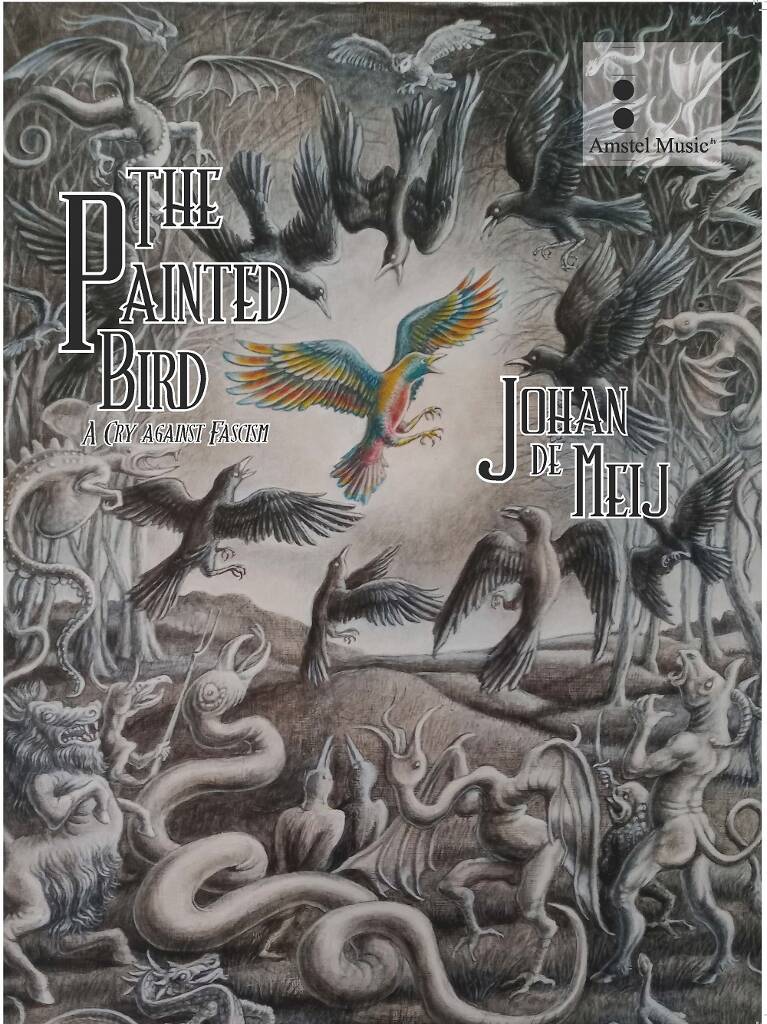
The Painted Bird - Johan de Meij
The Painted Bird, the controversial novel by Jerzy Kosinski (1933-1991), tells the story of a Jewish boy during World War II. For his safety, the child was sent to the Polish countryside by his parents. The title refers to a barbaric tradition among Polish farmers. The wings of a captured bird were painted in bright colors, after which the animal was released. Almost immediately, the bird was attacked and pecked to death by its peers. The boy underwent the same fate. Wherever he wandered, the local rural people cruelly mistreated him because of his distinctly different appearance. However, he survives the horrors and is reunited with his parents after the war. To escape the yoke of the Soviet occupation in his country, the Polish-Jewish Kosinski emigrated with counterfeit papers to the United States in 1957, where he became an American citizen in 1965. His landmark novel The Painted Bird was translated into thirty languages and sold millions of copies. Plagued by illness and accusations of betraying his country and plagiarism the writer ended his life in 1991.
Estimated dispatch 7-14 working days
-
 £81.80
We'll Meet Again - Flex 5 ShowBlow - Hughie Charles
During the Second World War, the English singer Vera Lynn gave many concerts for the British troops abroad, and in 1942 she also recorded her most famous song, We'll Meet Again, starring in a film of the same name. "We'll Meet Again" became one of the most affecting song of the war, resonated with soldiers going off to fight as well as their families and sweethearts.
Estimated dispatch 7-14 working days
-
 £72.99
Frederick's Black Devils - Paul Murtha
During World War II, Winston Churchill initiated the formation of Special Force Commando Units that would prove so effective as to change the course of the war. The First Special Service Force, led by their intrepid colonel,Robert T. Frederick, was perhaps the most famous of these units. Due to their ferocious nature and blackened faces for night raids, the fearful Germans gave them the nickname The Black Devils. In 2015 they were awarded theCongressional Gold Medal, the highest honor the U.S. government can bestow. Frederick's Black Devils is a stirring concert march that pays tribute to this legendary unit.
Estimated dispatch 7-14 working days
-
 £78.99
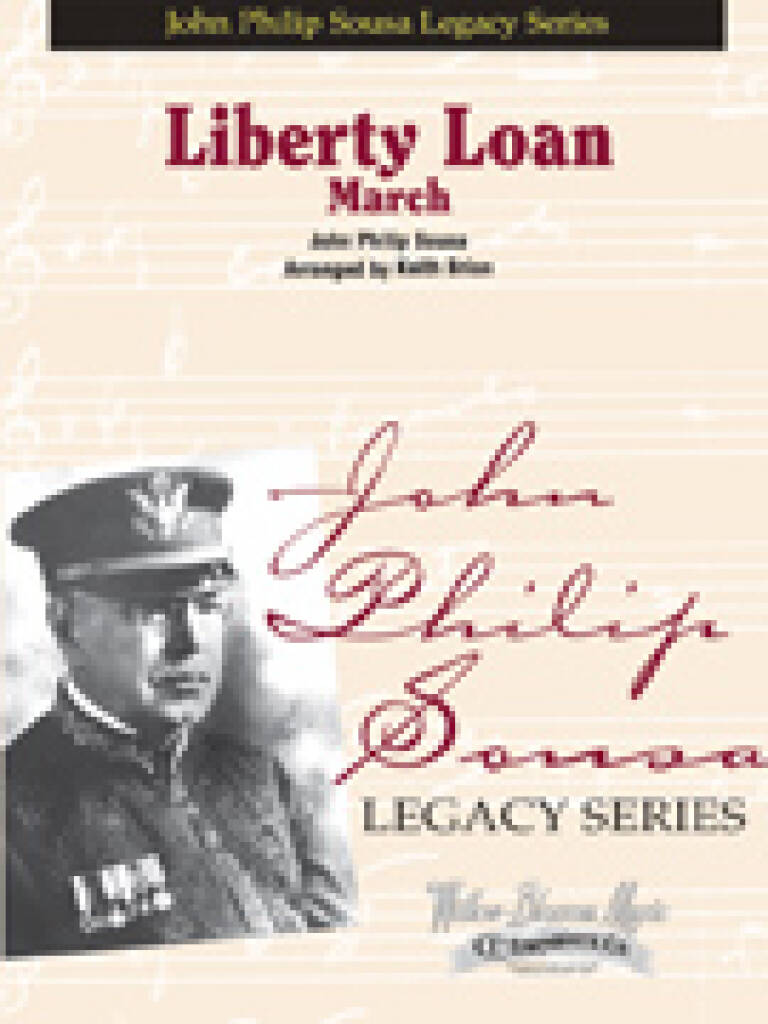
Liberty Loan - John Philip Sousa
"The Liberty Bell"'s WWI cousin, in lilting 6/8 march tempo. Complete with unique chromatic chime solos and great parade drum effects. "Liberty Loan" was the name for the US Government bonds sold to aid in the war effort and John Philip Sousa was the government's best salesman. Sousa's recording of this march was one of the top-selling recordings during the First World War.
Estimated dispatch 7-14 working days
-
 £60.99
Thunderbolt (A P-47 Tribute) - Johnnie Vinson
The P-47 Thunderbolt was one of the workhouse airplanes of World War II, becoming the most produced, and also largest single piston engine fighter plane in history. This dramatic overture for band musically tells the story of thislegendary plane. (The composer's father piloted a P-47 during the war in 1944). The opening heroic strain is contrasted with a slow, reflective middle section before returning to the fast theme and exciting conclusion. Aterrific-sounding and expertly scored overture, this will make a perfect choice for contest or festival. Dur: 4:40
Estimated dispatch 7-14 working days
-
 £117.10
Saturn, the Bringer of Old Age - Gustav Holst
Gustav Holst (Cheltenham, 1874 - London, 1934) was of the very first great British composers of classical music to write some valuable original compositions for symphonic band. Holst composed operas, choral works and splendid compositions for symphony orchestra. He got famous with his opus 32, the seven part suite "The Planets" composed between 1914 and 1917. The first complete public performance was given in 1920. The first part, "Mars, the war bringer" was written just before the outburst of the First World War. Geert Schrijvers wrote this fine arrangement for symphonic band, organ and two harps.
Estimated dispatch 7-14 working days
-
 £488.10
The Planets - Gustav Holst
Gustav Holst (Cheltenham, 1874 - London, 1934) was one of the very first great British composers of classical music to write some valuable original compositions for symphonic band. Holst composed operas, choral works and splendid compositions for symphony orchestra. He got famous with his opus 32, the seven part suite 'The Planets' composed between 1914 and 1917. The first complete public performance was given in 1920. The first part, 'Mars, the war bringer' was written just before the outburst of the First World War. Geert Schrijvers wrote this fine arrangement for symphonic band, organ and two harps.
Estimated dispatch 7-14 working days
-
 £92.50
The Greatest Generation - R.W. Smith
Written for the 75th Anniversary of Pearl Harbor and gathering of heroes from around the world in December of 2016, this stirring composition pays tribute to America's "Greatest Generation." Beginning with a heroic fanfare, the piece transforms into a lush and melodic underscore to highlight the beautiful and historic text. Originally narrated by World War II and Normandy veteran Col. Arnald D. Gabriel, this is the perfect selection to honor those that have served in the armed forces past and present.
Estimated dispatch 7-14 working days
-
£66.30
Fanfares in Remembrance - Peadar Townsend
Fanfares in Remembrance was commissioned by Nick Jarvis, Principal conductor of the Band of the Royal British Legion, Christchurch, Dorset, UK to be premiered during the Last Post Ceremony at the Menin Gate, Ypres, Belgium on May 27th, 2017. The work is a short reflection two World War One bugle calls, 'The General Salute' and 'Retreat' or 'Sunset' as it is also known. The significance and symbolism of bugle calls from this era are well known and they are still used in Barracks across the world. I have used sections of these famous British bugle calls on two trumpets either side of the band playing in two different musical keys. The band then plays an intermittent low drone like chord, again in a different musical key to the two trumpets. In my mind this opening depicts two buglers at dawn at either end of a misty field directly after a brutal slaughter. The two buglers are almost calling out for their missing comrades only to realise they are gone...... The work moves into a haunting oboe melody signifying loss. The oboe is joined by the full band in a tune of strength, solidarity, yet profound sadness. The work concludes with a recap of the opening idea; however, the two buglers are now united in musical key sounding 'The General Salute'. The music ends as the wind blows gently. The memories live on forever......
Estimated dispatch 7-14 working days
-
 £109.99
Normandy, 1944 - Jeremy S. Martin
D-Day, June 6, 1944. A fateful day and the turning point of World War II. A day that has only gained importance and reverence over the years. It was a day that we should never forget; for lives that were lost and lives that were saved through that sacrifice. This work resounds with homage to fallen heroes.
Estimated dispatch 7-14 working days
 View Music