
Results
-
 £248.99
Odysseia (Concert Band - Score and Parts) - Aulio, Maxime
Washed up on the Phaeacian shore after a shipwreck, Odysseus is introduced to King Alcinous. As he sits in the palace, he tells the Phaeacians of his wanderings since leaving Troy. Odysseus and his men fi rst landed on the island of the Cicones where they sacked the city of Ismarus. From there, great storms swept them to the land of the hospitable Lotus Eaters. Then they sailed to the land of the Cyclopes. Odysseus and twelve of his men entered the cave of Polyphemus. After the single-eyed giant made handfuls of his men into meals, Odysseus fi nally defeated him. He got him drunk and once he had fallen asleep, he and his men stabbed a glowing spike into the Cyclop's single eye, completely blinding him. They escaped by clinging to the bellies of some sheep. Once aboard, Odysseus taunted the Cyclop by revealing him his true identity. Enraged, Polyphemus hurled rocks at the ship, trying to sink it. After leaving the Cyclopes' island, they arrived at the home of Aeolus, ruler of the winds. Aeolus off ered Odysseus a bag trapping all the strong winds within except one - the one which would take him straight back to Ithaca. As the ship came within sight of Ithaca, the crewmen, curious about the bag, decided to open it. The winds escaped and stirred up a storm. Odysseus and his crew came to the land of the cannibalistic Laestrygonians, who sank all but one of the ships. The survivors went next to Aeaea, the island of the witch-goddess Circe. Odysseus sent out a scouting party but Circe turned them into pigs. With the help of an antidote the god Hermes had given him, Odysseus managed to overpower the goddess and forced her to change his men back to human form. When it was time for Odysseus to leave, Circe told him to sail to the realm of the dead to speak with the spirit of the seer Tiresias. One day's sailing took them to the land of the Cimmerians. There, he performed sacrifi ces to attract the souls of the dead. Tiresias told him what would happen to him next. He then got to talk with his mother, Anticleia, and met the spirits of Agamemnon, Achilles, Patroclus, Antilochus, Ajax and others. He then saw the souls of the damned Tityos, Tantalus, and Sisyphus. Odysseus soon found himself mobbed by souls. He became frightened, ran back to his ship, and sailed away. While back at Aeaea, Circe told him about the dangers he would have to face on his way back home. She advised him to avoid hearing the song of the Sirens; but if he really felt he had to hear, then he should be tied to the mast of the ship, which he did. Odysseus then successfully steered his crew past Charybdis (a violent whirlpool) and Scylla (a multiple-headed monster), but Scylla managed to devour six of his men. Finally, Odysseus and his surviving crew approached the island where the Sun god kept sacred cattle. Odysseus wanted to sail past, but the crewmen persuaded him to let them rest there. Odysseus passed Circe's counsel on to his men. Once he had fallen asleep, his men impiously killed and ate some of the cattle. When the Sun god found out, he asked Zeus to punish them. Shortly after they set sail from the island, Zeus destroyed the ship and all the men died except for Odysseus. After ten days, Odysseus was washed up on the island of the nymph Calypso.
Estimated dispatch 7-14 working days
-
 £58.50
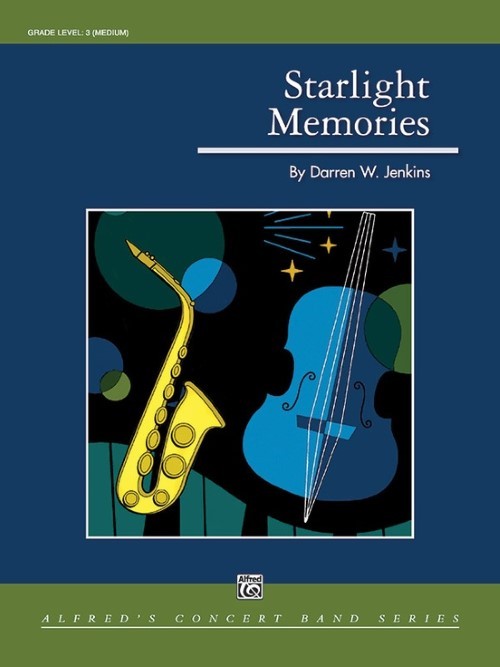
Starlight Memories (Concert Band - Score and Parts) - Jenkins, Darren W.
Starlight Memories was commissioned by and written for the Olathe Civic Band in Olathe, Kansas. It was dedicated to the memory of Ed Badsky, who resurrected the group from a 50 year absence in the mid 1980's. Mr. Badsky was a pillar of the Olathe Band community. He was instrumental in starting Olathe's Band program from its beginnings in the 1960's to what is now a thriving and vibrant program that a proud and supportive community enjoys. Mr. Badsky was also a prominent jazz saxophonist who performed in the Kansas City area on a regular basis during his career. The work itself is meant to reflect and celebrate this man's life and accomplishments. It contains two short alto saxophone solos and its harmonies are "jazz" influenced. The work's title is based upon a local theater at which Mr. Badsky frequently performed. Duration: 4.00
Estimated dispatch 7-14 working days
-
 £250.00
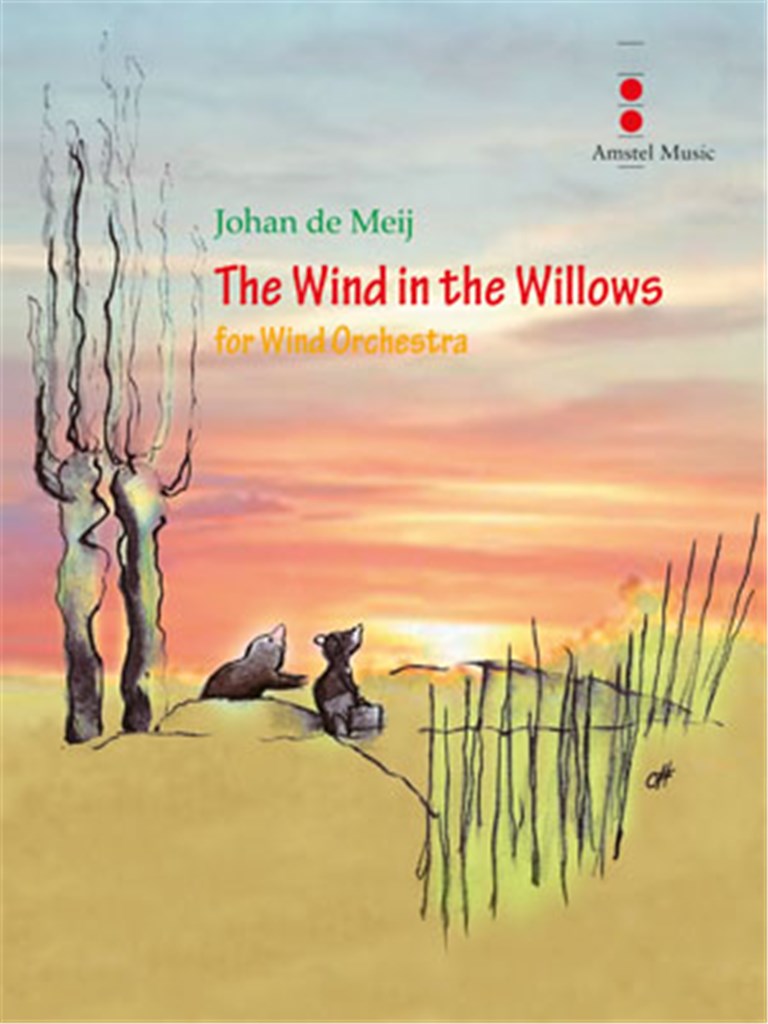
The Wind in the Willows (Concert Band - Score and Parts) - De Meij, Johan
A book for those who keep the spirit of youth alive in them; of life, sunshine, running water, woodlands, dusty roads, winter firesides, said author Kenneth Grahame (1859-1932) about his children's book The Wind in the Willows. Initially, he wrote the stories about Ratty, Mole, Badger and Toad to read to his visually handicapped son Alistair, but after the publication in book form in 1908, it became a worldwide success. It was later also turned into a film and a television series. What appealed ti the composer most is the friendly, very cosy atmosphere that Grahame has managed to create with his optimistic narrative style full of high spirits, an atmosphere that reminds thecomposer of his own carefree youth. It was therefore a great pleasure to set this book to music! The four movements successively describe: I) The River- The river, which flows through the habitat of the animals like a lifeline, regularly is the scene of pleasant boat trips and picnics. The animals lead their untroubled lives here. The four-tone main motif [A-C-D-C] is extensively presented by the brass section, and returns in the following movements as a countermelody. II) Ratty and Mole -The bright, energetic Rat and the melancholy doubter Mole are inseparable friends and have many adventures. Their opposite characters are illustrated by separate musical themes. III) Mister Toad - The wilful, haughty Mister Toad is indeed a unique case: time after time, he runs into tricky situations, and with his indomitable passion for fast, preferably stolen, cars he causes quite a lot of damage... IV) The Return of Ulysses - After Toad Hall, the majestic residence of Mister Toad, is recovered from the weasels and stoats of the Wild Wood, who had captured the estate in a cowardly way, our friends get ready for a banquet. They celebrate the victory with a triumphant parade, and so both the book and the music conclude with a happy ending. Duration: 17.00
Estimated dispatch 7-14 working days
-
 £54.99
Big Fun on the Bass Drum Wind Band Set (Score & Parts)
Beating a drum is fun. Beating a big drum is even more fun. Being a soloist and beating a bass drum is best of all. In 'Big Fun on the Bass Drum' the dream of every starter percussionist is realized. He/she is soloist and is allowed to really beat the drum hard without the conductor putting a stop to it, but beware: a new skin is rather expensive. 'Big Fun on the Bass Drum' is not only about hitting as hard as you can, though. A lot of attention is paid to playing the bass drum very softly. And what is more, the composer has found room to offer the soloist a real cadenza - at this point in the composition he/she can either play the part prescribed or give the audience an improvisation of his/her own. 02:00
Estimated dispatch 7-14 working days
-
£49.50
Ghost Band
What happens when the lights go out and the ghosts of musicians past come out to play? They form a "Ghost Band" performing to the delight of your next concert audience! This new novelty piece by Robert W. Smith provides a creative opportunity for all in the band. Beginning with a dark and mysterious introduction featuring vocal effects, the Ghost Band begins with a driving bass line leading to a delightfully haunting melody. The ghosts even enjoy a ghoulish waltz before returning to the final statement. Mr. Smith has included optional performance elements such as costumes and sound effects. Whether programmed for a recruiting concert at the elementary school or for your regular concert, this will be the piece they will be talking about for years!
Estimated dispatch 7-14 working days
-
 £55.00
Ides March (Concert Band - Score and Parts) - Bermel, Derek
Ides March was commissioned by William Brine in 1990, Bermel's first commission. Brine requested that the work be a march suitable for performance at both a wedding and a funeral. Although originally titled Brine's March, when the composer learned that the march was to receive its premiere on 15 March, he changed the title to Ides March in a umorous nod to the Shakespearean admonition 'Beware the Ides of March'; in his youthful view a sentiment appropriate for either a wedding or a funeral. However, a line from Cole Porter was the inspiration behind the major key to minor key interplay of the work: 'What could be any finer? But how strange the change from major to minor, every time we say goodbye', a line that captured the composer's attempt to write a march that did justice to both the melancholy and triumphant. Duration: 5.00
Estimated dispatch 7-14 working days
-
£139.99
Le Cortge du Roi Renaud (Concert Band - Score and Parts)
Le cort?ge du roi Renaud is a suite in five parts. It is based on tales that originated in southern European folk songs, dating back as far as the 16th century. A large portion of these songs are of the genre "Complaintes" songs in which the text gives a detailed description of events having a generally criminal or macabre character. The most familiar song to feature the tales of Roi Renaud is "Fualdes", consisting of 48 verses.The first part of the suite is based on the song "La Porcheronne" (The Swineherd). It telis the story of a young woman forced by her mother-in-law to tend pigs while her husband is away fighting in the war. She is freed only when her husband returns seven years later.The next part tells the story of "La mrquise Empoisonn?e" (The Poisoned Marquise). A marquise is coerced by her king to become his mistress. The jealous queen poisons her by means of a bouquet of deadly scented fiowers.Despite having the character of a merry dance, the third part, "La maumari?e vengee" (The Avenged Wedding), expresses the touching story of Queen Clotilde, persecuted for her refusal to live according to the Aryan beliefs."La belle engloutie" (The Swallowed Beauty) relates the tale of the young wife of King Renaud. She cannot imagine a life without her husband, who was mortally wounded in the war, and begs the earth to open and swallow her up so thst she may rejoin her love.The gruesome content of the final part,"Le tueur de femmes" (The Wife Killer), bears a strong resembiance to the tale of Bluebeard. The story is about a young wife in danger of being drowned in a pond by her husband, which is what happened to her 13 predecessors. Thanks to her cunning, she manages to turn the tables and contrive her husband's demise. 09:20
Estimated dispatch 7-14 working days
-
£137.99
Odyssee Wind Band Set (Score & Parts)
The Odyssee tells the story of Odysseus, the undaunted hero. In times long ago the blind poet Homer wrote this famous epic. The "Odyssey" follows the "Iliad", the story of the bloody war between the Greek and the Trojans. This battle ends after ten years thanks to the Odysseys famous trick. the Trojan Horse. The Odyssey is not a war epic, but a story about perseverance, loyalty, adventure, and the survival instinct of its ingenious hero. In The Odyssey, Homer describes how Odysseus, the king of Ithaca, had to endure another ten years of affliction after the ten years of war in Troy before he could finally return to his home land. During those years, his wife, Penelope, had to try and keep her many admirers away. These men not only wanted het hand but also the kingship. To prove her husbands worth, she played a trick: "As soon as I have finished weaving this shroud for my father-in-law, Laertes, I will choose one of you to become my husband", she promised them. But during the night, she secretly loosened what she had woven during the day, prolonging the time until Odysseus would finally return. After twenty long years, when he finally stood at the door, she wondered: Is this really my husband? Is he an imposter? Cunningly, she asked him to move the bed, because only she and her husband know that the bed was immovable and was build around an old three trunk! Odysseus was deeply moved: this really was his wife, his Penelope! Nearly three thousands years later, the loyalty and strength of this character, and all the dangerous adventures that Odysseus survived thanks to courage and intelligence, still moves us today. Odyssee by Jan Bosveld is not just an adventure story, but rather a characteristic piece in which memories of Homers story can be heard. The composition opens with a firm, stirring theme describing our hero, Odysseus, in detail: This man is not to be taken lightly. The further development of this short introduction completes this character sketch: trustworthy, perseverant, and a genius. After that we can picture Odysseus on the lonely beach of Ogygia. Do the trumpets depict his memories of the war of Troy? Does he think of his wife, as we recognise the weaving loom of Penelope in the murmuring eighth? In the solemn, plaintive part that follows, we can imagine Penelope feeling lonely, sitting in the womens room with her servants.One of the girls plays the harp, but that does not clear the sombre atmosphere. Then we can imagine seeing the sorceress Circe, who changed Odysseus men into swine. After she gives a simple magic sign something follows that reminds us of the sound of pigs grunting. Then the Odysseus theme resounds: the hero comes to savi his comrades. Assisted by Hermes, he forces Circe to lift the spell. The piece ends the same way as it began, with an animated theme: Odysseus is still the same, undefeated and not to be taken lighty! 07:45
Estimated dispatch 7-14 working days
-
£84.99
The Shopping Centre Wind Band Set (Score & Parts)
Many people when asked the question 'Do you have any hobbies?' will answer 'Shopping' (even though the female part of the population may be more interested in this than the male one). Of course it is great fun to walk about in a Shopping Mall, browsing in various small shops, looking for things you have always wanted to possess. This was what William Vean was doing one day when he came across the idea to write a composition in which several shops could try to sell their wares (and this idea didn't cost him a penny). First, the audience are taken to a 'Jeans store', then a 'Phone shop' is visited, after which a visit is made to a 'Perfumery'. The fourth part depicts a profession which is practised in several premises, namely that of shoplifter. In the fifth part there is room for a bite to eat at a Chinese restaurant, and finally after a visit to the hairdresser's it's time to go home. 10:00
Estimated dispatch 7-14 working days
-
 £56.00
Jingle Wish March - James Pierpont
What would a concert be without a march? This holiday toe-tapper has a familiar melody, tuneful harmonies, an easy-to-play countermelody and a typical march bass line. The trio features your students spelling out the words "Jingle Bells" before the band transitions into "We Wish You A Merry Christmas." Use this arrangement to teach all the march-style elements while also entertaining audiences at holiday concerts. I hope you and your students enjoy this new take on a holiday favorite.
Estimated dispatch 12-14 working days
 View Music