
Results
-
£159.99
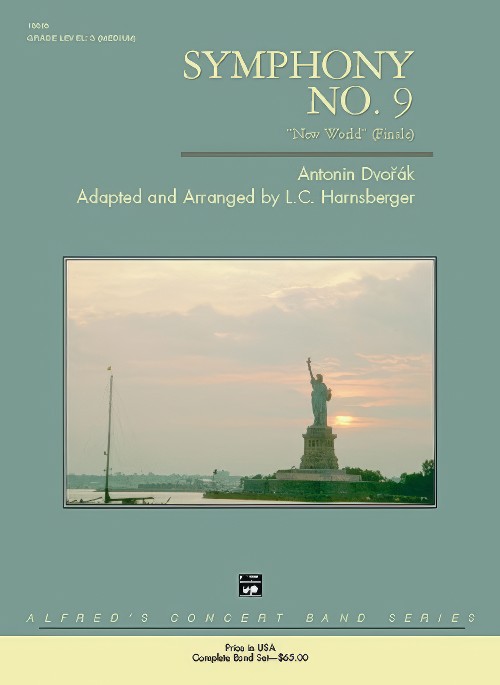
Fantasia Per La Vita E La Morte - Bert Appermont
The mystique surrounding life and death formed the starting point of this composition. I wanted to write a work without a story, mixed up in a kind of musical quest for a new world of sound, original rhythm sequences, melodies filled with suspenseand distinct orchestral tones.The indirect cause was the birth of my first child which took place during this time, followed by the death of a close family member. At such a moment you experience just how close life and death are to each other, anddespite one being the antithesis of the other, they are incredibly similar. Both radical events are passages into new worlds and have great emotional impact. Moreover, the work was commissioned by "New Life", an orchestra that lost one of itsmusician in a plane crash, which also led me to believe that this approach would be appropriate.I would prefer not to comment on which passages in the composition concern life (birth) and which refer to death. It seems to me that it is moreinteresting to question traditional conceptions and leave it open for the listener. If you think that a passage is about birth, and this idea then shifts, it is this that raises fascinating questions, on both a musical and metaphysical level.Music isin an indirect but incredibly persuasive way in which to express the endless striving and seeking of mankind. Music can even touch eternity, as it were, and give us the feeling that we can transcend death. This endless search (and also longing) canbe heard throughout the work; as much in the sound fields and accent shifts in the first part as in the enormous tension curves and compelling themes of the second part. The semi-tone functions in this way as a guide or something to hold on to,running through the whole work and upon which much of the musical material is based. Traces of profound love resound with quiet simplicity in the slow section's melodious solos, after which the work contemplates life and death one last time, musesupon joy and sadness, on the possibilities and limitations of people and on the why of all things.I would like to dedicate this work to my dearest daughter Paulientje, to Meterke and to Johan de Jong of the "New Life" orchestra. May it fare themwell, here or in another dimension...
Estimated dispatch 7-14 working days
-
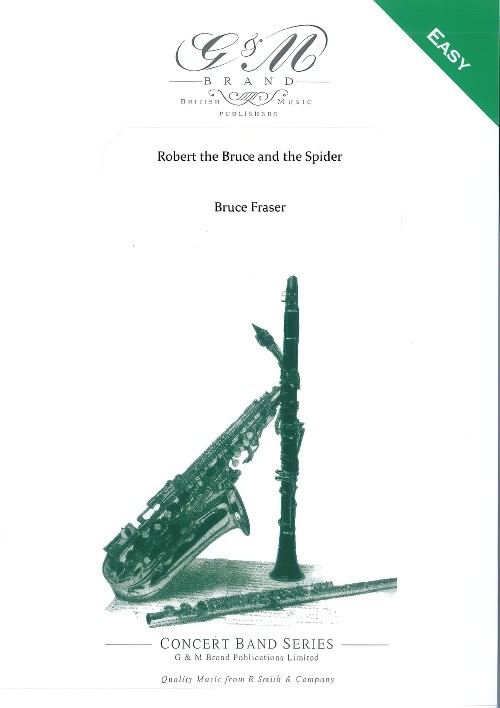
£274.99Symphony No. 2: States Of Mind, Opus 87 - Teo Aparicio-Barberán
I- Logos (reason)II- Pathos (emotion)III- Ethos (credibility)The ancient Greeks believed that music shaped the character of man. In Egyptian temples, music was an essential part of the magical rites to alter the course of nature or to treat illness.And today we know that sound can actually alter matter. The secret of music lies in harmony and mathematics, as many great musicians and experts have always known.One of the most important qualities of music is that it enables the listener to focushis attention inwards instead of on what is around him. It is indisputable that music can inspire emotion. Music leads us into a universe of emotions that are difficult to put into words. In short, music reaches into corners of our soul and thoughtsthat words cannot reach and makes it possible to more clearly describe these different States of mind.The composer of this symphony also believes that each "musical argument" must be constructed so that it will induce the desired reaction in thelistener.Music: more than wordsIn recent times, most orchestral symphonies have been based on a story, a text or something similar so that their composition must be structured accordingly.The intention of this work by Teo Aparicio-Barbern is quitedifferent. The composer describes the three elements of the argument as the only formal structure of the work. Since certain philosophers in world history were able to subdivide grammatical argument, why shouldnt that also be possible for the musicalargument?Since ancient times the power of the spoken word has captivated mankind. How can an argument move people and mobilise the masses? Where does the power of words come from today? The answer lays not so much in what people say but in how theysay it.Rhetoric is one of the oldest humanist disciplines in Western civilisation. Aristotle, in the 4th century BC, called it the art of persuasion. Indeed, the terms rhetoric and persuasion are mutually interchangeable.More than 2000 years agoAristotle structured his rhetoric according to the following three elements: the logos, the pathos and the ethos.Logos (words, reason) is the reasoning that gives freedom to the structure of the text by expressing what one wishes to say usingspecialist terms. With logos we create arguments to receive public approval and to defend our ideas.Pathos, the second element, refers to the effective use of public psychology. Pathos can be considered as the capacity to induce the desired emotionalresponse in the public, by creating an emotional connection with the public so that they accept our message.The third element, ethos (credibility), refers to the character of the speaker and is perhaps the most important of the three elements.Aristotle based his concept of ethos upon his belief that truth and justice will always have the upper hand over anger. He believed that what was true and good was easier to prove and was more persuasive.This second orchestral symphony from thecomposer from Enguera follows these three parameters of the argument according to Aristotle. Each movement tries to summon a different state of mind in the listener so that the message itself can be better understood and appreciated. Apart from thesethree general concepts the music is only structured, as Claude Debussy would say, in a "formative way".The first movement, logos, is based on a scherzo melody that undergoes various changes in rhythm and harmony. The arguments are presented by meansof conventional techniques of composition. The second movement, pathos, is characterised by suggestions of sound. It is subdivided into two large parts. The first part is based on a five seven sequence with five sounds that are repeated in differentenvironments, structures and dynamics. The second part, which is largely tonal, brings out more directly the emotional overtones that each argument must have. The third movement, ethos, is a faithful rendition of the composers personality. In thislast part, clear rhythmic sequences stand out, there are large dynamic contrasts and lots of tone variation. In addition, and this is quite in keeping with the composers earlier work, the harmony in States of Mind is handled in a manner that is bothoriginal and efficient, as a result of which Aparicio-Barberns message is well understood by the listener.This second symphony by Teo Aparicio-Barbern is devoted to "my dear Henrie Adams, a guiding light in this eternally dark musical world. Thankyou for everything."
Estimated dispatch 7-14 working days
-
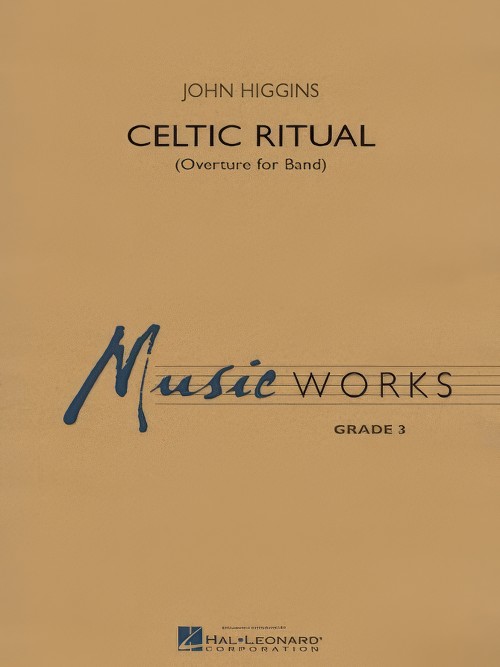
£134.99Dies Infernus - Bert Appermont
Dies Infernus means 'Day of Hell'. The reason for this title is the dreadful disaster that befell the Dutch village of Kolhorn in 1788, when the whole village went up in flames. Afterwards, a huge appeal was launched to rebuild the unfortunate village. Many people were willing to contribute, resulting in the collection of the enormous sum at the time of eighteen thousand guilders, with which the village could be rebuilt. This work was commissioned by Harmonie De Eendracht in Kolhorn to mark its 110th Anniversary.
Estimated dispatch 7-14 working days
-

£89.99Norwegian Overture - Traditional
It is not entirely sure where the melody originates that forms the basis for Norwegian Overture. Most sources point in the direction of a certain J.H. Nebelong in about 1881. It is also possible that he was the first to note down this traditional melody and put his name to it.The lyrics are by a certain A.H. Brorson and were set to the music at a later date. The original title is "store hvide flok", which means "the big white herd". Several composers have used this theme, including Edvard Grieg and the Danish Carl Nielsen.
Estimated dispatch 7-14 working days
-
£129.99
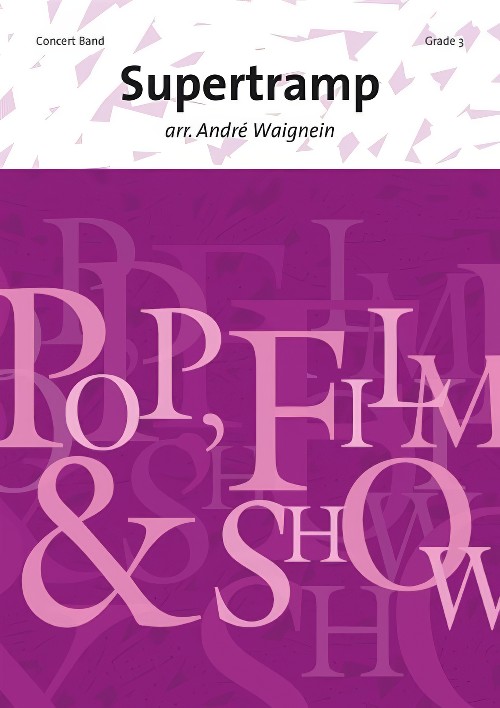
A Jupiter Fantasy (from the Planets) - Yasuhide Ito
Utilizing the melody from the central section of Holst's "The Planets: IV. Jupiter", I have exclusively written a chorus piece for an event in 1999. Based on that particular piece, a duo for piano and flute was written the same year. Later, more than a total of 30 renditions were written based on the original piece.This version of "Jupiter", arranged for the large wind band, is one of three parts of a three-part composition, which includes "Mars" and "Earth", composed in 2003 and 2005 respectively.The trumpet ad lib kicks off the central section, in which various other instruments could repeatedly perform the section, and ad lib is most welcome too.(Yasuhide Ito)
Estimated dispatch 7-14 working days
-
£264.99
Diferencias on an Old Spanish Song - Yasuhide Ito
I am immensely happy that my Gloriosa, symphonic poem for band (1990), has been performed by so many bands in the last thirty years.During this period, the growth of the internet has made it much easier to access information.When I composed Gloriosa, I only had limited information about the period when Christianity and Western music was first introduced to Japan, and had to rely a lot on my imagination.However, nowadays, it is easy to obtain various source materials and to read interesting studies on the music of the past.In recent years, the music of Luis de Narvez (born ca.1500 - died between 1555-1560), Spanish composer and vihuela player, has become increasingly known, and several CDs of his music are now available.Narvez composed the earliest-known set of diferencias, a forerunner of the variation form. One of his works is Seys diferencias sobre el himno "O gloriosa domina" [Six diferencias on the hymn "O gloriosa domina"] (1538), based on the Spanish Marian hymn, and it was this melody I used in the first movement of my Gloriosa.Western music has been my musical roots since childhood, and throughout my career as a composer, it has continued to fascinate me. One could say that this has provided the inspiration for Diferencias on an Old Spanish Song, my own take on the diferencias form.Actually, such music from the early sixteenth century could sound fresh to our modern ears. So I decided to quote the melody from Narvez's Sey diferencias at the beginning and end of the piece, in order that people can get the feel for the period.The main section (bars 42-390) is formed of 13 diferencias, similar to the first movement of the Gloriosa.In the middle section, which begins after the eighth diferencia(from bar 187), one should be totally absorbed in the tranquility and the beauty of the music. Although it's in the style of a sarabande, it should be taken slower and played as pianissimo as possible.This is followed by folk-style dance music. (As only standard percussion instruments are used, try to be creative with tonal colours and sense of rhythm).The structure of the work is simple, but be aware of the connection between the sections when constructing the whole.Also, think about the tonality. Overall, the work is in F minor. The main section is basically in D minor, but from bar 102, it modulates to A flat minor and G minor, and then in the middle section it suddenly switches to A flat major (which is the furthest key from D minor, and the relative major of F minor). From bar 219, it modulates to F minor and then to C minor, then back to F minor by way of A minor.N.B. The Oboe II part can be substituted by the English Horn (as indicated in the parts). One can choose according to the player's skills or preference.Recent new compositions for wind band are often full of rhythm, dynamism, and tonal colour, and compositional techniques and orchestration have also evolved greatly. Yet on the other hand, they tend to feature fewer melodic or expressive elements. Since this work is the test piece for WMC Kerkrade 2022, I had to think about what "tests" or "challenges" to set, and I decided to compose something that doesn't involve a lot of technical display, but requires beautiful sounds and harmonies, and above all, musical expressivity. I didn't put many expression markings in the score, because I wanted the performers to think about how best to express this music. If it is played merely as notated, it's not going to sound very interesting.Christianity was introduced to Japan in the mid-16th century, but it was subsequently banned and Japan entered a period of national isolation, which meant that there was hardly any international exchange for two hundred years. As a result, the Christian hymns that were introduced prior to the isolation became almost unrecognizable over the centuries. This was the theme I explored in my Gloriosa thirty years ago.Now, in 2021, the whole world has been forced to "isolate" due to the Covid-19 pandemic. In such times, it seems pertinent that I've written a work using this melody again. I sincerely hope that people will be able to gather in Kerkrade in 2022.(English Translation:Nahoko Gotoh)
Estimated dispatch 7-14 working days
-
£199.99Le Carnaval des Animaux - Camille Saint-Saëns
Camille Saint-Saens "grande fantasie zoologique" is a collection of 14 short movements, each with a specific animal subject. Performed now by the symphony, this suite was originally scored for two pianos and chamber orchestra. Yo Goto consulted Saint-Saens' score to set these nine movements for concert band. For humor, color and clarity he added piano and various percussion. Also, phrases were added for continuity and impact, particularly in the "Final".
Estimated dispatch 7-14 working days
-
£141.99Funiculi-Funicula Rhapsody - Luigi Denza
This famous melody was written for the 1880 opening of Mt. Vesuvius' funicular railway, lyrics were by Peppino Turco. Mr. Goto's fantasy commands immediate excitement with unmuffled percussion and bold fanfares that segue into a proper tarantella and trombone soli. Carefully observe relative dynamics throughout the 6/8 section, and give all dotted quarter notes equal treatment. Dynamic contrast is critical to maintaining interest in the returning melodic line. The alto/tenor voiced counter line at G should dominate. Take advantage of the novel woodwinds solis at H emphasizing lower voices. The polyrhythmic feel at J and K is best conducted in one; have all "play to" the melody. Enjoy the romantic potential of section L and do not exceed the indicated tempo. Sections N and O can be decidedly mechanical. Certainly "pull out the stops" at the concluding 6/8, but continue to observe all tempi and dynamics for a most effective finale.
Estimated dispatch 7-14 working days
-
£64.99
Procession of the Centurions - Douglas Court
A Centurion was a Roman soldier who was in charge of 100 men in the Roman Army. These soldiers were brave, God-fearing men loyal to the Roman Empire. The music portrays the strength and confidence that is a signature of any soldier.
Estimated dispatch 7-14 working days
-
£79.99All Creatures of our God - Stephen Bulla
As one of the great pillars of church hymnody, the song All Creatures of Our God lives through the centuries. The associated words are attributed to St. Francis of Assisi and they were wed to this melody in a hymnal first published in 1623. The setting adds a contemporary flare to the tune by combining it with up-beat, original material.
Estimated dispatch 7-14 working days
