
Results
-
£25.00
THE WAY WE WERE (Partitur/Score) - Hamlisch Marvin - Barry Darrol
Estimated dispatch 7-14 working days
-
 £60.99
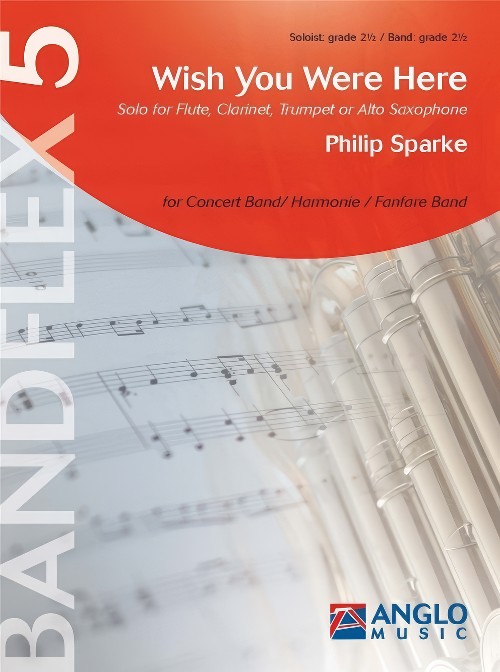
Wish You Were Here (Flexible Solo with Flexible Ensemble - Score and Parts) - Sparke, Philip
A chance to feature a star soloist! The solo part can be played by either flute, clarinet, alto sax or trumpet. The band can also benefit by learning the importance of accompanying sympathetically.Duration: 2.30
Estimated dispatch 7-14 working days
-
 £42.50
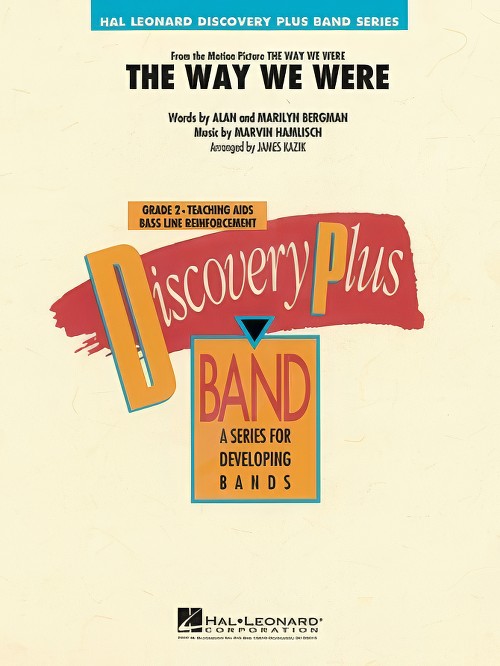
The Way We Were (Concert Band - Score and Parts) - Kazik, James
Written for the 1973 movie of the same name starring Barbra Streisand and Robert Redford, this iconic ballad went on to win an Oscar for Best Original Song and to become a popular standard recorded by countless artists. Nicely arranged for the concert stage.Duration: 2:40.
Estimated dispatch 7-14 working days
-
 £62.95
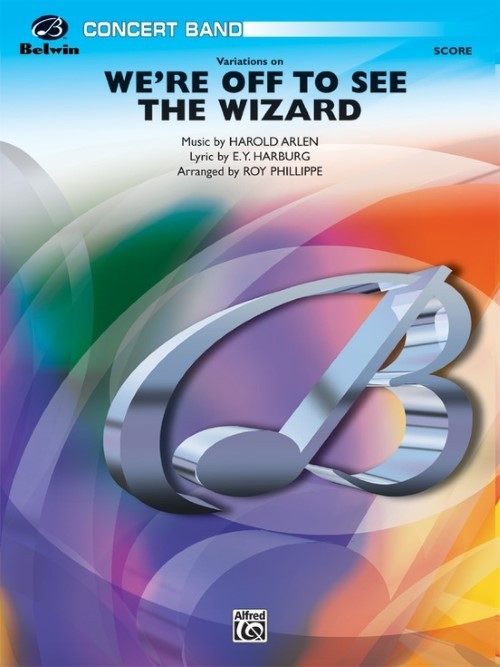
We're Off to See the Wizard, Variations on (Concert Band - Score and Parts) - Arlen & Harburg - Phillippe, Roy
This bold melody is introduced in a traditional up-beat march, then developed through several distinct styles, closing in a big-band swing. Great fun!Duration: 3:15
Estimated dispatch 7-14 working days
-
 £42.50
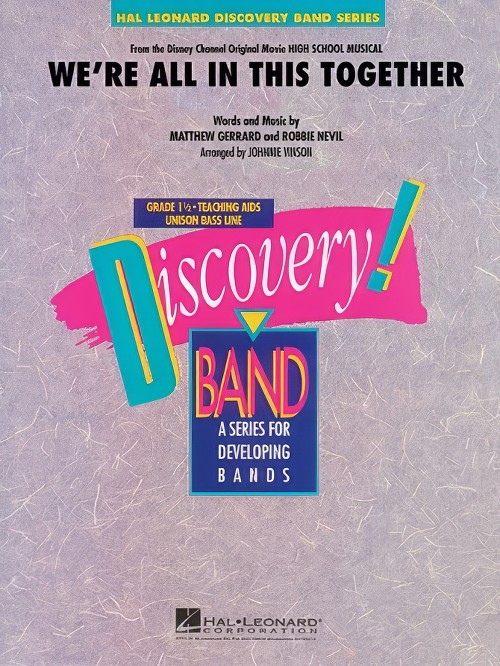
We're All in This Together (from High School Musical) (Concert Band - Score and Parts) - Gerrard & Nevil - Vinson, Johnnie
Filled with rock energy and rhythmic drive, here is an easy arrangement of this hit song from Disney's High School Musical. Your percussion section will have fun with this one!Duration: 2:00
Estimated dispatch 7-14 working days
-
 £76.99
As All the Heavens Were a Bell (Concert Band - Score and Parts) - Bocook, Jay
Commissioned as a tribute to the Fire Department of New York City, this immensely moving work was premiered at an emotional performance for the firefighters in Manhattan this past March. The composition opens with a striking brass fanfare accompanied by woodwind flourishes. A sensitive treatment of the melody from America (My Country, 'Tis Of Thee) follows using haunting vocal colors (cued in F Horns). The nation in turmoil is depicted in an intensely driving and powerful section which evolves marvelously into a full-blown treatment of America with chorus and band. A truly magnificent musical tribute to the heroes of 9/11.
Estimated dispatch 7-14 working days
-
 £104.99
We're All Alone (Concert Band - Score and Parts) - Scaggs, Boz - Onozaki, Kosuke
Duration: 4:15
Estimated dispatch 7-14 working days
-
 £84.99
Bread and Games - William Vean
'Panem et Circenses', Bread and Games were essential for keeping the citizens of ancient Rome in check. While the bread was meant for the poorest among the Romans, the Games were Popular Pastime Number One for everybody.There were different kinds of games, such as chariot races (especially popular with female spectators), or wild-beast fights, where lions, tigers, bulls or bears were set on one another or even on human beings. Most popular, however, were the Gladiator fights. In 'Bread and Games' William Vean depicts one of the many fights in the antique Colosseum. 1. Entrance of the Gladiators: By powerful bugle-calls the attention of the peoplewas asked for, after which the Gladiators entered the Arena at the sound of heroic marching-music.2.Swordfight: We can hear that the fights were not mere child's play in this part.On the contrary, they were a matter of life and death and were fought accordingly.3.Mercy of the Emperor: Sometimes a wounded gladiator could be fortunate, depending on the mercy of the audience. Waving one's handkerchief meant mercy, a turned-down thumb meant no pardon. The Emperor had the right to take the final decision, but he usually complied with the wish of the majority of the public. 4.Lap of Honour: Gladiators were mainly selected among slaves, convicted criminals, or prisoners of war. Consequently, winning was very important, as it would mean fame, honour and sometimes even wealth. A lap of honour, therefore, was the winner's due reward.
Estimated dispatch 7-14 working days
-
 £159.60
Sci-Fi Suite of Dances - Bernhard Bogisch
1. Harvest Dance - Phoeboia II Like many of the inhabited planets Phoebia II was first colonized by the survivors of a spaceship crash. There is no certainty as to where these survivors originated from. In the late 21st century many spaceship were launched manned by people who were looking for a new future, away from an over-populated Earth. Some succeeded, some managed to return, some were never heard of again. In 2311 a survey ship had to make an emergency landing on Phoebia II and they found a triving colony there. Although the early history of the colony is shrouded in antiquity, certain aspects of the language, as well as physical features, seem to point to a south-east European origin. The harvest dance, in the aspects of rhythm, melody and harmony has many things in common with the music of what once were the countries of Macedonia, Greece and Turkey, little of which has unfortunately, been left due to primitive recording methods of the period.2. Ritual Seduction Dance - Rugel VWhen first discovered Rugel V was already a very civilized planet populated by a humanoid race and governed by a class of superior females. The first settlers from Earth were held as slaves but gained freedom over the years. It is assumed that this happened because the Earth people were all male and considered very attractive by the native females in comparison with the aboriginal males. The Earth males were evidently very attractive to the native women, who on their part used all their womanly wiles to entice them. We all know that Rugel V is now a very advanced and totally integrated society. The people have not forgotten their roots, and these Ritual Seduction Dances are performed on a regular basis in commemoration of the original Grand Seduction. Musically speaking Romanian origin influenced by native characteristics is virtually certain.3. Attack Dance - Planet Khi't'onThis is the only dance in this suite that is purely native. The natives people know as Khi't'och are now very civilized, but initial contact was difficult due to the difference in physical make-up between the two peoples. Suffice it to say that in the early stages Earth people referred to the Khi't'och as 'mosquito people'. We still don't know very much about them, other then that they have a history of violence but are now quite peaceful although they love to relive their past in a stylised way, not unlike the Maories of the former New Zealand, whose fearsome tattoos were later only painted on. This Attack Dance is, at best, an imitation due to the lack native instruments, and it was a very happy occasion for this composer when, at a concert at the House of Culture on Khi't'on, the Khi't'och showed their appreciation by clicking their feeding tubes and emitting loud shouts.4. Wedding Dance and Prayer - Planet B'lGarThere is little doubt that the people of this planet originate in the former country of Bulgaria. Several examples of similar pieces featuring the quaint 11/8 time signature have been found in old archives and recordings. Russian influence is also noticeable in the prayer the style of which is reminiscent of that of the now extinct sect of Raskolniky.
Estimated dispatch 7-14 working days
-
 £35.50
Triglav - Julius Fucik
Julius Fuc k (1872-1916) appreciated life in Sarajevo. First compositions were written, which soon made him become one of the leading representatives of his profession in Austria-Hungary. Among those works also figured his elaborate piece "Austria's Glory and Honor", which unfortunately remains kind of ill-fated up to now. Yet another area of activities, where Fu k was able to demonstrate his talents was to stage the symphony concerts introduced by him in Sarajevo. Late in fall of the year 1900 Fuc k's time had come, when the regiment deployed from Sarajevo to Budapest. He lived in that metropolis on the Danube for the next some ten years, and during that period most of hisworks were composed. At that time his popularity also grew from day to day. The first performances of his works met with general interest, and not only numerous officers most of them were friends of Fuc k attended these events, they rather were attractions for all ranks of the society. It should also not be overlooked that music publishers were anxious to secure almost each one of his works for their publishing company, and most of them were printed immediately after their premieres. In 1899 the "Laban March" was written as his Opus 44. It was dedicated to Major General Rudolf Laban of Vralje, commander of the 3d Mountain Brigade which was stationed in Nevesinje. The title of the march then changed to "Eiserne Brigade" ("Iron Brigade") until it finally became known as "Danubia". It was first printed as late as 1933 by Bohuslav Leopold (Edition Continental). Leopold was a musician in Fuc k's regimental band, and later a successful publisher. He succeeded in securing the best of Fuc k's works for his company. Sketches of "Triglav" date back to 1903. The title alludes to the highest mountain of the province of Slovenia, and this was probably an apt means in the eyes of the composer to demonstrate his "Slavonic patriotism".
Estimated dispatch 7-14 working days
 View Music