
Results
-
 £125.00
Danceries (Set II) (Concert Band - Score and Partss) - Hesketh, Kenneth - Littlemore, Phillip
Danceries Set II was commissioned by Keith Allen and Birmingham Symphonic Winds, supported by PRS for Music Foundation and the RVW Trust. The world premi?re of this work was given by Birmingham Symphonic Winds, conducted by Keith Allen, at the CBSO Centre, Birmingham in 2011. This second set of Danceries continues the format established in Danceries (Set I), namely in using material taken from Playford's Dancing Master, a collection of folk and popular tunes published in the seventeenth century, to form the basis of an extended dance suite. In this set, the melodies have been more abstracted and project only a distant echo of their original forms, but as before, each movement is self-contained, colourful and direct, with its own distinct mood. The outer movements - Jennie's Bawbee and Peascod's Galliarda - share a use of driving percussion writing with a military air. Tom Tinker's Toye and Heart's Ease (movements two and three) are both settings of original melodies. All movements are more extended than in the first set, with a freer use and approach to the material; melodies now occur in various keys and are supported by a greater variety of harmonic colouring. The result is a richer, even more exhilarating set of dances. Danceries has come of age! Duration: 15.00
Estimated dispatch 7-14 working days
-
 £169.99
Olympica (Concert Band - Score and Parts) - Van der Roost, Jan
This "Grand Overture" was commissioned by the "Nagano Community Band" - Japan- on occasion of its jubilee in 1992 and is dedicated to the band's conductor, Ikuo Inagaki. The work is based upon three main themes, each symbolising a certain theme. The first part is characterized by its bright themes played mainly by the brass, accompanied by the woodwinds and festive percussion. This part symbolizes the jubilee which is the origin of the composition. This is followed by a bouncing allegro, in which each register of the band displays brilliant techniques. Especially the woodwinds come to the fore! This movement depicts the industriousness and enthusiasm shown by the members of the "Nagano Community Band" in the carrying out of their hobby. A third, main theme, is choral-like in character and is displayed both in the (soft) brass as well as in the warm medium register of the reeds. Here, nature's beauty in and around the city of Nagano is musically celebrated. Following a "chamber-music episode" (featuring the flute, oboe, clarinet, alto-saxophone and horn) the initial allegro re-occurs, weaving its way towards a grandiose finale, in which the two previous themes are once again apparent. Due to its very colourful scoring and the enormous diversity of musical thoughts and ideas, this composition is a fascinating and memorable piece, worthy a jubilee overture!Duration: 10:15
Estimated dispatch 7-14 working days
-
 £209.99
Dunamis (Concert Band - Score and Parts) - Waignein, Andre
Major Yvon Ducene wanted a new lush and colourful composition for his Guides military band, with Andr Waignein as its composer. Early in 1979 the composer began his assignment and in October of the same year, the finished full score was on the music stands of this prestigious military band of the Belgian Army.The introduction (Grave) mirrors an atmosphere full of serenity in which the theme, played by the oboes and the English horn is predominant and immediately holds the listener spell-bound. It is taken up again as central element of the slow movement.The Allegro breaks away from the quiet passion of the introduction. Here, the band can really show its capabilities to the full. Based on a very precise rhythm, an idiom of sudden desperation and adversity develops which, fused with a crushing aggression, culminates in a kind of eruption, soon calmed down by a Lento : peace and quiet has returned thanks to a melody by the horns and soon taken over by the clarinets. In the meantime, the saxophone - an instrument full of human emotion - express the main spatial dimension in contemporary psyche. Following a harmonic transition the brass-players take up the theme again in forte whilst the basses and the woodwinds intertwine in technical arabesques.The movings of the mind and the heart get an audible and almost touchable shape in the ensuing Allegro, a movement characterised by a rhythmic dialogue in which the whole orchestra participates and where the exposition contains a wealth of sound and technical contrasts. The Lento finally uses the central theme of the slow movement again, with some occasional references to the two allegros. The last page is of unprecedented grandeur. All the instruments display their most beautiful sound which were named by Jacques Ferschotte, when speaking about Honneger, "harmonies d'intensits" harmonies of the unmeasurable.Duration: 14:30
Estimated dispatch 7-14 working days
-
 £332.99
Cantica de Sancto Benedicto Wind Band Set (Score & Parts)
Cantica de Sancto Benedicto is a three-movement work for mixed choir, soprano solo, concert band and organ ad libitum - on Latin lyrics that relate to the life of Saint Benedict. It was commissioned by the city of Norcia in Italy, where Benedict was born. The holy Benedict (480-547) is considered the founder of monastic life within the Roman Catholic Church. His enormous influence is especially owing to his monastic rule, the Regula Benedicti.Jacob de Haan has named the movements of Cantica de Sancto Benedicto after the Holy Trinity: the Father (Gloria Patri), the Son (Gloria Filio) and the Holy Spirit (Gloria Spiritui Sancto). The lyrics of thehymn Gemma Caelestis, (which, like the other texts, were originally used in Gregorian chant) are voiced by the choir. To this purpose, Jacob de Haan composed new, choral-like, homophone music. The sequence Laeta Quies is rendered by the soprano; the verses (divided over the three movements) are alternated with those of Gemma Caelestis. The work closes with an impressive grand finale, in which texts are used from the proprium of the mass in honor of the saint's day of the holy Benedict (11 July). Notes to the conductor: For this cantata, there are various possibilities for the performance. The first involves a performance in which the choir and soprano parts are only accompanied by organ. Such a performance has several advantages: since the band never sounds together with the choir and the soprano, no balance problems occur, and even a performance with a large concert band and a small cantata choir is conceivable. A special layout is also possible - with which you can set up a three-dimensional performance in a church. For example, the choir can sing in the chancel, accompanied by the choir organ; the soprano can stand on the gallery, accompanied by the main organ; and the band can be seated in another part of the church. The choir could also sing from a gallery. With layouts like this, working with two conductors is advisable. Choral parts available separately. 0:28:30
Estimated dispatch 7-14 working days
-
 £94.99
Majesty (Concert Band - Score and Parts) - Deleruyelle, Thierry
Majesty is a powerful and spectacular overture. Right from the start, the brass open the work brilliantly before making way for a majestic hymn mostly played by the woodwind. The end of the piece repeats the opening fanfare as a monumental finale in the style of an American symphonic march. This work was commissioned by the Bourbourg Wind Orchestra (France), conducted by Claude Deconinck, on the occasion of its 230th anniversary. This piece was premiered by the commissioning orchestra on 19 November 2022, just two months after the death of Queen Elizabeth II. Naturally, this work is dedicated to her.Duration: 6.15
Estimated dispatch 7-14 working days
-
 £279.99
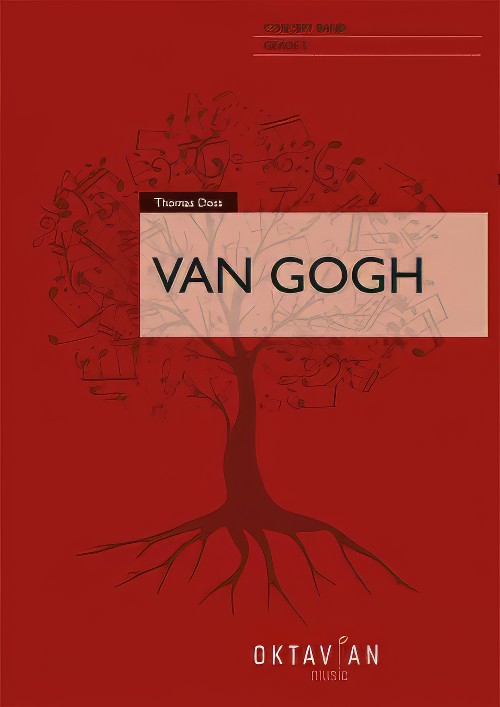
Van Gogh (Concert Band - Score and Parts) - Doss, Thomas
This composition is not a work inspired by the life of the famous painter, but rather an attempt at a pictorial immersion into his world. In addition to Van Gogh's character and tragic life, the technique he employed to create his works, the bright colours of his paintings and his view of nature served as inspiration for this musical work. Point by point, stroke by stroke, Van Gogh brought his own world to life on canvas.On the life of Van Gogh: The Dutch artist Vincent van Gogh was one of the most important pioneers of Modernism, despite being relatively unknown during his own lifetime. As an artist, he chose a life of poverty and seclusion. From today's perspective, his important woks were created from 1880 onwards, when he had already more or less succumbed to madness. While his earlier works could still be classed as contemporary, he matured into a pioneer of Expressionism with his later work indicating an increasing self-awareness. He was just 37 years old when he died but he created over 750 paintings and 1600 drawings in the last ten years of his life.The structure of the work:Start: Brushes and Paints: Van Gogh retired to Arles in southern France where he found his artistic home. The colours and flowering gardens of this landscape awakened in him an unbelievably great creative power.A: A Picture Comes into Being: Van Gogh's psychotic episodes and bouts of depression did not stop him from painting wonderful pictures. Hardly anyone recognised his genius during his lifetime, on the contrary, he often felt misunderstood.C: Paris - Arles: In Paris (from 1886), Van Gogh became inspired by the French art scene. His works found few takers, however. He met and befriended the painter Paul Gauguin, but the lack of success made Van Gogh short tempered, and he began to drink. Eventually, he moved from Paris to Arles in the south of France to establish an artists' collective with Gaugin. Within a few weeks, the two got into such a violent argument that Van Gogh attacked his friend with a knife. The friends parted ways and afterwards Van Gogh cut off his right ear. In 1889 he voluntarily admitted himself into a mental hospital at St. Remy, suffering from hallucinations and fearing that he would lose his mind.G: The Starry Night One of his most famous paintings, created in 1898.H: Death and Brotherly Love Vincent van Gogh accepted an invitation to Auver-sur-Oise in 1890. This was one of his most intensive creative periods. He also went there for treatment, but his mental state hardly improved. After an extended walk, he injured himself fatally with a pistol under mysterious circumstances. Not even to his beloved brother Theo, who had supported him all his life, did he reveal on his deathbed how the accident had occurred.J: Art Market Today, Van Gogh's paintings are among the most expensive paintings on the art market. How ironic, given that he could hardly sell a painting during his lifetime. "I put my heart and soul into my work and lost my mind in the process." (Vincent van Gogh)Duration: 13.15
Estimated dispatch 7-14 working days
-
 £137.99
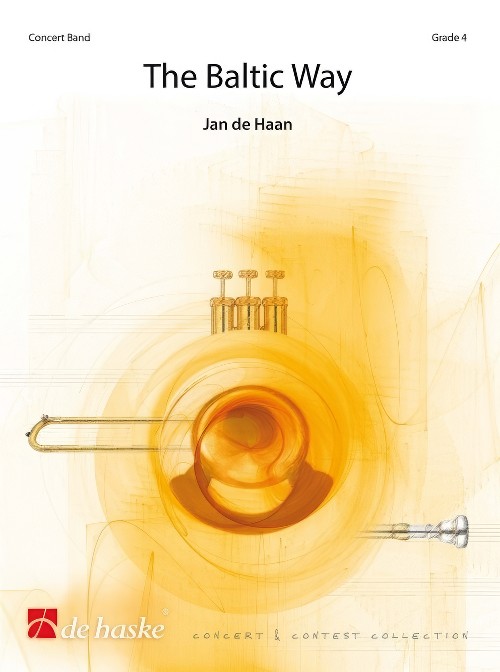
The Baltic Way (Concert Band - Score and Parts) - De Haan, Jan
In 1989, the demonstration named the Baltic Way, also known as the Baltic Chain, was held in the Baltic states of Estonia, Latvia and Lithuania by its citizens in a call for independence from the Soviet Union. On 23rd August 1989, some two million participants formed a human chain, hand-in-hand all the way from the Estonian capital of Tallinn its Latvian counterpart, Riga, through to the Lithuanian capital of Vilnius - six hundred kilometres long. It became the longest human chain ever created and turned out to be the final push needed for much sought-after independence. This historic event became the source of inspiration for this composition. The introduction of the first movement, 'Struggle for Independence', is based on a nocturne for piano by the renowned Lithuanian composer and painter Mikalojus Konstantinas Ciurlionis (1875-1911), thematic material from which has been incorporated throughout the whole composition. The melancholic beginning is followed by a powerful theme which reflects the resolve of the Baltic people. The sudden aggressive, dissonant chords and a dominant and, in rhythmic terms, contrary bass drum announce that the resistance is not going smoothly. Just for a moment, we hear the anthem of the Soviet Union in the lower brass, but this is relentlessly pushed to the background by the rest of the band playing the Lithuanian national anthem, 'Tautiska giesm?' (Lithuania, our homeland). The second movement, 'Decades of Suffering', echoes life under the Soviet Union's thumb. In the pursuit of independence, a peaceful protest is planned in which a human chain is formed across the Baltic states of Estonia, Latvia and Lithuania. This 'Chain of Freedom' is depicted in the final movement of the work. Duration: 10.30
Estimated dispatch 7-14 working days
-
 £91.99
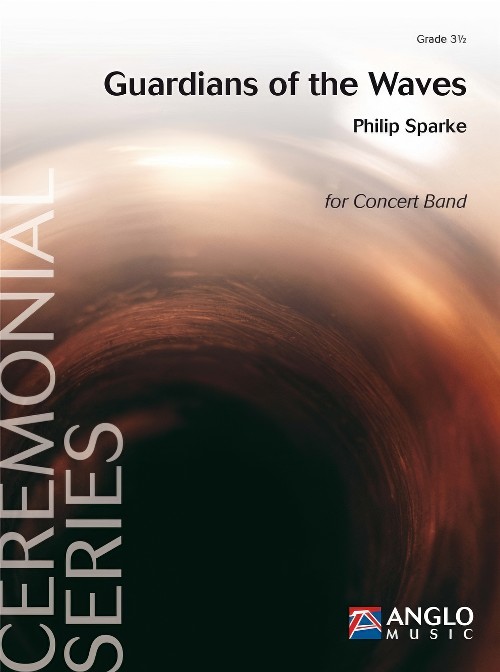
Guardians of the Waves (Concert Band - Score and Parts) - Sparke, Philip
Guardians of the Waves was commissioned by the Japan Coast Guard Band to celebrate their 30th anniversary in 2018. They gave the premiere as part of a 30th anniversary concert on November 8th that year. Set in traditional march form, Guardians of the Waves opens with a short introduction, which leads to the main theme, played initially by the brass and then repeated with a florid woodwind descant. The theme is extended and morphs into a second theme, first played tutti and then quietly repeated by bassoon, tenor sax and euphonium. This leads to a conventional 'bass strain', played twice with varying accompaniments. A quieter trio section follows, delicately scored and featuring the tenor instruments of the band. Taken up by the full band, this leads back to a recall of the introduction and a return to the main two themes, which lead to a triumphal close. Duration: 4.00
Estimated dispatch 7-14 working days
-
£26.99
Out to Sea & The Shark Cage Fugue (from Jaws) (Concert Band - Score only) - Williams, John - Bocook, Jay
Referring to the 1975 blockbuster Jaws, director Steven Spielberg states that John Williams' music "was clearly responsible for half the success of the movie." This suite features two of the signature musical sequences. In "Out to Sea," the trio of shark hunters led by police chief Martin Brody (played by Roy Scheider) heads into open water to find the menacing beast. This is followed by the "Shark Cage Fugue," a classically inspired and sophisticated accompaniment to a tense underwater scene in which Hooper (portrayed by Richard Dreyfuss) comes face-to-face with the great white in an all-too-fragile suspended cage.
Estimated dispatch 7-14 working days
-
 £204.99
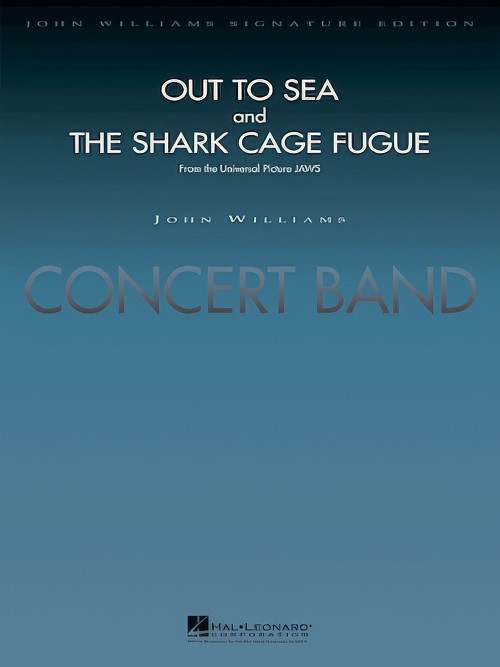
Out to Sea & The Shark Cage Fugue (from Jaws) (Concert Band - Score and Parts) - Williams, John - Bocook, Jay
Referring to the 1975 blockbuster Jaws, director Steven Spielberg states that John Williams' music "was clearly responsible for half the success of the movie." This suite features two of the signature musical sequences. In "Out to Sea," the trio of shark hunters led by police chief Martin Brody (played by Roy Scheider) heads into open water to find the menacing beast. This is followed by the "Shark Cage Fugue," a classically inspired and sophisticated accompaniment to a tense underwater scene in which Hooper (portrayed by Richard Dreyfuss) comes face-to-face with the great white in an all-too-fragile suspended cage.
Estimated dispatch 7-14 working days
 View Music