
Results
-
 £99.99
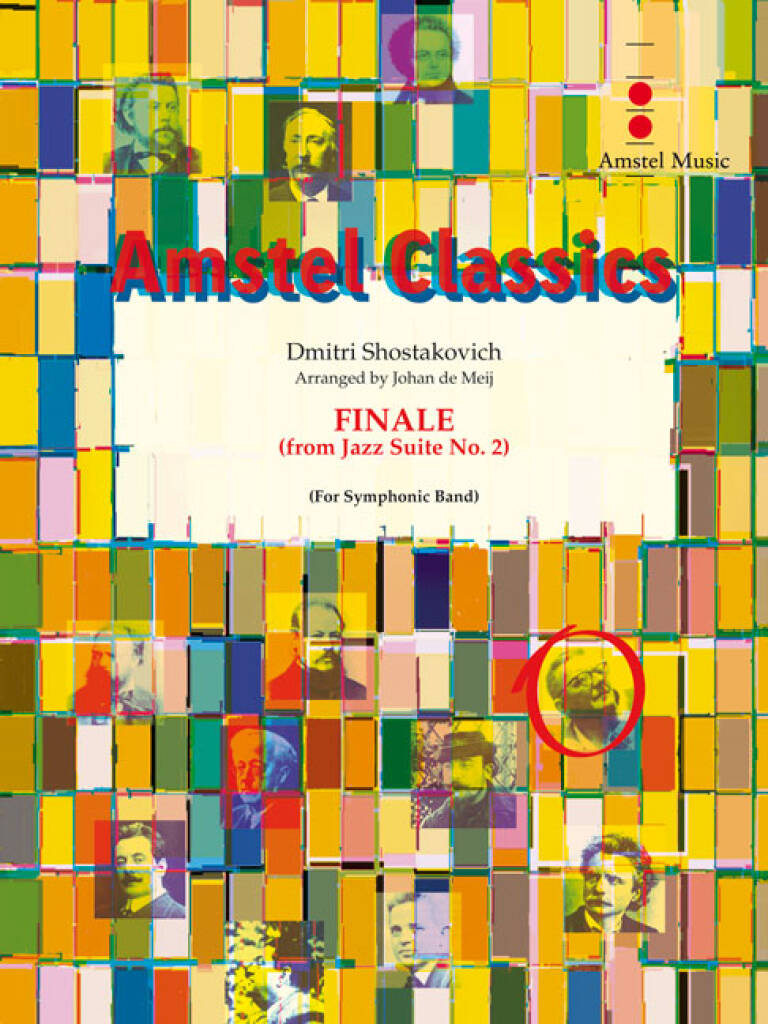
Jazz Suite No. 2 - Finale - Dimitri Shostakovich
In 1938 Shostakovich composed his Second Jazz Suite at the request of the recently founded State Orchestra for Jazz conducted by Victor Knushevitsky. This suite was originally scored for a complete symphony orchestra to which four saxophones, an accordion and a guitar had been added. The Jazz Suite no. 1 in three movements, composed in 1934, had been written for a smaller ensemble. The title 'Jazz Suite' is rather misleading, as the composer definitely uses the style of light music. Back in 1928, the twenty-two-year-old Shostakovich had already composed some light music. A bet among friends to make an orchestration of the popular song 'Tea for Two' in less then one hour time, causedhim to compose 'Tahiti Trot'. Shostakovich easily won the bet as he completed the original and witty arrangement within only forty minutes!
Estimated dispatch 7-14 working days
-
 £110.99
T-Bone Concerto, Part I - Rare - Johan de Meij
The T-Bone Concerto was Johan de Meij's first composition for solo instrument and symphonic band. It consists of three movements called respectively 'Rare', 'Medium' and 'Well Done'. In addition to the solo trombone, an important role has been allotted to a kind of chamber music ensemble within the band. This group introduces new thematic material and accompanies the soloist, thus creating a delightful transparant accompaniment. The ensemble consists of a double wind quintet (2 flutes, 2 oboes, 2 clarinets, 2 french horns and 2 bassoons) plus a cor anglais and a double bass. Part I is written in the A-B-A form and allow the soloist to display both the technical and the lyricalcharacteristics of the instrument.
Estimated dispatch 7-14 working days
-
£110.99
T-Bone Concerto, Part II - Medium - Johan de Meij
The T-Bone Concerto was Johan de Meij's first composition for solo instrument and symphonic band. It consists of three movements called respectively 'Rare', 'Medium' and 'Well Done'. In addition to the solo trombone, an important role has been allotted to a kind of chamber music ensemble within the band. This group introduces new thematic material and accompanies the soloist, thus creating a delightful transparant accompaniment. The ensemble consists of a double wind quintet (2 flutes, 2 oboes, 2 clarinets, 2 french horns and 2 bassoons) plus a cor anglais and a double bass. Part II is written in the A-B-A form and allow the soloist to display both the technical and the lyricalcharacteristics of the instrument. Part III at first develops into a kind of neo-baroque style using the thematic material of the first and second movement, and finally leads to a triumphant finale and a virtuoso conclusion.
Estimated dispatch 7-14 working days
-
 £110.99
T-Bone Concerto, Part III - Well Done - Johan de Meij
The T-Bone Concerto was Johan de Meij's first composition for solo instrument and symphonic band. It consists of three movements called respectively 'Rare', 'Medium' and 'Well Done'. In addition to the solo trombone, an important role has been allotted to a kind of chamber music ensemble within the band. This group introduces new thematic material and accompanies the soloist, thus creating a delightful transparant accompaniment. The ensemble consists of a double wind quintet (2 flutes, 2 oboes, 2 clarinets, 2 french horns and 2 bassoons) plus a cor anglais and a double bass. Part III at first develops into a kind of neo-baroque style using the thematic material of the first andsecond movement, and finally leads to a triumphant finale and a virtuoso conclusion.
Estimated dispatch 7-14 working days
-
 £340.99
T-Bone Concerto (Complete Edition) - Johan de Meij
The T-Bone Concerto was Johan de Meij's first composition for solo instrument and symphonic band. It consists of three movements called respectively 'Rare', 'Medium' and 'Well Done'. In addition to the solo trombone, an important role has been allotted to a kind of chamber music ensemble within the band. This group introduces new thematic material and accompanies the soloist, thus creating a delightful transparant accompaniment. The ensemble consists of a double wind quintet (2 flutes, 2 oboes, 2 clarinets, 2 french horns and 2 bassoons) plus a cor anglais and a double bass. Parts I and II are written in the A-B-A form and allow the soloist to display both the technical and thelyrical characteristics of the instrument. Part III at first develops into a kind of neo-baroque style using the thematic material of the first and second movement, and finally leads to a triumphant finale and a virtuoso conclusion.
Estimated dispatch 7-14 working days
-
 £183.99
Portrait of a City - Philip Sparke
In this exciting suite Philip Sparke sets out to capture the essence of his hometown, London, with each of the three movements depicting one of the many characteristics of this fascinating city. Skyline shows the frantic lifestyles of Londoners with millions of diverse people with different hopes and needs. Autumn shows the changes that take place in London during the different seasons and Downtown portrays the exciting nightlife of the West End.
Estimated dispatch 7-14 working days
-
 £99.99
Sleepers, Wake - Johann Sebastian Bach
This enchanting melody is from the fourth movement of Bach's Cantata 140 which was composed in 1731 using the parable of the wise and foolish virgins as the text. The work is beautiful in its simplicity with only three melodic lines, demonstratingBach's counterpoint at its best. For greatest effect it is suggested that the trumpets and trombones play behind the band or to the right and left of the stage.
Estimated dispatch 7-14 working days
-
 £141.99
Postcard from Singapore - Philip Sparke
This new three movement work by the world renowned composer Philip Sparke is based on traditional folk songs, in particular popular children's songs, from Singapore.The first movement is based on Gelang Sipaku Gelang, a well-loved folksong which has become associated with the Geylang area and is a song about community spirit and people living together in harmony. The slower second movement uses Di-Tanjung Katong, a song which is popular with childrens' choirs and third the movement uses two traditional melodies - Lenggang Kangkung which tells of the graceful swaying of watercress in the rice paddy fields and Munnaeru Vaalibaa.Why not bring as little part of the orient to yourconcert with this exotic new work.
Estimated dispatch 7-14 working days
-
 £99.99
Almshouse Street Blues - Philip Sparke
In 2007, Philip Sparke received the exciting task of composing three new works for the historic Monmouth School, situated on the Welsh/English border, at which he was composer-in-residence. Almshouse Street Blues was conceived ina truly democratic way, with each member of the band choosing the kind of piece they wanted! The result reflects the summer festival that takes place in the town each year, where you can experience anything from folk music to jazzand even bangra. With Almshouse Street Blues, Philip Sparke has written a work that will fit perfectly in any festival program. Dur: 4:45
Estimated dispatch 7-14 working days
-
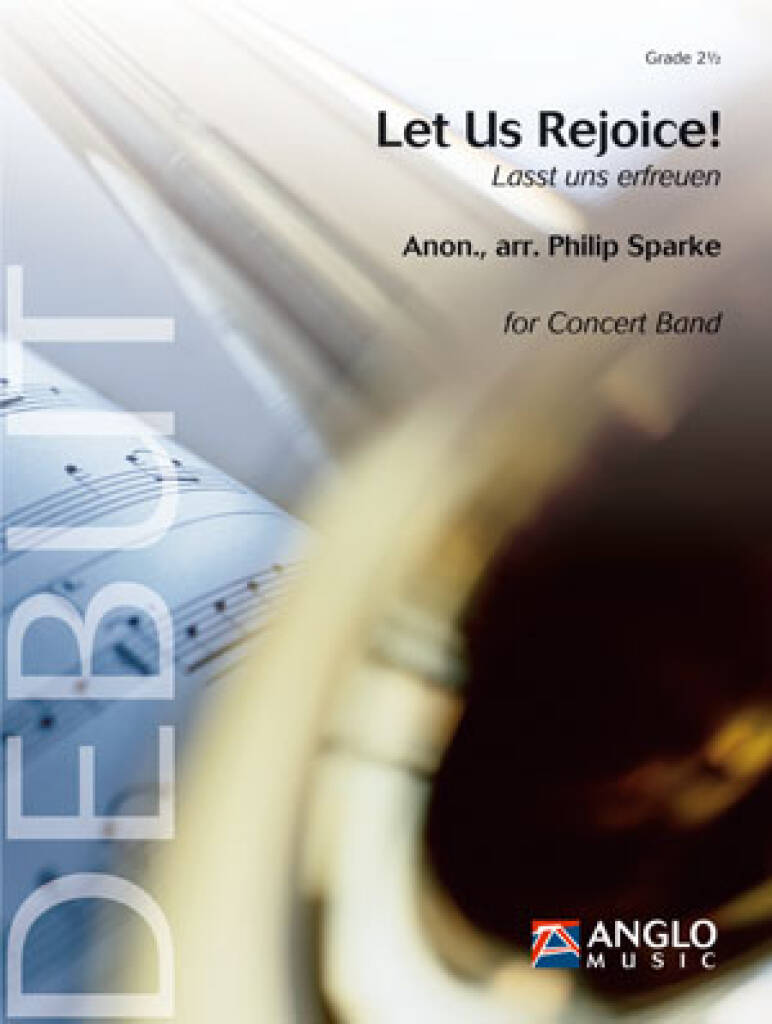 £87.99
Let Us Rejoice!
This arrangement presents three contrasting verses of the ancienthymn tune Let Us Rejoice!, which in the English-speaking worldis usually sung to the hymn All creatures of our God and King. Itis effective as a concert piece as well as an instrumental interludeduring a church service, particularly at Easter or Whitsun.
Estimated dispatch 7-14 working days
 View Music