
Results
-
 £84.50
The Spirit of an Eagle - Larry Clark
This is one of Larry Clark's most successful and performed pieces. It is a standard overture with a glorious slower B section, and is already on the required music lists for many states (including Texas and Florida). Now it can be performed by a band with instrumentation problems in this new flexible scoring edition. As few as five players and percussion can perform a full-sounding version of this wonderful work. To prove it, we recorded an excerpted version of the piece where we did just that.
Estimated dispatch 7-14 working days
-
 £159.60
Drieluik - Oscar van Hemel
Drieluik is one of the pearls in the repertoire, which is specifically written for wind band. It is an interesting piece in a contemporary idiom that was written ahead of its time (1969). This is a revised and colourful orchestration, and hopefully returns Triptych to its former glory, and gives it the attention it deserves. It is an exciting composition for the musicians, with many chamber music type moments, various solo opportunities and full of energy.
Estimated dispatch 7-14 working days
-
£53.95
So Low - Bankston
If your beginning band needs a piece to help give the bass players more confidence while having fun, then this is the piece for you! This clever work for young band is based on a groove featuring low brass and woodwinds. It also includes a bass drum solo, hence the name So Low. Your students will love rehearsing this one and will hurry to the band room every day to play it. It will also be a real treat for parents as they watch their students have a blast performing this infectious, yet simple composition.
Estimated dispatch 7-14 working days
-
 £199.99
Fanfare No. 1 - Wataru Hokoyama
Fanfare No. 1 (1995) In the summer of 1995 before his departure to the United States, a request from his high school band friends for a good concert opener sparked 19 year old Hokoyama to write his very first wind band composition.To capture the excitement of the rising curtain, the piece begins with magnificent brass ascending in 4th and 5th intervals. This is followed by the energetic entrance of the full ensemble like celebratory cannon fire. The following melody has many notes, yet is still simple. Do not overestimate it, just perform with driving momentum.In the slower middle section, utilize an instinctive vision of a scorching midsummer sun shimmering on the horizon. (Likely this shimmering sunset image was scored unconsciously, being composed in midsummer. A more applicable mood might be "Indian sunset". Perhaps this Indian style came from a capricious feeling of youthfulness.)The bright tempo and melody return for the last section. The climactic volley of musical display is like explosive fireworks as the last sounds echo throughout the concert hall.The composer wishes for performers to play from their hearts and not be limited by an analytic approach to the score-absolute accuracy is not required. Above all, the deepest pleasure for the composer is to know that teachers and students share the joy of music making with the intention of sharing it with others all over the world.With deepest gratitude, thank you for performing this work.
Estimated dispatch 7-14 working days
-
£106.95
Chisholm Trail - Carl Strommen
Chisholm Trail has a truly American quality, containing hints of music from the mountains, which evoke the rugged terrain and the pioneering spirit that were so important to the growth of this great nation. Carl Strommen is most at home in this style and has great success with it... in fact, this may be his best one yet! It's challenging, but energetic and fun to play. Students will enjoy it and audiences will love to hear it. This is a winner!
Estimated dispatch 7-14 working days
-
 £140.80
An all American suite - Robert Macray
This suite is based on 4 american folksongs.1. 'Go tell it on the Mountain' - A light swinging negro spiritual telling in many ways: 'Our Lord Jesus Christ is born'.2. 'Sweet Betsy from Pike' - This is the story of the girl who crossed the big prairie with her brother Mike. The setting has a reminiscene of the French 'Musette Waltz' because it was said that Betsy originally came from Paris.3. 'The Fiddler in the Rain' - This is the song from the play 'The Arkansas Traveller' which was very popular in Ohio in the 1850's.4. 'Johnny and Frankie' - This is the combination of 2 songs 'When Johnny comes home' and 'Frankie and Johnny'. The lyrics of the songs have nothing in common, but the two melodies seem to be made to blend perfectly.
Estimated dispatch 7-14 working days
-
 £228.70
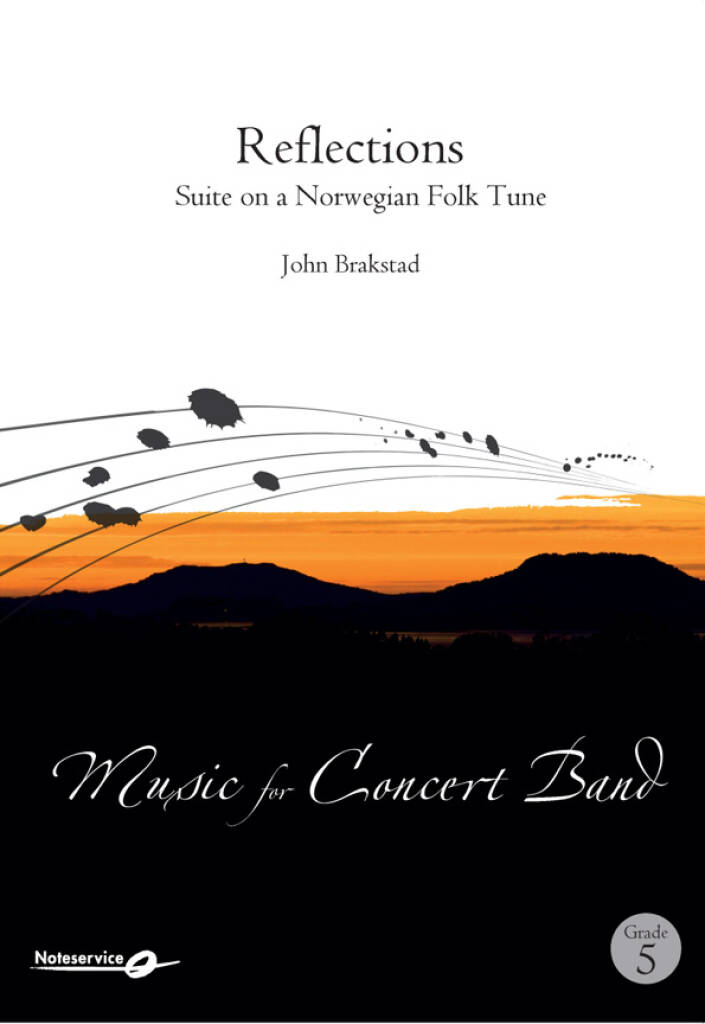
Reflections - Suite on a Norwegian Folk Tune - John Brakstad
The suite is constructed around a Norwegian folk tune. The melody is called "Dark Forebodings", and the words of the song revolve around thoughts and reflections on a future that can take unexpected, insecure, or perhaps dramatic and tragic turns.This is essentially a sad song with a beautiful melody. The folk tune itself is presented in the 2nd movement. In the 1st movement, the folk tune is joined with fleeting themes that indicate the unexpected; as if the music sometimesis confused as to which way to go. There are constant changes in atmosphere and feeling, from the harsh and dissonant, to the harmonious and melodic. The 3rd movement presents a more lively variant of thefolk tune, showing optimism andhappiness, even though the "halting" character of the rhythm underscores the unpredictable. The title "Reflections", therefore, refers to thoughts we can have about life. To the Conductor:The 2nd movement has an alternativeending which is may be used if the movement is played as an independent lyrical piece in a concert.It is advisable to begin first rehersal with the 2nd movement so that the main theme is known, before beginning on the 1st movement with itsmore semi-tonal parts. Intervals and intonation can provide much of the challenge in this movement.The 3rd movement can be more technically challenging, but there is considerable leeway in the tempo marking! It is important to maintain theenergy and intensity of the music through the whole movement.
Estimated dispatch 7-14 working days
-
 £57.50
Carrying You from "Laputa: Castle in the Sky" - Joe Hisaishi
New Sounds in Concert Band Series(NSB) for small band with 2-part choir Duration: approx.4'10" Arranged by Eiji Suzuki"Carrying You" was composed as a theme song to Castle in the Sky, an animated film produced by Studio Ghibli and directed by Hayao Miyazaki, released in 1986. The composer for Castle in the Sky was originally not Joe Hisaishi, but the director Miyazaki strongly requested him. The director told Hisaishi his vision for the film, and based on the world he imagined, Hisaishi made a collection of music called the Image Album. The melody that later becomes the basis for "Carrying You" was born from this album. However, the director Miyazaki was not planning on including a theme song in this film. Isao Takahata, the producer, proposed including a song, for the audience to think over the film at the end. He wanted the audience to think, "While the protagonists sought for the treasure, they didn't obtain any treasure. What did they obtain instead?" They thought, if they are going to create a theme song, it should be something organically connected with the entire film. Takahata requested the director Miyazaki to write the lyrics for the theme song. And to Hisaishi, he gave instructions to create a melody for the theme song using an instrumental piece called "Pazu and Sheeta" from the image album mentioned above. Director Miyazaki handed a piece of memo with lyrics to Takahata. "Carrying You" we hear now is this lyrics with some changes, set to Hisaishi's music. The melody is used at the opening of the film as well as the scene where Laputa is destroyed, and the song is used for the ending. Performance Advice from Arranger Suzuki: This is an extremely simple arrangement that can be performed by lower grade bands and singers. Of course, it can be played without singers and chorus, but the contents of the lyrics are very tasty so if possible, we recommend that you perform using the voices. Depending on your resources, the voice parts can be done as all solo, all female chorus, and so on.
Estimated dispatch 7-14 working days
-
 £67.95
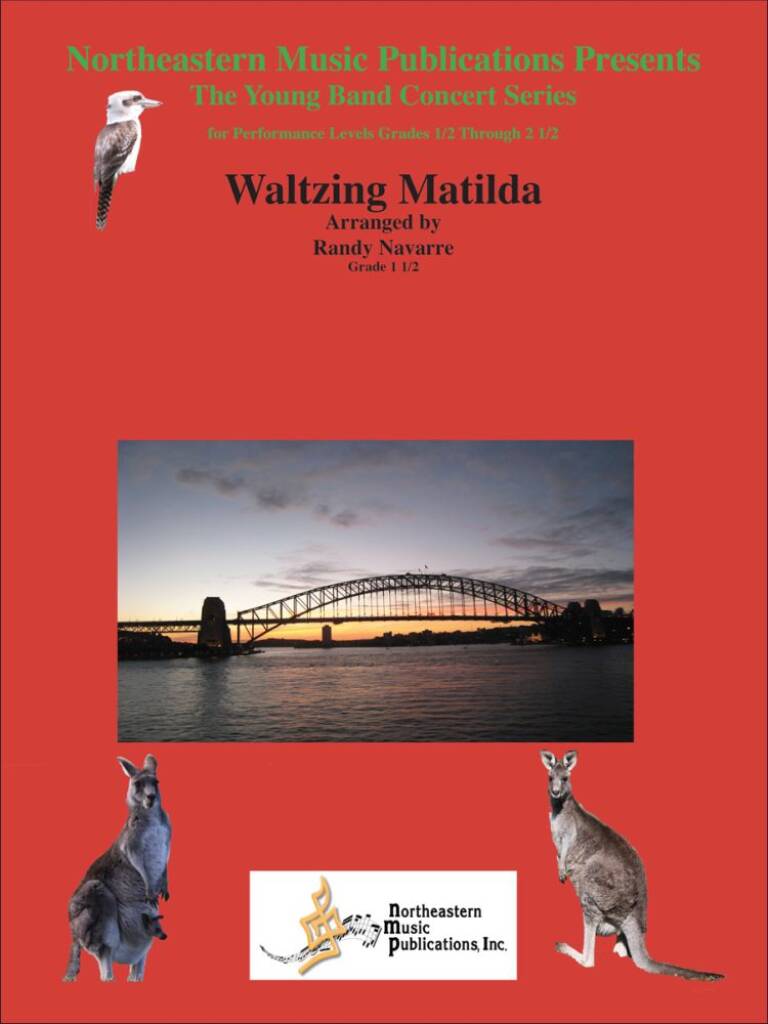
Waltzing Matilda - Randy Navarre
This is the unofficial National Anthem of Australia. You hear it in movies, documentaries, and any time there is a mention of the land Down Under. It is a great song on its own, telling the story of the traveling migrant through the Outback. This is a very easy version that may be played along with the Grade 3 version by Randy Navarre (N300161). If you have an event to combine young musicians with a community or more advanced band, they may play together in this ideal composition. 1st trumpet's highest note is C. Only the 1st clarinets cross the break.
Estimated dispatch 7-14 working days
-
£202.99
The Wind Rises - Joe Hisaishi
This beautiful, lyrical melody is so colorful in the film, without having an imposing image. "The Wind Rises" (2013) does not dominate the visual, and perhaps is an ideal form of film music considering this is director Miyazaki's final production. Chamber ensembles with solos and strings are frequently used in the soundtrack, so the sound is mellow and soft. As you listen more and more, you still recognize the tradition of Ghibli music.When I arrange, I try not to visualize the image of a film. I may think of characters and story line but is it important to write music that alone is appealing and fascinating. Trying not to "overstate" the film is not needed here. If you can bring out the most appealing parts of the soundtrack, excess can be forgiven. Of course, I have not changed the musical elements of the original.I asked Mr. Tomoki Ubata (band director at Ina Gakuen Sr. High School) whom I have worked with numerous times to assist with layout. He came up with a heartwarming medley with two main parts; leading boy Jiro's gift for aeronautical design and his romance with the heroine, Natsuko.The following themes are contained in the arrangement:1. Nahoko (A Rainbow) Beginning2. Caproni (An Aeronautical Designer's Dream) C3. A Journey (An Encounter at Karuizawa) H4. The Falcon I5. Prototype 8 N6. A Journey (A Parting) & A Journey (A Dream of Flight) PIt is quite remarkable, looking back on 30 years of Studio Ghibli's achievements.(Kazuhiro Morita)
Estimated dispatch 7-14 working days
 View Music