Results
-
£127.00Medium Funk Prelude - Paul Richards
New York City-based composer Paul Richards works with diverse musical genres, and this is reflected in Medium Funk Prelude, a brief dance in which a small group of figures are transformed and tossed about in the ensemble. Its title was in fact inspired by tempo markings in a jazz fake book. An unconventional yet challenging and exciting work for the advanced high school or university ensemble.
Estimated dispatch 12-14 working days
-
£179.00William Tell Overture - Gioachino Rossini
One of the great, classic transcriptions of the concert band repertoire, Leidzen's famous arrangement of the most popular and beloved of Rossini's opera overtures has been reissued in a fine modern edition edited by Tommy J. Fry. From the atmospheric opening, through the brilliant storm sequence and following pastorale (with its English horn solo), to the quick march, almost inseparable, for Americans of a certain age, from The Lone Ranger, this is a dazzling survey of what a talented modern band should be able to achieve.
Estimated dispatch 12-14 working days
-
£71.00Afton Variations
Based upon the Appalachian Folk Song Flow Gently, Sweet Afton, Strommen takes the tune through a myriad of different harmonic and textural variations. An excellent piece with which to teach expressive playing, this is one of the best pieces Carl Strommen
Estimated dispatch 12-14 working days
-
£106.00
A Countess From Hong Kong - Charlie Chaplin - John Glenesk Mortimer
This Is My Song
Estimated dispatch 10-14 working days
-
£55.00
-
£70.99
(Is This The Way To) Amarillo - Neil Sedaka & Howard Greenfield - Johny Ocean
Estimated dispatch 10-14 working days
-
£164.95Euphonium Concerto (Concert Band - Score and Parts) - Ellerby, Martin
This Euphonium Concerto was written between late 1994 and early 1995 in response to a commission from Steven Mead to whom the work is dedicated. It is cast in four movements and lasts a little over 22 mins:I. Fantasy: After the briefest of introductions, the solo euphonium enters with the key melodic phrase of the movement in a fast 'Tempo I'. This idea is developed up to the point where a slower 'Tempo II' breaks the argument - here the mood is reflective but it is only to be a brief interruption as 'Tempo I' returns very quickly. The opening material is then subjected to further transformation with 'Tempo II' making occasional returns en route, the distances between the contrasting tempi becoming ever closer, and the movement closes in a rather soft though definite manner.II. Capriccio: This relatively short presto movement forms a bridge between the first movement and the work's slow movement. The majority of the band parts are bright and muted with the percussion players enhancing the texture with contributions from xylophone, glockenspiel and vibraphone. Again the initial solo euphonium phrase provides the basis for almost all the movement's material. This is extremely virtuosic for the soloist and band alike and makes great play of the rhythmic possibilities of combining simple and compound music either in close proximity or together.III. Rhapsody (for Luis): A Lento movement, sitting between two different but essentially rapid ones, this provides the work's emotional core exploiting the soloist's cantabile qualities in an almost seamless fashion. Again, as will all the work's movements, the initial idea paves the way for subsequent development, eventually culminating in a passionate climax; thereafter it winds down with an affectionate backward glance towards the close of the the slow movement of the Euphonium Concerto of Joseph Horovitz, whose mark had been made indelibly on the euphonium repertoire. This movement is dedicated to Luis Maldonado who set the full score of the brass version before his untimely death.IV. Diversions: The work's variation finale is cast in 3/4 throughout though the barline is often a guideline and was seen by the composer as a challenge of metrical restraint! There is an obvious jazz feel to this movement (both rhythmically and harmonically) with a swaggering ritornello theme first announced by the solo euphonium. Thereafter follows a series of interludes and 'adjusted' returns of the main theme. A lyrical idea is allowed to enter but the underlying momentum is ever present. The band also contributes to the interludes and eventually the tempo increases towards a 'wild' and absolute conclusion.Duration: 22.30Recorded on QPRM143D Dreamscapes, Royal Northern College of Music Wind Orchestra
Estimated dispatch 7-14 working days
-
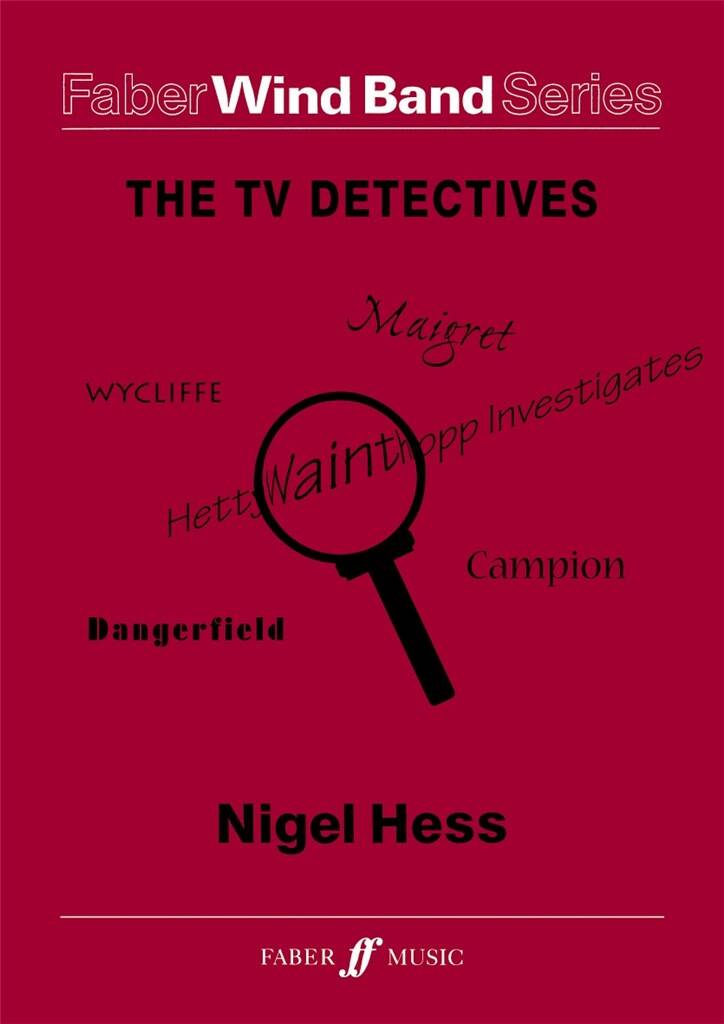
£32.95Euphonium Concerto (Concert Band - Score only) - Ellerby, Martin
This Euphonium Concerto was written between late 1994 and early 1995 in response to a commission from Steven Mead to whom the work is dedicated. It is cast in four movements and lasts a little over 22 mins:I. Fantasy: After the briefest of introductions, the solo euphonium enters with the key melodic phrase of the movement in a fast 'Tempo I'. This idea is developed up to the point where a slower 'Tempo II' breaks the argument - here the mood is reflective but it is only to be a brief interruption as 'Tempo I' returns very quickly. The opening material is then subjected to further transformation with 'Tempo II' making occasional returns en route, the distances between the contrasting tempi becoming ever closer, and the movement closes in a rather soft though definite manner.II. Capriccio: This relatively short presto movement forms a bridge between the first movement and the work's slow movement. The majority of the band parts are bright and muted with the percussion players enhancing the texture with contributions from xylophone, glockenspiel and vibraphone. Again the initial solo euphonium phrase provides the basis for almost all the movement's material. This is extremely virtuosic for the soloist and band alike and makes great play of the rhythmic possibilities of combining simple and compound music either in close proximity or together.III. Rhapsody (for Luis): A Lento movement, sitting between two different but essentially rapid ones, this provides the work's emotional core exploiting the soloist's cantabile qualities in an almost seamless fashion. Again, as will all the work's movements, the initial idea paves the way for subsequent development, eventually culminating in a passionate climax; thereafter it winds down with an affectionate backward glance towards the close of the the slow movement of the Euphonium Concerto of Joseph Horovitz, whose mark had been made indelibly on the euphonium repertoire. This movement is dedicated to Luis Maldonado who set the full score of the brass version before his untimely death.IV. Diversions: The work's variation finale is cast in 3/4 throughout though the barline is often a guideline and was seen by the composer as a challenge of metrical restraint! There is an obvious jazz feel to this movement (both rhythmically and harmonically) with a swaggering ritornello theme first announced by the solo euphonium. Thereafter follows a series of interludes and 'adjusted' returns of the main theme. A lyrical idea is allowed to enter but the underlying momentum is ever present. The band also contributes to the interludes and eventually the tempo increases towards a 'wild' and absolute conclusion.Duration: 22.30Recorded on QPRM143D Dreamscapes, Royal Northern College of Music Wind Orchestra
Estimated dispatch 7-14 working days
-
£309.99Ninth Symphony (Concert Band - Score and Parts) - Barnes, James
Premiered on 21 September, 2018 in Lawrence, Kansas by The University of Kansas Wind Ensemble (Dr. Paul Popiel, conducting), James Barnes' Ninth Symphony was composed between January and late June of that same year. This large work was commissioned by a consortium of twenty-one college bands, community bands, professional bands and individuals to help mark the 70th birthday of the composer (b. 1949). It is an expansive forty-minute work in four movements, of which the composer writes, "This is my last symphony...this work represents a compendium of all that I have learned during the fifty years of composing and scoring for this wonderful new medium: the modern wind band." The first movement, subtitled Elegy, is based around G minor. It is the longest movement of the symphony. Tragic and despondent in character, it is cast in sonata-allegro form. The second movement is entitled Scherzo. Barnes claims that "I have always wanted to write a waltz," and that is how this movement is cast, in a modified rondo form in D minor. In contrast to the mood of the first movement, the scherzo is a delightful posy of expansive melody, splashy color, humor and rhythm. The third movement, which is in a modified tertiary form, is entitled Night Music. In contrast to the scherzo, this movement begins with a mysterious incantation, first displayed by solo Alto Flute. The music becomes even darker and more mysterious, while overall the movement effectively expresses an "otherworldly" mood, ending with a solo soprano offstage which suddenly emerges, eerily singing a modified version of the opening incantation. Cast in sonata-allegro form, the fourth movement is most definitely a rousing Finale, beginning with a brilliant fanfare and undergoing several mood transformations before emerging into the final coda, ending the symphony with an energetic splash of color. Duration: 40.00
Estimated dispatch 7-14 working days
-
£421.99The Book of Urizen (Movements I: The Vision and II: The Creation) (Soprano, Narrator and Concert Band - Score and Parts) - De Haan, Jacob
The Book of Urizen is a work for concert band, solo soprano, and a male narrator in which sound collages of religious expressions are used. The piece is inspired by the compelling visionary poem of the same name (which the poet illustrated himself) by the Englishman William Blake (1757-1827), who occupies a unique position in western literature and the visual arts. He was not just a poet and a writer, but he was also a graphic artist, a painter, an illustrator, a spiritualist, a religious visionary, and a mystic philosopher. For the performance of this work, a professional sound system, including two microphones and a CD player, is needed. The three sound collages are three separate tracks on the enclosed CD and can be played easily at the right moment.The Book of Urizen bears resemblance to Genesis and Exodus, of which the contents form the basis of the Christian, Jewish, and Islamic faith. Blake adhered to the principle that all religions are in fact one, and that deities reside in human beings. In The Book of Urizen this is represented in "The Net of Religion," which is spanned over the earth by Urizen. The sound collages, compiled by Jacob de Haan in the studio, find their origin in Jerusalem, the Holy City, where the afore-mentioned faiths come together.In the first movement of this composition, The Vision, Urizen prepares his vision of the world, and he presents this to the "Eternals." His vision is rejected, and Urizen locks himself up in his own abstract world. When he does emerge again, he is confronted with rage by the gathered Eternals. Urizen flees the wrath of the Eternals, "the flames of eternal fury," and enwombs himself in his own world. When the Eternals see Urizen in his "stony sleep," they wonder if this is death. The blacksmith Los is torn by grief because of the isolation of Urizen. It brings him to rouse his fires, prepare his forge, and to give Urizen's world concrete form.In the second movement, The Creation, Urizen's world, but also man, woman, and child are created. Los is horrified with the appearance of Urizen's body. He mourns and pities Urizen, and from his blood a female form comes into being, with the name Enitharmon. The Eternals, fearful of the female form, decide to erect a tent to obstruct their view to eternity. Enitharmon and Los beget a son, called Orc. Los baptizes him as a child of the "fallen world." Orc is fed at Enitharmon's breast, which makes a girdle of jealousy restrict Los' chest. He takes the child to the top of the mountain and chains him down. The cries of Orc awaken Urizen, who explores his world creating instruments of scientific measurement to do so. Los encircles the face of Enitharmon from the sight of Urizen and Orc. She then populates the earth by giving birth to an enormous race.The Web, the third movement of The Book of Urizen, is available in a separate set.
Estimated dispatch 7-14 working days