
Results
-
 £189.99
Masked - Alex Shapiro
Masked by Alex Shapiro is composed in the exact shape of a Classical Minuet and Trio waltz, though the music--a whimsical if somewhat demented masked ball (or, balls, in this case)--bears little connection to that of Mozart or Haydn. Historically, third movement Minuets gave way to the joke-like Scherzo, and the Trio section tips its hat to some welcome levity. This is one of four movements in Suspended, a piece is composed in the tradition of an 18th century Classical symphony: four contrasting movements which serve specific functions and reveal a story. The work begins in absolute rage and chaos, then alternates between moments of grief and bleakness. Grim reality shifts to a macabre, circus-like insanity, and by the end, flickers of genuine hope contrast a pervasive sense of dread, and finally arrive at more optimistic possibilities. To perform the piece, you'll need an audio system capable of playing the prerecorded audio tracks from a laptop computer via a small digital audio interface connected to an audio mixer. Download information is provided in the printed piece.
Estimated dispatch 7-14 working days
-
 £134.99
Talisman - Thierry Deleruyelle
Talisman tells the story of the "Pierre du Serment", an event that took place in 1639 in the village of Fontenotte, on the border between France and Switzerland. Composed of three brothers and their parents, the Billod family lived peacefully on their farm despite the Thirty Years' War raging around them. When their father was captured by the Swedish mercenaries who plundered the farm, the three brothers vowed to save him, carving their pact in stone according to a Celtic and Viking tradition.Commissioned by the Orchestre d'Harmonie de Montlebon for its centenary, this work pays tribute to a local story that has become a legend. The conductor, Jean-Pierre Frigo, wanted this commission to mark the orchestra's presence within the region.
Estimated dispatch 7-14 working days
-
 £59.99
Maximus Fanfare - Thierry Deleruyelle
Maximus Fanfare is a dazzling, energetic work for wind band, conceived as a short, percussive overture in which brass and percussion impose their power from the outset. From the very first bars, an explosion of sound captures attention before giving way to vibrant orchestral development, leading to a triumphal conclusion.This fanfare was inspired by the majestic golden lion that sits atop the belfry in the Place des Hros in Arras, a town with a rich architectural heritage listed by UNESCO. A symbol of strength and grandeur, the lion finds a musical echo in this brilliant work full of panache.Commissioned by the Orchestre d'Harmonie d'Arras, the piece owes its name to Maxime Lavoine, its conductor since 2011, in tribute to his commitment to and passion for wind band music.With Maximus Fanfare, Thierry Deleruyelle has created an intense and luminous work, a musical tribute to the significance of Arras' heritage and the enthusiasm of the musicians who keep it alive.
Estimated dispatch 7-14 working days
-
 £82.95
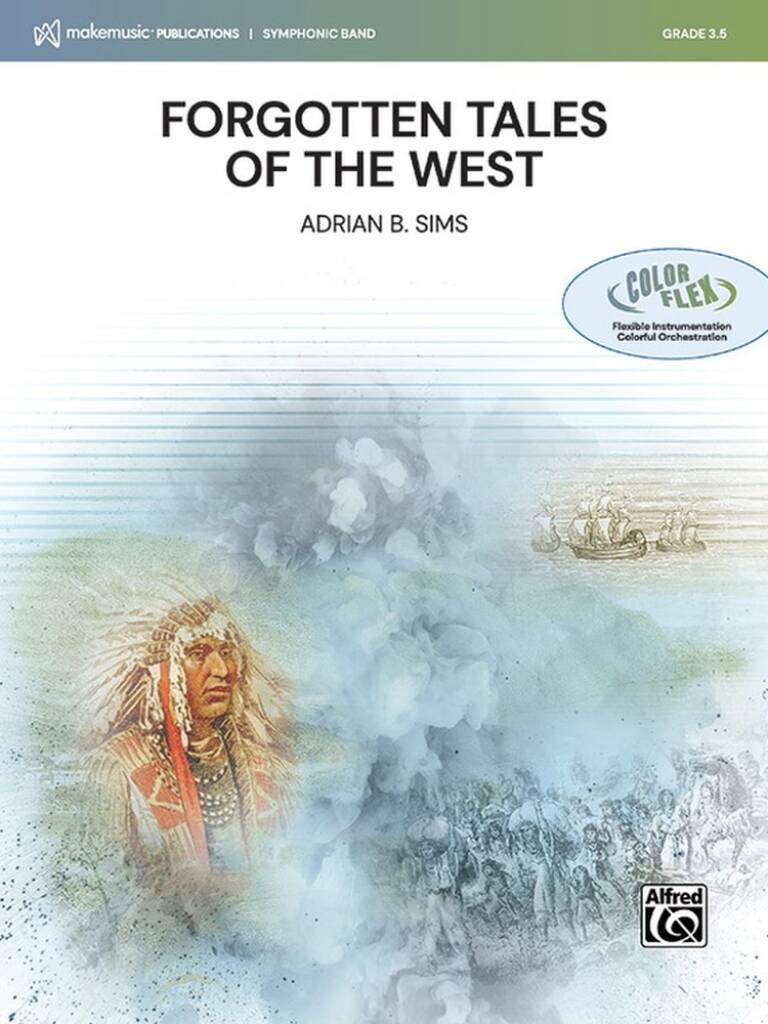
Forgotten Tales of the West - Adrian B. Sims
Now in ColorFlex format for groups with limited instrumentation! This powerful work pays tribute to the many battles fought between the Native Americans and Europeans. Forgotten Tales of the West moves between Native American-influenced themes and western harmonies before adapting into an amalgamation of the two. Incredible writing by Adrian B. Sims, who was a teenager when he composed this piece! (4:15)About ColorFlexConductors no longer need to choose between function and texture! Ensembles with instrumentation challenges still have numerous options to cover all parts, yet orchestration is elevated significantly to be faithful to the composer's original intent. Musicians have more opportunities to rest, and timbre once again becomes a central element of each work. So go ahead and have the best of both worlds: flexible and colorful.
Estimated dispatch 7-14 working days
-
 £79.50
The Country Club Stomp! - Jarod Hall
Now in ColorFlex format for groups with limited instrumentation !Experience a New Orleans vibe with this exciting, parade-inspired crowd-pleaser! The Country Club Stomp! is based on an infectious rhythmic groove and spirited melody. JaRod Hall uses elements of jazz as well as a strong reference to the West African circle dances from which this music evolved. Stellar writing that is fun, catchy, and informative! (3:00)About ColorFlexConductors no longer need to choose between function and texture! Ensembles with instrumentation challenges still have numerous options to cover all parts, yet orchestration is elevated significantly to be faithful to the composer's original intent. Musicians have more opportunities to rest, and timbre once again becomes a central element of each work. So go ahead and have the best of both worlds: flexible and colorful.
Estimated dispatch 7-14 working days
-
 £58.50
As One - Chris M. Bernotas
There is no better model of coming together in unity As One than being part of a musical ensemble. This delightful concert overture by Chris M. Bernotas features optional solos that join together, uniting the full ensemble. This piece has memorable melodies and a fun groove section, making it an excellent choice for a concert or contest. (3:20) Correlates to Sound Innovations, Book 1, Level 5.
Estimated dispatch 7-14 working days
-
 £66.95
Quest of the Magi - Brian Beck
The Quest of the Magi was one of the working titles for John Henry Hopkins Jr.'s famous carol, "We Three Kings." Written in 1857 for a Christmas pageant in New York City, "We Three Kings" tells the tale of the Magis' journey to find a newly born king in a faraway land and the precious gifts they brought with them. This piece focuses more on the journey of "following yonder star." Traveling across many countries in the first century was a perilous task, full of danger, thievery, and possible death, not to mention these men were traveling with some of the most precious and expensive cargo one could possess. This piece chronicles the magi acquiring myrrh, frankincense, and gold for their journey. Each treasure is represented by its own motif and woven into Hopkins' original carol. (2:45)
Estimated dispatch 7-14 working days
-
 £66.95
High Velocity - Michael Story
High Velocity, by Michael Story, is both exciting and full of contrast. This A-B-A form piece will be a student favorite with its high-energy melodic lines and lyrical contrast. Solid scoring, appropriate ranges, and teachable moments make this an excellent choice for concerts or contests. (2:55)
Estimated dispatch 7-14 working days
-
 £79.50
Tapestry of the Sky - Michael Kamuf
The grandeur of the sunrise over the Atlantic Ocean is depicted in the powerful fanfare Tapestry of the Sky by Michael Kamuf. With rich harmonies, beautiful melodies, and a strong rhythmic undercurrent, your students and audiences will enjoy this descriptive work. This piece would be a fantastic opening or closing selection for your next concert! (2:45)
Estimated dispatch 7-14 working days
-
 £79.50
Rondo: From Third Suite - Chris M. Bernotas
Arranged by Chris M. Bernotas, this rendition of "Rondo" from Jager's timeless Third Suite is thoughtfully scored for intermediate-level bands. The opening five-chord sequence connects each of the sections in this rondo. Memorable main themes and countermelodies, coupled with rhythmic drive, propel the music forward with momentum and excitement straight through to the end. Rondo is rich with teachable moments, making it an excellent choice for your concert's opening or closing piece. (2:20)
Estimated dispatch 7-14 working days
 View Music