
Results
-
 £260.99
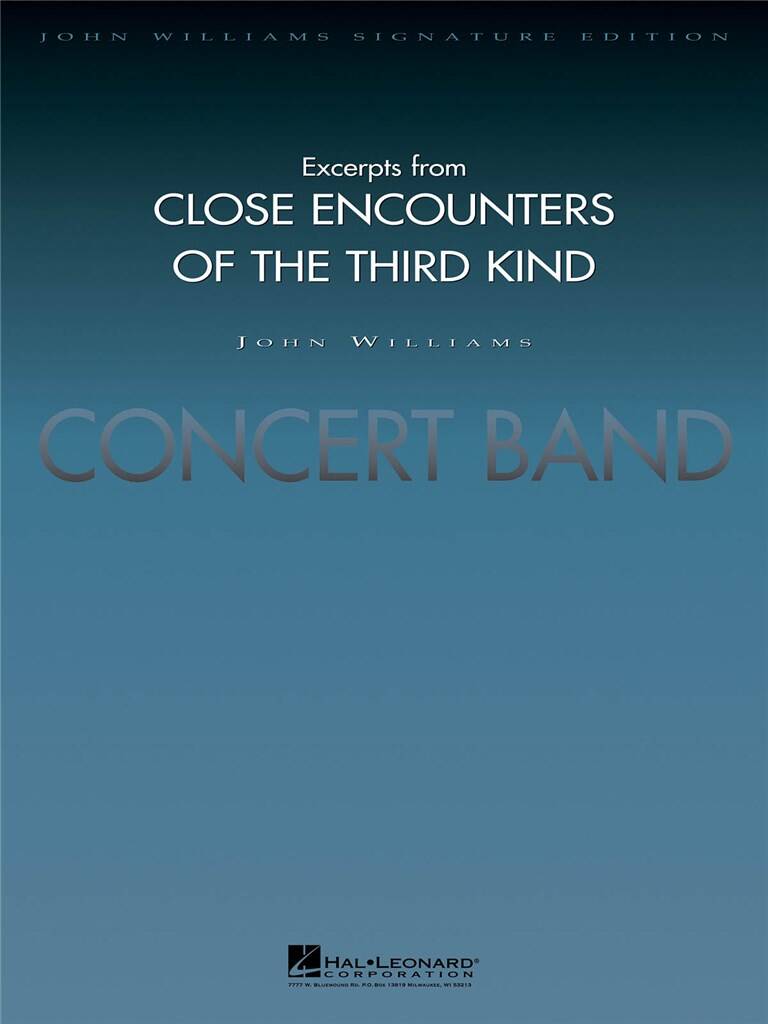
Excerpts from Close Encounters of the Third Kind - John Williams
In a story about friendly extraterrestrial visitors, John Williams' music captures the anticipation and excitement of this blockbuster movie, including the signature five-note motif used to communicate with the alien guests. Thefact that this is one of Mr. Williams' favorite Spielberg films clearly comes across in this unique and masterful soundtrack. Performance time - ca. 7:20
Estimated dispatch 7-14 working days
-
 £76.99
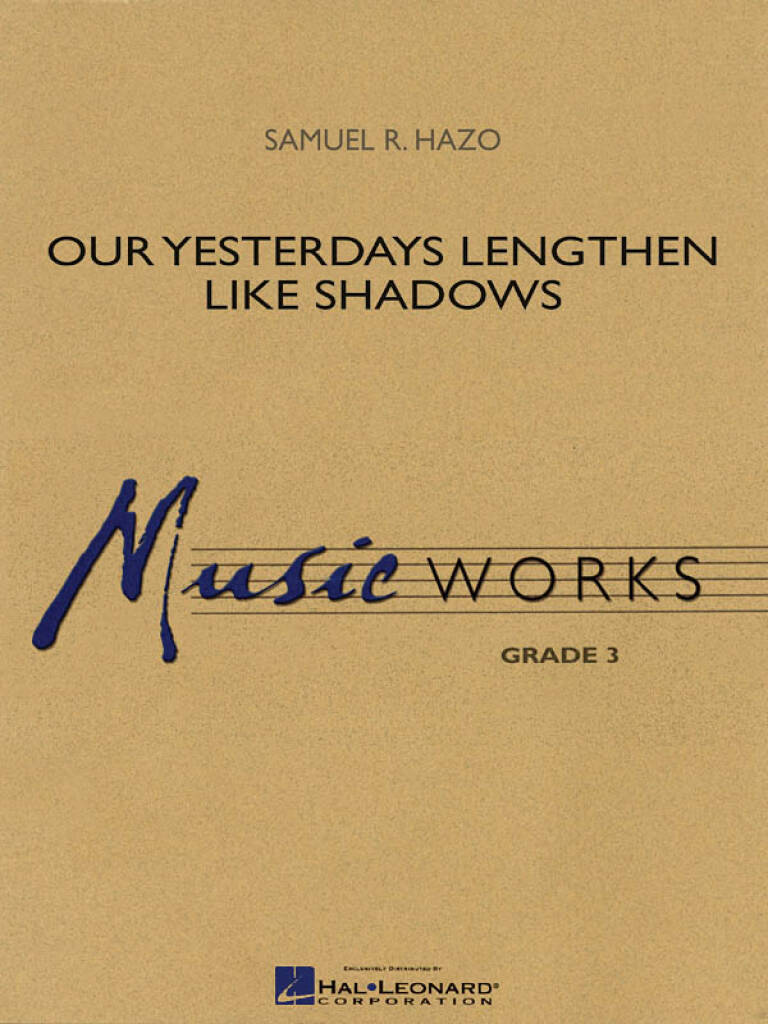
Our Yesterdays Lengthen Like Shadows - Samuel R. Hazo
This uniquely constructed work was commissioned by the 2008 South Carolina High School All-State Band and consists of a series of gorgeous melodic textures surrounding one ever-present note. The listener hears this note briefly inthe beginning and the end, but it is skillfully hidden in between. From lush soft passages to crescendos that leave your audience breathless, this composition will provide you and your ensemble with an unforgettable musicalexperience! Includes access to online recording of full performance. Dur: 5:00
Estimated dispatch 7-14 working days
-
 £72.99
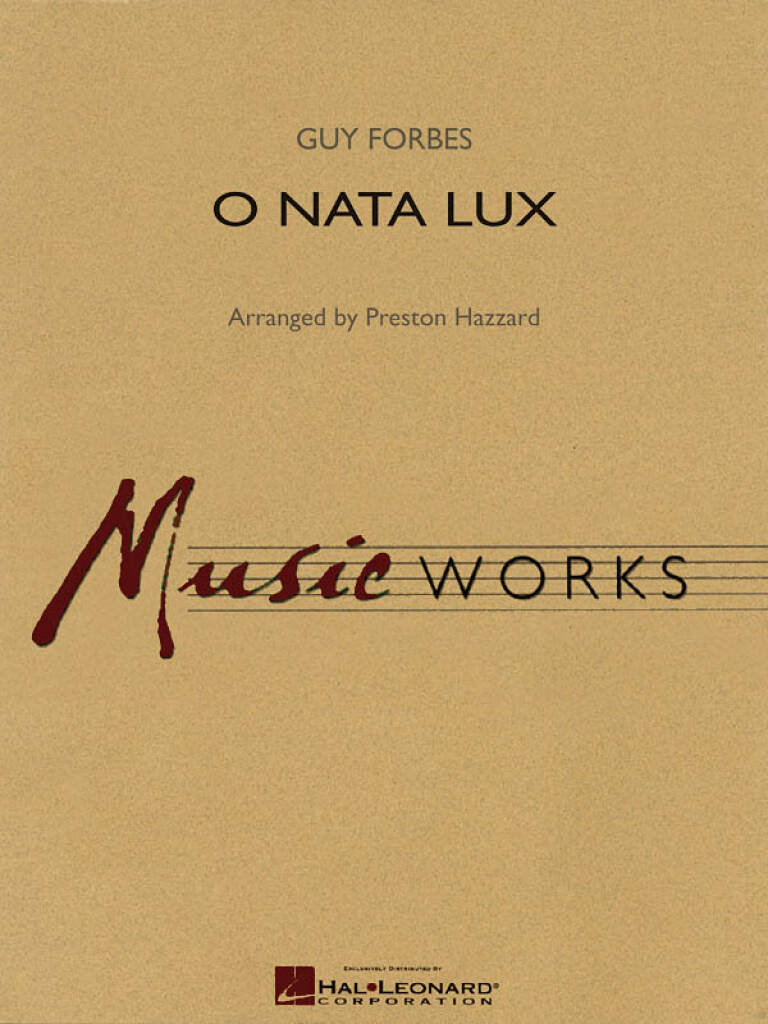
O Nata Lux - Guy Forbes
The opening section of this beautiful lyric piece is meant to depict light breaking upon a darkened world. Filled with vibrant instrumental colors and textures, this piece expands to a climax followed by a serene closing passage.Originally conceived as a choral work by Guy Forbes, this has been skillfully transcribed for winds by Preston Hazzard. Dur: 3:30
Estimated dispatch 7-14 working days
-
 £79.99
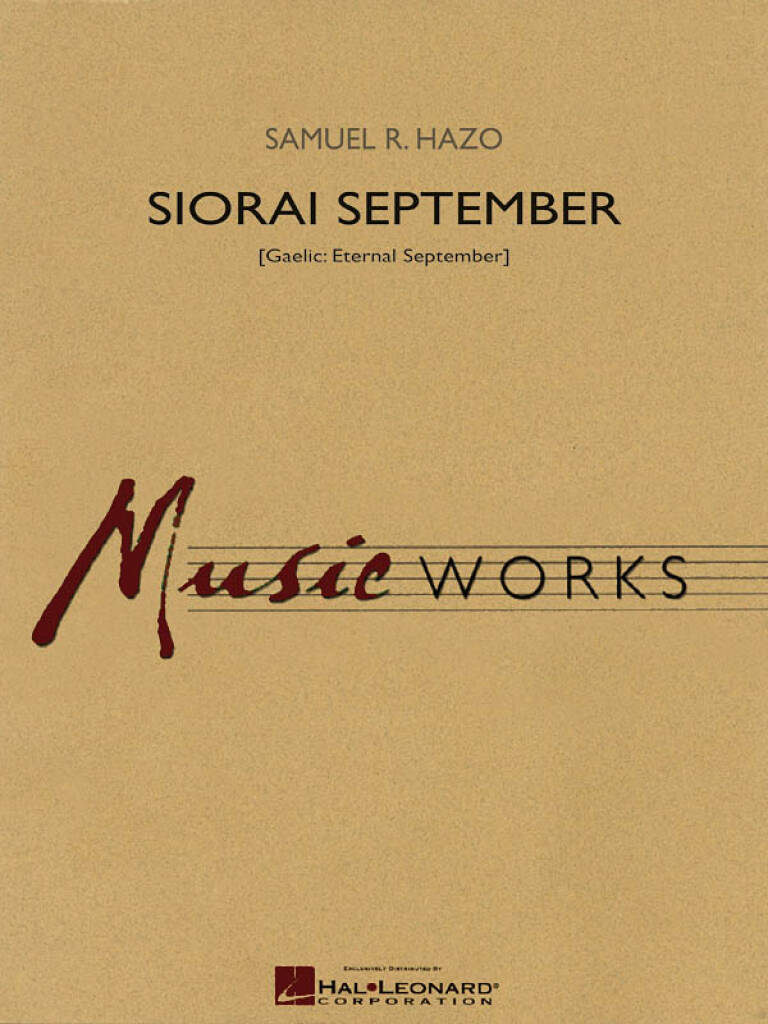
Siorai September - Samuel R. Hazo
Translated from Gaelic as Eternal September, this marvelous setting for band is designed to take each listener back to their own vivid fall memories on a college campus. Commissioned by the University of Notre Dame and premieredat their Carnegie Hall performance in 2010, this work is also dedicated to the composer's father, Dr. Samuel J. Hazo, a 1949 graduate of Notre Dame. Additionally, Dr. Hazo's poem Home Are the Sailors is incorporated in the middleof the piece. Rich in musical references and varied textures, this is a dramatic and rewarding work for mature ensembles. Dur: c. 5:30
Estimated dispatch 7-14 working days
-
 £53.50
Aquia Landing (Gateway to Freedom March) - Paul Murtha
During the Civil War, this pivotal transportation point located on the Potomac River and Aquia Creek was an important hub for both north and south. In addition, it was a key link in the network of freedom for fugitive slaves. PaulMurtha pays tribute to this historical site with this great-sounding Sousa style march at an easy level.
Estimated dispatch 7-14 working days
-
 £57.50
Sweet like that - Christopher Theofanidis
An outstanding addition to the BandQuest series, Sweet like that features low brass emphasis at the beginning and end, trap set, and other requests from students with whom Mr. Theofanidis workshopped the piece. This work is exuberant, joyful, and with a whiff of gospel; capsulizing the sound of the American street, instrumental doo-wop; an urban march. Free interdisciplinary curriculum for the piece is available for download at www.BandQuest.org. Learn more on YouTube! BandQuest, an exciting series of new music and accompanying curricula for band, is a program published by the American Composers Forum. The series was started as a response to feedback from music educators that there is a pressing need for new, fresh band music. The heart of this program is new works written by a diverse group of leading American composers who have created challenging pieces that are a true departure from standard middle school repertoire. Every BandQuest project includes a residency component in which the composer works collaboratively with a middle school as they create their new piece.Many BandQuest pieces are accompanied by an interdisciplinary curriculum designed to assist students as they learn the music and to integrate each piece with non-music studies. Visit www.bandquest.org to learn more about this innovative series, and email [email protected] to request a free downloadable audio catalog.
Estimated dispatch 7-14 working days
-
 £60.99
Incandescence - Richard L. Saucedo
Composed to give young players the opportunity to experience mixed meter in a controlled setting (in this case, 3/4 + 4/4), Incandescence uses an engaging and energetic rhythmic groove to make this big step fun and enjoyable. Inaddition to being a perfect vehicle for teaching and internalizing a constant 8th- note subdivision, this piece will be exciting and rewarding to perform. Dur: 2:10
Estimated dispatch 7-14 working days
-
 £57.50
Nonantum Bulgar - Hankus Netsky
Adding to the minuscule number of Klezmer pieces for concert band, Nonantum Bulgar is the 20th piece published in the BandQuest series. The title, Nonantum Bulgar, refers to Nonantum, a district in Newton which is home to the city's oldest synagogue (on the National Register of Historic Places), and bulgar (pronounced 'bull-ghar'), a type of Klezmer dance. When writing the piece, the composer imagined the dedication of the Adams St. Shul, which took place over one hundred years ago and featured a prominent Boston cantor and choir and a klezmer orchestra leading a Grand March down Adams St. This upbeat work is fun to play, features a trumpet solo, and gives every instrument the opportunity to play the melody. Learn more on YouTube! BandQuest, an exciting series of new music and accompanying curricula for band, is a program published by the American Composers Forum. The series was started as a response to feedback from music educators that there is a pressing need for new, fresh band music. The heart of this program is new works written by a diverse group of leading American composers who have created challenging pieces that are a true departure from standard middle school repertoire. Every BandQuest project includes a residency component in which the composer works collaboratively with a middle school as they create their new piece. Many BandQuest pieces are accompanied by an interdisciplinary curriculum designed to assist students as they learn the music and to integrate each piece with non-music studies. Visit www.bandquest.org to learn more about this innovative series, and email [email protected] to request a free downloadable audio catalog.
Estimated dispatch 7-14 working days
-
 £53.50
Like a Mighty Stream - Johnnie Vinson
Composed in remembrance of Dr. Martin Luther King, Jr., the title of this dramatic setting is taken from a biblical passage and quoted by Dr. King in his celebrated I Have a Dream speech in 1963. After a fanfare-like introduction, the piece is comprised of three sections. The Dream relects on Dr. King's famous speech. This is followed by Strife, which recalls the violence of the civil rights movement, and finally Hope, which looks to a brighter future and is a setting of the hymn We Shall Overcome. Performed with or without the narration, this is a stirring work for young bands. Dur: 5:20
Estimated dispatch 7-14 working days
-
 £53.50
Celebrating My Three Best Friends - Richard L. Saucedo
The mission of United Sound, Inc. is to provide musical performance experiences for students with special needs. In this program, each student is mentored by three general education students already in a band or orchestra. Celebrating My Three Best Friends pays tribute to this special relationship and bond between students. Written in a modified rondo form and a fast 3/4 tempo throughout, this is an uplifting and rewarding piece for young players. Dur: 2:10
Estimated dispatch 7-14 working days
 View Music