
Results
-
 £49.50
Recorder Rag (Concert Band - Score and Parts)
Recorder Rag was composed to feature members of your elementary recorder class playing along with the band for recruitment purposes. The ragtime style was chosen for its fun appeal to both player and audience alike. Place the recorder section at the front of the band so they can be heard and seen by their parents. This will be a smash hit and a great recruitment tool.
Estimated dispatch 7-14 working days
-
 £59.40
Soulmates (Concert Band - Score and Parts)
This one's a gas! Features a small jazz combo backed up by the concert band. There are written solos for the combo players or they can do their own thing. Very Hip!
Estimated dispatch 7-14 working days
-
£64.35
They're Off!
Here's the perfect "chaser" or encore for any concert performance! This fun-filled, rollicking galop from the golden age of the circus is accelerated excitement for performers and audience alike. Suitable at a range of tempos (all fast!) your band will love seeing just how fast they can go! Certain to become a favorite!
Estimated dispatch 7-14 working days
-
 £435.40
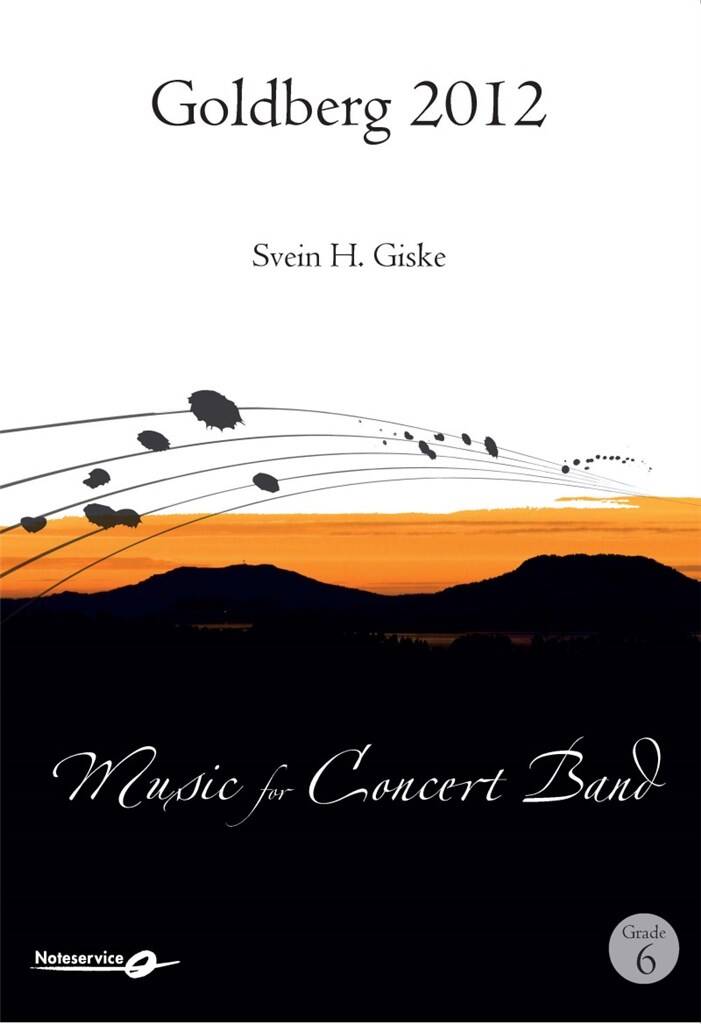
Goldberg 2012 - Svein H. Giske
The first time I heard Bach's Goldberg Variations was in the movie Silence of the lambs, in the early 1990s. I noticed the beautiful background music in one of the scenes, but at that time I didn't know what it was. A few years later, when I was studiying at the Grieg Academy, I got to know the entire piece. For me, this is a piece of music which I can listen to countless times. I think it sounds as fresh today as it did more than 15 years ago and it never ceases to inspire me. Both Bach's composition and Glenn Gould's famous 1955 recording (which was the first one I heard) still makes a great impression on me. Before Gould recorded it at age 22, it wasn't a highly ranked piece amongst pianists and Bach was by many viewed as a bit old-fashioned. The young Canadian turned all this around. He managed to portray Bach in a reformed way, producing fine nuances in phrasing and making the many layers in Bach's music more transparent than anyone before him. Thus he plunged both himself and Bach (back) onto the international music scene. When The Norwegian Band Federation (NMF) asked me to write the test piece for NM in 2012, it was only natural for me to use the Goldberg Variations as a starting point and inspiration for my work. Since I was a teenager at NMF's summer courses in the mid eighties I've always listened to many different styles of music. Growing up in Sunnmre with the Brazz Brothers as teachers and mentors, jazz-, pop/rock- and folk music were early on a natural part of my musical background. I also have my classical education from the Grieg Academy on trumpet. As the title of my piece implies, I've wanted to bring Bach to the present and put his music into various modern musical landscapes. I think you can bring about a special kind of energy when music from different genres are mixed and I've tried to do this by mixing Bach with artists and musical styles from the present. In Goldberg 2012, the music is often constructed by several layers, which in a way are living parallel musical lives. They are seemingly moving or floating freely, almost unaware of each other, but bound together by the same basic pulse. The rythms, however, are often notated on a different rythmic subdivision level than the usual 8th- or 16th note levels. By doing this, I hope to achieve transparent sounds that rythmically are perceived as more free and detached from each other. In large sections of the piece, pop/jazz is fusioned with elements from Bach. I guess you could have this little scene as a synopsis for the piece: picture a group of musicians meeting: some are classical performers, some are jazz. They start to improvise together, each in their own voice or musical dialect and I'm sort of in the middle, trying to write down what they are playing. This is what I feel much of Goldberg 2012 is about. The foundation of the piece, in addition to Bach and references from pop/jazz music, lies also in my own material. This material, basically two chords, is heard in it's purest form in the 1st movement. I use these chords to create scales, new chords and different motifs which contribute to blend together the different moods of the piece. It has not been my intention to copy Bach's form (theme and 30 variations), but rather to use the bits and pieces that I like the most as an inspiration for my own variations. The 1st movement, Aria 2, is for my 3rd son, Olav, who was born on the 21st of April 2011, and the 5th movement, From long ago, is dedicated to the memory of my father, Svein J. Giske, who passed away on the 6th of June 2011. -Svein H. Giske, January 2012-
Estimated dispatch 7-14 working days
-
 £149.40
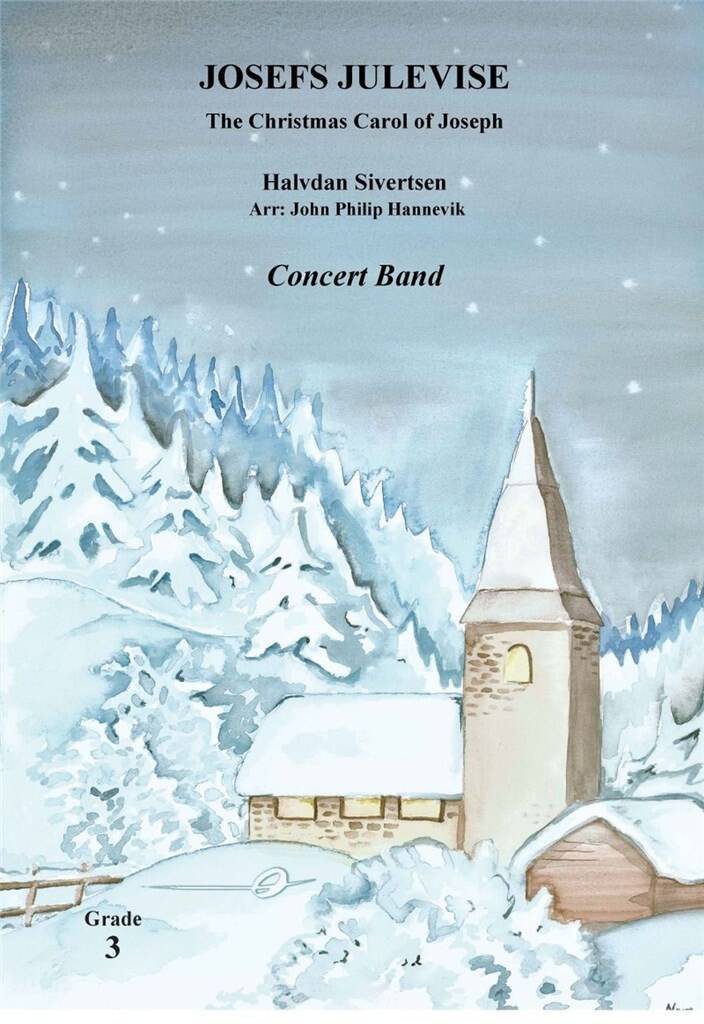
Josefs Julevise - Halvdan Sivertsen
Halvdan Sivertsen (born 1950) is one of the most popular singer/ songwriters in Norway. He is well know as a first-class storyteller, and he has a strong melodic line in all his music. This Christmas song was first recorded in 1991 and it has become a Norwegian classic. The lyrics tell the story of a couple travelling through time to find a city with bright lights, where they hear people sing about the couple who are about to have their first baby. But still this couple can not find anybody willing to help them, and they are forced to go back 2000 years, to find the stable where they find some shelter. Maybe they should have travelled further ahead in time in the firstplace, to find people willing to open their door to the poor and needing?
Estimated dispatch 7-14 working days
-
 £168.50
60 Warm-up Chorales for Concert Band
During his experience as a band conductor and teacher of wind orchestra conducting at university, Franco Cesarini has dealt with the topic of warm-ups very frequently. Throughout these long years of conducting he has had the opportunity to try many existing methods, evaluating their advantages and disadvantages.After a long time, he has decided to compile a collection of chorales for warm-ups, which are organized according to the criteria that he considers most effective.While working on his60 Warm-up Chorales for Concert Band, Franco Cesarini has always borne in mind that amateur musicians play for pleasure.He feels that it is extremely important that they have satisfaction at every moment of the rehearsal and not to start the rehearsal with needless "punishing" exercises. Nobody is really motivated to start playing with scales, long notes, or tricky rhythmical exercises. There is often a distinguished absentee in band rehearsals, namely music itself!Although this publication does not foresee a specific tempo for the chorales, they should often be performed rather slowly but without dragging.Dynamics are not indicated, so that the conductor has the opportunity to draw the attention of the musicians to his gestures and to make them react according to his indications.Timpani and bell parts have been added with the aim of not leaving the percussionists completely inactive during the warm-up phase, but can also be omitted.The chorales are written in four parts (SATB) and are also playable in smaller groups. The four voices can be played in different combinations of woodwinds or brass quartets or in mixed combinations.The collection includes ten chorales for the following keys: D flat major, A flat major, E flat major, B flat major, F major and C major.With his 60 Warm-up Chorales Franco Cesarini would like to convey the message to play the chorales in a musical way, thus raising the musicians' awareness of phrasing, the right interpretation of cadences, rubato and agogic.Above all, never do anything without putting the musical aspect in the foreground. 60 Warm-up Chorales for Concert Band: A perfect collection to warm-up and improve tuning of a concert band!
Estimated dispatch 7-14 working days
-
 £79.99
Scalin' and Wailin' - Thomas C. Duffy
Scalin' and Wailin' is a flexible, fun piece written with a differentiated instruction model. Three different difficulty levels meet students where they're at in their development and allows space for each to grow. This piece is also ideal for educators and conductors looking for side by side programming - younger ensembles can all play within the easiest group and more advanced ensembles can play within the more difficult groups, all fitting together in one energetic piece. Celebrate BandQuest's 20th anniversary with this special release, and find what works for your ensemble! BandQuest, an exciting series of new music and accompanying curricula for band, is a program published by the American Composers Forum. The series was started as a response to feedback from music educators that there is a pressing need for new, fresh band music. The heart of this program is new works written by a diverse group of leading American composers who have created challenging pieces that are a true departure from standard middle school repertoire. Every BandQuest project includes a residency component in which the composer works collaboratively with a middle school as they create their new piece. Many BandQuest pieces are accompanied by an interdisciplinary curriculum designed to assist students as they learn the music and to integrate each piece with non-music studies. Visit www.bandquest.org to learn more about this innovative series, and email [email protected] to request a free downloadable audio catalog.
Estimated dispatch 7-14 working days
-
 £140.80
Western Pictures - Kees Vlak
A group of European pioneers are dwelling through the Far West, looking for the eldorado called ' El Rancho Grande'. On their way they have to overcome a lot of dangers and difficulties. The morning mist hides the hostile country. The horses gallop towards the horizon, passing through terrifying canyons. The pioneers see the coyotes waiting for their prey, though at first sight they seem to play...! Finally they reach the border of 'El Rancho Grande' and you can hear the cries of joy and hope in a long anacrusis. The band now plays the main theme. The horsemen are riding towards their destiny and spur their horses.
Estimated dispatch 7-14 working days
-
 £236.00
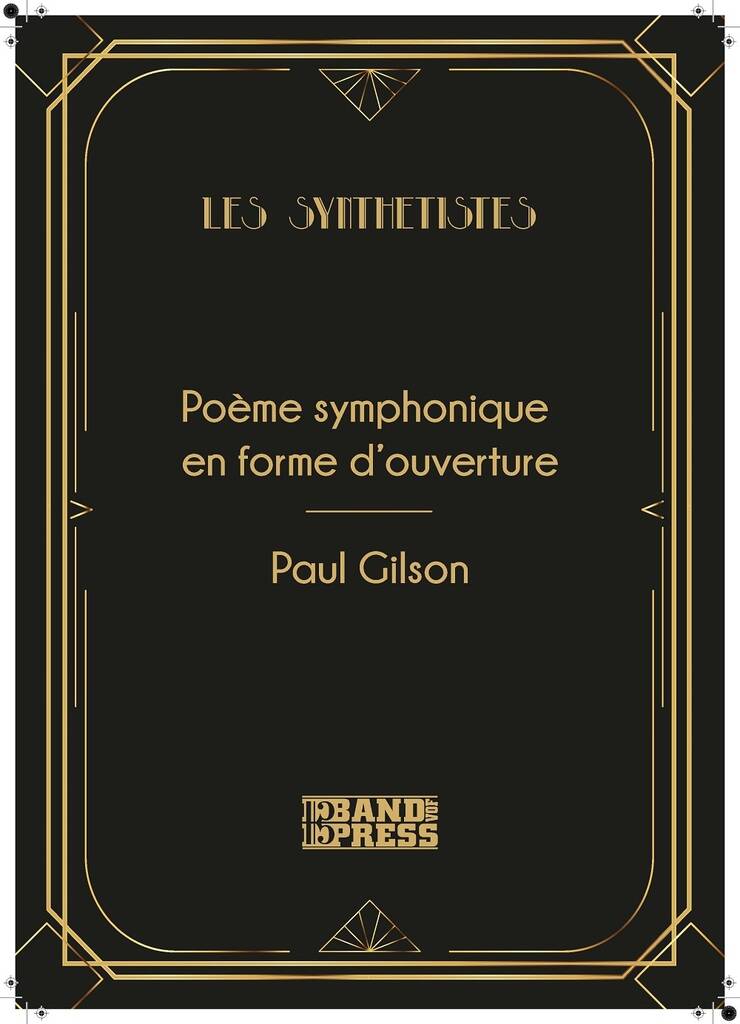
Pome symphonique en forme d'ouverture - Paul Gilson
In September 1925, on the occasion of the sixty-fifth birthday of their 'master', seven students of Paul Gilson gathered to form the first composers' collective in Belgian national music history. The members of Les Synthtistes (the Synthetists) are Ren Bernier, Francis de Bourguignon, Gaston Brenta, Tho Dejoncker, Marcel Poot, Maurice Schoemaker and Jules Strens. Their intent is twofold and both theoretical and practical. Les Synthtistes want to distinguish themselves as the 'Brussels seven' by breaking away from the prevailing late-romantic music of their time. Their theoretical aim is to synthesize the modern tendencies in music from 1925 onwards, to connect with the 'acquisitions of contemporary music' and to apply them within balanced and well-defined forms. Their practical goal is to make it easier to find a stage to perform their new symphonic music by uniting. In a period when there is no professional symphonic orchestra in Belgium, apart from the opera orchestra, they compose and transcribe their original symphonic works for wind band. They work together with Arthur Prevost and the Royal Band of the Belgian Guides which grew into a model instrumentation of 85 musicians during the interwar period. Thanks to Prevost and the Guides a unique collection of original, modern music for wind band by Les Synthtistes can be heard on the Brussels concert stages during the interwar period. Because only a few works of this unique, forgotten collection of 75 works were published, this unique canon remained largely unknown. Thanks to a historical study of sources by Luc Vertommen, these works for wind band are now, a century after their creation, made accessible and recorded for the first time.
Estimated dispatch 7-14 working days
-
 £236.00
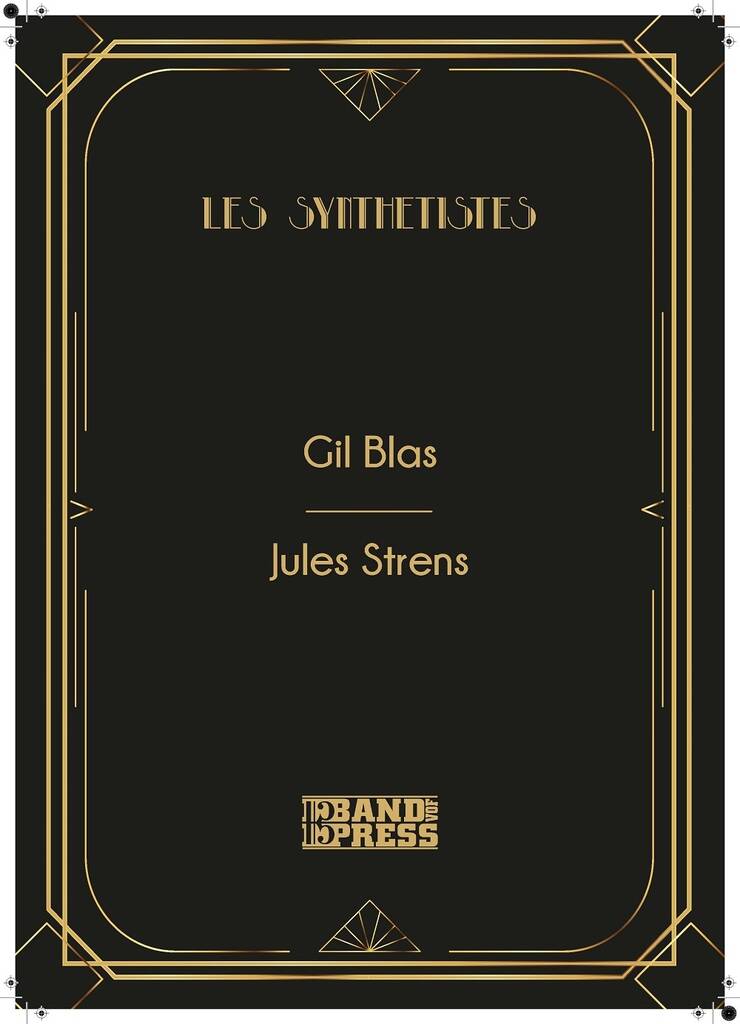
Gil blas - Jules Strens
In September 1925, on the occasion of the sixty-fifth birthday of their 'master', seven students of Paul Gilson gathered to form the first composers' collective in Belgian national music history. The members of Les Synthtistes (the Synthetists) are Ren Bernier, Francis de Bourguignon, Gaston Brenta, Tho Dejoncker, Marcel Poot, Maurice Schoemaker and Jules Strens. Their intent is twofold and both theoretical and practical. Les Synthtistes want to distinguish themselves as the 'Brussels seven' by breaking away from the prevailing late-romantic music of their time. Their theoretical aim is to synthesize the modern tendencies in music from 1925 onwards, to connect with the 'acquisitions of contemporary music' and to apply them within balanced and well-defined forms. Their practical goal is to make it easier to find a stage to perform their new symphonic music by uniting. In a period when there is no professional symphonic orchestra in Belgium, apart from the opera orchestra, they compose and transcribe their original symphonic works for wind band. They work together with Arthur Prevost and the Royal Band of the Belgian Guides which grew into a model instrumentation of 85 musicians during the interwar period. Thanks to Prevost and the Guides a unique collection of original, modern music for wind band by Les Synthtistes can be heard on the Brussels concert stages during the interwar period. Because only a few works of this unique, forgotten collection of 75 works were published, this unique canon remained largely unknown. Thanks to a historical study of sources by Luc Vertommen, these works for wind band are now, a century after their creation, made accessible and recorded for the first time.
Estimated dispatch 7-14 working days
 View Music