
Results
-
 £87.20
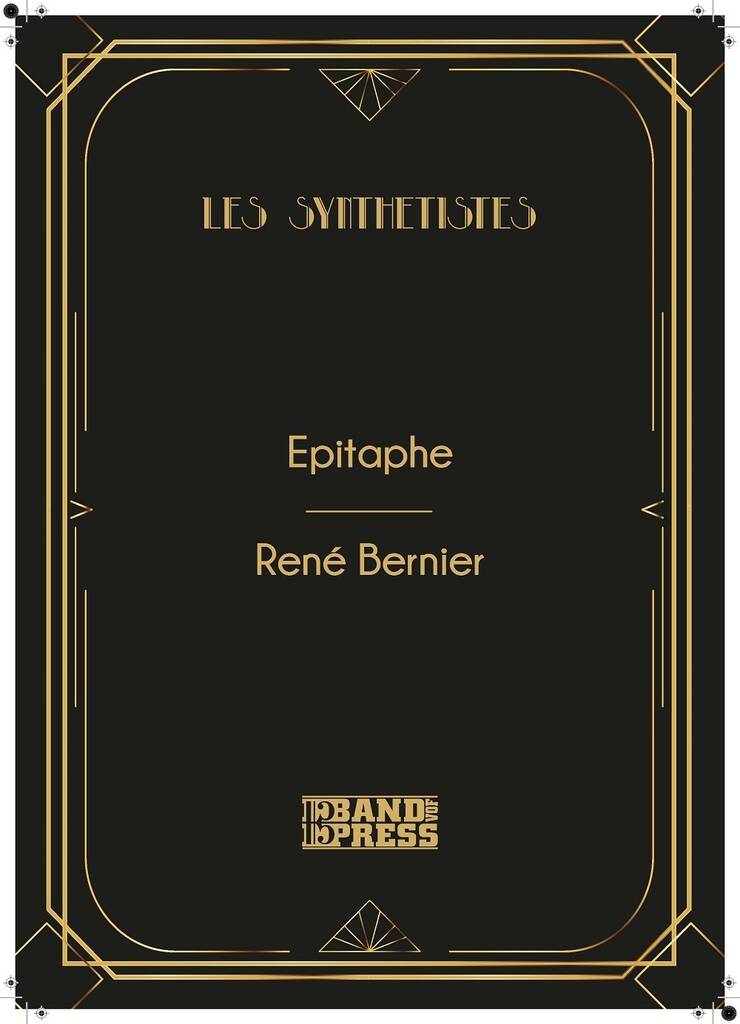
Epitaphe - René Bernier
In September 1925, on the occasion of the sixty-fifth birthday of their 'master', seven students of Paul Gilson gathered to form the first composers' collective in Belgian national music history. The members of Les Synthtistes (the Synthetists) are Ren Bernier, Francis de Bourguignon, Gaston Brenta, Tho Dejoncker, Marcel Poot, Maurice Schoemaker and Jules Strens. Their intent is twofold and both theoretical and practical. Les Synthtistes want to distinguish themselves as the 'Brussels seven' by breaking away from the prevailing late-romantic music of their time. Their theoretical aim is to synthesize the modern tendencies in music from 1925 onwards, to connect with the 'acquisitions of contemporary music' and to apply them within balanced and well-defined forms. Their practical goal is to make it easier to find a stage to perform their new symphonic music by uniting. In a period when there is no professional symphonic orchestra in Belgium, apart from the opera orchestra, they compose and transcribe their original symphonic works for wind band. They work together with Arthur Prevost and the Royal Band of the Belgian Guides which grew into a model instrumentation of 85 musicians during the interwar period. Thanks to Prevost and the Guides a unique collection of original, modern music for wind band by Les Synthtistes can be heard on the Brussels concert stages during the interwar period. Because only a few works of this unique, forgotten collection of 75 works were published, this unique canon remained largely unknown. Thanks to a historical study of sources by Luc Vertommen, these works for wind band are now, a century after their creation, made accessible and recorded for the first time.
Estimated dispatch 7-14 working days
-
 £256.00
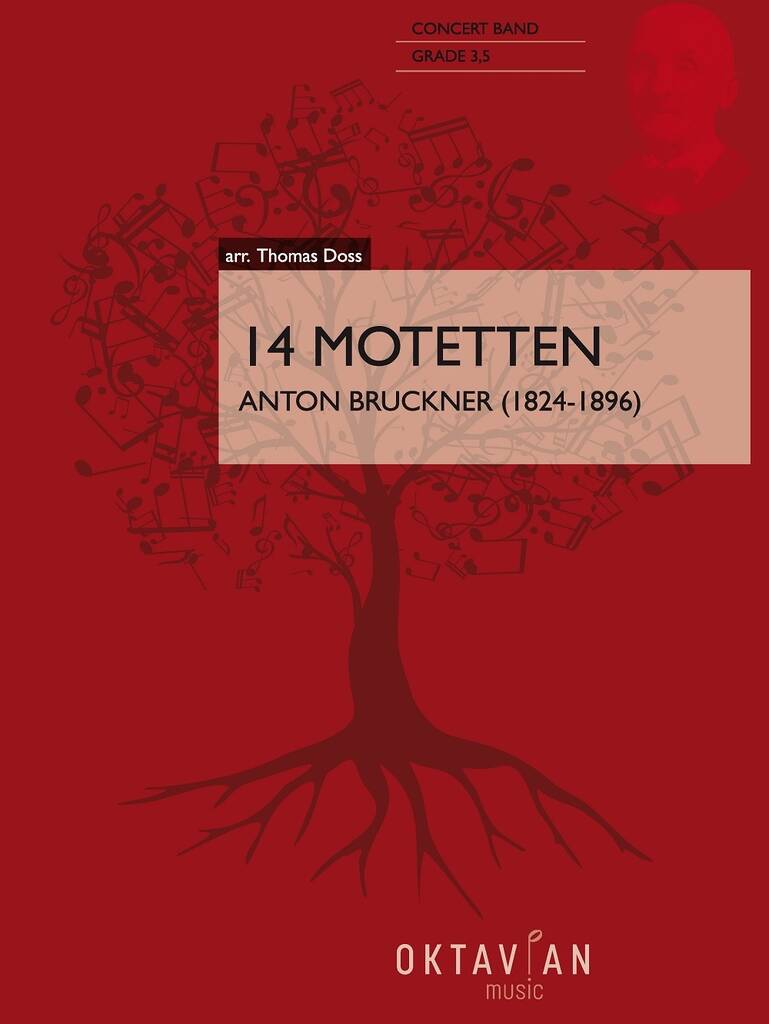
14 Motetten - Anton Bruckner
Anton Bruckner (b. 4.9.1824, Ansfelden, d. 11.10.1896, Vienna) didn't have it easy. Throughout his life, the Austrian composer was plagued by self-doubt. Anton Bruckner came from a simple, rural background. After the death of his father, he was accepted as a choirboy at the monastery of Sankt Florian in 1837. After several years as a school assistant and his own organ and piano studies, he first worked as organist in St. Florian, then from 1855 as cathedral organist in Linz. Introduced to music theory and instrumentation by Simon Sechter and Otto Kitzler, he discovered Richard Wagner as an artistic role model, whom he admired throughout his life and also visited several times in Bayreuth.In 1868 Anton Bruckner became professor of basso continuo, counterpoint and organ at the Vienna Conservatory; ten years later court organist; and in 1891 finally honorary doctor of the University of Vienna. He was considered an important organ virtuoso of his era, but had to wait a long time for recognition as a composer. It was not until Symphony No.7 in E major, composed between 1881 and 1883, with the famous Adagio written under the effects of Wagner's death, that he achieved the recognition he had hoped for, even if he was reluctant to accept it given his inclination towards scepticism and self-criticism.Anton Bruckner was a loner who did not want to follow a particular school or doctrine. He composed numerous sacred vocal works, such as his three masses, the Missa Solemnis in B flat minor (1854), the Te Deum (1881-84) and numerous motets. As a symphonic composer, he wrote a total of nine symphonies and many symphonic studies from 1863 onwards, tending to revise completed versions several times over. Bruckner's orchestral works were long considered unplayable, but in fact were merely exceptionally bold for the tonal language of their time, uniting traditions from Beethoven through Wagner to folk music, on the threshold between late Romanticism and Modernism.Anton Bruckner composed about 40 motets during his lifetime, the earliest a setting of Pange lingua around 1835, and the last, Vexilla regis, in 1892.Thomas Doss has compiled some of these motets in this volume for symphonic wind orchestra.These motets show many characteristics of personal expression, especially Bruckner's colourful harmony in the earlier works, which is in places aligned with Franz Schubert (changes between major and minor; and movements in thirds). Later works are characterised by many components which, in addition to the expanded stature of the movements, include above all a sense of the instrumentation as an outward phenomenon and the harmony as a compositional feature that works more internally. Some aspects of Bruckner's work are the result of his long period of study, which familiarised him not only with the tradition of his craft, but also gave him insights into the "modernity" of his time in such composers as Wagner, Liszt and Berlioz.From this developed his personal standpoint, which always pursues the connection between the old and the new.
Estimated dispatch 7-14 working days
-
 £116.40
Rapsodie sur des Themes Normands - Serge Lancen
The Paris born composer and pianist Serge Lancen (1922-2005) studied the piano with Marguerite Long and composition with Tony Aubin at the conservatory of his native town and was awarded a Prix de Rome. Lancen composed symphonic music, choral works, ballet music and several concertos.In 1960 he met his ancient study friend Dsir Dondeyne, conductor of the Paris Metropolitan Police Band, who incited him to write for symphonic band. Lancen wrote an impressive series of wind band works that earned him an international reputation. Among his most successful compositions are Manhattan Symphony (1962) an Cape Kennedy (1970), but we should not forget that Lancen also wrote several fine works for symphonic bands of average level. So he did in 1976 by writing two rhapsodies based respectively on Breton and Normandy themes. The Rhapsody on Themes from Normandy was recorded in 1977 on a long playing record by the French National Police Band conducted by Pierre Bigot alongside with Le Mont-Saint-Michel, Hymne la Musique and Rapsodie sur des Thmes Breton. Rhapsody on Themes from Normandy is a piece that is characterized by an original orchestration and fluent melodic lines, two main characters of Lancen's music.
Estimated dispatch 7-14 working days
-
 £118.99
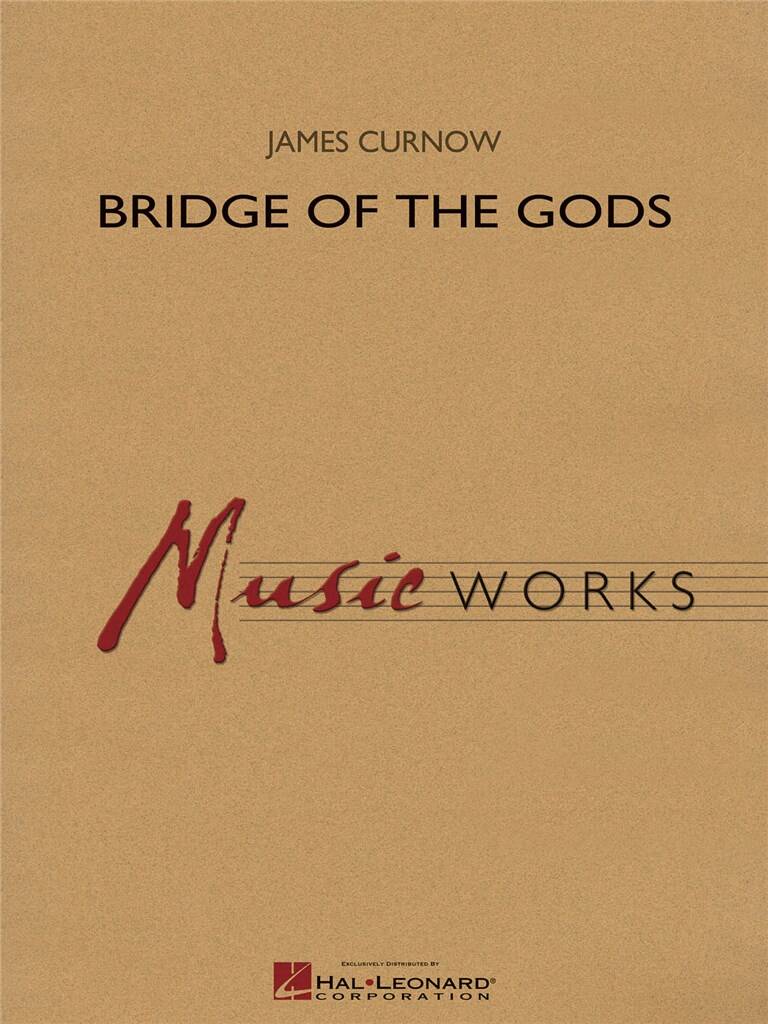
Bridge of the Gods - James Curnow
Commissioned by the Oregon Symphonic Band in Portland, Bridge of the Gods is a dramatic three-movement symphonic poem presenting the colorful legend told by the Native American Klickitatst about the origins of the volcanic mountains of the Cascade range and legendary bridge. The first movement (Saghalie) pays tribute to the powerful chief of all gods and is based on a majestic fanfare theme. The second movement captures the beauty of the maiden Loowit, with haunting flute and English horn solos accompanied by soft chanting voices. The final movement, Tanmahawis, utilizes stark clusters, jagged melodic fragments, and rhythmic percussive energy as it depicts the destruction of the mighty bridge. Dur: 8:50 Recorded by the Oregon Symphonic Band - Michael Burch-Pesses, conductor
Estimated dispatch 7-14 working days
-
 £89.99
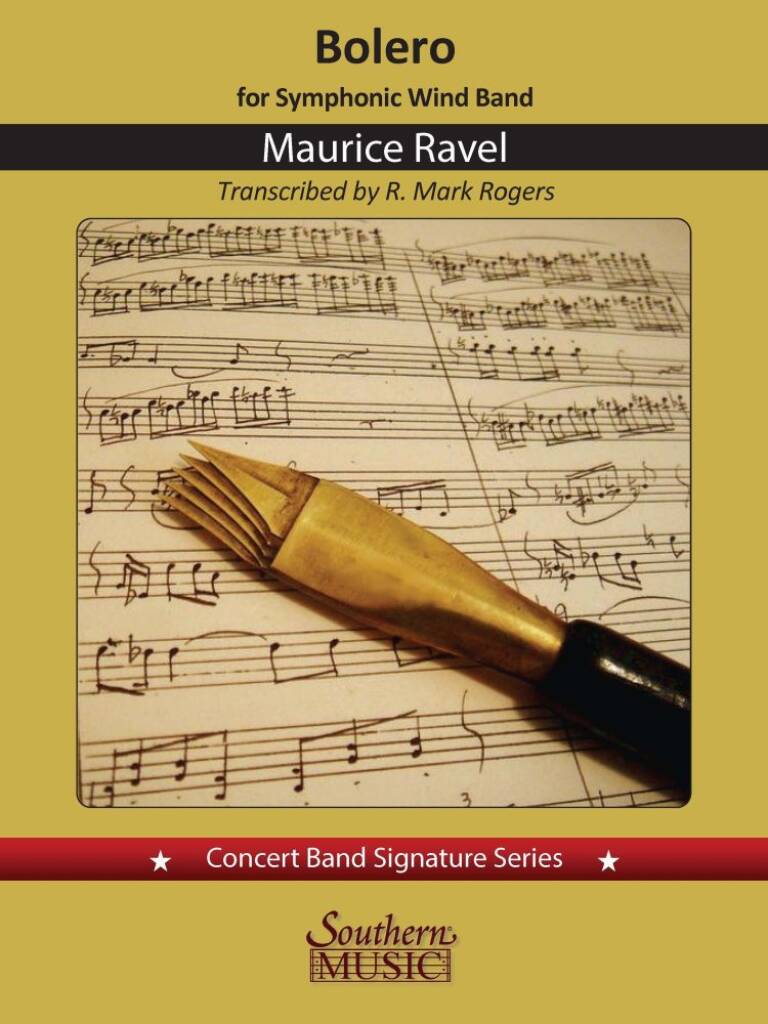
Bolero For Band - Maurice Ravel
Initially commissioned by Ida Rubenstein as a ballet work initially, Maurice Ravel's BOLERO has become his most popular and often-performed orchestra composition, which was a surprise to the composer who described it as seventeen minutes of orchestra without any music. With a structure that is simplicity itself, BOLERO uses two alternating melodies in what Ravel described as a crescendo on commonplace melod[ies]. Mark Rogers' transcription of BOLERO is an entirely complete wind band version of the piece; omitting not a single note or exotic instrument, thereby transferring the brilliance of Ravel_x001A_s orchestral score to the symphonic wind band with as much fidelity to the original as possible. Ravel calls for a very large orchestra (triple woodwinds, saxophones, large brass section, harp, celesta and percussion). Consequently, this transcription of BOLERO contains a large amount of divisi writing. It goes without saying that this transcription will be most successfully performed by large symphonic wind band.
Estimated dispatch 7-14 working days
-
 £119.20
Sinfonisches Prludium - Anton Bruckner
The Symphonic Prelude in C minor is an orchestral composition from the circle of the Austrian composer Anton Bruckner. The unearthing of this work, discovered shortly after World War II, has created confusion, leading to a second, reduced version being attributed to Gustav Mahler, a theory which still holds sway in musical circles today, although there is a high probability that the original composition is indeed by Bruckner himself. Rudolf Krzyzanowski (1895-1911), a pupil of Bruckner, transcribed the score in 1876. The 43-page manuscript bears the inscription Rudolf Krzyzanowski cop. 1876 on the first page; while on the last page is written in blue pencil: By Anton Bruckner.Thomas Doss used a facsimile of this autograph copy as the basic of his instrumentation of the prelude for symphonic wind orchestra.
Estimated dispatch 7-14 working days
-
 £193.20
CASTRVM - Lionel Beltrán-Cecilia
CASTRVM is a symphonic episode inspired by four of the main civilizations that have coexisted over time in Ulldecona's Castle. With its melodies and sound effects, the composer tries to transport the listener through a trip to four uninterrupted movements, from the beginnings of this small settlement, creating a natural atmosphere recreated by the voice and the singing of birds to take us into the history with the first inhabitants, the Iberians, giving strength to the introduction of the composition, to move on to the time of the Andalusians, which with a melody in the form of a dance marked by percussion will transport us to take a walk in the surroundings of its circular tower. Next, and with strength, we arrive at the medieval and Christian period, marked in the score by the brass instruments, in this fragment we find moments that take us into the church of "Santa Mara de los ngeles", with melodies that evoke resonance and pomposity, continuing until we find the immense square tower, symbol of the fortress and homage, finally used as a prison and arsenal of those times. Then, there is a small slow march that will move us to some measures of strong stridency to finish with the whole section of low brass having its great moment of prominence, down to we reach the last part, Qna, a name that is recited during the musical piece and one of the names given in the past to the area that could be seen from the castle, where the change of location of the new town is recreated leaving the castle site, but always looking at it with respect and admiration as at the beginning of what is now the current Ulldecona, in this part, the composer plays a bit with a very well-known and significant melody for the inhabitants of Ulldecona, the "Jota Vieja", first making a reflex effect of all its melody and then only with the first six notes of this one, which builds a bridge until reaching the march and, later, the grand finale of this symphonic episode. The work was commissioned by Ulldecona Town Council and the Ulldecona Music Band, led by its conductor Joan Nadal i Girona, to commemorate the 800th anniversary of the donation of the Town Charter of Ulldecona "the old" (1222-2022), as part of the PATRIMONIUM 20.22 programme, "La Banda (Sonora) del Castell" (The soundtrack of the Castle).CASTRVM consists of: I.Iberians: stone and ironII.AndalusiansIII.The square tower: fortress and homageIV.Qna
Estimated dispatch 7-14 working days
-
 £95.99
5 Tantum Ergo - Anton Bruckner
Anton Bruckner (b. 4.9.1824, Ansfelden, d. 11.10.1896, Vienna) didn't have it easy. Throughout his life, the Austrian composer was plagued by self-doubt. Anton Bruckner came from a simple, rural background. After the death of his father, he was accepted as a choirboy at the monastery of Sankt Florian in 1837. After several years as a school assistant and his own organ and piano studies, he first worked as organist in St. Florian, then from 1855 as cathedral organist in Linz. Introduced to music theory and instrumentation by Simon Sechter and Otto Kitzler, he discovered Richard Wagner as an artistic role model, whom he admired throughout his life and also visited several times in Bayreuth.In 1868 Anton Bruckner became professor of basso continuo, counterpoint and organ at the Vienna Conservatory; ten years later court organist; and in 1891 finally honorary doctor of the University of Vienna. He was considered an important organ virtuoso of his era, but had to wait a long time for recognition as a composer. It was not until Symphony No.7 in E major, composed between 1881 and 1883, with the famous Adagio written under the effects of Wagner's death, that he achieved the recognition he had hoped for, even if he was reluctant to accept it given his inclination towards scepticism and self-criticism.Anton Bruckner was a loner who did not want to follow a particular school or doctrine. He composed numerous sacred vocal works, such as his three masses, the Missa Solemnis in B flat minor (1854), the Te Deum (1881-84) and numerous motets. As a symphonic composer, he wrote a total of nine symphonies and many symphonic studies from 1863 onwards, tending to revise completed versions several times over. Bruckner's orchestral works were long considered unplayable, but in fact were merely exceptionally bold for the tonal language of their time, uniting traditions from Beethoven through Wagner to folk music, on the threshold between late Romanticism and Modernism.Hymns for four-part mixed choir a cappella (1846, St. Florian)No. 1 in E flat major (WAB 41/3): Quite SlowNo. 2 in C major (WAB 41/4): AndanteNo. 3 in B flat major (WAB 41/1): SlowNo. 4 in A flat major (WAB 41/2): SlowHymn for five-part (2 S, A, T, B) mixed choir and organNo. 5 in D major: SolemnlyThey are simple works, completely subordinate to their liturgical use, which nevertheless already show numerous characteristics of personal expression. These small pieces were able to stand up to the harsh scrutiny of the mature master: in 1888, Bruckner subjected them to a revision in which he made only minor corrections.
Estimated dispatch 7-14 working days
-
 £143.00
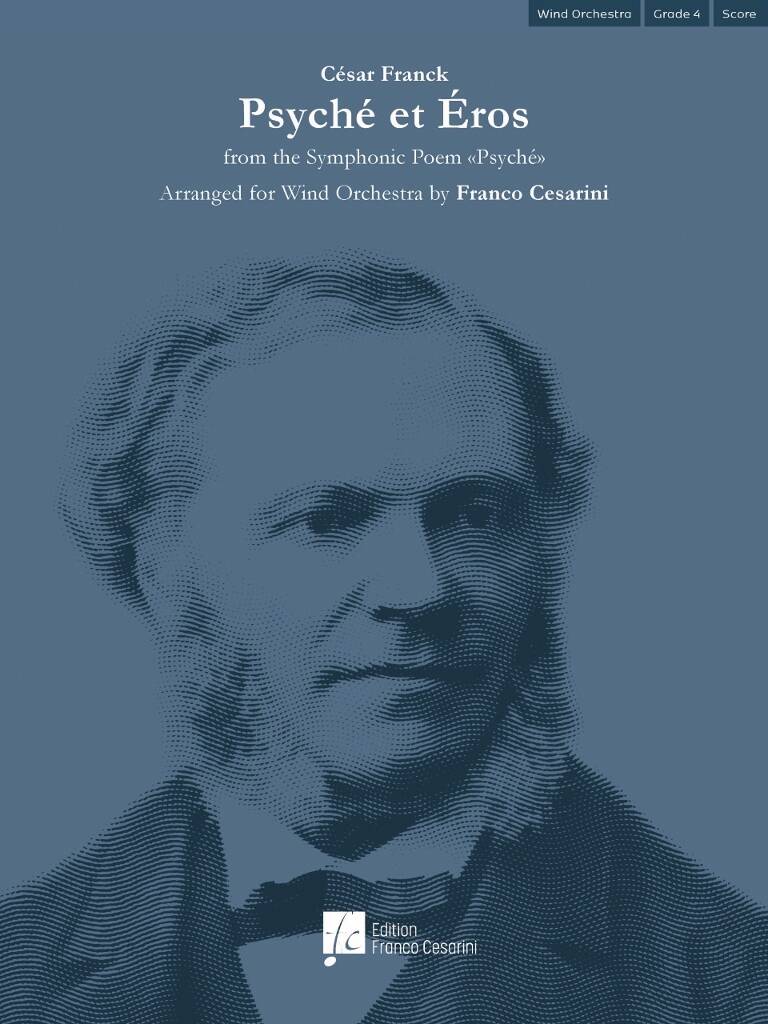
Psych et ros - César Franck
Csar Franck, composer, pianist, organist and music teacher, completed Cupid and Psych, his sixth and last symphonic poem in 1887. It was first performed in Paris in 1888 and was a complete success, but the piece later fell completely into oblivion, and it was only thanks to some meticulous research that it has returned to concert halls. The intricate love affair between Psyche and Cupid is an original story of the Metamorphoseswritten in the 2nd century AD by Apuleius. The tale is about overcoming obstacles in love and their final union. The symphonic poem is divided into three parts and calls for a choir. The movement that is the subject of this arrangement, Psych et rosis positioned at the end of the second part.Franco Cesarini's version for wind orchestra carefully illustrates the nuances of the instrumental colours, and represents a real test aimed at demonstrating the musicality and interpretative skills of orchestras and their conductors.
Estimated dispatch 7-14 working days
-
 £65.00
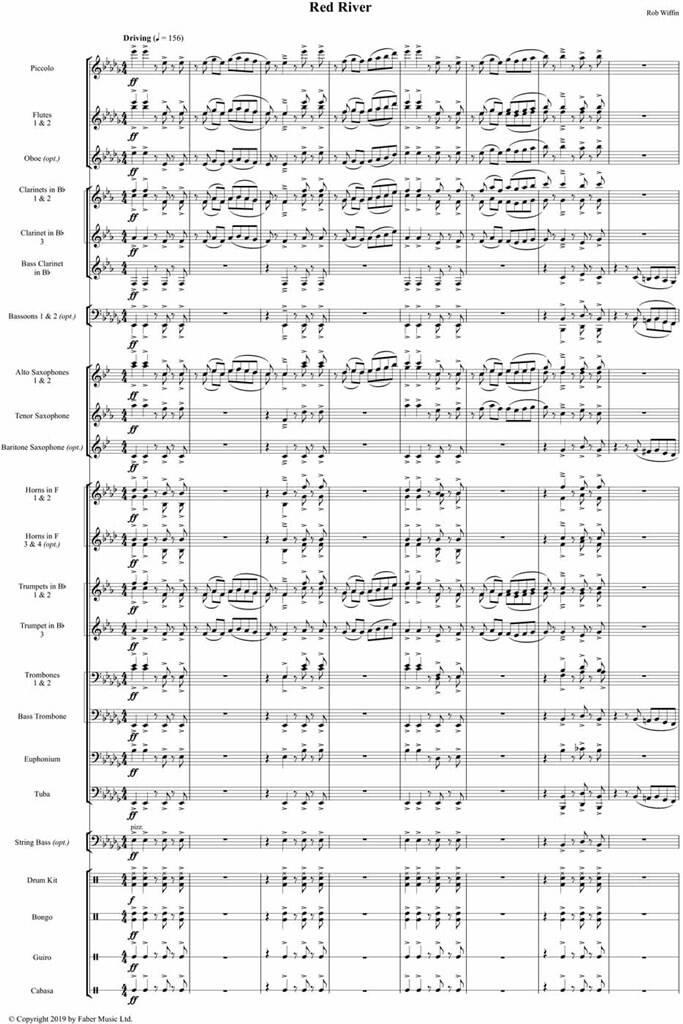
Red River - Rob Wiffin
Red River is a piece full of raw energy. The title is about the feeling engendered by the name rather than a reference to a specific place. In the composer's mind it is a river coloured red by the dust of the earth in a hot, sun-drenched landscape. Full of fiery rhythmic drive and syncopation carried along by Latin percussion, performers will enjoy the vigour and verve of the music. Suitable for intermediate level (Grade 3/4) symphonic wind band. Red River is a piece full of raw energy. The title is about the feeling engendered by the name rather than a reference to a specific place. In the composer's mind it is a river coloured red by the dust of the earth in a hot,sun-drenched landscape. Full of fiery rhythmic drive and syncopation carried along by Latin percussion, performers will enjoy the vigour and verve of the music. Suitable for intermediate level (Grade 3/4) symphonic wind band.
Estimated dispatch 7-14 working days
 View Music