
Results
-
£79.99
Remembrance - James L. Hosay
This moving and beautiful "Yiddish Rhapsody" includes the songs "Hine' Ma Tov", "Black Cherries" and "Why Is The Sky?". This skillful arrangement for intermediate level concert band will add drama to your concert or special event and raise your student's awareness of the importance of basic human rights. Drawn from arrangements of Holocaust songs he has done over the years for the Washington D.C. U.S. Army Band (Pershing's Own), James L. Hosay's REMEMBRANCE helps to keep us mindful of that tragic time in our history. The three songs provide very effective contrast, and the James Hosay's masterful orchestration skills are readily evident throughout. A powerful piece forconcert or contest!
Estimated dispatch 7-14 working days
-
 £57.50
Grandmother Song
Grandmother Song is an introduction to the Mohican tradition of sung syllables, or what Native Americans call vocables. Combining them with traditional wood flute songs, composer Brent Michael Davids offers a fresh look at the sound of Native American songs. Band instruments are performed less as musical instruments and more as talking sticks, singing reeds, rustling winds and shooting thunder. Through this beautiful ballad, students are given the materials to understand how Native Americans celebrate the world around them through the blending of words and song. (Includes score and parts.) BandQuest, an exciting series of new music and accompanying curricula for band, is a program published by the American Composers Forum. The series was started as a response to feedback from music educators that there is a pressing need for new, fresh band music. The heart of this program is new works written by a diverse group of leading American composers who have created challenging pieces that are a true departure from standard middle school repertoire. Every BandQuest project includes a residency component in which the composer works collaboratively with a middle school as they create their new piece. Many BandQuest pieces are accompanied by an interdisciplinary curriculum designed to assist students as they learn the music and to integrate each piece with non-music studies. Learn more on YouTube. Visit www.bandquest.org to learn more about this innovative series, and email [email protected] to request a free downloadable audio catalog.
Estimated dispatch 7-14 working days
-
 £144.99
Suite Marchigiana - Luciano Feliciani
According to a famous statement by Herder, folk songs represent the archives of a nation's knowledge, the expression of its heart and theimage that reflects its history and identity. Suite Marchigiana is a three movement piece, inspired by folk songs from the Marche in central Italy, a region with a very ancient and rich folkloristic heritage. The first movement elaborates on the well-known Pasquella. The Pasquella comes from a traditional winter begging ritual where a group of musicians go from house to house singing verses, wishing their audience good health, wealth and abundance, in return for small amounts of money, food and wine. The second movementis an Andante Triste inspired by an old song called Sona la mezzanotte (The Clock Strikes Midnight), a melancholic song that reminds us of unhappy love stories, bereavement, and so on. Luciano Feliciani concludes the suite with the Saltarello Marchigiano, which is bright and sparkling, and therefore in complete contrast with the previous movement. Although unproven, the Saltarello is thought to have its origins in the 'saltatio' (a latin dance). While the choreae were group dances, circular in structure and with a rhythmic progression, the saltationes were more lively in character. The fast, frenetic and joyous saltarello was without any doubt the most famous musical expression of rural central Italy in the nineteenth century.
Estimated dispatch 7-14 working days
-
 £349.99
Gloriosa - Symphonic Poem for Band (Complete) - Yasuhide Ito
A new acquisition by Bravo Music, this fresh printing of the 1990 masterwork by Yasuhide Ito features a newly engraved score, improved parts, good availability and value. This stirring and powerful homage to early Christianity in Japan profoundly and eloquently states the case of cross-cultural conflict and resolution.I. OratioThe Gregorian chant "Gloriosa" begins with the words, "O gloriosa Domina excelsa super sidera que te creavit provide lactasti sacro ubere." The first movement Oratio opens with bells sounding the hymn's initial phrases. The movement as a whole evokes the fervent prayers and suffering of the Crypto-Christians.II. CantusIII. Dies FestusCommissioned in 1989 and premiered in 1990 by the Sasebo Band of the Maritime Self-Defense Force of Kyushu, southern Japan.Gloriosa is inspired by the songs of the Kakure-Kirishitan (Crypto-Christians) of Kyushu who continued to practice their faith surreptitiously after the ban of Christianity, which had been introduced to that southern region in the mid-16th century by Roman Catholic missionary Francisco Xavier. The worship brought with it a variety of western music.Though Christianity was proscribed in 1612 by authority of the Tokugawa Shogunate in Edo (today Tokyo), Kakure-Kirishitan continued advocating sermons and disguised songs. Melodies and lyrics such as Gregorian chant were obliged to be "Japanized". For example, the Latin word "Gloriosa" was changed to "Gururiyoza." This adaptation of liturgy for survival inspired Ito to write this piece in order to reveal and solve this unique cultural mystery.The composer explains:"Nagasaki district in Kyushu region continued to accept foreign culture even during the seclusion period, as Japan's only window to the outer world. After the proscription of Christianity, the faith was preserved and handed down in secret in the Nagasaki and Shimabara areas of Kyushu region. My interest was piqued by the way in which the Latin words of Gregorian chants were gradually `Japanized' during the 200 years of hidden practice of the Christian faith. That music forms the basis of Gloriosa."Gloriosa, fusing Gregorian chant and Japanese folk music, displays the most sophisticated counterpoint yet found in any Japanese composition for wind orchestra.
Estimated dispatch 7-14 working days
-
 £104.99
Rolling Stones Fantasy - Mick Jagger
Millions of fans will be delighted to hear that, after 40 years of collaboration and countless international tours, The Rolling Stones still have no intention of ending their career. The band's songs have united fans everywhere, be they new fans, old fans, young or old. Their most popular songs are the ones they wrote during the 60's and early 70's and it is from this unforgettable era that Peter Kleine Schaars has picked their greatest hits to form this mind-blowing medley.
Estimated dispatch 7-14 working days
-
 £154.60
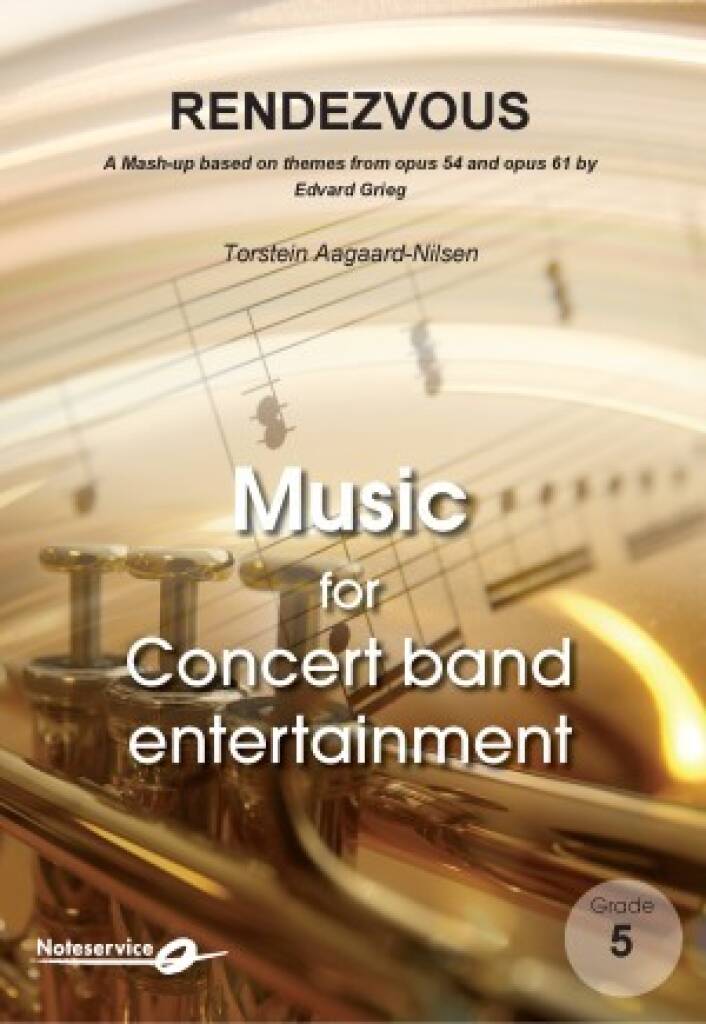
Rendezvous - Torstein Aagaard-Nilsen
Rendezvous was commissioned by Krohnengen Brass Band for their 50th Anniversary in 2019. This version for Concert Band was scored autumn 2020.Rendezvous is devided into three sections. Each section are referring to Edvard Grieg's own titles. but twisted, to make sure that everybody understand that this music is a mash-up of themes Edvard Grieg used in opus 54 (for piano) and opus 61 (songs for children).1. Trolltog med avsporing (March of the Trolls derailment)March of the Trolls is a famous part of Edvard Grieg lyric pieces, opus 54.2. Klokkeklang i feil sang (Bell ringing in wrong tune).Bell ringing show that Grieg was one of the first composers to write the way impressionists did. What happens if this beatiful piece is combined with several other themes from the same book? It somehow works in its own way.3. Pep talk til Blakken (Pep talk to Blakken)The riff used in the first part becomes an important part of the third part: a funky treat of the childrens song "Kveldssang for Blakken" (Evening song for Blakken).I felt that a rather tired old horse needed a pep talk more than a slow tune. So that is why you get this music(!) - and this is how my rendezvous with Grieg ends.Not sure what maestro Grieg would have thougt... But, I have read that the fiddlers that played the tunes Grieg used was not happy with the way Grieg used them.So there you go...Torstein Aagaard-Nilsen
Estimated dispatch 7-14 working days
-
 £113.30
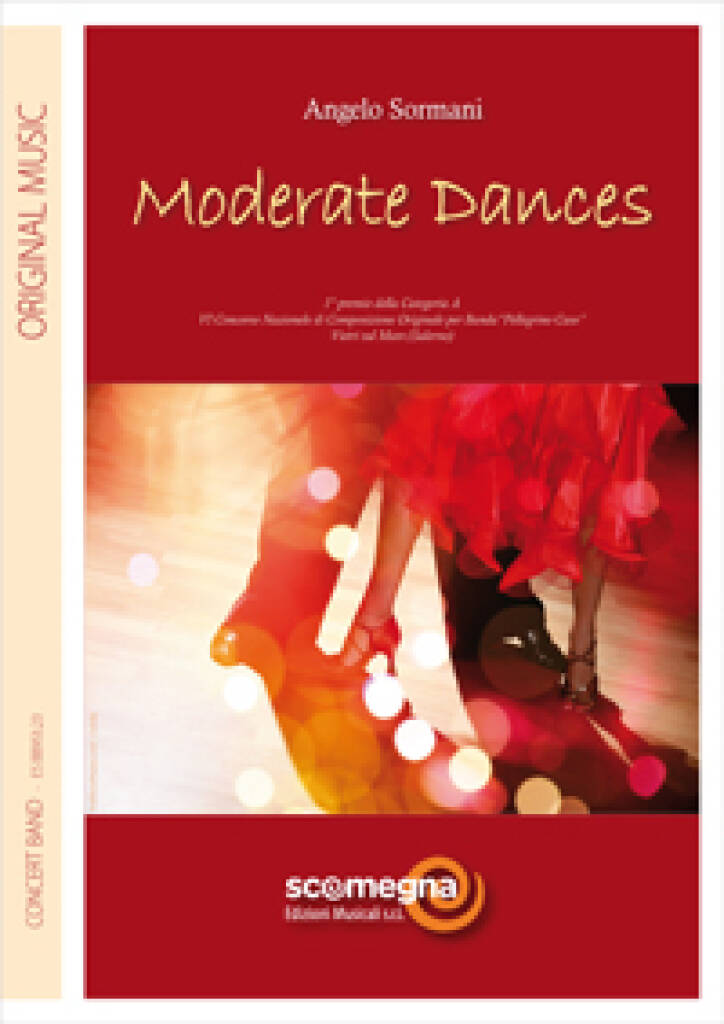
Moderate Dances - Angelo Sormani
This piece is a tribute to dance music, especially passionate, intense and meditative dance music. "Moderate Dances" is divided into three movements: a "Tango", a "Slow Waltz" and a "Bossa Nova". Each movement and each dance has its own particular characteristics but, when combined, these different rhythmic beats and times give the piece a feeling of completeness and uniformity. The Tango started to flourish in the suburbs of Buenos Aires in around 1880. There is still some doubt as to its origins, which may be Cuban (Habanera) but are probably African. It was most popular in Argentina and Brazil: here the male protagonist was originally the "gaucho" with his inseparable guitar, later to be replaced by the proud, elegant "compadre". By around 1910 the Tango had spread to Italy and France. New clubs opened, where the upper classes could watch and dance the Tango. Here the dance also underwent some rapid transformations. The exaggerated and extravagant gestures and body movements disappeared. Slow, gliding steps replaced the old rotational movements. The women's red ankle-boots and the partners "staring into each other's eyes" accentuated the erotic nature and sensuality of this dance. So much so that, in 1913, the German government banned soldiers from dancing the Tango. Those who broke the law were immediately discharged from the army. From a strictly musical perspective, the basic instruments were a flute, a harp (the diatonic harp typically played by the Indians of Paraguay) and a violin, or flute, guitar and violin or even clarinet, guitar and violin. These instruments were easy to transport, ideal for playing at parties, in the streets and in courtyards. The musicians played by ear, frequently improvising: there were no scores, no records, which is the main reason why it is impossible to trace the Tango back to its exact origins. However, the Tango's evolution (and growing popularity) was once again fostered by its fundamental ability to absorb "other" cultures, languages and sounds. And it was the arrival of the "bandoneon" (an accordion-like instrument that was invented in Germany and brought to Rio de la Plata by some immigrant), which replaced the flute, that marked the beginning of the Tango's huge success outside Argentina. A number of talented composers, above all the great Astor Piazzola (1921-1992), transformed the bandoneon from a simple accompanying instrument to a solo instrument that was to become the distinguishing feature of the 20th century Tango. The Slow Waltz originated from the Waltz, the typical dance of the Bavarian and Tyrolese peasants in the 1700s. It was composers like Johann Strauss, father and son, who carried the Waltz to its zenith in the 1800s, creating the sensual and melancholy yet joyful and charming dance we are all familiar with. When the Waltz first became popular in Germany, the members of respectable society were shocked at the closeness of the dancing partners, who had always previously danced apart. The main difference between the Waltz and Slow Waltz is that the latter has a slower, more expressive rhythm: the men wear tails and the women wear ball gowns decorated with beads and feathers and couples dance in graceful rotational movements. "Bossa Nova" is the title of the last movement in the piece. Jobim, the great Brazilian musician, described this musical genre as a combination of modern Jazz and Samba. Bossa Nova means "new wave". This was the name of the artistic and musical movement that evolved in Brazil in the late Fifties and was extremely popular throughout the Sixties. The songs are usually about love or social matters, drawing inspiration from the slums of Rio De Janeiro and the lives of their inhabitants. Bossa Nova, with its original compositions and the artistic talent of its musicians, also became hugely popular in the United States and Europe, and top Jazz musicians (Ella Fitzgerald, Stan Getz, Bob Cooper, Charlie Bird, Sonny Rollins, Dexter Gordon, Dizzy Gillespie) started to include Bossa in their repertoires.
Estimated dispatch 7-14 working days
-
 £115.60
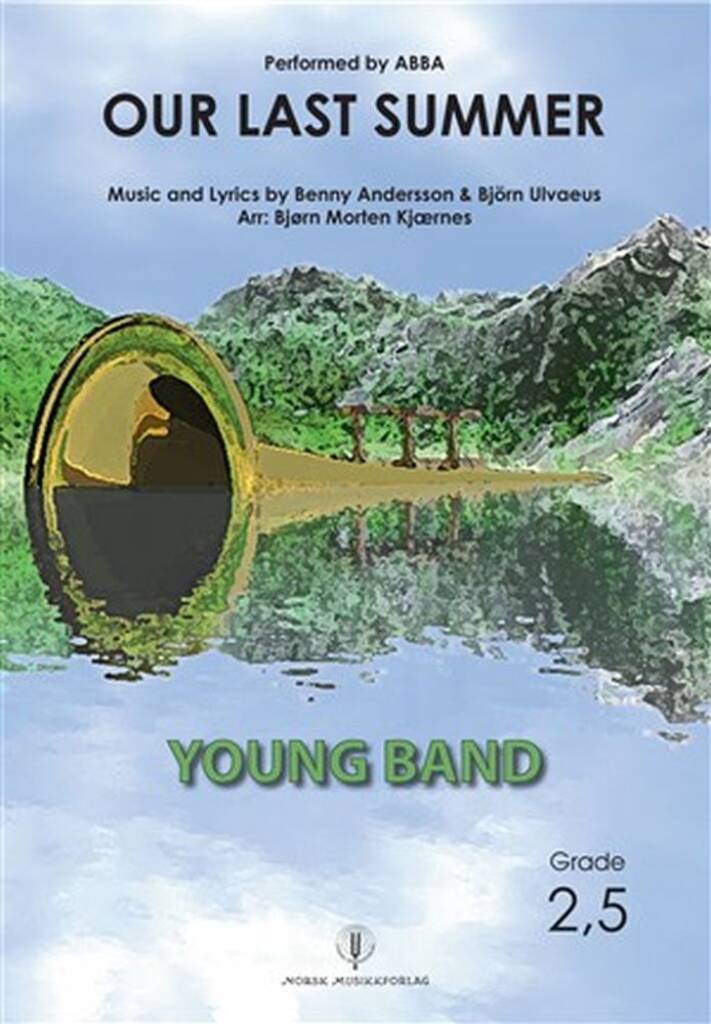
Our Last Summer - Benny Andersson
An exciting arrangement where almost all players have a bit of the melody line. There are many opportunities to give individual musicians soloistic challenges. Any bandmember should find something interesting in this piece. It will be possible to add vocals to the arrangement. A lovely melody with great expressions.Our Last Summer" is a song by the Swedish pop group ABBA from their seventh studio album, "Super Trouper," released in 1980. The song is indeed featured in the musical "Mamma Mia!", a little bit shortened and with small changes in the lyrics. The musical premiered in London's West End in 1999 and is a duet performed by the characters Harry Bright and Donna Sheridan, reflecting on their past romance during a summer spent in Paris.The song is primarily sung by Bjrn Ulvaeus, with backing vocals provided by Agnetha Fltskog and Anni-Frid Lyngstad, the female members of ABBA. Their harmonies contribute to the song's nostalgic and wistful atmosphere. The lyrics vividly describe the memories of the summer spent together, including scenes of walking along the Seine River in Paris and listening to French songs. The song also touches on the passage of time and the realization that the summer romance has ended.While not released as an official single in most countries, "Our Last Summer" still received considerable airplay and became a fan favorite. It charted in some European countries and has remained popular among ABBA fans over the years.
Estimated dispatch 7-14 working days
-
 £72.99
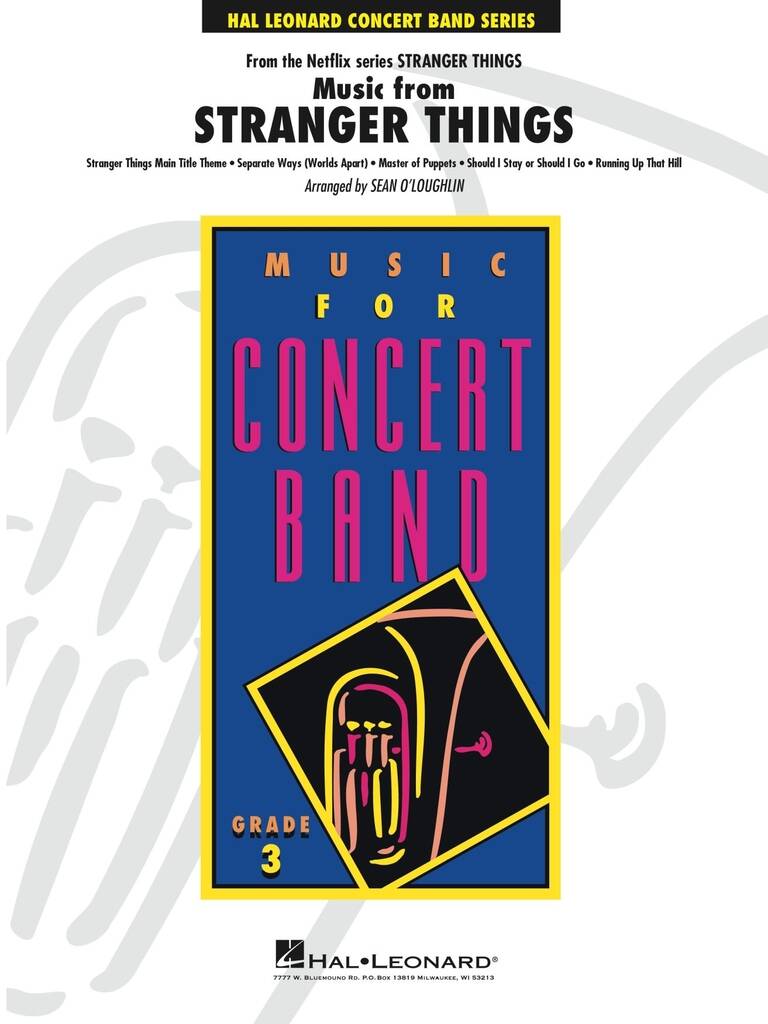
Music from Stranger Things
The popular TV series Stranger Things has reminded us of some of the great songs from the 1980s! With songs supporting key moments in the storyline, here is an emotion-packed medley of classic rock hits along with the iconic theme. Includes: Stranger Things Main Theme Should I Stay or Should I Go Master of Puppets Separate Ways (Worlds Apart) and Running Up That Hill.
Estimated dispatch 7-14 working days
-
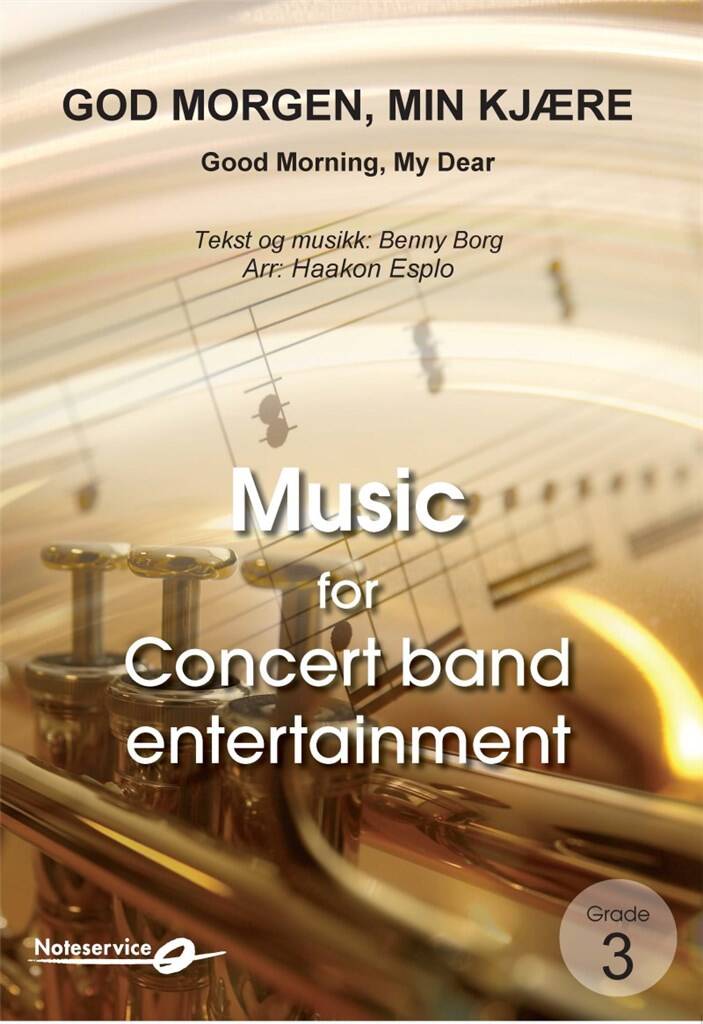 £149.40
God morgen, min kjre - Benny Borg
Most Scandinavian people know Benny Borg. As a guitarist, composer, lyric writer and a show actor, he has been producing great music for many decades. His most famous songs are probably "Balladen om Morgan Kane", "En spennende dag for Josefine" and "Den store dagen". When Benny Borg made his comeback with the new album, "Den strste reisen" in 2016, he wrote some of the strongest songs of his career. Maybe the strongest one is "Good morning, my dear", that he wrote to his wife after she died.
Estimated dispatch 7-14 working days
 View Music