
Results
-
 £50.50
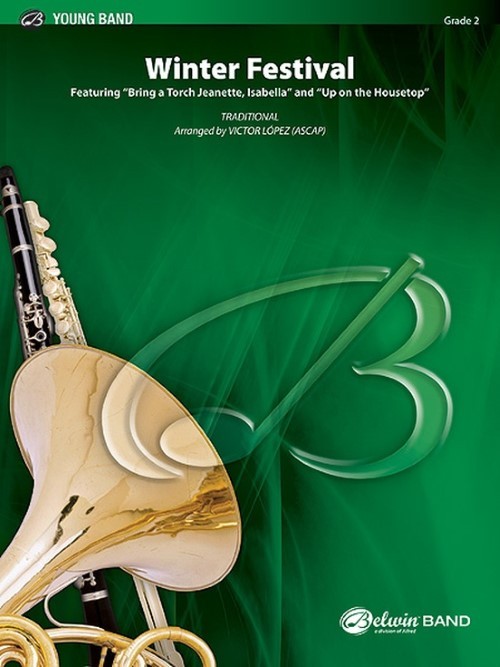
Winter Festival (Concert Band - Score and Parts) - Lopez, Victor
Tis the season! Every Christmas concert needs a fresh interpretation of songs that every audience can instantly identify, and Victor Lopez has chosen "Bring a Torch, Jeannette, Isabella," and "Up on the Housetop" as titles familiar to all. Charming simplicity with smooth transitions and a dramatic climax make this the perfect short medley for the forthcoming seasonal concert.Duration 2:45
Estimated dispatch 7-14 working days
-
 £109.99
Finale (from Symphony No.2, Little Russian) (Concert Band - Score and Parts) - Tchaikovsky, Peter Ilyich - Curnow, James
Throughout the years, composers have found inspiration for their works in simple folk melodies. Tchaikovsky loved Russian folk music all his life. Whilst composing his 2nd symphony, he was inspired by farmers' songs that fascinated him during a stay in Kamenka (near Kiev). He composed this symphony in 1872/73 and used the melody from the song The Stork as the main theme for the Finale. James Curnow's transcription of this 19th century masterpiece allows you to bring your contest or concert performance to a fitting Finale.Duration: 10.15
Estimated dispatch 7-14 working days
-
 £72.99
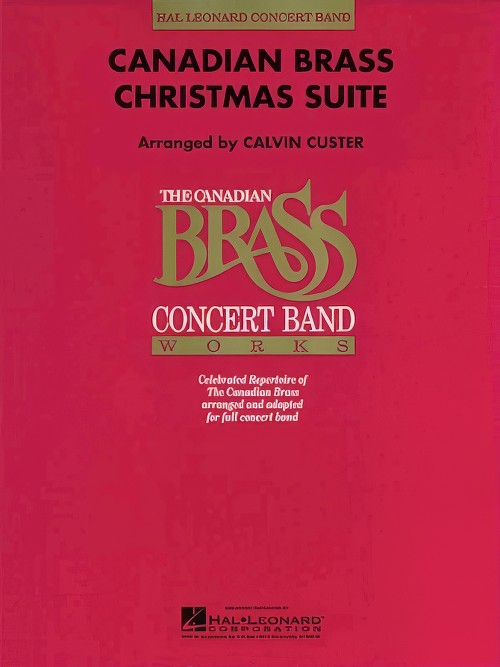
Canadian Brass Christmas Suite (Concert Band - Score and Parts) - Custer, Calvin
Over their twenty year span, the Canadian Brass have recorded many memorable Christmas songs that have become classic recordings heard everywhere. Here are six of their favourites, woven together into an outstanding medley for band.Includes:Jingle BellsGood King WenceslasLo, How a Rose E'er BloomingCarol of the BellsSilent NightO, Come All Ye Faithful
Estimated dispatch 7-14 working days
-
 £109.99
The Phantom of the Opera Wind Band Set (Score & Parts)
The musical Phantom of the Opera is full of many songs that are instantly recognised and it has been fundamental in making the genre of Musicals extremely popular with people of all ages. Peter Lavender's arrangement of this tender and moving ballad will sound fantastic with just about any band. 0:08:15
Estimated dispatch 7-14 working days
-
 £118.99
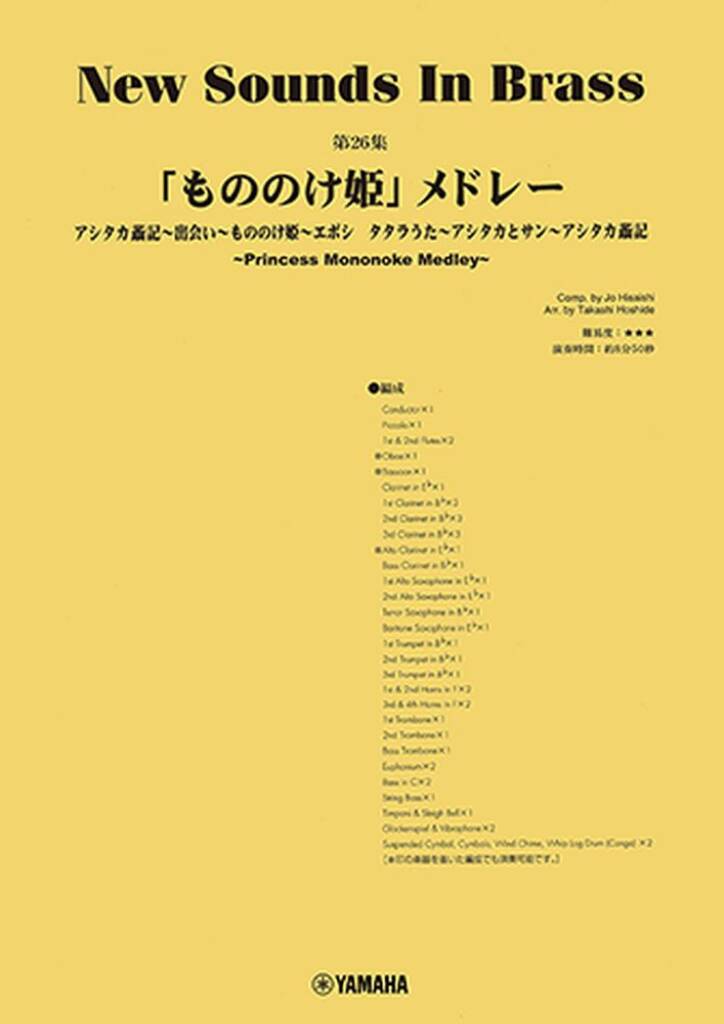
Princess Mononoke, Medley - Joe Hisaishi
Series: New Sounds in Brass (NSB); Duration: approx.8'50"; Composed by Joe Hisaishi; Arranged by Takashi Hoshide. Arranger Takashi Hoshide says, "I have selected beautiful melodies from the soundtrack of 'Princess Mononoke' (1997, directed by Hayao Miyazaki) and arranged them into a medley. What can be said about these songs as a whole is that they combine a grand continental scale with the delicacy that reflects Japanese emotions. Since there are no upbeat songs in this selection, I had to work hard on the arrangement, but this allowed for creating contrasts and transitions between each scene in the performance. 'Ashitaka Sekki (English title: The Legend of Ashitaka)' - 'Sekki' means a story that is not recorded but passed down orally. In this anime, this can be considered a sub-main theme. The song starts with a feeling that the story is about to begin and, once the theme kicks in, aim for a grand performance to convey its scale. 'Encounter' - This is the music that plays during the scene where the protagonist Ashitaka meets San. Interestingly, the motif of the main theme 'Princess Mononoke' is used in this melody. Here, let's pursue the shifts in the timbre of individual phrases, creating a beautiful and aesthetic soundscape. 'Princess Mononoke' - This is the main title of the anime. The melody line is carried by horns and trumpets."
Estimated dispatch 7-14 working days
-
 £149.40
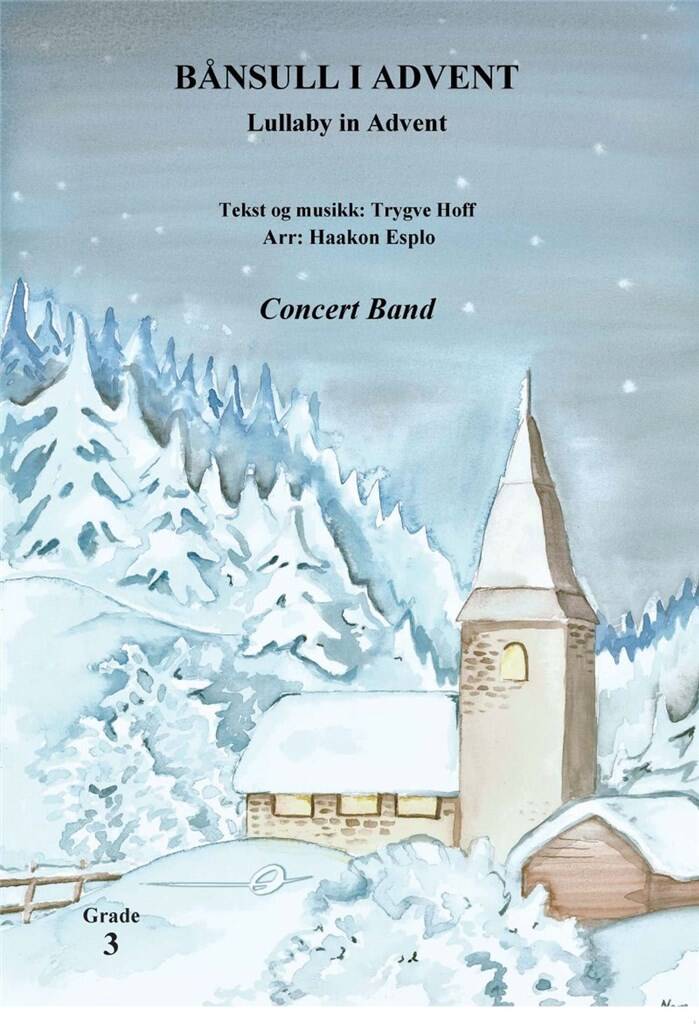
Bnsull i advent - Trygve Hoff
The composer and musician Trygve Hoff was born and raised at Rognan in Nordland and gained a lot of inspiration for his texts from the North Norwegian culture. He is a composer and copywriter of many of our most popular songs. "Ei hand holde i" and "Har en drm" with music by Svein Gundersen and especially his own "North Norwegian Christmas Psalm" are famous songs in Norway. "Lullaby in advent" may not be among his most famous songs, but it's a beautiful and thoughtful melody that will fit well with any Christmas concert. Hoff himself varied with musical styles on this song. This arrangement is written as a jazz-version with swing feel.
Estimated dispatch 7-14 working days
-
 £139.99
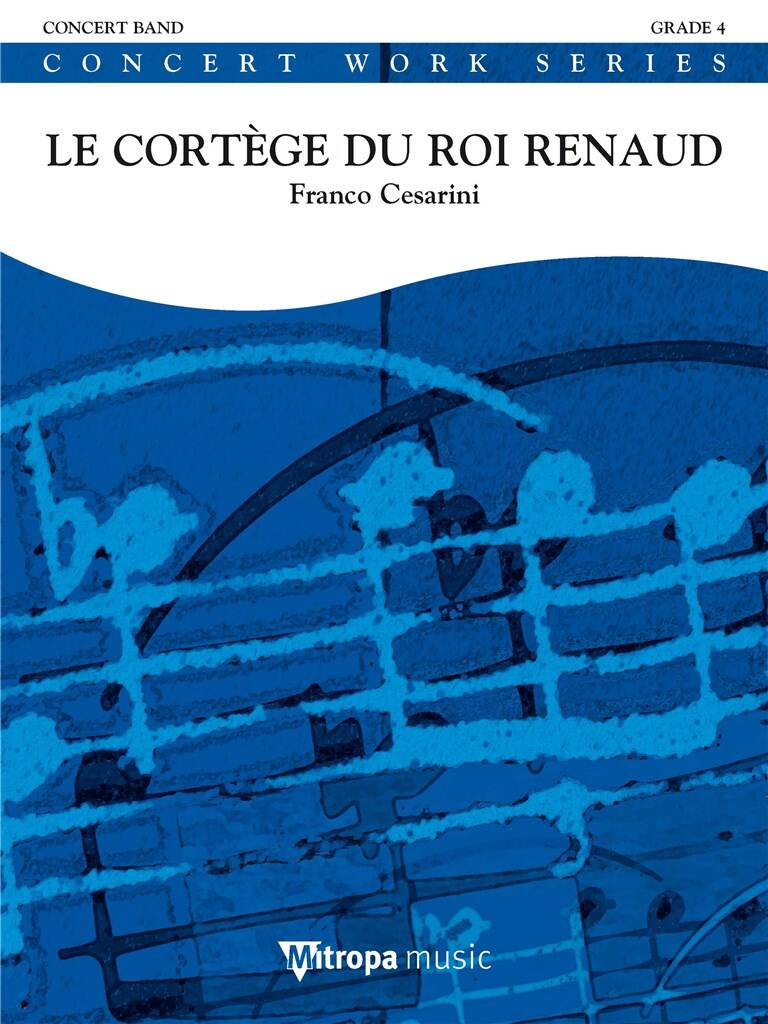
Le Cortge du Roi Renaud - Franco Cesarini
Le cortge du roi Renaud is a suite in five parts. It is based on tales that originated in southern European folk songs, dating back as far as the 16th century. A large portion of these songs are of the genre "Complaintes" songs in which the text gives a detailed description of events having a generally criminal or macabre character. The most familiar song to feature the tales of Roi Renaud is "Fualdes", consisting of 48 verses.The first part of the suite is based on the song "La Porcheronne" (The Swineherd). It telis the story of a young woman forced by her mother-in-law to tend pigs while her husband is away fighting in the war. She is freed only when her husband returns sevenyears later.The next part tells the story of "La mrquise Empoisonne" (The Poisoned Marquise). A marquise is coerced by her king to become his mistress. The jealous queen poisons her by means of a bouquet of deadly scented fiowers.Despite having the character of a merry dance, the third part, "La maumarie vengee" (The Avenged Wedding), expresses the touching story of Queen Clotilde, persecuted for her refusal to live according to the Aryan beliefs."La belle engloutie" (The Swallowed Beauty) relates the tale of the young wife of King Renaud. She cannot imagine a life without her husband, who was mortally wounded in the war, and begs the earth to open and swallow her up so thst she may rejoin her love.The gruesome content of the final part,"Le tueur de femmes" (The Wife Killer), bears a strong resembiance to the tale of Bluebeard. The story is about a young wife in danger of being drowned in a pond by her husband, which is what happened to her 13 predecessors. Thanks to her cunning, she manages to turn the tables and contrive her husband's demise.
Estimated dispatch 7-14 working days
-
 £109.99
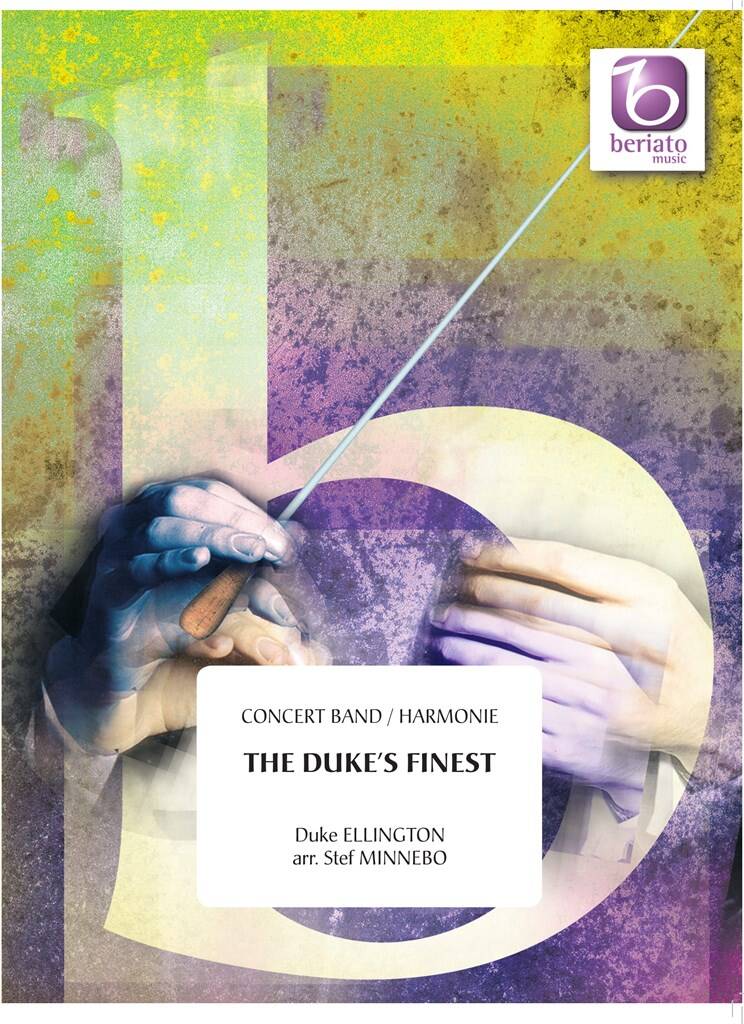
The Duke's Finest - Duke Ellington
Duke Ellington (1889- 1974) was a very successful American pianist, conductor, composer and arranger. His orchestra existed for decades and was able to survive thanks to the enormous hits that he and his collaborators wrote. Many of those songs now belong to the standard repertoire of jazz musicians.Billy Strayhorn (1915-1967) was arranger and composer with the orchestra from 1939, and also wrote Take the A-Train, which became the band's favourite song from 1941. Many recordings were made of it. Juan Tizol (1900-1984, valve trombone) played with Duke Ellington almost his entire career and composed Latin songs for the orchestra. He is co-composer of Caravan and Perdido.Just likein the original Duke Ellington concerts, the medley begins with Take the A-Train, followed by a number of classics from the repertoire of the legendary orchestra. In some songs there are soloists, notable a solo on kettledrums in C- Jam Blues. This solo can also be improvised.When rehearsing a lot of attention has to be paid to the drum and bass, which together form the rhythm section and drive the orchestra on. The other sections have to be tight and create a coherent swing effect. The swing shouldn't be too stiff, and can vary per song. For example in "In a Sentimental Mood", the melody can be played almost straight (classically), while the rhythm section continues swinging.
Estimated dispatch 7-14 working days
-
 £202.99
Gloriosa - Symphonic Poem for Band Movement 1 - Yasuhide Ito
A new acquisition by Bravo Music, this fresh printing of the 1990 masterwork by Yasuhide Ito features a newly engraved score, improved parts, good availability and value. This stirring and powerful homage to early Christianity in Japan profoundly and eloquently states the case of cross-cultural conflict and resolution.I. OratioThe Gregorian chant "Gloriosa" begins with the words, "O gloriosa Domina excelsa super sidera que te creavit provide lactasti sacro ubere." The first movement Oratio opens with bells sounding the hymn's initial phrases. The movement as a whole evokes the fervent prayers and suffering of the Crypto-Christians.II. CantusIII. Dies FestusCommissioned in 1989 and premiered in 1990 by the Sasebo Band of the Maritime Self-Defense Force of Kyushu, southern Japan.Gloriosa is inspired by the songs of the Kakure-Kirishitan (Crypto-Christians) of Kyushu who continued to practice their faith surreptitiously after the ban of Christianity, which had been introduced to that southern region in the mid-16th century by Roman Catholic missionary Francisco Xavier. The worship brought with it a variety of western music.Though Christianity was proscribed in 1612 by authority of the Tokugawa Shogunate in Edo (today Tokyo), Kakure-Kirishitan continued advocating sermons and disguised songs. Melodies and lyrics such as Gregorian chant were obliged to be "Japanized". For example, the Latin word "Gloriosa" was changed to "Gururiyoza." This adaptation of liturgy for survival inspired Ito to write this piece in order to reveal and solve this unique cultural mystery.The composer explains:"Nagasaki district in Kyushu region continued to accept foreign culture even during the seclusion period, as Japan's only window to the outer world. After the proscription of Christianity, the faith was preserved and handed down in secret in the Nagasaki and Shimabara areas of Kyushu region. My interest was piqued by the way in which the Latin words of Gregorian chants were gradually `Japanized' during the 200 years of hidden practice of the Christian faith. That music forms the basis of Gloriosa."Gloriosa, fusing Gregorian chant and Japanese folk music, displays the most sophisticated counterpoint yet found in any Japanese composition for wind orchestra.
Estimated dispatch 7-14 working days
-
£209.99
Gloriosa - Symphonic Poem for Band Mvt 2 & 3 - Yasuhide Ito
A new acquisition by Bravo Music, this fresh printing of the 1990 masterwork by Yasuhide Ito features a newly engraved score, improved parts, good availability and value. This stirring and powerful homage to early Christianity in Japan profoundly and eloquently states the case of cross-cultural conflict and resolution.I. OratioThe Gregorian chant "Gloriosa" begins with the words, "O gloriosa Domina excelsa super sidera que te creavit provide lactasti sacro ubere." The first movement Oratio opens with bells sounding the hymn's initial phrases. The movement as a whole evokes the fervent prayers and suffering of the Crypto-Christians.II. CantusIII. Dies FestusCommissioned in 1989 and premiered in 1990 by the Sasebo Band of the Maritime Self-Defense Force of Kyushu, southern Japan.Gloriosa is inspired by the songs of the Kakure-Kirishitan (Crypto-Christians) of Kyushu who continued to practice their faith surreptitiously after the ban of Christianity, which had been introduced to that southern region in the mid-16th century by Roman Catholic missionary Francisco Xavier. The worship brought with it a variety of western music.Though Christianity was proscribed in 1612 by authority of the Tokugawa Shogunate in Edo (today Tokyo), Kakure-Kirishitan continued advocating sermons and disguised songs. Melodies and lyrics such as Gregorian chant were obliged to be "Japanized". For example, the Latin word "Gloriosa" was changed to "Gururiyoza." This adaptation of liturgy for survival inspired Ito to write this piece in order to reveal and solve this unique cultural mystery.The composer explains:"Nagasaki district in Kyushu region continued to accept foreign culture even during the seclusion period, as Japan's only window to the outer world. After the proscription of Christianity, the faith was preserved and handed down in secret in the Nagasaki and Shimabara areas of Kyushu region. My interest was piqued by the way in which the Latin words of Gregorian chants were gradually `Japanized' during the 200 years of hidden practice of the Christian faith. That music forms the basis of Gloriosa."Gloriosa, fusing Gregorian chant and Japanese folk music, displays the most sophisticated counterpoint yet found in any Japanese composition for wind orchestra.
Estimated dispatch 7-14 working days
 View Music