
Results
-
 £89.10
Premiere Concertante (Concert Band - Score and Parts)
Based on the hymn tune "Holy, Holy, Holy." It is an inspirational piece to prepare and perform. Not technically difficult, it showcase a solo trio consisting of Flute, Clarinet and Alto Saxophone. This work will highlight any concert, especially those during holidays, and also makes an outstanding contest choice.
Estimated dispatch 7-14 working days
-
 £110.99
With Clouds Descending - Philip Sparke
With Clouds Descending is a fantasy on the powerful Advent hymn Helmsley which is long associated with another Advent hymn - Wesley's Lo! He Comes with Clouds Descending. The hymn tune is divided into an introduction and three complete verses of Helmsley, which surround a slower central section, whose melody is derived from the last line of the hymn tune. Philip Sparke's grade 4 arrangement of this majestic piece for Concert Band is equally suitable as a concert opener or a main concert piece.
Estimated dispatch 7-14 working days
-
 £84.99
Humanos - Jan Van der Roost
Jan Van der Roost was commissioned to write this hymn by the "International Association for Human Rights" in Frankfurt. The commission specified that the instrumentation of this simple hymn should be so, that it can be performed by a variety of combinations of players. The piece starts with an "intrada" for brass ensemble based on the first bars of the hymn, but is "ad libitum" and can therefore be omitted. The coda can also be left out, depending on the available instrumentation. The piece should be played "legato" to accentuate its hymn-like character.
Estimated dispatch 7-14 working days
-
 £89.99
1861 - Jonathan Newman
1861 is a lyric hymn/fantasia for young concert bands, based on the beautiful 19th century Anglican hymn Lead Me, Lord (written in 1861 by Charles Sebastian Wesley). The hymn itself features a gorgeous melodic line over biting harmonies and striking counterpoint, and provides the pillars for this work. First is a soloistic treatment, followed with a dramatic full band tutti, and finally a section of evocative humming. Throughout are unique textures and colorful improvisitory accompaniments.
Estimated dispatch 7-14 working days
-
 £89.99
Gelobet seist du, Jesu Christ
Gelobet seist du Jesu Christ (We Praise You Jesus Christ) is an old Christmas hymn dating from the 16th century, which can still be found in many hymnbooks today. John Blanken has created a varied and imaginative arrangement on four verses of the hymn. After the introduction, derived from the opening notes, the hymn is first accompanied by an agile harmonisation. Next, we hear the chorale in a four-part setting with a percussion accompaniment. Then follows a short prologue to the third verse and finally its time for fireworks as the arrangement takes a stylistic leap in time with the festive prelude to the fourth and last verse.
Estimated dispatch 7-14 working days
-
 £66.95
Blessed Hope - Brian Beck
Blessed Hope is a breathtaking arrangement of the beloved hymn "It Is Well With My Soul." The melody is beautifully intertwined throughout the ensemble, complemented by rich harmonies. Moving and captivating, this creative setting is perfect for any concert. Arranger Brian Beck honors the original hymn while adding depth of harmony and flow using the hymn lyrics to guide musical imagery. (3:30) The PerformancePlus+ series is an innovative addition to the ever-expanding MakeMusic Cloud interactive library. These engaging selections are presented with educational resources designed to enrich the rehearsal process and create outstanding performances. Including:Assignment, recording, and assessment tools within MakeMusic CloudPiece-specific exercises focused on skills and techniquesPrintable sheet music (with a standard MakeMusic Cloud subscription)Educational tips and suggestions to support learningAvailable in print and digital formats.
Estimated dispatch 7-14 working days
-
 £121.00
With Voice of Triumph Raised - Custer
Based on the well-loved hymn tune, "Madrid" ("Come, Christians, Join To Sing"), this creatively striking, rousing overture is perfectly suited to be a concert opener or closer. Energetic rhythms, effective orchestration, and warm harmonies make this piece a favorite of band members and concertgoers alike, while remaining practical for conductors to prepare, even with limited rehearsal time. Formally based on the structure of the hymn lyrics, this work features a vigorous opening section, followed by a lyrical repose that eventually transitions into an assertive, climactic crescendo to the finish. "With Voice of Triumph Raised" will be the highlight of your concert!
Estimated dispatch 7-14 working days
-
 £102.99
Three Blind Mice - Bert Appermont
This composition is based on the children's song 'Three Blind Mice', of which the melody is featured in a range of variations: in a canon, in inversion, in minor, transformed, with changing harmonisations and orchestrations, and in different times and tempi. The work consists of three continuous, contrasting movements: 1) Mouse March: The mice cheerfully set off while the original melody is presented as a march. - 2) Hymn: In a tuneful hymn, the wonderful praises of the life of mice are sung. - 3) Catch Me If You Can: In an animated chase, the farmer's wife is trying to catch the mice. Following a stirring acceleration, she cuts off their tails in accordance with the lyrics of the song. I hope this work, with its humorous touch, will be a welcome contribution to the expansion of interesting repertoire for the lower divisions. - Bert Appermont
Estimated dispatch 7-14 working days
-
 £205.30
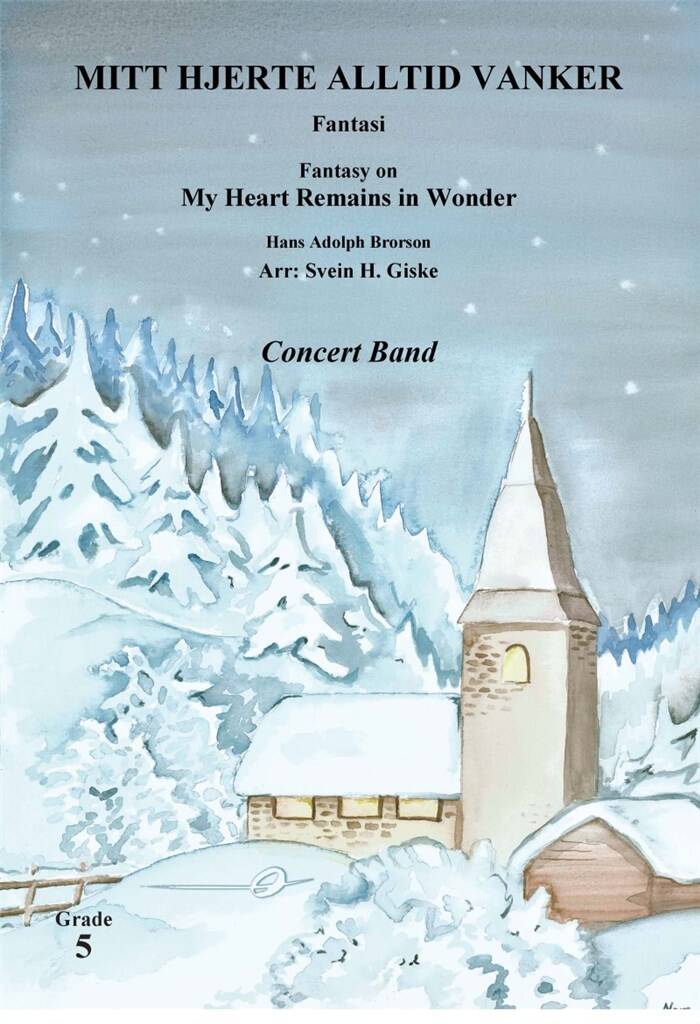
Mitt hjerte alltid vanker - Fantasi - Hans Adolph Brorson
This arrangement was commissioned by B3 (The Bergen Woodwind Ensemble). B3 is a large woodwind ensemble located in Bergen with a mix of professional and amateur players. My Heart Remains in Wonder is a well-known Christmas hymn in Scandinavia. I wanted my version to be different to the traditional hymn tune style in which it is normally performed. One day I was outside walking and this idea came to me: an ostinato-like, mechanical skeleton of arpeggio semiquavers on which I could 'hang' the melody. However, I also wanted to do the melody line a bit different. The inspiration for this comes from folk music and the way fiddlers hardly ever lift their bow off the strings when they play. Because of this, it is important that the melody is played in a very sostenuto style in this arrangement. The harmonies lie somewhere between jazz and folk music with a little nod towards Grieg (himself heavily influenced by folk music) in the slow middle section.
Estimated dispatch 7-14 working days
-
£233.99
Transfiguration - James Curnow
James Curnow explores many domains of sound with this wonderful piece. Four extensive variations, based on the melody of the hymn All Praise to You, Oh Lord, together form a beautiful piece of music for use in church services. The composer has a fresh view of the theme in the various fragments of the melody, from ethereal reflections to passionate joy. The last variation starts softly but energetically, and keeps developing using the last phrase of the melody - until the majestic highlight of this glorious hymn begins.
Estimated dispatch 7-14 working days
 View Music