
Results
-
 £76.99
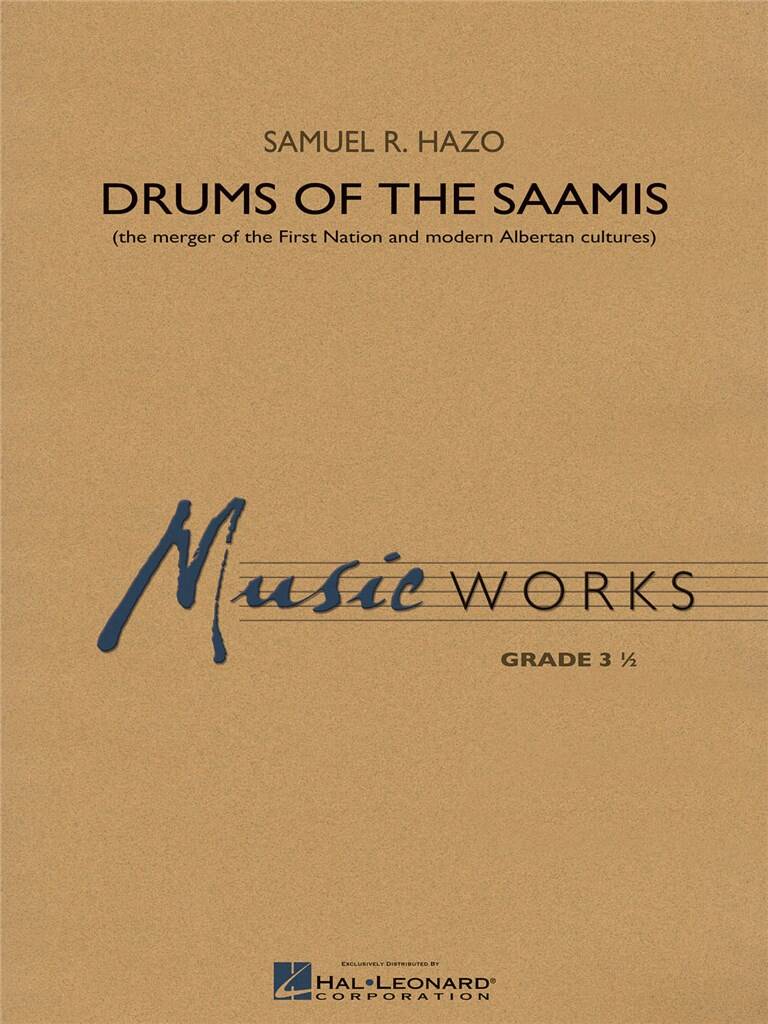
Drums of the Saamis - Samuel R. Hazo
Drums of the Saamis was commissioned by the Medicine Hat Concert Band Society of Medicine Hat, Alberta, Canada. The piece chronicles the merger of the First Nation (first natives) and modern Albertan cultures.The opening tribal drums followed by the haunting melody simulating the traditional wooden flute comprise two themes that are the foundation for the entire piece. Both elements are developed, varied and enhanced throughout as the listener senses the increasing influence of modern day Alberta through the use of modern sounding chords and rhythms.By the end, the marriage of the old and the new is complete. This powerful work closesas it began; a restatement of themes representing the musical and historical foundation of the region. Dur: 5:00
Estimated dispatch 7-14 working days
-
 £87.99
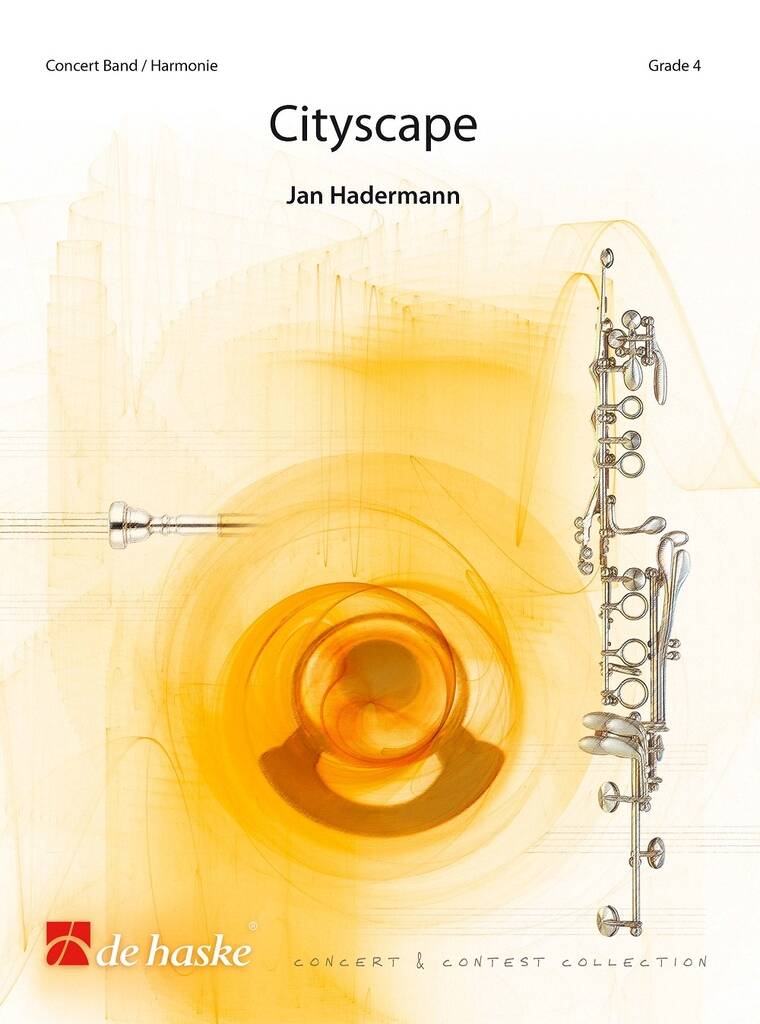
Cityscape - Jan Hadermann
Cityscape was commissioned by Concertband Antwerp for the 't Stad Geblazen event, which took place during the weekend of European Heritage Days in 2024.This short concert piece describes the impressions given when approaching and visiting the beautiful Belgian city of Antwerp from the north across the river Scheldt. We first pass the busy bustle of the harbour, home to the impressive Port House. Then the old city comes into view: the graceful cathedral tower, surrounded by smaller church spires and modern buildings, dominates the distinctive skyline. After setting foot ashore, we are struck by the beautiful way the medieval buildings here blend harmoniously with modern architecture. Our walk through the city continues: we visit the serene cathedral and are impressed by the picturesque faades of and around the city hall, as well as the Brabo Fountain on the Grote Markt (Large Market Square). Finally, it is time to enjoy the merriment taking place on the many squares of the lively city centre.
Estimated dispatch 7-14 working days
-
 £154.60
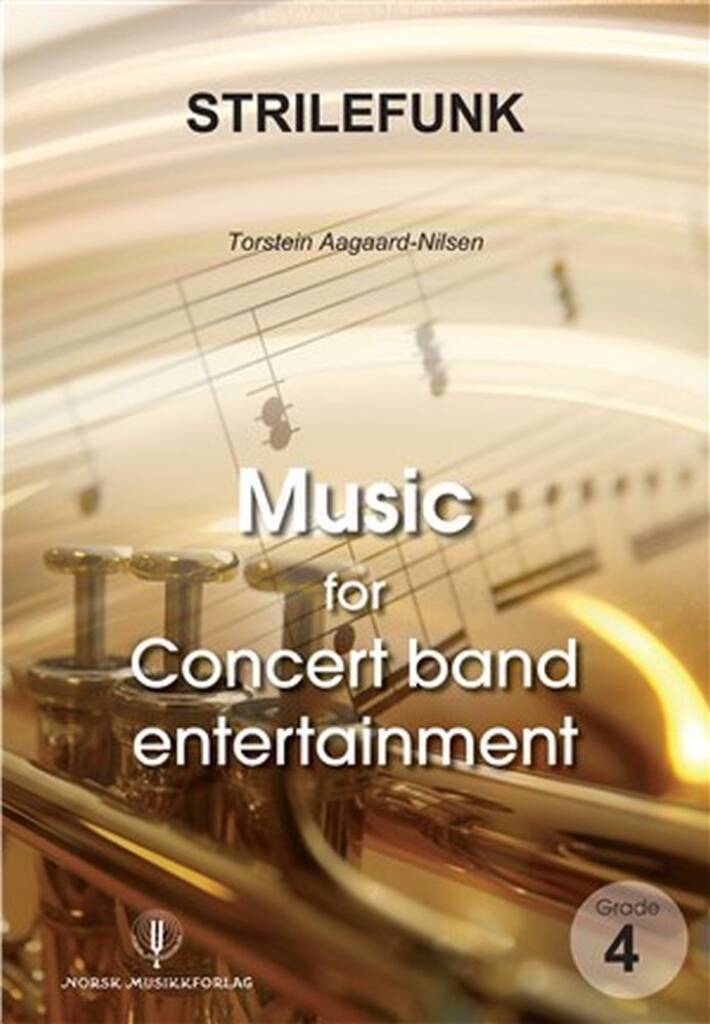
Strilefunk - Torstein Aagaard-Nilsen
The piece was commissioned by the Norwegian Band Federation Hordaland and conductor Arvid Anthun for the 40th anniversary of Hordaland Youth Band in 2021. The piece is dedicated to Arvid Anthun.Several of our collaborations have focused on arranging and performing Norwegian folk music. This includes projects such as the one Manger Musikklag undertook in the late 90s, concerts, and recording sessions with Jlster Musikklag alongside the fiddler Sigmund Eiks, and now, for the anniversary concert of Hordaland Youth Band.Arvid desired folk music in a modern style. We discussed, among other things, Valter Aamodt's "Hordarapsodi," and he mentioned my Norwegian Dance, a funky piece where I incorporate a folk tune as a crucial element. Aamodt uses the melody "Eg rodde meg ut," or "Strilevise," as it is also known, in his rhapsody.The concept for Strilefunk was therefore to utilize one of the melodies Aamodt had used and additionally draw on the rhythmic experiences that we, as modern band musicians, bring from other genres.Torstein Aagaard-Nilsen
Estimated dispatch 7-14 working days
-
 £236.00
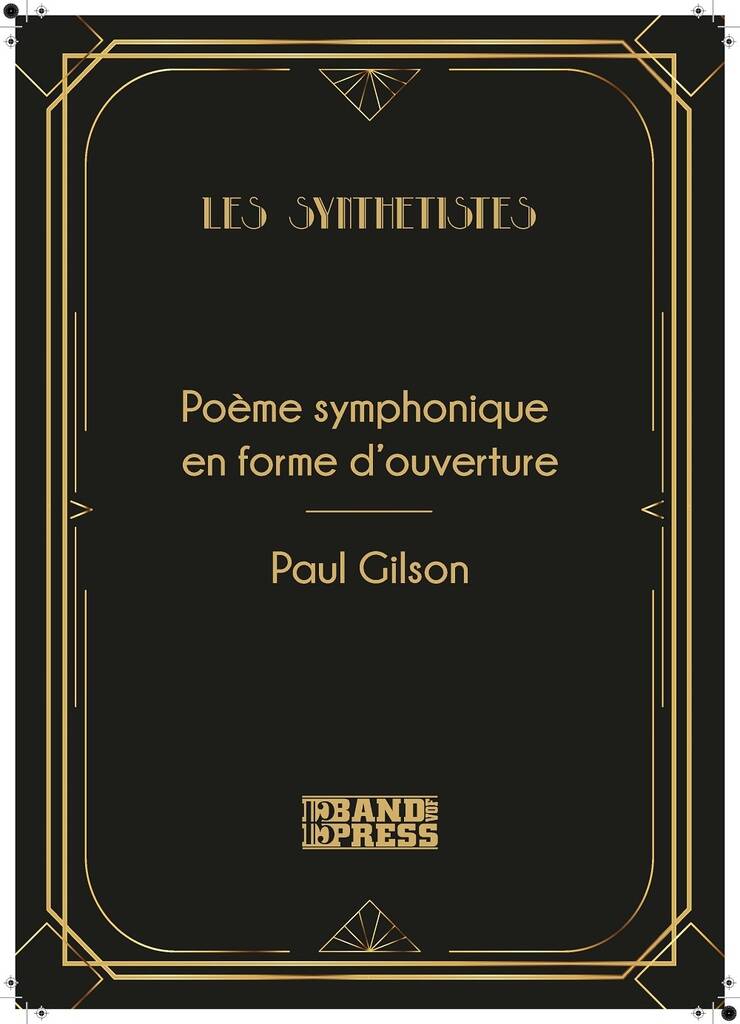
Pome symphonique en forme d'ouverture - Paul Gilson
In September 1925, on the occasion of the sixty-fifth birthday of their 'master', seven students of Paul Gilson gathered to form the first composers' collective in Belgian national music history. The members of Les Synthtistes (the Synthetists) are Ren Bernier, Francis de Bourguignon, Gaston Brenta, Tho Dejoncker, Marcel Poot, Maurice Schoemaker and Jules Strens. Their intent is twofold and both theoretical and practical. Les Synthtistes want to distinguish themselves as the 'Brussels seven' by breaking away from the prevailing late-romantic music of their time. Their theoretical aim is to synthesize the modern tendencies in music from 1925 onwards, to connect with the 'acquisitions of contemporary music' and to apply them within balanced and well-defined forms. Their practical goal is to make it easier to find a stage to perform their new symphonic music by uniting. In a period when there is no professional symphonic orchestra in Belgium, apart from the opera orchestra, they compose and transcribe their original symphonic works for wind band. They work together with Arthur Prevost and the Royal Band of the Belgian Guides which grew into a model instrumentation of 85 musicians during the interwar period. Thanks to Prevost and the Guides a unique collection of original, modern music for wind band by Les Synthtistes can be heard on the Brussels concert stages during the interwar period. Because only a few works of this unique, forgotten collection of 75 works were published, this unique canon remained largely unknown. Thanks to a historical study of sources by Luc Vertommen, these works for wind band are now, a century after their creation, made accessible and recorded for the first time.
Estimated dispatch 7-14 working days
-
 £236.00
Gil blas - Jules Strens
In September 1925, on the occasion of the sixty-fifth birthday of their 'master', seven students of Paul Gilson gathered to form the first composers' collective in Belgian national music history. The members of Les Synthtistes (the Synthetists) are Ren Bernier, Francis de Bourguignon, Gaston Brenta, Tho Dejoncker, Marcel Poot, Maurice Schoemaker and Jules Strens. Their intent is twofold and both theoretical and practical. Les Synthtistes want to distinguish themselves as the 'Brussels seven' by breaking away from the prevailing late-romantic music of their time. Their theoretical aim is to synthesize the modern tendencies in music from 1925 onwards, to connect with the 'acquisitions of contemporary music' and to apply them within balanced and well-defined forms. Their practical goal is to make it easier to find a stage to perform their new symphonic music by uniting. In a period when there is no professional symphonic orchestra in Belgium, apart from the opera orchestra, they compose and transcribe their original symphonic works for wind band. They work together with Arthur Prevost and the Royal Band of the Belgian Guides which grew into a model instrumentation of 85 musicians during the interwar period. Thanks to Prevost and the Guides a unique collection of original, modern music for wind band by Les Synthtistes can be heard on the Brussels concert stages during the interwar period. Because only a few works of this unique, forgotten collection of 75 works were published, this unique canon remained largely unknown. Thanks to a historical study of sources by Luc Vertommen, these works for wind band are now, a century after their creation, made accessible and recorded for the first time.
Estimated dispatch 7-14 working days
-
 £236.00
Tartarin de Tarascon - Marcel Poot
In September 1925, on the occasion of the sixty-fifth birthday of their 'master', seven students of Paul Gilson gathered to form the first composers' collective in Belgian national music history. The members of Les Synthtistes (the Synthetists) are Ren Bernier, Francis de Bourguignon, Gaston Brenta, Tho Dejoncker, Marcel Poot, Maurice Schoemaker and Jules Strens. Their intent is twofold and both theoretical and practical. Les Synthtistes want to distinguish themselves as the 'Brussels seven' by breaking away from the prevailing late-romantic music of their time. Their theoretical aim is to synthesize the modern tendencies in music from 1925 onwards, to connect with the 'acquisitions of contemporary music' and to apply them within balanced and well-defined forms. Their practical goal is to make it easier to find a stage to perform their new symphonic music by uniting. In a period when there is no professional symphonic orchestra in Belgium, apart from the opera orchestra, they compose and transcribe their original symphonic works for wind band. They work together with Arthur Prevost and the Royal Band of the Belgian Guides which grew into a model instrumentation of 85 musicians during the interwar period. Thanks to Prevost and the Guides a unique collection of original, modern music for wind band by Les Synthtistes can be heard on the Brussels concert stages during the interwar period. Because only a few works of this unique, forgotten collection of 75 works were published, this unique canon remained largely unknown. Thanks to a historical study of sources by Luc Vertommen, these works for wind band are now, a century after their creation, made accessible and recorded for the first time.
Estimated dispatch 7-14 working days
-
 £123.20
Rcitatif et Ronde - Francis de Bourguignon
In September 1925, on the occasion of the sixty-fifth birthday of their 'master', seven students of Paul Gilson gathered to form the first composers' collective in Belgian national music history. The members of Les Synthtistes (the Synthetists) are Ren Bernier, Francis de Bourguignon, Gaston Brenta, Tho Dejoncker, Marcel Poot, Maurice Schoemaker and Jules Strens. Their intent is twofold and both theoretical and practical. Les Synthtistes want to distinguish themselves as the 'Brussels seven' by breaking away from the prevailing late-romantic music of their time. Their theoretical aim is to synthesize the modern tendencies in music from 1925 onwards, to connect with the 'acquisitions of contemporary music' and to apply them within balanced and well-defined forms. Their practical goal is to make it easier to find a stage to perform their new symphonic music by uniting. In a period when there is no professional symphonic orchestra in Belgium, apart from the opera orchestra, they compose and transcribe their original symphonic works for wind band. They work together with Arthur Prevost and the Royal Band of the Belgian Guides which grew into a model instrumentation of 85 musicians during the interwar period. Thanks to Prevost and the Guides a unique collection of original, modern music for wind band by Les Synthtistes can be heard on the Brussels concert stages during the interwar period. Because only a few works of this unique, forgotten collection of 75 works were published, this unique canon remained largely unknown. Thanks to a historical study of sources by Luc Vertommen, these works for wind band are now, a century after their creation, made accessible and recorded for the first time.
Estimated dispatch 7-14 working days
-
 £236.00
Zo'har - Gaston Brenta
In September 1925, on the occasion of the sixty-fifth birthday of their 'master', seven students of Paul Gilson gathered to form the first composers' collective in Belgian national music history. The members of Les Synthtistes (the Synthetists) are Ren Bernier, Francis de Bourguignon, Gaston Brenta, Tho Dejoncker, Marcel Poot, Maurice Schoemaker and Jules Strens. Their intent is twofold and both theoretical and practical. Les Synthtistes want to distinguish themselves as the 'Brussels seven' by breaking away from the prevailing late-romantic music of their time. Their theoretical aim is to synthesize the modern tendencies in music from 1925 onwards, to connect with the 'acquisitions of contemporary music' and to apply them within balanced and well-defined forms. Their practical goal is to make it easier to find a stage to perform their new symphonic music by uniting. In a period when there is no professional symphonic orchestra in Belgium, apart from the opera orchestra, they compose and transcribe their original symphonic works for wind band. They work together with Arthur Prevost and the Royal Band of the Belgian Guides which grew into a model instrumentation of 85 musicians during the interwar period. Thanks to Prevost and the Guides a unique collection of original, modern music for wind band by Les Synthtistes can be heard on the Brussels concert stages during the interwar period. Because only a few works of this unique, forgotten collection of 75 works were published, this unique canon remained largely unknown. Thanks to a historical study of sources by Luc Vertommen, these works for wind band are now, a century after their creation, made accessible and recorded for the first time.
Estimated dispatch 7-14 working days
-
 £87.20
Guitenstreken-Gaminerie - Theo Dejoncker
In September 1925, on the occasion of the sixty-fifth birthday of their 'master', seven students of Paul Gilson gathered to form the first composers' collective in Belgian national music history. The members of Les Synthtistes (the Synthetists) are Ren Bernier, Francis de Bourguignon, Gaston Brenta, Tho Dejoncker, Marcel Poot, Maurice Schoemaker and Jules Strens. Their intent is twofold and both theoretical and practical. Les Synthtistes want to distinguish themselves as the 'Brussels seven' by breaking away from the prevailing late-romantic music of their time. Their theoretical aim is to synthesize the modern tendencies in music from 1925 onwards, to connect with the 'acquisitions of contemporary music' and to apply them within balanced and well-defined forms. Their practical goal is to make it easier to find a stage to perform their new symphonic music by uniting. In a period when there is no professional symphonic orchestra in Belgium, apart from the opera orchestra, they compose and transcribe their original symphonic works for wind band. They work together with Arthur Prevost and the Royal Band of the Belgian Guides which grew into a model instrumentation of 85 musicians during the interwar period. Thanks to Prevost and the Guides a unique collection of original, modern music for wind band by Les Synthtistes can be heard on the Brussels concert stages during the interwar period. Because only a few works of this unique, forgotten collection of 75 works were published, this unique canon remained largely unknown. Thanks to a historical study of sources by Luc Vertommen, these works for wind band are now, a century after their creation, made accessible and recorded for the first time.
Estimated dispatch 7-14 working days
-
 £236.00
Brueghel Suite - Maurice Schoemaker
In September 1925, on the occasion of the sixty-fifth birthday of their 'master', seven students of Paul Gilson gathered to form the first composers' collective in Belgian national music history. The members of Les Synthtistes (the Synthetists) are Ren Bernier, Francis de Bourguignon, Gaston Brenta, Tho Dejoncker, Marcel Poot, Maurice Schoemaker and Jules Strens. Their intent is twofold and both theoretical and practical. Les Synthtistes want to distinguish themselves as the 'Brussels seven' by breaking away from the prevailing late-romantic music of their time. Their theoretical aim is to synthesize the modern tendencies in music from 1925 onwards, to connect with the 'acquisitions of contemporary music' and to apply them within balanced and well-defined forms. Their practical goal is to make it easier to find a stage to perform their new symphonic music by uniting. In a period when there is no professional symphonic orchestra in Belgium, apart from the opera orchestra, they compose and transcribe their original symphonic works for wind band. They work together with Arthur Prevost and the Royal Band of the Belgian Guides which grew into a model instrumentation of 85 musicians during the interwar period. Thanks to Prevost and the Guides a unique collection of original, modern music for wind band by Les Synthtistes can be heard on the Brussels concert stages during the interwar period. Because only a few works of this unique, forgotten collection of 75 works were published, this unique canon remained largely unknown. Thanks to a historical study of sources by Luc Vertommen, these works for wind band are now, a century after their creation, made accessible and recorded for the first time.
Estimated dispatch 7-14 working days
 View Music