
Results
-
 £248.99
The White Tower - Otto M. Schwarz
The year is 1798 and thieves, robbers, and bandits prowl the countryside, wreaking havoc wherever they go and more often than not escaping without so much as a scratch. This was, however, not the case with a supposedly well-planned assault on the German town of Daaden, during which 20 long sought-after crooks from Germany, France, and Holland where captured. Otto M. Schwarz' exciting musical montage lets people experience the planning, assault, and attempted retreat first hand!
Estimated dispatch 7-14 working days
-
 £84.99
Morgens um Sieben (ist die Welt noch in Ordnung) - James Last
German band leader, composer, arranger and music producer James Last has created many hits during his long career. Particularly memorable are the theme tunes and soundtracks that he composed for television programs and films. Gilbert Tinner has arranged Last's award-winning melody from the 1968 TV-film Morgens um sieben (ist die Welt noch in Ordnung) for concert band.
Estimated dispatch 7-14 working days
-
 £76.99
Summertime Party - Johan Nijs
After a long winter and a rainy spring it's that much lovelier when at last the summer appears! This sunny composition by Johan Nijs in a Caribbean style awakens thoughts of summer parties out in the open and above all creates a great mood! Whether at an open-air concert or indeed indoors, no one will be able to sit still with this snappy piece!
Estimated dispatch 7-14 working days
-
 £154.99
Old Russian Romances - Franco Cesarini
Foreign culture - art, literature and above all music - have long fascinated Franco Cesarini and often serve as a source of inspiration for his compositions. For Old Russian Romances, Cesarini immersed himself in the study of Russian folksongs and eventually selected a number of joyful and also melancholy melodies which he worked into his composition with typical craft and imagination but also with respect for the original tunes.
Estimated dispatch 7-14 working days
-
 £289.99
Bulgarian Dances (part II) - Franco Cesarini
Bulgarian folk music has a long tradition and numerous typical characteristics, such as particular dissonances and complex, irregular rhythms. In Bulgarian Dances (Part II) (which can be performed together with the previously published title Bulgarian Dances) Franco Cesarini has preserved the original spirit of Bulgarian folk music, yet has imbued it with a symphonic character and brought it into the concert hall. The three different movements give us a meditative, moving folksong and a lively dance, before a distinctly symphonic part leads to a glittering finale.
Estimated dispatch 7-14 working days
-
 £87.50
A Most Wonderful Christmas
Some of the most popular Christmas selections of all time are included in this delightful arrangement, A Most Wonderful Christmas. Robert Sheldon has included "Winter Wonderland," "I'll Be Home for Christmas," "Santa Claus Is Comin' to Town," "Have Yourself a Merry Little Christmas," and "It's the Most Wonderful Time of the Year" in this very tasteful setting for band. Solo opportunities abound and are cross-cued to allow your best players to shine, while the swing sections and jazz inspired ballads will have your audience tapping their feet and singing these tunes long after the concert is over. This is certain to become a repertoire standard for bands year after year!(7:40)
Estimated dispatch 7-14 working days
-
 £53.95
Monsters, Unite! - Kelly Dugger
Monsters, Unite! by Kelly Dugger is a fun beginning band piece that is sure to be a hit, not only at Halloween time but all year round. Monsters all around the world are waking up to a calling to unite. Some are big, hairy creatures, and others are delicate and fairy-like. They walk and fly long distances to find each other. In the end, they all come together, marching as one. Just when you think they've marched off into the distance, they come together to surprise the audience. Unique percussion effects---timpani glissando and theremin (or flexatone)---add to the spooky sound. A tuba solo at the end is followed by a surprising scream that will leave the performers and the audience giggling!
Estimated dispatch 7-14 working days
-
 £54.95
Sakura (Cherry Blossoms)
Sakura is an ancient Japanese children's song. It is traditionally accompanied by a koto (a long 13-stringed instrument) or a shamisen (a 3-stringed lute) and various gongs, drums and bells. This is a musical visit to a culture quite different from our own. Captivating! (2:00) This title is available in SmartMusic.
Estimated dispatch 7-14 working days
-
 £118.99
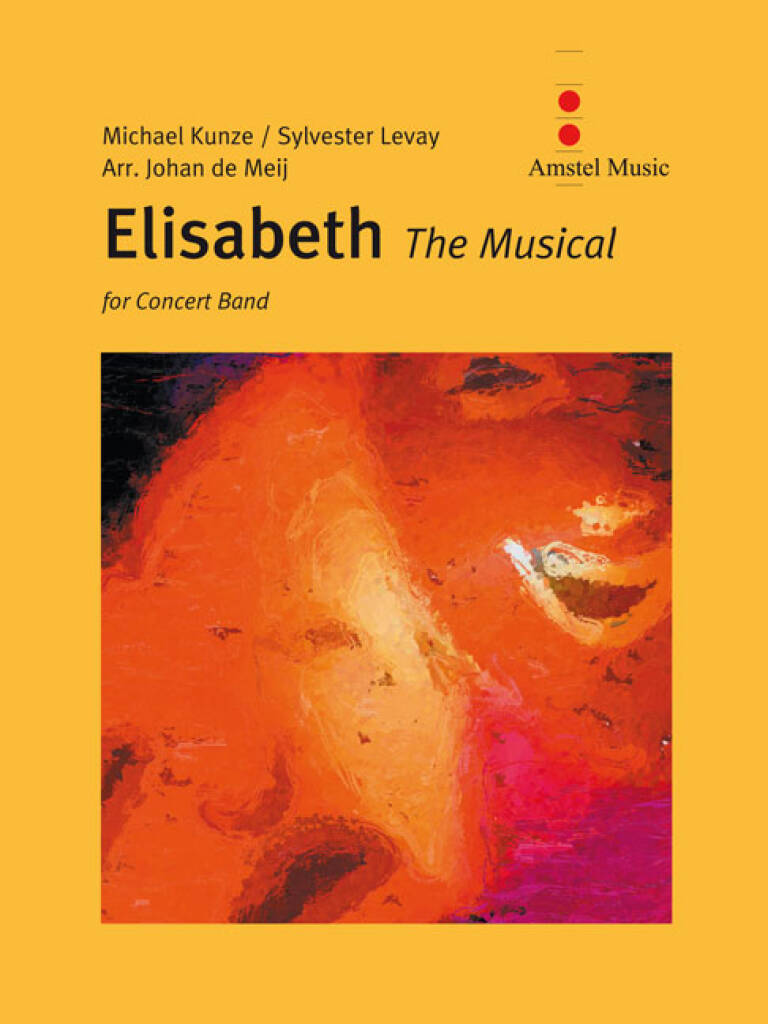
Elisabeth - Sylvester Levay
The world premiere of the musical Elisabeth took place in Vienna on September 3, 1992. From the great acclaim with which the musical was received, it became clear that the life of the Empress of Austria still appeals to the imagination. Although Elisabeth's life (1837-1898) as an Empress has a fairy-tale-like beginning, it takes a gloomy turn. In this production, Luigi Lucheni, the man who finally takes her life, tells her story. Death plays a major role throughout Elisabeth's life. In the musical, an equally mysterious and attractive man portrays the phenomenon of death, seducing her to the realm of death time after time. Elisabeth's life resembles a fairy tale when shemarries the Emperor Franz Joseph at the age of sixteen. Her mother-in-law, Archduchess Sophie, does not make it easy on Elisabeth. But it is life itself that puts the Empress to the test. First, her youngest daughter dies. Then, not long after her son Rudolf is born, her happiness is clouded when her mother-in-law decides she must take pity on him. After her husband's unfaithfulness and Sophie's death, Elisabeth is so disillusioned that she chooses a travelling existence without realizing her husband and her son, Rudolf, miss her. Rudolf's loneliness is one of the reasons he commits suicide. The accumulation of disappointments in Elisabeth's life almost drives her into the arms of Death. In the end, however, it is Lucheni who kills her.
Estimated dispatch 7-14 working days
-
 £69.99
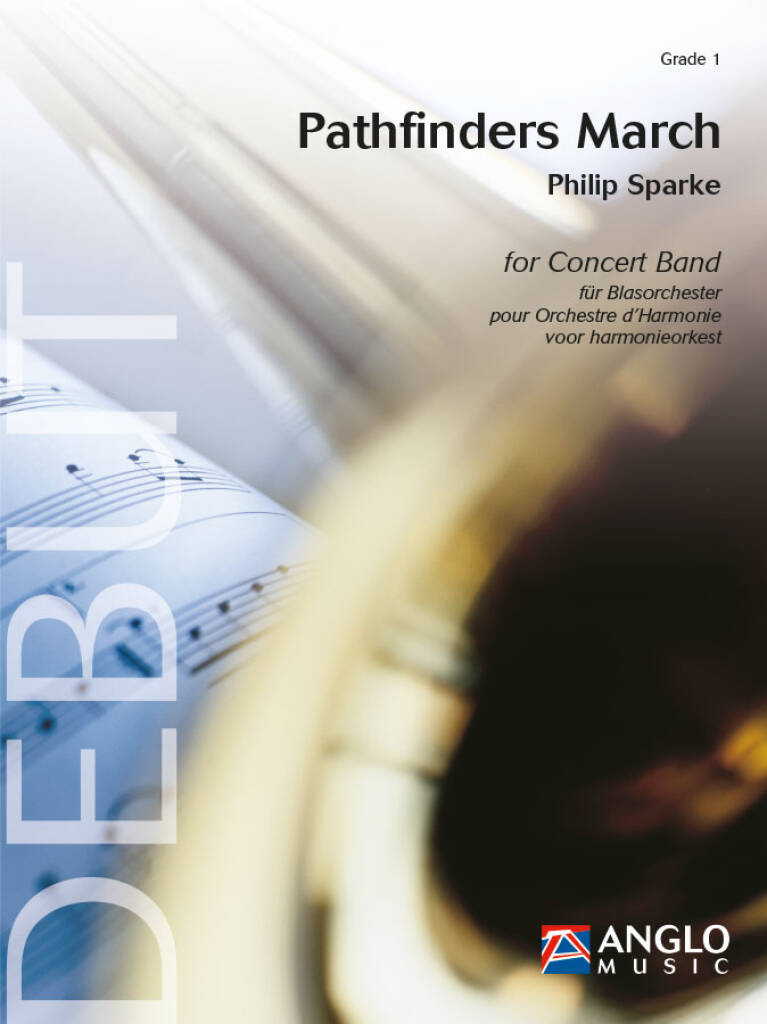
Pathfinders March - Philip Sparke
Composer Philip Sparke has long been fascinated by history's pioneers. In all fields of human activity, there has been someone with enormous vision who has made the first step into the unknown. Explorers have found new lands, doctors have discovered new medicines and scientists are pushing the bounds of technology ever further. But there was always one 'pathfinder', someone who was not afraid of the unknown, who dared to go one step further than anyone before him. The march is dedicated those pioneers who have risked everything for the sake of their vision.
Estimated dispatch 7-14 working days
 View Music