
Results
-
 £137.70
..., koinn sprkk - Egil Monn-Iversen
Johan Falkberget wrote the novel Br Brson Jr. in 1920. It is the story of the naive bachelor and trader Br Brson Jr. and his fight for wealth and fame. On his way, he face prejudices and envy on the countryside and investors in the bigger citites. All of them tries to exploit his credulity. The musikal, based on the novel by Johan Falkberget, was written by Egil Monn-Iversen (music) and Harald Tusberg (lyrics) for Det Norske Teatret in 1972. It was a great success from the very beginning. In 1974, a movie version of Br Brson Jr. was produced. Also this with great success.
Estimated dispatch 7-14 working days
-
 £137.70
Ei jomfru - Egil Monn-Iversen
Johan Falkberget wrote the novel Br Brson Jr. in 1920. It is the story of the naive bachelor and trader Br Brson Jr. and his fight for wealth and fame. On his way, he face prejudices and envy on the countryside and investors in the bigger citites. All of them tries to exploit his credulity. The musikal, based on the novel by Johan Falkberget, was written by Egil Monn-Iversen (music) and Harald Tusberg (lyrics) for Det Norske Teatret in 1972. It was a great success from the very beginning. In 1974, a movie version of Br Brson Jr. was produced. Also this with great success.
Estimated dispatch 7-14 working days
-
 £137.70
Nils kjrleiksvise - Egil Monn-Iversen
Johan Falkberget wrote the novel Br Brson Jr. in 1920. It is the story of the naive bachelor and trader Br Brson Jr. and his fight for wealth and fame. On his way, he face prejudices and envy on the countryside and investors in the bigger citites. All of them tries to exploit his credulity. The musikal, based on the novel by Johan Falkberget, was written by Egil Monn-Iversen (music) and Harald Tusberg (lyrics) for Det Norske Teatret in 1972. It was a great success from the very beginning. In 1974, a movie version of Br Brson Jr. was produced. Also this with great success.
Estimated dispatch 7-14 working days
-
 £137.70
Wienerbrd-Tango - Egil Monn-Iversen
Johan Falkberget wrote the novel Br Brson Jr. in 1920. It is the story of the naive bachelor and trader Br Brson Jr. and his fight for wealth and fame. On his way, he face prejudices and envy on the countryside and investors in the bigger citites. All of them tries to exploit his credulity. The musikal, based on the novel by Johan Falkberget, was written by Egil Monn-Iversen (music) and Harald Tusberg (lyrics) for Det Norske Teatret in 1972. It was a great success from the very beginning. In 1974, a movie version of Br Brson Jr. was produced. Also this with great success.
Estimated dispatch 7-14 working days
-
 £137.70
Omforlatels O.C. Bentzen - Egil Monn-Iversen
Johan Falkberget wrote the novel Br Brson Jr. in 1920. It is the story of the naive bachelor and trader Br Brson Jr. and his fight for wealth and fame. On his way, he face prejudices and envy on the countryside and investors in the bigger citites. All of them tries to exploit his credulity. The musikal, based on the novel by Johan Falkberget, was written by Egil Monn-Iversen (music) and Harald Tusberg (lyrics) for Det Norske Teatret in 1972. It was a great success from the very beginning. In 1974, a movie version of Br Brson Jr. was produced. Also this with great success.
Estimated dispatch 7-14 working days
-
 £137.70
Shimmy - Egil Monn-Iversen
Johan Falkberget wrote the novel Br Brson Jr. in 1920. It is the story of the naive bachelor and trader Br Brson Jr. and his fight for wealth and fame. On his way, he face prejudices and envy on the countryside and investors in the bigger citites. All of them tries to exploit his credulity. The musikal, based on the novel by Johan Falkberget, was written by Egil Monn-Iversen (music) and Harald Tusberg (lyrics) for Det Norske Teatret in 1972. It was a great success from the very beginning. In 1974, a movie version of Br Brson Jr. was produced. Also this with great success.
Estimated dispatch 7-14 working days
-
 £137.70
Lkka si Pamfilius - Egil Monn-Iversen
Johan Falkberget wrote the novel Br Brson Jr. in 1920. It is the story of the naive bachelor and trader Br Brson Jr. and his fight for wealth and fame. On his way, he face prejudices and envy on the countryside and investors in the bigger citites. All of them tries to exploit his credulity. The musikal, based on the novel by Johan Falkberget, was written by Egil Monn-Iversen (music) and Harald Tusberg (lyrics) for Det Norske Teatret in 1972. It was a great success from the very beginning. In 1974, a movie version of Br Brson Jr. was produced. Also this with great success.
Estimated dispatch 7-14 working days
-
 £239.99
Energico - Oliver Waespi
Energico is the third movement from the composition Out of Earth, a musical exploration of the creation of the myth 'Ovid's Metamorphoses'.This myth depicts humanity's path, and is taken from a golden age of the past. It describes the destruction of the Great Flood, to the re-building of life on earth. Out of Earth was created as a commission for the Aulos Concert Band and was premiered by the band in October 2015. It is a very challenging piece of music, which is perfect for contests or high-end concerts.
Estimated dispatch 7-14 working days
-
 £109.99
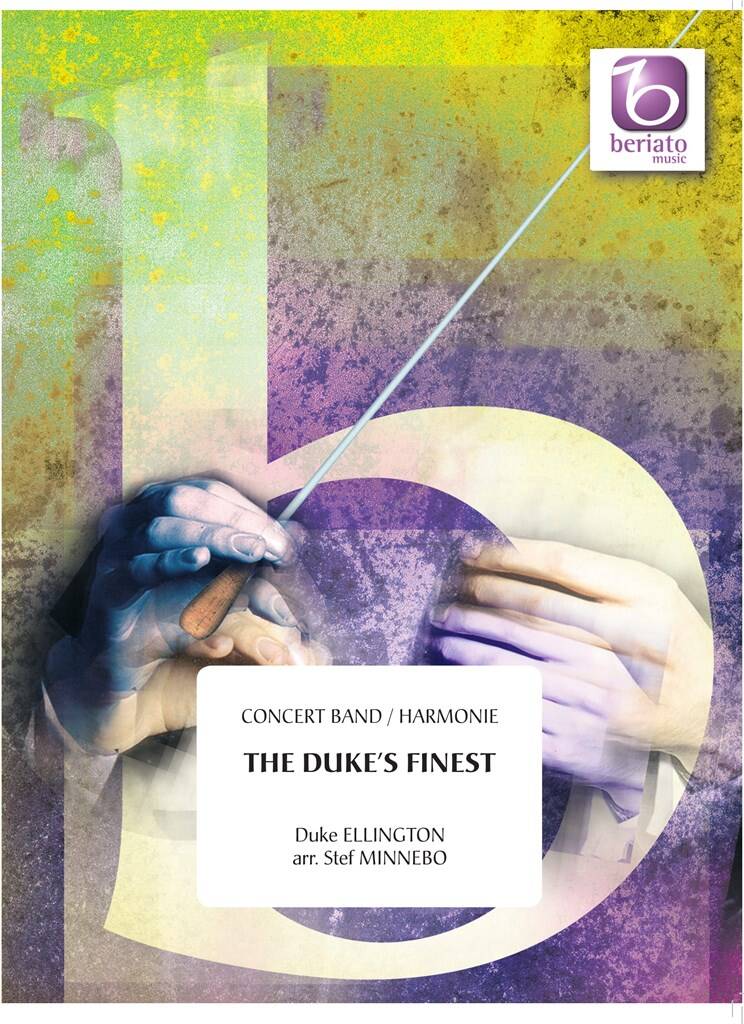
The Duke's Finest - Duke Ellington
Duke Ellington (1889- 1974) was a very successful American pianist, conductor, composer and arranger. His orchestra existed for decades and was able to survive thanks to the enormous hits that he and his collaborators wrote. Many of those songs now belong to the standard repertoire of jazz musicians.Billy Strayhorn (1915-1967) was arranger and composer with the orchestra from 1939, and also wrote Take the A-Train, which became the band's favourite song from 1941. Many recordings were made of it. Juan Tizol (1900-1984, valve trombone) played with Duke Ellington almost his entire career and composed Latin songs for the orchestra. He is co-composer of Caravan and Perdido.Just likein the original Duke Ellington concerts, the medley begins with Take the A-Train, followed by a number of classics from the repertoire of the legendary orchestra. In some songs there are soloists, notable a solo on kettledrums in C- Jam Blues. This solo can also be improvised.When rehearsing a lot of attention has to be paid to the drum and bass, which together form the rhythm section and drive the orchestra on. The other sections have to be tight and create a coherent swing effect. The swing shouldn't be too stiff, and can vary per song. For example in "In a Sentimental Mood", the melody can be played almost straight (classically), while the rhythm section continues swinging.
Estimated dispatch 7-14 working days
-
 £61.00
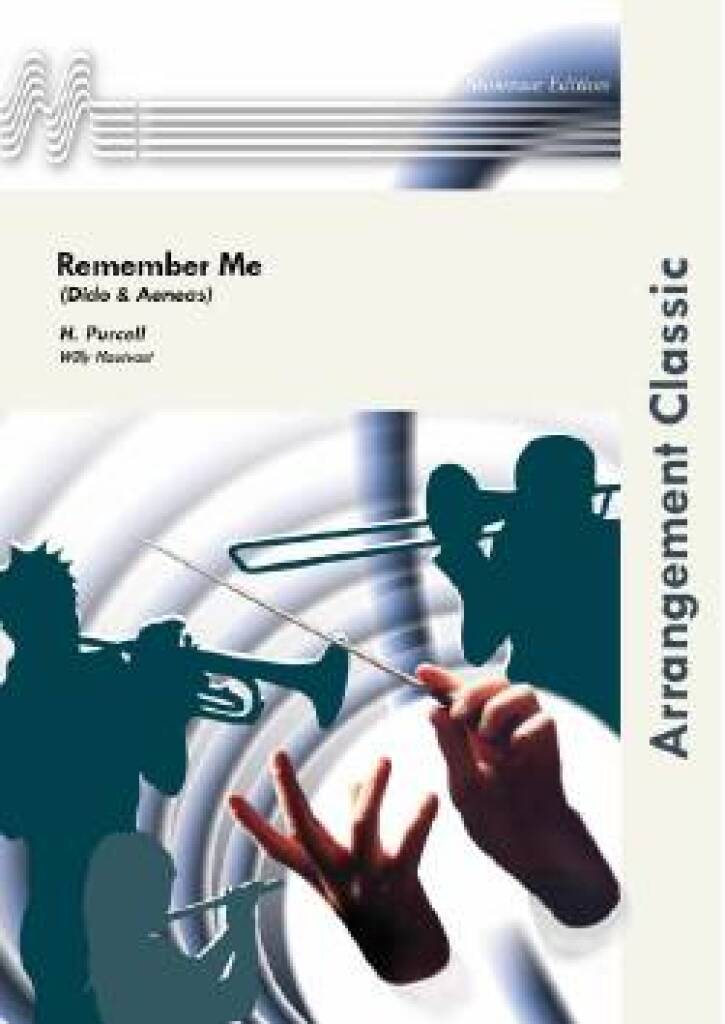
Remember Me - Henry Purcell
The opera 'Dido and Aeneas' by Henry Purcell (1659-1695) was written for a school performance at a girls boarding school. This piece is not very requiring. The aria 'Remember Me' is composed on a chromatic descending continuous bass, one of Purcell's favorite composition methods. It is a very emotional aria in which Dido says farewell to life.
Estimated dispatch 7-14 working days
 View Music