
Results
-
 £140.50
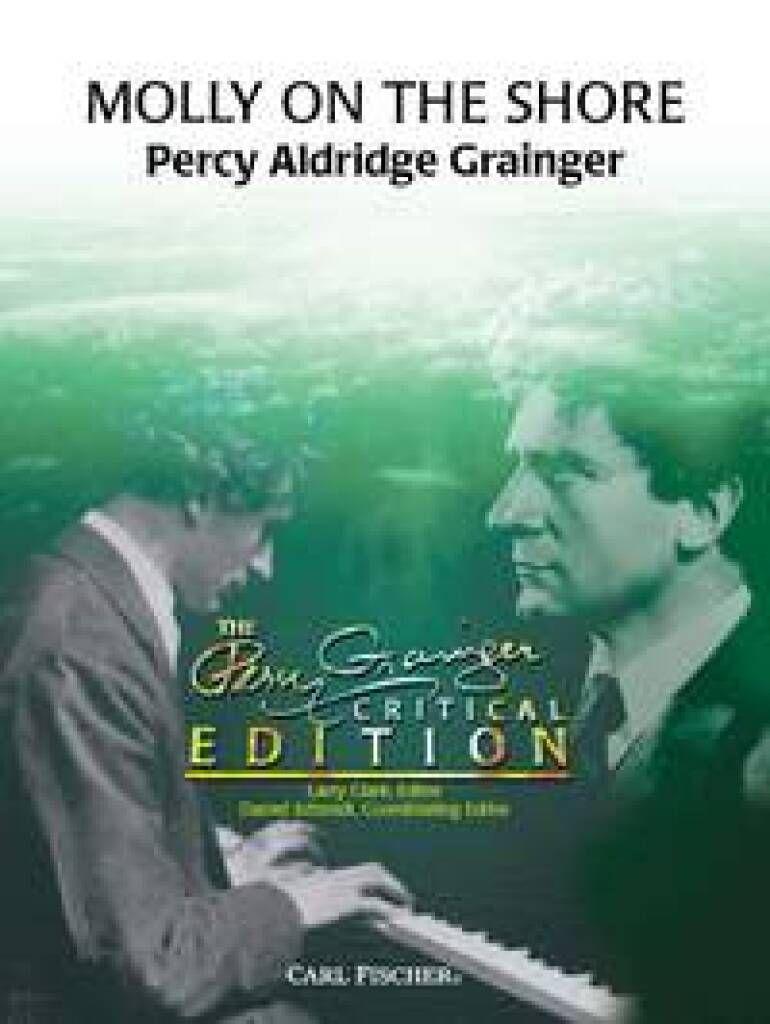
Molly On The Shore - Percy Aldridge Grainger
No. 23 offerainger's British Folk Music settings, Molly on the Shore is a rollicking treatment of a popular Irish Reel. It scampers and bounces its way through a succession of sonorous climaxes, accumulating an amazing collection of memorable counter themes as it goes along, before subsiding in a delicately scored coda that ends with a characteristic Grainger bang. An acclaimed classic, we are proud to offer this engraved and corrected edition of Molly on the Shore with a complete full score. Duration: 4' Key: Ab Ranges: Solo Cornet - C, Cornet - G, Horn - Ab, Trombone - Ab
Estimated dispatch 7-14 working days
-
 £134.99
Hunting Tower - Ottorino Respighi
Not much is known about the origin of Huntingtower, except for the fact that this ballad was composed in 1931 by the Italian composer Ottorino Respighi (1879-1936), commissioned by Edwin Franko Goldman and the American Bandmaster Association, and was premiered on 17 April 1932 at a concert in memory of John Philip Sousa in Washington D.C. It is not even certain whether Respighi arranged the work himself, or left this to someone else. Huntingtower is the name of a castle in Scotland, where Respighi spent some time. It is possible that this ballad contains his musical impressions of his stay there. The orchestration on this CD, made by Franco Cesarini in 1987, is an adaptation ofthe work to the demands of the contemporary concert band.
Estimated dispatch 7-14 working days
-
 £149.40
O Helga natt - Adolphe Charles Adam
O Holy Night is a very well-known Christmas carol. The origin of the carol is French beginning with the words: "Minuit! Chrtiens, c'est l'heure solennelle". It is about the birth of Jesus and was written in 1843 by a wine merchant and poet by the name of Placide Cappeau (1808 77). He turned to the composer Adolphe Adam (1803 56) and asked him to write a suitable melody. The result was brilliant and the carol was premiered in Cappeau's home town Roquemaure in 1847 by the opera singer Emily Laurey. Based on Cappeau's French text, the English version was written in 1855 by an American Unitarian (Calvinist) minister by the name of John Sullivan Dwight (1813 93). Adolphe Adamwas the son of the pianist and composer Louis Adam (1758 1848), who did not want his son to follow in his foot-steps as a musician. However, Adolphe wanted otherwise, and already at the age of 17 he was accepted to study at the music conservatoire in Paris. He was a student under Franois Adrien Bo eldieu and composed several comical operas that became successful. After the July-revolution 1830 Adam moved to London. He worked for a couple of years before returning to Paris, where he founded a new opera house in 1847, the Th tre national. After the revolution in 1848 it had to close and Adam was ruined, why he had to go back to composing. In 1856 he concluded the ballet Le Corsaire, which together with the ballet Giselle are his most performed works today.
Estimated dispatch 7-14 working days
-
 £75.00
Sonata - Derek Bourgeois
This work, composed in 1998, was commissioned by the American trombonist Don Lucas as a work for trombone and piano and first performed by him in Birmingham on 19th May 2000. Subsequently, I arranged the music for both solo trombone and brass band and solo trombone and wind band so that it now exists in three formats. The first movement, in B flat major, is brisk and energetic, and is cast in sonata form. The second subject is gentler and more lyrical. The second movement, a scherzo in C major, is the most complex of the four. Basically the structure is a rond. For a long time the music remains in the opening 5/8 time until a new theme introduces more broken rhythms in a more jazzy idiom. After a return of the opening theme the following episode is more tonally ambiguous. Finally, the main theme returns to round off the movement. The third movement, a lyrical adagio, is really one long extended melodic flow. The harmonies are lush and the textures simple and direct. The tonal center is A minor, but the music meanders through so many keys, that this key centre is heavily disguised. The finale is a fiery affair. G minor is really its home key, but throughout the movement the music moves about a lot and the second subject is first heard in A flat minor. The movement's underlying sonata structure is masked not only by its loose tonality but also by its frequently changing time signatures. Like the first movement the second subject is more lyrical in nature and for a while it seems that the music will end peacefully, but a final flurry heralds a triple forte unison on the home note of the first movement - B flat. Derek Bourgeois
Estimated dispatch 7-14 working days
-
 £53.50
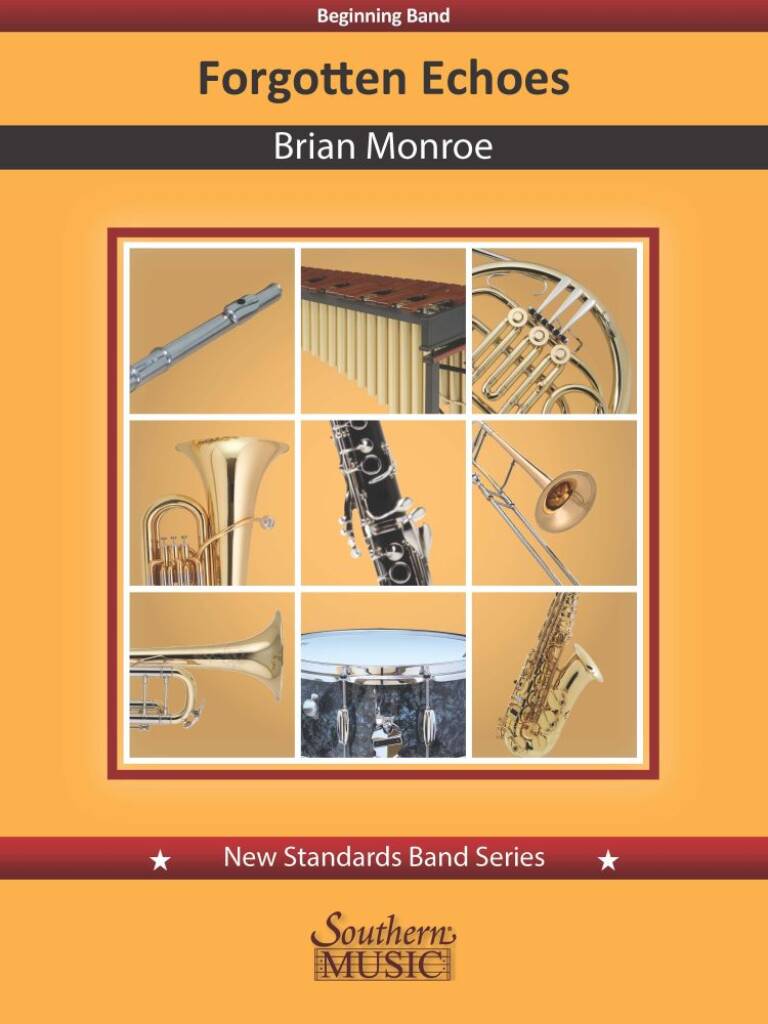
Forgotten Echoes - Brian Monroe
The clarinet part does not cross the break, trumpets range only to second space A (with an optional C sharp) for trumpet 1, there's plenty of percussion if needed (use or subtract as necessary!). Overall, it adds up to the perfect grade 1 concert piece!
Estimated dispatch 7-14 working days
-
 £66.95
Comegys Creek - Brian Beck
Kick off your shoes, jump in, and ride down Comegys Creek. This North Texas creek is named after Dr. C. G. Comegys, a prominent family who lived in Mckinney, TX in the early 1900s. Composer and fellow Texan, Brian Beck captures the southern rowdiness of frolicking in the water with friends and family. Comegys Creek is a fun piece that will expand your student's harmonic vocabulary and is perfect for introducing and reinforcing accidentals that create interesting harmonies, all within a comfortable range. It also explores the many permutations of the 8th and 16th note combinations, as well as introduces and reinforces 7/8 time signature. Groups performing this piece will become "multi-meter masters" in no time! (2:24).
Estimated dispatch 7-14 working days
-
 £119.99
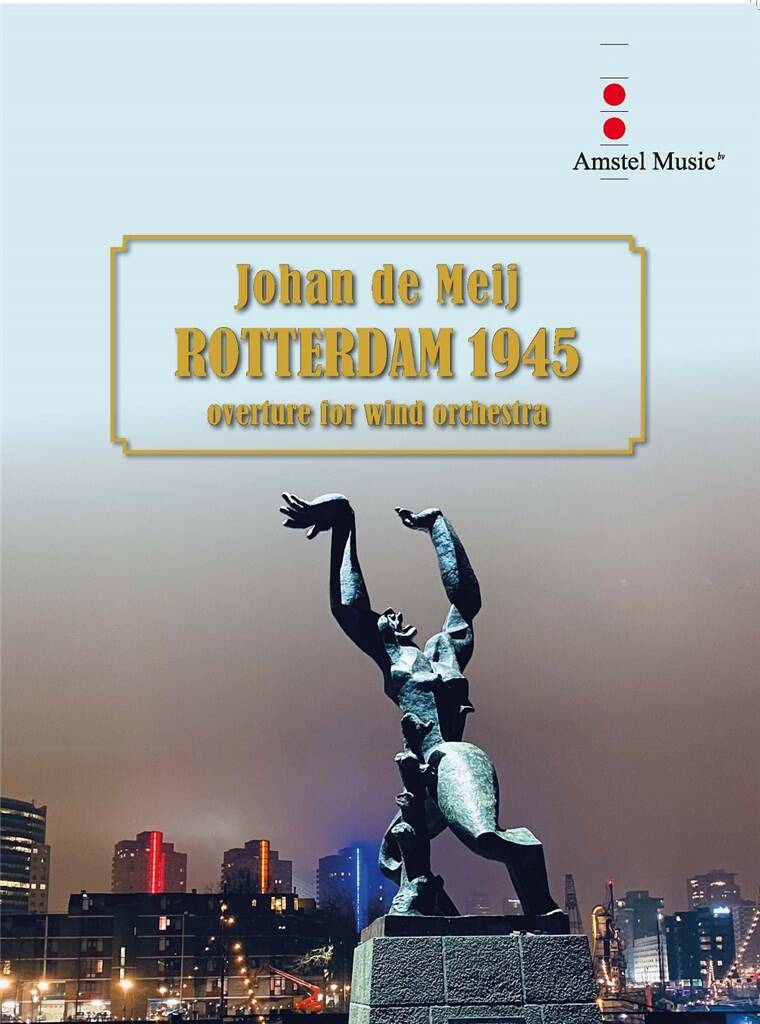
Rotterdam 1945 - Johan de Meij
Rotterdam 1945 was written at the request of Maestro Arjan Tien, the chief conductor of the Marine Band of the Royal Netherlands Navy, to commemorate their 75th anniversary in 2020. 1945 also marked the end of World War II, the year that my home country Holland was liberated from Nazi Germany. My father was born in Rotterdam in 1910, so I have a special bond with this dynamic city. I have used the numbers 1-9-4-5 to create the main theme and translated it into a four-note motif: C - D'- F - G.
Estimated dispatch 7-14 working days
-
 £168.50
60 Warm-up Chorales for Concert Band
During his experience as a band conductor and teacher of wind orchestra conducting at university, Franco Cesarini has dealt with the topic of warm-ups very frequently. Throughout these long years of conducting he has had the opportunity to try many existing methods, evaluating their advantages and disadvantages.After a long time, he has decided to compile a collection of chorales for warm-ups, which are organized according to the criteria that he considers most effective.While working on his60 Warm-up Chorales for Concert Band, Franco Cesarini has always borne in mind that amateur musicians play for pleasure.He feels that it is extremely important that they have satisfaction at every moment of the rehearsal and not to start the rehearsal with needless "punishing" exercises. Nobody is really motivated to start playing with scales, long notes, or tricky rhythmical exercises. There is often a distinguished absentee in band rehearsals, namely music itself!Although this publication does not foresee a specific tempo for the chorales, they should often be performed rather slowly but without dragging.Dynamics are not indicated, so that the conductor has the opportunity to draw the attention of the musicians to his gestures and to make them react according to his indications.Timpani and bell parts have been added with the aim of not leaving the percussionists completely inactive during the warm-up phase, but can also be omitted.The chorales are written in four parts (SATB) and are also playable in smaller groups. The four voices can be played in different combinations of woodwinds or brass quartets or in mixed combinations.The collection includes ten chorales for the following keys: D flat major, A flat major, E flat major, B flat major, F major and C major.With his 60 Warm-up Chorales Franco Cesarini would like to convey the message to play the chorales in a musical way, thus raising the musicians' awareness of phrasing, the right interpretation of cadences, rubato and agogic.Above all, never do anything without putting the musical aspect in the foreground. 60 Warm-up Chorales for Concert Band: A perfect collection to warm-up and improve tuning of a concert band!
Estimated dispatch 7-14 working days
-
 £149.99
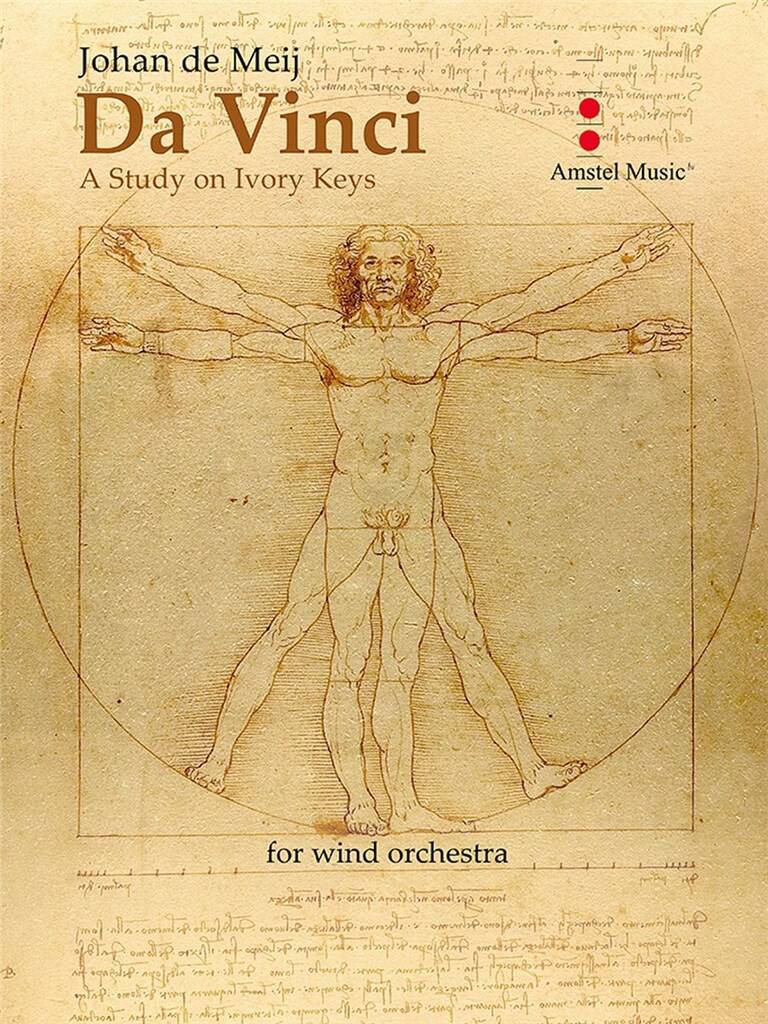
Da Vinci - Johan de Meij
The fascinating life of Leonardo da Vinci and his enormous curiosity spurred Johan de Meij to experiment with musical material, by using only the ivory keys of the piano during the composition process. DA VINCI opens with a grand, massive chord over five octaves throughout the orchestra. This chord, the Da Vinci Chord, is the connective tissue between the various sections, and it leads to a radiant C major chord, as an ode to one of the greatest geniuses of all time.
Estimated dispatch 7-14 working days
-
 £67.95
Attack of the Zombies - Chris Bernotas
This is such a fun composition for beginning students. It is easy with an introduction to some chromatics, but very easily done. They will love shouting out, "Look Out! Zombies!" while learning about music and playing their instruments. The clarinets do not cross the break. 1st trumpet's highest note is C.
Estimated dispatch 7-14 working days
 View Music