
Results
-
 £48.95
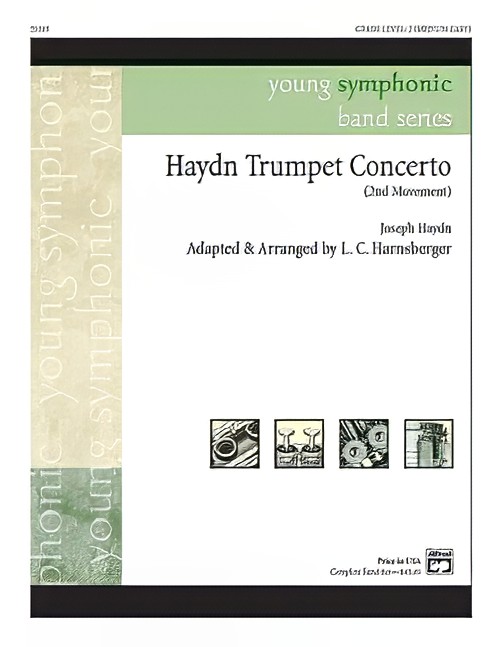
Haydn Trumpet Concerto (2nd Movement) (Trumpet Solo with Concert Band - Score and Parts) - Haydn, Joseph - Harnsberger, L. C.
Haydn's Trumpet Concerto is probably the most-performed trumpet concerto ever written. The second movement is known equally for both its beautiful melody and wonderful use of trumpet as a solo instrument. In this adaptation, the key is lowered to avoid the high notes of the original, sixteenth notes are eliminated by using a 3/4 time signature and difficult passages are simplified-making it ideal for younger soloists. Let your star trumpet player shine with this well-crafted adaptation of a repertoire standard.Duration: 4.00
Estimated dispatch 7-14 working days
-
 £49.95
JERUSALEM (Programme Concert Band) - Parry, Hubert C. - Wiffin, Rob
William Blake's great poem set to music by Hubert Parry is now almost accepted as an alternative national anthem for Great Britain. It is played at civic functions everywhere and also at such diverse events as rugby matches and, most impressively, as the closing item at the Promenade Concert season at the Royal Albert Hall. American Grade 4 Duration: 2:10
Estimated dispatch 7-14 working days
-
 £53.50
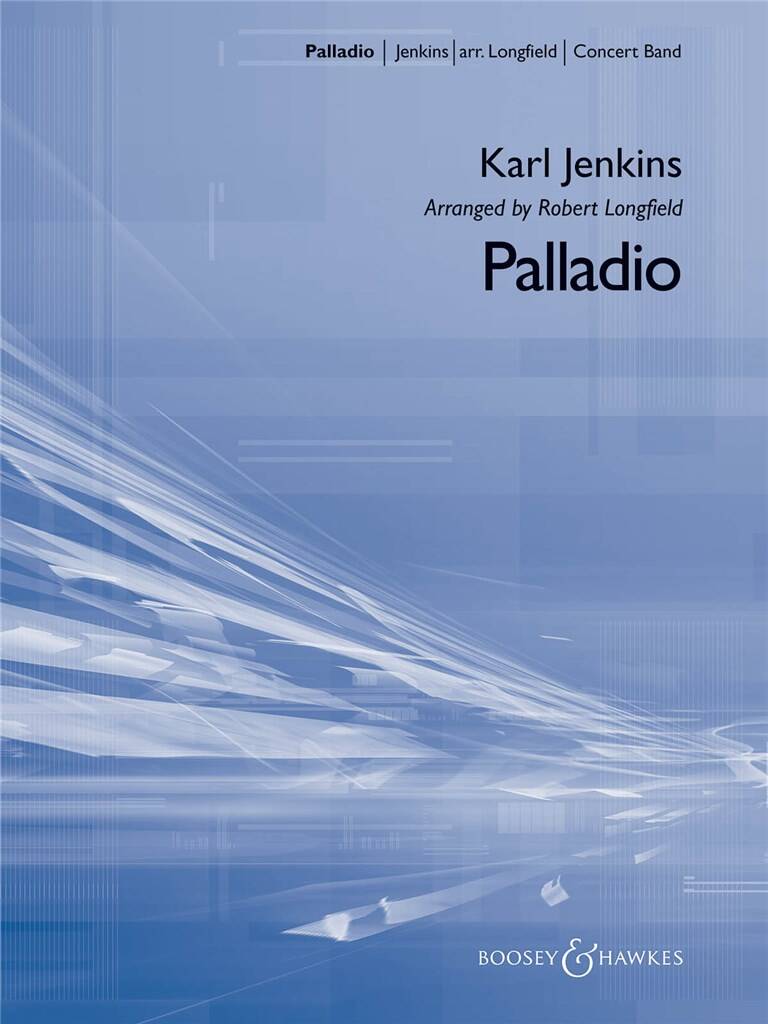
Palladio - Karl Jenkins
Although this composition sounds like it came straight out of the Baroque period, it is actually the first movement of a suite written in 1996 by Karl Jenkins. Instantly recognized as the 'diamond commercial' theme, its relentless pulse and dramatic nature make it a natural for bands. Robert Longfield's skilled arrangement puts it within reach of most groups.score and parts - 4 Flute I, 4 Flute II, 2 Oboe, 4 Bb Clarinet I, 4 Bb Clarinet II, 4 Bb Clarinet III, 2 Bb Bass Clarinet, 2 Bassoon, 2 Eb Alto Saxophone I, 2 Eb Alto Saxophone II, 2 Bb Tenor Saxophone, 2 Eb Baritone Saxophone, 2 F Horn I, 2 F Horn II, 3 Bb Trumpet I, 3 Bb Trumpet II, 3 Bb Trumpet III, , 3 Trombone I,3 Trombone II, 2 Baritone B.C., 2 Baritone T.C., 4 Tuba, I String Bass, I Timpani, 2 Percussion I, 2 Percussion II - wind/concert band
Estimated dispatch 7-14 working days
-
 £47.50
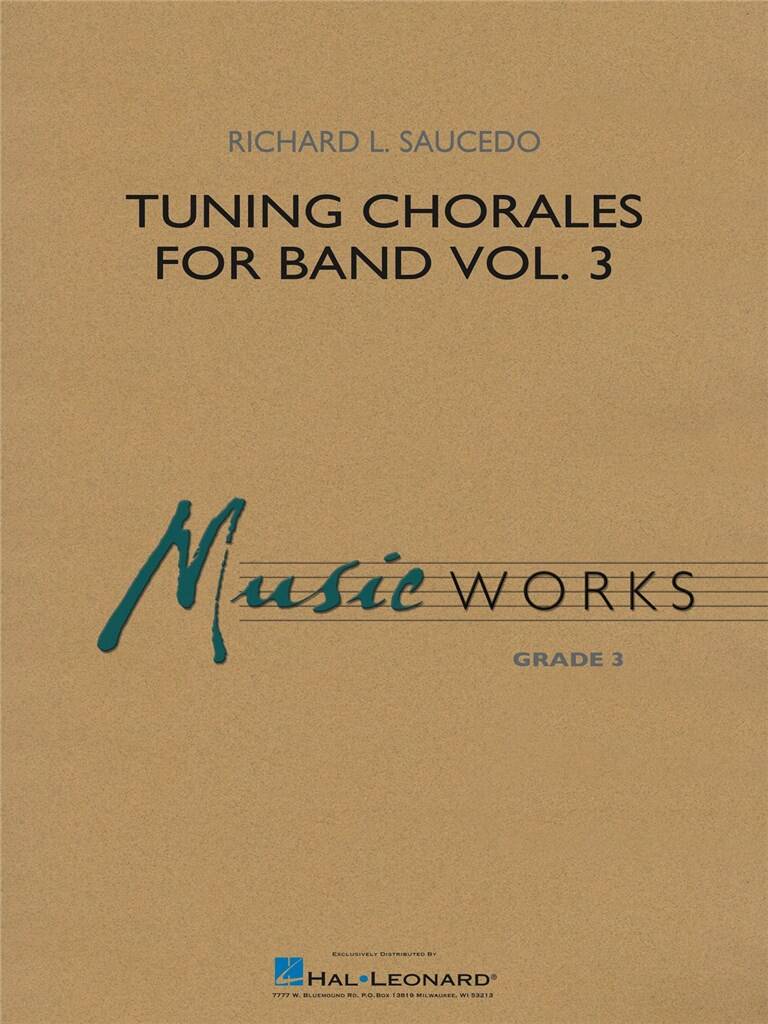
Tuning Chorales for Band Vol. 3 - Richard L. Saucedo
Using the concept of drones as well as tuning hints written into both the score and parts, this volume of chorales will help students understand more of the tuning process and how it feels as well as how it sounds. (Keys: DbMajor, C Minor, C Major)
Estimated dispatch 7-14 working days
-
 £87.99
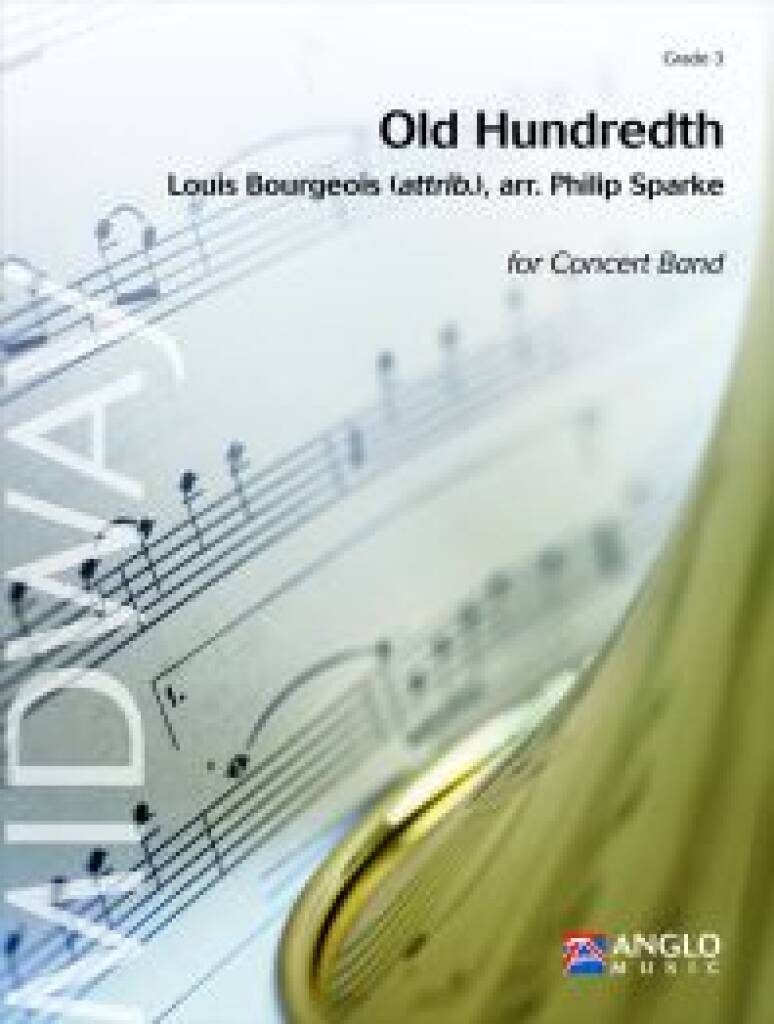
Old Hundredth - Louis Bourgeois
The tune Old Hundredth is one of the best-known melodies in all Christian musical traditions and first appeared in the 1551 psalter "Pseaumes Octante Trois de David", where it is used as a setting for a version of Psalm 134; it is usually attributed to the French composer Louis Bourgeois (c.1510 - c.1560). The melody was then used in 1561 by the Scots clergyman, William Kethe in Sternhold and Hopkins' Psalter for his paraphrase of Psalm 100 - All People that on Earth do Dwell, which is still the most familiar hymn sung to this noble tune. When Tate and Brady's "New Version of the Psalms" was published in 1696, the melody became know as the 'old' version - henceits current title. This arrangement presents three contrasting verses and is effective as a concert piece as well as an instrumental interlude as part of a church service or wedding.
Estimated dispatch 7-14 working days
-
 £104.99
Divertimento - Roger Boutry
Divertimento is an outstanding composition by Roger Boutry for Alto Saxophone and Wind Orchestra. This great work is really nice to play and will enlighten the audience. The Orchestracomposition required is: 2 Flutes, 2 Oboes, 2 Bassoons, 2 small Clarinets, Clarinet I, Clarinet II, 1 Bass Clarinet, 2 Alto Saxophones, 2 Tenor Saxophones, 1 Baritone Saxophone, 4 Horns, 4 Bb or C Trumpets, 4 Trombone or 3Trombone and an Euphonium, 1 Bb or C Bass, 1 Double Bass, 1 Harp, Timpani, Drum and a Celesta. It is divided into three parts: I. "Allegro ma non troppo", is strongly rhythmic and syncopated.Itincludes a Cadenza by the Solo Saxophone and is written as a tribute to Jazz music. II. "Andante", also includes a Cadenza by the Solo Saxophone but at the end of the section. It is reminiscent of slowerblues ballads. III. This part features few sections by the Solo Saxophone but is specially highlighted its ending, in a bright and fast finale. This volume features the score and parts for all theinstruments. Born in France in 1932, Roger Boutry received numerous prizes, including those for Piano, Composition and Conducting. He received the Grand Prix de Rome in 1954. His career was quite successful,alternating between Harmony professor, composer and conductor. He also received numerous prizes for his incredible compositions.
Estimated dispatch 7-14 working days
-
£264.99
Diferencias on an Old Spanish Song - Yasuhide Ito
I am immensely happy that my Gloriosa, symphonic poem for band (1990), has been performed by so many bands in the last thirty years.During this period, the growth of the internet has made it much easier to access information.When I composed Gloriosa, I only had limited information about the period when Christianity and Western music was first introduced to Japan, and had to rely a lot on my imagination.However, nowadays, it is easy to obtain various source materials and to read interesting studies on the music of the past.In recent years, the music of Luis de Narvez (born ca.1500 - died between 1555-1560), Spanish composer and vihuela player, has become increasingly known, and several CDs of his music are now available.Narvez composed the earliest-known set of diferencias, a forerunner of the variation form. One of his works is Seys diferencias sobre el himno "O gloriosa domina" [Six diferencias on the hymn "O gloriosa domina"] (1538), based on the Spanish Marian hymn, and it was this melody I used in the first movement of my Gloriosa.Western music has been my musical roots since childhood, and throughout my career as a composer, it has continued to fascinate me. One could say that this has provided the inspiration for Diferencias on an Old Spanish Song, my own take on the diferencias form.Actually, such music from the early sixteenth century could sound fresh to our modern ears. So I decided to quote the melody from Narvez's Sey diferencias at the beginning and end of the piece, in order that people can get the feel for the period.The main section (bars 42-390) is formed of 13 diferencias, similar to the first movement of the Gloriosa.In the middle section, which begins after the eighth diferencia(from bar 187), one should be totally absorbed in the tranquility and the beauty of the music. Although it's in the style of a sarabande, it should be taken slower and played as pianissimo as possible.This is followed by folk-style dance music. (As only standard percussion instruments are used, try to be creative with tonal colours and sense of rhythm).The structure of the work is simple, but be aware of the connection between the sections when constructing the whole.Also, think about the tonality. Overall, the work is in F minor. The main section is basically in D minor, but from bar 102, it modulates to A flat minor and G minor, and then in the middle section it suddenly switches to A flat major (which is the furthest key from D minor, and the relative major of F minor). From bar 219, it modulates to F minor and then to C minor, then back to F minor by way of A minor.N.B. The Oboe II part can be substituted by the English Horn (as indicated in the parts). One can choose according to the player's skills or preference.Recent new compositions for wind band are often full of rhythm, dynamism, and tonal colour, and compositional techniques and orchestration have also evolved greatly. Yet on the other hand, they tend to feature fewer melodic or expressive elements. Since this work is the test piece for WMC Kerkrade 2022, I had to think about what "tests" or "challenges" to set, and I decided to compose something that doesn't involve a lot of technical display, but requires beautiful sounds and harmonies, and above all, musical expressivity. I didn't put many expression markings in the score, because I wanted the performers to think about how best to express this music. If it is played merely as notated, it's not going to sound very interesting.Christianity was introduced to Japan in the mid-16th century, but it was subsequently banned and Japan entered a period of national isolation, which meant that there was hardly any international exchange for two hundred years. As a result, the Christian hymns that were introduced prior to the isolation became almost unrecognizable over the centuries. This was the theme I explored in my Gloriosa thirty years ago.Now, in 2021, the whole world has been forced to "isolate" due to the Covid-19 pandemic. In such times, it seems pertinent that I've written a work using this melody again. I sincerely hope that people will be able to gather in Kerkrade in 2022.(English Translation:Nahoko Gotoh)
Estimated dispatch 7-14 working days
-
 £168.50
Trois Nuances - Scott L. Hines
TROIS NUANCES is a three movement work composed by Scott L. Hines for the Memphis Ballet Company in 2004. Originally for Piano only,it is a three movement work. The two fast movements surround a blues-like second movement. While it was not the composer's initial intent to write a movement based in the blues, that's what happened and it was very appropriate as Trois Nuances was danced on thestage of W.C. Handy Park on Beale Street, the site of the birth of the blues publishing industry. Hines was given a week to present a draft to the ballet company to be performed as it's opening piece of the 2004 season debut. Once the draft was approved, he had two days to finalize it. The first and third movements reflect the hurried and excited pace at which it was composed. Excellent repertoire from a contemporary American composer! Symphonic Orchestra. Instrument Parts. Grade: 4 Duration: 12:29
Estimated dispatch 7-14 working days
-
£72.95
Jamaica Jack - Joseph Compello
Infectious Caribbean rhythms from an expanded percussion section drive this Calypso-style piece and guarantee that it will be a big hit with players and audiences alike. This is a great introduction to Latin rhythms and syncopations and has a variety of phrasings and articulations with which young players need to become familiar. Duration: 2' 30" Key: Eb Ranges: Trumpet - Eb, Horn - C, Trombone - C
Estimated dispatch 7-14 working days
-
 £95.99
5 Tantum Ergo - Anton Bruckner
Anton Bruckner (b. 4.9.1824, Ansfelden, d. 11.10.1896, Vienna) didn't have it easy. Throughout his life, the Austrian composer was plagued by self-doubt. Anton Bruckner came from a simple, rural background. After the death of his father, he was accepted as a choirboy at the monastery of Sankt Florian in 1837. After several years as a school assistant and his own organ and piano studies, he first worked as organist in St. Florian, then from 1855 as cathedral organist in Linz. Introduced to music theory and instrumentation by Simon Sechter and Otto Kitzler, he discovered Richard Wagner as an artistic role model, whom he admired throughout his life and also visited several times in Bayreuth.In 1868 Anton Bruckner became professor of basso continuo, counterpoint and organ at the Vienna Conservatory; ten years later court organist; and in 1891 finally honorary doctor of the University of Vienna. He was considered an important organ virtuoso of his era, but had to wait a long time for recognition as a composer. It was not until Symphony No.7 in E major, composed between 1881 and 1883, with the famous Adagio written under the effects of Wagner's death, that he achieved the recognition he had hoped for, even if he was reluctant to accept it given his inclination towards scepticism and self-criticism.Anton Bruckner was a loner who did not want to follow a particular school or doctrine. He composed numerous sacred vocal works, such as his three masses, the Missa Solemnis in B flat minor (1854), the Te Deum (1881-84) and numerous motets. As a symphonic composer, he wrote a total of nine symphonies and many symphonic studies from 1863 onwards, tending to revise completed versions several times over. Bruckner's orchestral works were long considered unplayable, but in fact were merely exceptionally bold for the tonal language of their time, uniting traditions from Beethoven through Wagner to folk music, on the threshold between late Romanticism and Modernism.Hymns for four-part mixed choir a cappella (1846, St. Florian)No. 1 in E flat major (WAB 41/3): Quite SlowNo. 2 in C major (WAB 41/4): AndanteNo. 3 in B flat major (WAB 41/1): SlowNo. 4 in A flat major (WAB 41/2): SlowHymn for five-part (2 S, A, T, B) mixed choir and organNo. 5 in D major: SolemnlyThey are simple works, completely subordinate to their liturgical use, which nevertheless already show numerous characteristics of personal expression. These small pieces were able to stand up to the harsh scrutiny of the mature master: in 1888, Bruckner subjected them to a revision in which he made only minor corrections.
Estimated dispatch 7-14 working days
 View Music