
Results
-
 £39.50
Back from The Wars (from 'For England, Harry and St. George') (Concert Band - Score and Parts) - Gorb, Adam
The little pieces that form 'For England, Harry and St. George' may be played individually, in pairs, scattered through a programme or, when given complete, may even be played in a different order. All take their inspiration from the music of mediaeval and renaissance Britain, the scene of political intrigue, social turmoil and military strife. Performers should keep in mind the combination of vigour, mysticism and grandeur which so characterised English music of this bygone age. AB grade 2Duration: 02:00
Estimated dispatch 7-14 working days
-
£39.50
With Fire and Sword (from 'For England, Harry and St. George') (Concert Band - Score and Parts) - Gorb, Adam
The little pieces that form 'For England, Harry and St. George' may be played individually, in pairs, scattered through a programme or, when given complete, may even be played in a different order. All take their inspiration from the music of mediaeval and renaissance Britain, the scene of political intrigue, social turmoil and military strife. Performers should keep in mind the combination of vigour, mysticism and grandeur which so characterised English music of this bygone age. AB grade 2 - 2.5Duration:01:30
Estimated dispatch 7-14 working days
-
£39.50
Treason and Plot (from 'For England, Harry and St. George') (Concert Band - Score and Parts) - Gorb, Adam
The little pieces that form 'For England, Harry and St. George' may be played individually, in pairs, scattered through a programme or, when given complete, may even be played in a different order. All take their inspiration from the music of mediaeval and renaissance Britain, the scene of political intrigue, social turmoil and military strife. Performers should keep in mind the combination of vigour, mysticism and grandeur which so characterised English music of this bygone age. AB grade 1.5Duration: 02:00
Estimated dispatch 7-14 working days
-
 £64.99
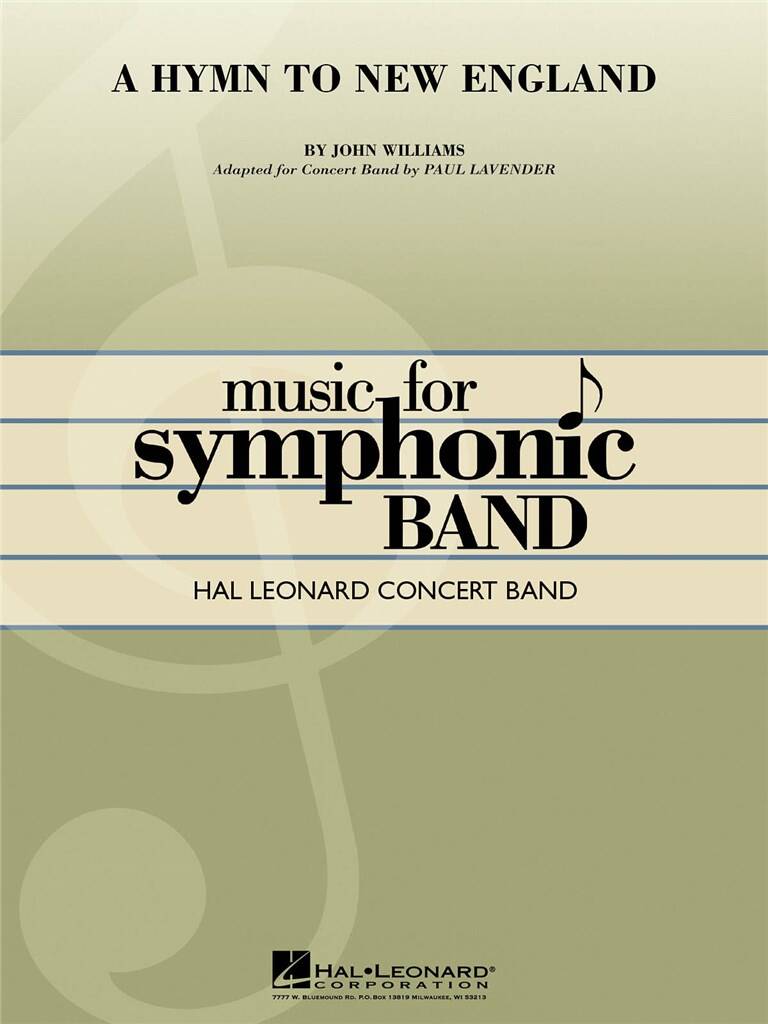
A Hymn To New England - John Williams
Written in 1987 as the accompaniment to New England Time Capsule, an Omnimax travelogue, and recently recorded by the Boston Pops, this three minute concert work adapts wonderfully for band. With true Williams craftmanship, it features brassy fanfares and a rich, sonorous hymn, all based on the same melodic intervals. John Williams' brilliant orchestration is successfully captured, making this a superb concert opener for bands.
Estimated dispatch 7-14 working days
-
 £64.99
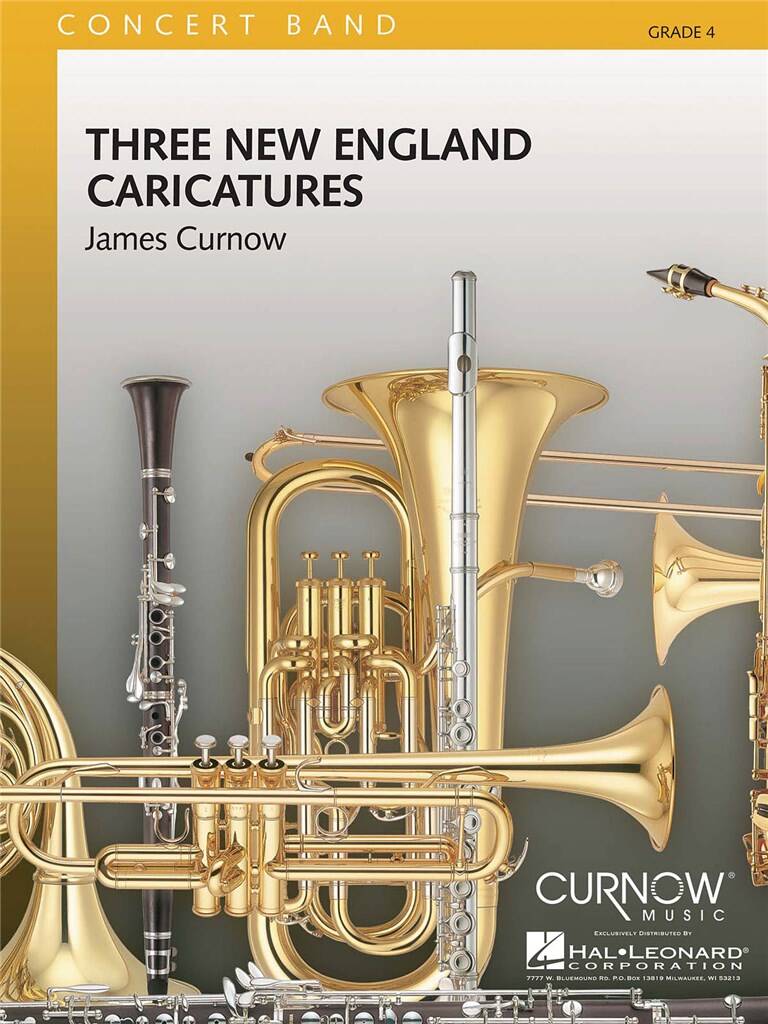
Three New England Caricatures - James Curnow
Commissioned for the University of Massachusetts Lowell New England Youth Wind Ensemble, this significant composition by James Curnow is a pure delight. Interesting percussion and a wide range of expectations from every windplayer lets all the musicians have the joy of being challenged. The creative exploration and development of these interesting old melodies rewards the entire ensemble in ways that shorter, more condensed pieces cannot. Dur: c.9:00
Estimated dispatch 7-14 working days
-
 £186.20
Concerto for Alto Saxophone and Band - Ronald Binge
Ronald Binge was born on 15 July 1910 at Derby, England. He studied harmony and counterpoint on his own and tried his hand at arranging and composing during the many years he worked as a pianist and musician in movie theatres. In 1934 he met the conductor of Italian descent Annunzio Paolo Mantovani (1905-1980) and started writing numerous arrangements for the symphony orchestra of this very popular conductor. In fact, Binge is the inventor of the famous 'Mantovani Sound' (with echo effects by the strings) which charmed and pleased millions of music lovers and television spectators all over Europe in the fifties and sixties. In 1952 he scored a hit with ' Elisabethan Serenade'. Binge also wrote classical music and even a series of wind band compositions such as the most popular 'Cornet Carillon'. Ronald Binge died on 6 September 1979 at Ringwood. He dedicated his Concerto for Alto Saxophone (1956) to the famous American saxophone virtuoso Sigurd Rascher (1907-2001), the pioneer of the classical saxophone. At the request of the Dutch wind band publisher Pieter Jan Molenaar, Binge wrote a version for symphonic band. Unfortunately both the editor and the composer died some time later in 1979 and could not attend the premiere of this version by the Dutch Royal Marine Band conducted by Jaap Koops and with Johan Perik as soloist. The concerto consists of three parts. In the dynamic and quick 'Allegro Spirituoso' one can hear the melody alternately with the soloist and the accompanying band. The second part is more lyrical, though passionate as well and it is better known as it is often performed on itself under its title 'Romance'. The final part 'Rondo Allegro Giocoso' is written in rondo form as its title indicates and it allows the soloist to demonstrate his virtuosity in a very lively dialogue with he band.
Estimated dispatch 7-14 working days
-
 £110.99
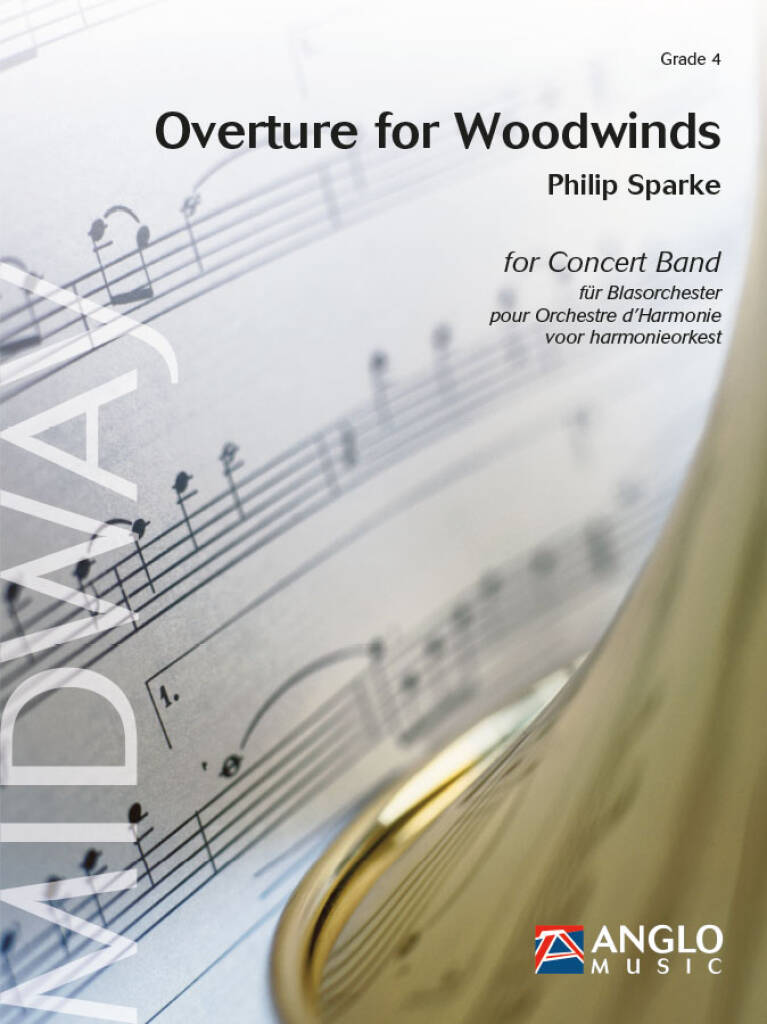
Overture for Woodwinds - Philip Sparke
This work was commissioned for The Berkshire Young Musicians Trust (England), who required a testing piece for the woodwind section of their concert band. The piece opens with a strong unison passage based on the interval of a fifth and develops with a passionate legato. This is followed by the main vivo section of the work based on the earlier 'fifth' figures. A bridge passage leads to a short chorale figure and a rhythmic climax which dissolves into a plaintive solo for oboe over staccato clarinets. Following a recapitulation of the main theme the oboe returns triumphantly before the opening unison passage reappears to provide a stirring coda.
Estimated dispatch 7-14 working days
-
£65.99
Music For The Funeral Of Queen Mary - Henry Purcell
Austere, powerful music of England's most famous Baroque composer. From the first sounds of the muffled drums, your players and audience will be taken back to a snowy London morning in 1685 for the funeral procession of Queen Mary II. Spellbinding!
Estimated dispatch 7-14 working days
-
Letters For Home - Peter Meechan
Letters for Home is a three movement work, commissioned by East Lancashire Concert Band with support from Arts Council England, to commemorate the start of the First World War, and the role played in the war by the 'Accrington Pals'. Before each movement a reading should be made - these may be a letter sent from The Front, WW1 poetry, thoughts and reflections recorded elsewhere, or new words, written by local poets, school children or others.Whilst specifically concerned with the First World War, each of the work's movements broadly outlines emotions that would form part of any soldiers lives during any war - and as such, performances of this work can easily be adapted to reflect other wars both modern and historical, and locally sourced words for the readings is highly encouraged.The first movement, "The Bittersweet Love Song" is the story of a soldier saying goodbye to his loved one before leaving for war. The opening passages are of the soldier, perhaps putting to the back of his mind the danger he is facing, singing a love song to his wife or girlfriend. In the following passages we hear his loved one singing "I love you", played by the flute section.We again hear the soldier singing - this time with more of a sense of what lies ahead for him, but now the response is further away as they gradually move more distant from each other. The movement ends without conclusion, but with chords for the soldier's song played hauntingly over the percussion.The second movement, "The Trench", is more self-explanatory. It combines bravado in the percussion opening with the whole band coming together as one - as a unit, before again we hear fear and trepidation in the brass, once more failing to reach a resolution. Perhaps the thoughts of the soldier are interrupted as the percussion once more calls the men to arms. The movement ends with gun shots in the percussion.The final movement, "In Memory", opens with a repetition of the love song from the opening movement, before a slow lament, again never resolving, is heard. It keeps finding a new key, a new place, intending to represent the cyclical nature of war, and again without resolution, suggesting that war is also often that way.Letters for Home is dedicated to Ian McGuinness, whose support, enthusiasm, and sheer hard work led to this work being commissioned and performed, and to the East Lancashire Concert Band, who gave the premiere on 27 September 2014, at the Town Hall, Accrington, home of the Accrington Pals, with the final revision of the work being completed in November of the same year.
Estimated dispatch 5-14 working days
-
 £250.00
The England of Elizabeth,Three Portraits from (Concert Band - Score and Parts) - Williams, Vaughan - Noble, Paul
This suite was derived from Vaughan Williams' score for the film, The England of Elizabeth, written in 1955. It was the composer's tenth of his 11 cinematic efforts and designed to serve a more descriptive role than other such scores, since the movie was a documentary featuring no action scenes, but lots of images of paintings, buildings, and the like. Composer Muir Matheson adapted this three-movement suite, probably shortly after the composer's death in 1958, though publication of the manuscript would not come until 1964. The first movement is entitled Explorer, and refers to Sir Francis Drake. Its music is mostly festive and colourful, but features interior passages of exotic flavor, similar in style to that of Vaughan Williams' then-recent Symphony No.8. The second movement is entitled Poet and, at about seven minutes, is the longest of the three in this 16 to 17 minute work. It also contains probably the score's best music, hardly a surprising result since the poet in question is Shakespeare, one of the composer's favourites and an inspirational springboard for so many other of his works. The mood is mostly subdued and Vaughan Williams presents lovely, if slightly somber music in the opening, and follows it with a hearty, folk-like dance tune. The latter part of this movement depicts Shakespeare as a noble, heroic figure in English history. The last movement, Queen, is devoted to Queen Elizabeth. It has a regal yet muscular manner at the outset, and features a gentle but somewhat disengaged middle section. It returns to the splendor and colour of the opening to close the work. This suite is important because it distills some of the best music from the film into a logically assembled structure. Program notes extracted from those of Robert Cummings.
Estimated dispatch 7-14 working days
 View Music