
Results
-
 £54.99
Anthem of Triumph - Tyler Arcari
Anthem of Triumph is for all of the students who have made it to their first spring concert! Utilizing only the first 6 notes of the Bb-major scale, composer Tyler Arcari has crafted an exciting anthem for young musicians. Perfect for beginners or as a celebration piece for events!
Estimated dispatch 7-14 working days
-
 £54.99
Ringtone Christmas - Tyler Arcari
Set your beginners up for success this Christmas with an interactive new work for beginning band. Full of theatrics and audience participation, Ringtone Christmas is a winning combination of function and flair! Using only the first 6 notes in the Bb Scale (as well as a few random ringtones on your personal device), this piece is perfect for reinforcing musical fundamentals, as well as being a great ice-breaker for a beginner's first performance.
Estimated dispatch 7-14 working days
-
£60.99
Der Zaubermarsch - Rob Ares
On 30th September 1791, a few months before his death, the opera "Die Zauberflote" (The Magic Flute) by Wolfgang Amadeus Mozart was given its first performance. It was remarkable that despite his ill health and his disastrous financial situation he was able to compose a work of such comic genius. Mozart composed the overture in the two days before the premier of the opera and it is on this overture that this transcription is based. To perform the work 'a la Mozart' only the timpani part should be used, the additional percussion parts have been added by the arranger and are therefore optional.Mozart 40th SymphonyThe Austrian composer Wolfgang Amadeus Mozart lived atragically short life of thirty-five years. Towards the end of his life in the summer of 1788, he wrote three symphonies in the span of a little over six weeks. His Symphony No.40 in G Minor was one of those great works. This setting of the first movement from that Symphony provides ample demonstration of the composer's grace, inventiveness and pervasive sense of humour, which can be found throughout his music.
Estimated dispatch 7-14 working days
-
 £179.99
Tom Sawyer Suite - Franco Cesarini
During his childhood The Adventures of Tom Sawyer was the favourite book of the composer Franco Cesarini. With his memories of the magic of joy, fear and freedom, Cesarini seeks to bring the figures of the book to life musically in his Tom Sawyer Suite. Each of the first four movements describes a figure from the story. Tom Sawyer is depicted in the first movement, where the characteristic "cake walk" rhythm is used. The second movement depicts Huckleberry Finn. The third movement is slower, more expressively melancholic and is dedicated to Becky Thatcher. Then there is Injun Joe, who tries to catch Tom in the fourth movement with the fifth movement leading to a happyend.
Estimated dispatch 7-14 working days
-
 £179.99
Austrian Overture - Thomas Doss
Austria is an industrious country. During the last century--which was characterized by extreme changes--the hard-working and ambitious people achieved a great deal, enduring two world wars and numerous political skirmishes. Despite all the problems involved in a change from a dual monarchy to a small state, Austria has found its independence. With his Austrian Overture, Thomas Doss looks toward the future. The first part of the composition provides an optimistic outlook; along with the happiness and energy, some musical humor is also present: while the horns powerfully express joy, small yodeling melodies sound throughout. As the rhythm continues insearch of new ways to go, catchy tunes compete to be heard. However, in addition to the energetic, diligent Austria, there's also the quiet landscape where one can enjoy repose and beauty. These aspects - as well as the freedom of spirit and cultural life -are conveyed in the second part of the work through the surprising linking of chords, romantic phrasing, and tender melodies. But life never stands still: creativity, ambition, and work are the driving forces of our existence. Embracing this thought, a reprise of the first part provides a compelling ending.
Estimated dispatch 7-14 working days
-
£69.99
Mountain March - Wim Laseroms
A fanfare introduces This festive march is introduced by a lively fanfare which leads into the first, playful, melodic line which features a regular dynamic alternation and a light syncopated rhythm. After the traditional bass solo, the first theme returns. The initial theme, performed by piano and cantabile trio, later sounds in a jubilant forte with various figurations in the higher woodwinds. The fine work Mountain March is suitable as a street march, but will also gain much appreciation on the concert platform.
Estimated dispatch 7-14 working days
-
 £96.40
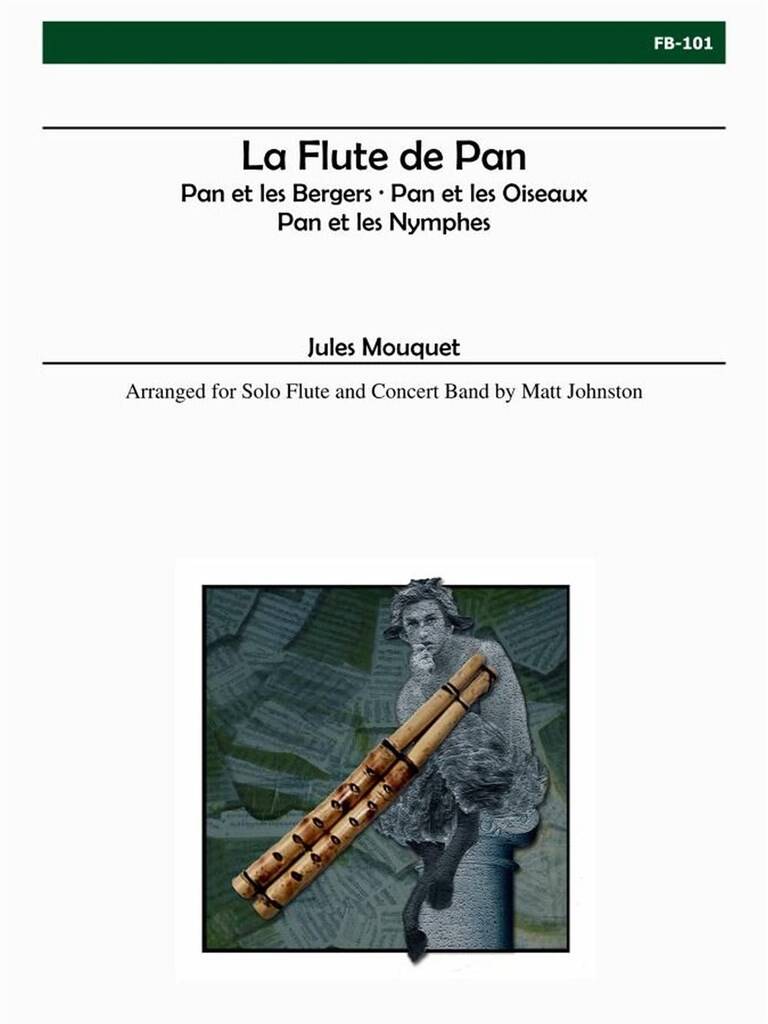
La Flute De Pan - Jules Mouquet
This arrangement features a colorful, yet light accompaniment to this delightful flute solo. A great piece to feature your first chair flute player. The first movement is appropriate for bands of all ages, while the latter two movements are a most likely appropriate for high school groups and up. Instrumentation: Solo Flute, Flute 1/2, Oboe, Bassoon, Clarinet 1/2, Bass Clarinet, Alto Saxophone 1/2, Tenor Saxophone, Baritone Saxophone, Trumpet 1/2, Horn 1/2, Trombone, Euphonium (BC and TC), Tuba, Snare Drum/Bass Drum, Triangle/Suspended Cymbal, Bells
Estimated dispatch 7-14 working days
-
 £172.50
Edgar - Giacomo Puccini
Edgar was Giacomo Puccini's second opera but despite numerous changes and adaptations, it was never able to match the success enjoyed by his first opera Le Villi. Puccini himself was never completely satisfied with the opera either. It was not until the 1970's, after the first release of a recording of the work, that Edgar gained in popularity and recognition. Johan de Meij has created this fabulous concert band arrangement of this much under-performed work.
Estimated dispatch 7-14 working days
-
 £102.99
To my Country - Bernard Zweers
The Hymn To My Country is the trio part of the second movement, entitled 'In the Country', from the third Symphony To My Country (1886 - 1890) by the Dutch composer Bernard Zweers (1854 - 1924). This symphony was written at a time when a lot of composers were largely inspired by patriotic feelings. The compositions of Zweers have apparently been influenced by his contemporaries such as Antonin Dvor k, Jean Sibelius (Finlandia), Bedrich Smetana (who also wrote a work entitled 'My Country' (Ma Vlast) - a cycle of symphonic poems including the famous Moldau) and Edvard Grieg. Although his father, a music dealer and amateur musician, at first described his son's musical activities as'a waste of paper and time', Zweers did not abandon his vocation. When the 27-year-old Bernard Zweers conducted his first symphony in 1881, his father was so impressed that he allowed his son to devote himself completely to music. Thre arrangement of this chorale was written on the occasion of the 50th anniversary of the Liberation of the Netherlands on May 5th, 1995, and is dedicated 'To My Country'.
Estimated dispatch 7-14 working days
-
£514.99
The Venetian Collection
The Venetian Collection by Johan de Meij consists of four movements which are all a musical reflection of the four paintings of the same names from the Peggy Guggenheim Museum in Venice.Voice of Space is the first movement of The Venetian Collection. The picture on which the music is based on was painted by the Belgian surrealist artist Ren Magritte. Along with Ensor, Permeke and Delvaux he was one of the most important painters of the 20th century.The Red Tower was inspired by the painting of the same name (La Torre Rossa) by the Italian artist Giorgio de Chirico, and was awarded first prize in the International Composition Contest in Oman. One of the towers of the mediaevalwalls of the Italian town of Soncino (home to the band for whom Johan de Meij wrote the work for) shows a remarkable resemblance to the tower in the work of De Chirico. Magic Garden contrasts starkly with the other movements of the cycle. As with the painting, Johan de Meij has tried to reflect the colourful, naive dream world of Paul Klee. The transparent texture, in which the woods play an important role, makes a striking impression throughout this serene movement.Empire of Light is also based on a work by Ren Magritte. He was a versatile and productive artist producing over 1100 paintings and 700 gouaches. Johan de Meij used the painting Empire of Light as his theme for the last movement of his Venetian Collection.
Estimated dispatch 7-14 working days
 View Music