
Results
-
 £14.99
Dedication For Band - Joseph Turrin
American composer Joseph Turrin is acclaimed for his work with symphony orchestras, classical performers, theater and film as well as his works for school bands. With Dedication for Band he brings a significant addition to the repertoire for mature ensembles. The work is based on five melodic ideas that reoccur throughout the piece, including an opening fanfare that introduces the main theme. With a concentration on climactic tension and expansiveness, this is a masterful and dynamic composition for band.
Estimated dispatch 7-14 working days
-
 £112.50
Nne Na Tatu - Daniel French
Nne na Tatu (Swahili for "Four on Three") is inspired by the music of sub-Saharan Africa and other world music traditions. Like many of those traditions, Nne na Tatu is driven by relentless percussion and rhythmic-focused development. A bold, festive theme, introduced in the brass, recurs throughout and grounds the piece amidst a series of unpredictable detours - a Scottish-inspired dance in the winds, a marimba melody reminiscent of the music of the Andes - before returning in a final triumphant fanfare.
Estimated dispatch 7-14 working days
-
£106.95
Catawba Crossing - William G. Harbinson
Named for the beautiful Catawba River, this piece begins with a brilliant fanfare, revealing the principle motive upon which the entire composition is based. Shifting tonalities and colorful scoring are the hallmark of the opening section. This is followed by an expressive con moto section that provides the piece with dramatic contrast. Once the opening theme returns, Catawba Crossing develops into a rousing march in 6/8 time, followed by a return to the opening material, bringing the piece to an exciting conclusion. An impressive choice for contest or festival performance.
Estimated dispatch 7-14 working days
-
£65.50
Victory and Celebration - Alan Lee Silva
Sparkling fanfare gestures and celebratory music are the theme of this dynamic new piece from composer Alan Lee Silva. Open harmonies are used with memorable melodies in this exciting new work for developing bands. You can hear Silva's influences with his truly American style in this winning new piece.
Estimated dispatch 7-14 working days
-
£106.95
Haleakala (House of the Sun) - Carl Strommen
Named for a volcano on the Hawaiian island of Maui, Haleakala is a boldly conceived and sumptuously scored tribute to the wonder of nature. A series offerilliant fanfares, with prominent use of the brass section, leads to a broad chorale theme for the wind section that soon acquires a noble counter melody from the horn choir. After a splendidly sonorous climax, the fanfare material returns to close the piece in a grand style. This selection will work particularly well as a concert opener.
Estimated dispatch 7-14 working days
-
 £154.99
Dynamica - Jan Van der Roost
As the title suggests, this is a fiery and energetic, dynamic overture. Jan Van der Roost was commissioned to write the piece by the Japanese 'Band of the NEC-Tamagawa Plant' on the occasion of its 40th anniversary. From the first measure, the brass section sets the scene with rhythmical motives. Gradually we hear melodic and playful themes, often supported by (poly)rhythmic figures. A fermate in the trombone section prepares the way for the final theme, which virtuosically leads into a reprise of the first fanfare. The dynamic circle closes!
Estimated dispatch 7-14 working days
-
 £176.50
Masquerade (Concert Band - Score and Parts) - Sparke, Philip
Masquerade was commissioned by Stadtmusik Willisau from Switzerland (Reto Gdel, conductor) to celebrate their 175th anniversary in 2003 and first performed by them in November that year.1. Overture: The first movement opens with a fanfare-like figure, featuring the brass, before the main them is introduced over staccato chords. After a short, syncopated interlude a legato theme is introduced in the tenor register and material is developed until the music slows temporarily. The opening theme returns and the 'tenor' tune is taken up by the whole band until the opening fanfare returns to close the movement.2. Elegy: The slow movement opens intensely with a bare two-part theme, which leads to a passionate chorale-style melody. A second theme is introduced and leads to a climax, a return of the chorale theme and a pianissimo repeat which again leads to a full-band climax. The two-part theme returns quietly to create a peaceful close.3 Interlude: A short movement which changes the mood to introduce...4 Finale: Three violent chords preface a lively syncopated opening theme. The trumpets introduce a second idea, which is treated fugally, and this in turn leads to the main melodic idea of the movement, over staccato chords. A contrasting subject is then introduced in the middle of the band, followed by echoes of the first movement fanfare. The opening theme returns and material is revisited until the opening fanfare returns in full to end the work triumphantly.Duration: 15:30
Estimated dispatch 7-14 working days
-
 £137.99
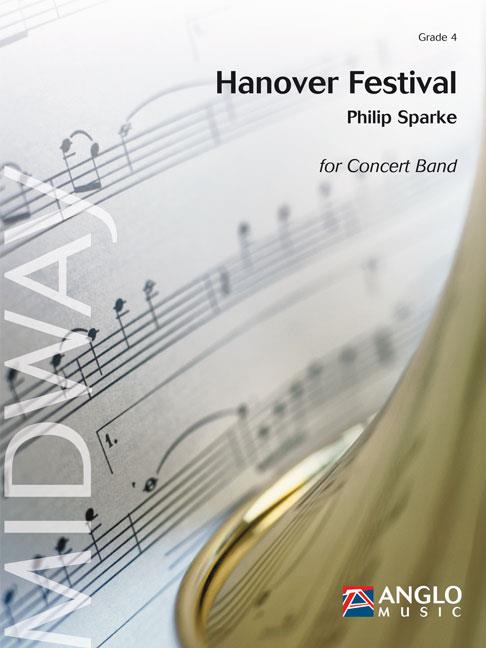
Hanover Festival (Concert Band - Score and Parts) - Sparke, Philip
The Hanover Wind Symphony, New Jersey, USA was founded in 1984 by its conductor Peter Boor. He commissioned Hanover Festival to celebrate the band's 15th Birthday and the first performance took place on October 27th 1999. The piece starts with a solemn brass fanfare. Woodwinds join in and the music subsides into an expressive chorale. A climax is reached and the fanfare returns. Trumpets introduce an explosive vivo section, characterised by an energetic theme from the horns and low clarinets. A bridge passage with strong brass chords leads to a playful section that introduces a legato central theme under woodwind figures. This is taken up by the full band, the playful music returns and the original horn tune is reintroduced. Finally the opening fanfare returns, this time accompanied by music from the vivo section, until a fast and furious coda closes the work.Duration: 8:20
Estimated dispatch 7-14 working days
-
 £79.95
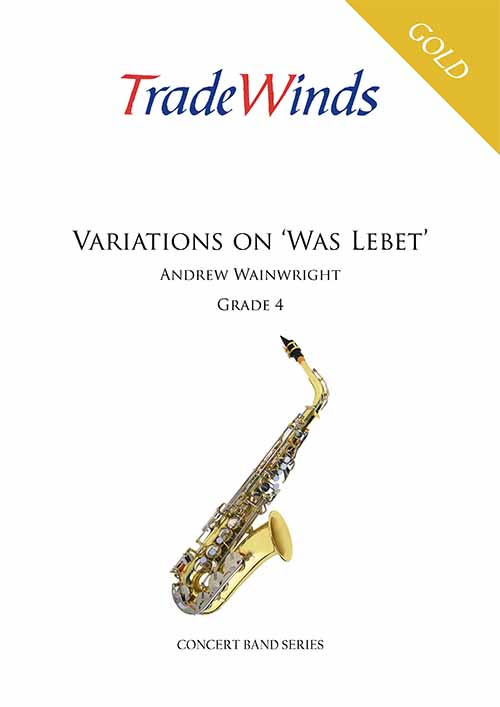
Variations on 'Was Lebet' (Concert Band - Score and Parts) - Wainwright, Andrew
Variations on 'Was Lebet' is based on the German chorale of the same name, the first line of which translates as 'O worship the Lord in the beauty of holiness!' The opening fanfare figure in the Trumpets should be supported by bold, organ-like sostenuto chords in the lower band. Ensure that the fanfare in the Trumpets and Trombones from bars 25 to 28 is given equal articulation and volume in the antiphonal parts. After this majestic introductory section, the first of five contrasting variations is presented, although the tune is never realised in full form until the final variation, with fragments gradually being revealed as the piece progresses.Variation I is somewhat classical in approach, with its energy coming from a regular contrast between cantabile references to the theme, set against lively staccato figures. Ensuring a lightness of touch will be important here; the music should be poised and never sound frantic. As a result, careful attention should be paid to the tempo marking, being no quicker than 136 beats per minute. Snippets of the chorale come and go, with the last phrase of the hymn completing the movement. This final statement, at bar 95, should be an immediate change in tempo and a separate statement to the music that comes before.Variation II is plaintive in mood, giving the listener the chance to reflect on the following words, which form part of the second verse: 'Comfort thy sorrows and answer thy prayerfulness, Guiding thy steps as may best for thee be.' There is opportunity for rubato in this movement, at the discretion of the conductor.Variation III is somewhat quirky and volatile in nature, and takes its inspiration from the 3rd and 4th verses which describe the fearful times in life that we must entrust to the Lord. Driven by the Percussion section in particular, there are references here to Variation I with its chorale-like figures and hurtling scalic figures, and there is a feeling of a lack of resolution. A somewhat abrupt ending suggests that our sense of completeness in Christ is yet to be resolved. It is important that clarity and tempo are maintained in the bass line between sections L and M. Aim for consistency of line in the bass parts, particularly with the trade-offs between players here.There is a French romantic feel to the waltz in Variation IV, with the opportunity for various soloists to display their musicianship. A sense of ironic humour pervades throughout. The Clarinet and Bassoon duet from section U should be playful and display a lightness of touch, with that sense of style continued throughout the movement.Variation V is fugal in nature, with each section of the band being handed the theme at various points. Again it is important that a steady tempo is set at Y in order to maintain control. The sense of momentum gradually increases to a grandiose presentation of the full theme, beginning at section CC, affirming our completeness in the Lord, with the words of the first and last verses reiterated: O worship the Lord in the beauty of holiness! Bow down before him, his glory proclaim; With gold of obedience and incense of lowliness, Kneel and adore him, the Lord is his name.Duration: 11.45
Estimated dispatch 7-14 working days
-
 £15.95
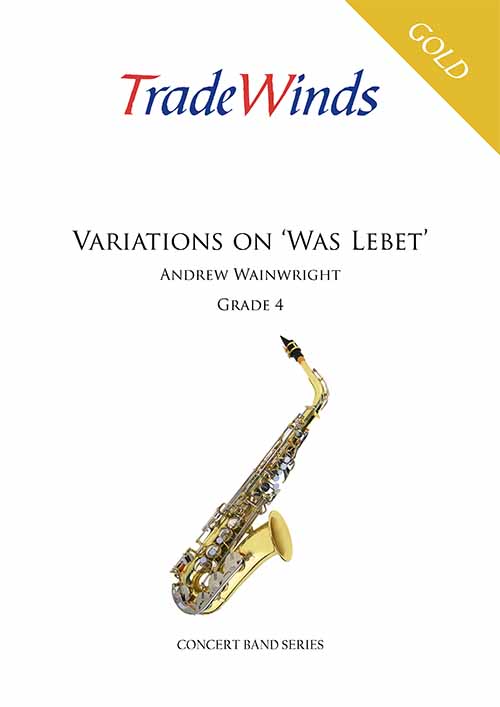
Variations on 'Was Lebet' (Concert Band - Score only) - Wainwright, Andrew
Variations on 'Was Lebet' is based on the German chorale of the same name, the first line of which translates as 'O worship the Lord in the beauty of holiness!' The opening fanfare figure in the Trumpets should be supported by bold, organ-like sostenuto chords in the lower band. Ensure that the fanfare in the Trumpets and Trombones from bars 25 to 28 is given equal articulation and volume in the antiphonal parts. After this majestic introductory section, the first of five contrasting variations is presented, although the tune is never realised in full form until the final variation, with fragments gradually being revealed as the piece progresses.Variation I is somewhat classical in approach, with its energy coming from a regular contrast between cantabile references to the theme, set against lively staccato figures. Ensuring a lightness of touch will be important here; the music should be poised and never sound frantic. As a result, careful attention should be paid to the tempo marking, being no quicker than 136 beats per minute. Snippets of the chorale come and go, with the last phrase of the hymn completing the movement. This final statement, at bar 95, should be an immediate change in tempo and a separate statement to the music that comes before.Variation II is plaintive in mood, giving the listener the chance to reflect on the following words, which form part of the second verse: 'Comfort thy sorrows and answer thy prayerfulness, Guiding thy steps as may best for thee be.' There is opportunity for rubato in this movement, at the discretion of the conductor.Variation III is somewhat quirky and volatile in nature, and takes its inspiration from the 3rd and 4th verses which describe the fearful times in life that we must entrust to the Lord. Driven by the Percussion section in particular, there are references here to Variation I with its chorale-like figures and hurtling scalic figures, and there is a feeling of a lack of resolution. A somewhat abrupt ending suggests that our sense of completeness in Christ is yet to be resolved. It is important that clarity and tempo are maintained in the bass line between sections L and M. Aim for consistency of line in the bass parts, particularly with the trade-offs between players here.There is a French romantic feel to the waltz in Variation IV, with the opportunity for various soloists to display their musicianship. A sense of ironic humour pervades throughout. The Clarinet and Bassoon duet from section U should be playful and display a lightness of touch, with that sense of style continued throughout the movement.Variation V is fugal in nature, with each section of the band being handed the theme at various points. Again it is important that a steady tempo is set at Y in order to maintain control. The sense of momentum gradually increases to a grandiose presentation of the full theme, beginning at section CC, affirming our completeness in the Lord, with the words of the first and last verses reiterated: O worship the Lord in the beauty of holiness! Bow down before him, his glory proclaim; With gold of obedience and incense of lowliness, Kneel and adore him, the Lord is his name.Duration: 11.45
Estimated dispatch 7-14 working days
 View Music