
Results
-
 £100.00
Heal (Concert Band - Score and Parts) - Smith, Robert W.
Suite for the Heroes Among Us is a musical tribute from master composer Robert W. Smith to the everyday heroes that dedicate their lives to the care and protection of us all. The second movement Heal is dedicated to the medical professionals that care for us each and every day. We owe an eternal debt of gratitude to the doctors, nurses, paramedics, pharmacists, hospital workers and others who give selflessly of their time and talent for the greater good of all. A emotionally powerful musical statement that is programmable and appropriate in every community in the world. Duration: 5.15
Estimated dispatch 7-14 working days
-
 £225.00
Snowdonia (Concert Band - Score and Parts) - Glyn, Gareth - Noble, Paul
From the composer's home on Anglesey, the magnificent mountain range of Eryri ('abode of the eagles'), known as Snowdonia in English, can be seen clearly, and it is this fine view that spurred him to compose this tone-poem. Just as the mountains change from season to season, and the view alters as one climbs the slopes, there are several distinct and contrasting sections to the piece itself. First we hear the bustle and excitement of the area in summer, as tourists flock to the foot of Snowdon; then an impression of the confident striding of those setting off to climb. After a brisk climax, the codetta to the energetic theme becomes the basis of a new, folk-like, idea which develops into a majestic anthem suggesting the grandeur of the mountain-range. The famous little train of Snowdon is brought to mind by a repetitive, mechanical idea which leads to a section combining both the main themes of excitement and grandeur, and to a powerful climax. Then, after a moment of silence, the atmosphere changes completely. Here is the ineffable solitude - and timeless beauty - of Snowdonia; but from the cellos (saxophone) we soon hear the folk-like theme slowly re-asserting itself, resolving into a peremptory fanfare which leads back to the opening mood and a return of the opening theme. But the final word is given to the 'solitude' motive, now transformed into a resolute chorale representing the eternal permanence of these extraordinary mountains.
Estimated dispatch 7-14 working days
-
 £159.99
Tarjan (Concert Band - Score and Parts) - Deleruyelle, Thierry
Tarjan, Hungarian Pictures is a work in three movements commissioned by the town of Vesoul and its concert band. This work pays tribute to Jean-Marie Goux, the band's former musical director, who had forged strong links with Hungary: whether in the village of Tarjan or Budapest itself, he had shared his zest for life with the Hungarian people. This colourful work consists of three movements: The 7th Tribe, Eternal Fidelty and Conquest of the Homeland. It offers not only strong musical content, but also historical insight about a beautiful region with a great tradition.Duration: 12.00
Estimated dispatch 7-14 working days
-
 £44.95
New Beginnings (Concert Band - Score and Parts) - Wiffin, Rob
New Beginnings?is a joyous and exuberant outburst, an affirmation of the eternal hope of the human spirit.??It starts and ends with the drama and splendour of a simple fanfare and the sections in between are full of energy, drive and purpose.
Estimated dispatch 7-14 working days
-
 £84.99
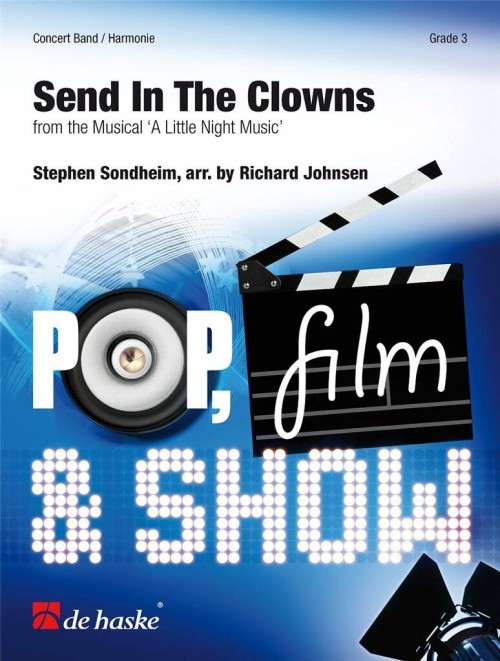
Send in the Clowns (Concert Band - Score and Parts) - Sondheim, Stephen - Johnsen, Richard
From A Little Night MusicSend in the Clowns is one of the most well known songs written by composer Stephen Sondheim. The ironic lyrics have a present-day meaning. It was recorded by the likes of Judy Collins, Frank Sinatra and Barbra Streisand. Between them all, they brought this song eternal fame. The Norwegian arranger, Richard Johnsen, who is very familiar with this musical repertoire, made this beautiful arrangement and kept it very close to the sound of the original version.Duration: 4.00
Estimated dispatch 7-14 working days
-
 £32.95
Trombone Concerto (Trombone Solo with Concert Band - Score only) - Wiffin, Rob
The composer writes:My Trombone Concerto was commissioned by Brett Baker following an earlier piece I had written for him called Shout. The concerto was composed in Spain the summer of 2010. Once I started writing I realised this concerto was, inevitably, going to draw on my own experiences as a trombone player.The first movement was really a matter of getting the right thematic ideas and balancing the tutti and solo passages so, for formal structure, I studied the Gordon Jacob Trombone Concerto. There is a lyrical section preceding the first Allegro that owes much in spirit (but not the actual music) to The Eternal Quest, Ray Steadman-Allen's Salvation Army solo.The slow movement seemed determined to come out in the vein of a Richard Strauss song. I wanted to write ineluctably cantabile as we trombone players rarely get a chance to play the melody! There is a brief allusion to that wonderful moment when the trombone gets to sing above the orchestra in Sibelius' seventh symphony. Arthur Wilson (my teacher at college) died in the summer of 2010 so it seemed appropriate to dedicate this movement to him.The last movement is the lightest of the three in style and is slightly jazz-inflected, hopefully providing some fun for the soloist.While wanting to test the instrument, I did not set out with the intention of making the concerto difficult but there are undoubtedly challenges of technique, range and style to be met by the soloist.Recorded on Polyphonic CD QPRM161D Roman TrilogyDuration: 19:30
Estimated dispatch 7-14 working days
-
£164.95
Trombone Concerto (Trombone Solo with Concert Band - Score and Parts) - Wiffin, Rob
The composer writes:My Trombone Concerto was commissioned by Brett Baker following an earlier piece I had written for him called Shout. The concerto was composed in Spain the summer of 2010. Once I started writing I realised this concerto was, inevitably, going to draw on my own experiences as a trombone player.The first movement was really a matter of getting the right thematic ideas and balancing the tutti and solo passages so, for formal structure, I studied the Gordon Jacob Trombone Concerto. There is a lyrical section preceding the first Allegro that owes much in spirit (but not the actual music) to The Eternal Quest, Ray Steadman-Allen's Salvation Army solo.The slow movement seemed determined to come out in the vein of a Richard Strauss song. I wanted to write ineluctably cantabile as we trombone players rarely get a chance to play the melody! There is a brief allusion to that wonderful moment when the trombone gets to sing above the orchestra in Sibelius' seventh symphony. Arthur Wilson (my teacher at college) died in the summer of 2010 so it seemed appropriate to dedicate this movement to him.The last movement is the lightest of the three in style and is slightly jazz-inflected, hopefully providing some fun for the soloist.While wanting to test the instrument, I did not set out with the intention of making the concerto difficult but there are undoubtedly challenges of technique, range and style to be met by the soloist.Recorded on Polyphonic CD QPRM161D Roman TrilogyDuration: 19:30
Estimated dispatch 7-14 working days
-
 £164.95
Amphibiosity (Concert Band - Score and Parts) - Ellerby, Martin
Amphibiosity was commissioned by the Royal Marines Band Service with funds made available by the Royal Navy and Royal Marines Charities for the 2014 Mountbatten Festival of Music held at the Royal Albert Hall in London.The work was written in celebration of the 350th Anniversary of the Royal Marines Corps and utilises many familiar tunes associated with them. Although the piece is cast in one continuous movement it falls into an introductions, ten sections and a coda.The Introduction sets the tone with the Amphibiosity mofif - a call to attention, it is of serious intent. During the course of the work it returns as a point of reference. The first section makes use of The Globe and Laurel (Original Regimental Slow March of the Royal Marines, the tune (Early One Morning) making an apt appearance, it has been played in the minor and like much of the quotational material in the piece is of a referenced nature being symbolic in meaning. However it soon turns to the major to provide a less sombre aspect to the introduction proper. There follows an interlude, the Amphibiosity motif returning rather like a ritornello to give cohesion to the structure and act as a point of change.Section two presents Sarie Marais (Regimental March Past of the Royal Marine Commandoes), the first half of the tune used as a fugal subject (placed in the minor) and as such providing the impression of a building up of activity. The ensuing third section is light-hearted commencing with an original hornpipe leading into the fourth section, Seascape, representing the fleet at sea. Another interlude follows, the Amphibiosity motif reappearing as a woodwind fanfare making way for the fifth section. Anticipation, serious matters lie ahead, there is trouble in the papers, the Corps will be placed on standby.Section six is subtitled Preparation, all hands-on deck, time to get set: A Life on the Ocean Wave (Regimental March of the Royal Marines) is alluded to. On reaching section seven, Assault, the landing goes ahead. Within this section there is an internal interlude reflecting on things past: other men have been in this position before. It is a taut and trying situation, training must pay off!Section eight is named Victory, but not gung-ho, and here the Seascape music is revisited. The penultimate ninth section is called Rememberances, although all made it this time, it was not always the case in times past and the Naval Hymn (Eternal Father) provides a moment of tribute to the fallen of previous generations.The Finale (section ten) delivers By Land and Sea (Slow March of the Royal Marines) in a bright and positive orchestration, the mood being celebratory. In a brief Code, the Amphibiosity motif makes a last triumphant appearance.Duration: 10.30
Estimated dispatch 7-14 working days
-
 £32.95
Amphibiosity (Concert Band - Score only) - Ellerby, Martin
Amphibiosity was commissioned by the Royal Marines Band Service with funds made available by the Royal Navy and Royal Marines Charities for the 2014 Mountbatten Festival of Music held at the Royal Albert Hall in London.The work was written in celebration of the 350th Anniversary of the Royal Marines Corps and utilises many familiar tunes associated with them. Although the piece is cast in one continuous movement it falls into an introductions, ten sections and a coda.The Introduction sets the tone with the Amphibiosity mofif - a call to attention, it is of serious intent. During the course of the work it returns as a point of reference. The first section makes use of The Globe and Laurel (Original Regimental Slow March of the Royal Marines, the tune (Early One Morning) making an apt appearance, it has been played in the minor and like much of the quotational material in the piece is of a referenced nature being symbolic in meaning. However it soon turns to the major to provide a less sombre aspect to the introduction proper. There follows an interlude, the Amphibiosity motif returning rather like a ritornello to give cohesion to the structure and act as a point of change.Section two presents Sarie Marais (Regimental March Past of the Royal Marine Commandoes), the first half of the tune used as a fugal subject (placed in the minor) and as such providing the impression of a building up of activity. The ensuing third section is light-hearted commencing with an original hornpipe leading into the fourth section, Seascape, representing the fleet at sea. Another interlude follows, the Amphibiosity motif reappearing as a woodwind fanfare making way for the fifth section. Anticipation, serious matters lie ahead, there is trouble in the papers, the Corps will be placed on standby.Section six is subtitled Preparation, all hands-on deck, time to get set: A Life on the Ocean Wave (Regimental March of the Royal Marines) is alluded to. On reaching section seven, Assault, the landing goes ahead. Within this section there is an internal interlude reflecting on things past: other men have been in this position before. It is a taut and trying situation, training must pay off!Section eight is named Victory, but not gung-ho, and here the Seascape music is revisited. The penultimate ninth section is called Rememberances, although all made it this time, it was not always the case in times past and the Naval Hymn (Eternal Father) provides a moment of tribute to the fallen of previous generations.The Finale (section ten) delivers By Land and Sea (Slow March of the Royal Marines) in a bright and positive orchestration, the mood being celebratory. In a brief Code, the Amphibiosity motif makes a last triumphant appearance.Duration: 10.30
Estimated dispatch 7-14 working days
-
 £79.99
Siorai September (Concert Band - Score and Parts) - Hazo, Samuel R.
Translated from Gaelic as "Eternal September," this marvellous setting for band is designed to take each listener back to their own vivid fall memories on a college campus. Commissioned by the University of Notre Dame and premiered at their Carnegie Hall performance in 2010, this work is also dedicated to the composer's father, Dr. Samuel J. Hazo, a 1949 graduate of Notre Dame. Additionally, Dr. Hazo's poem "Home Are the Sailors" is incorporated in the middle of the piece. Rich in musical references and varied textures, this is a dramatic and rewarding work for mature ensembles.Duration: 5:30
Estimated dispatch 7-14 working days
 View Music