
Results
-
 £109.50
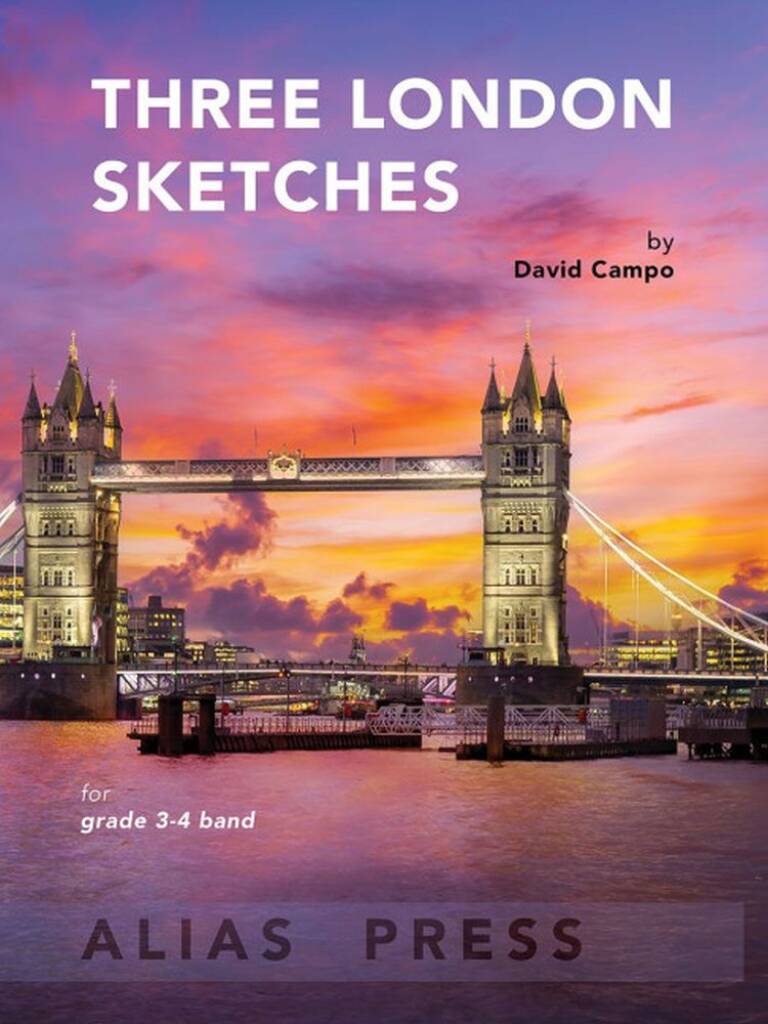
Three London Sketches - David Campo
London is one of my favorite cities in the world, and in 2016 I was invited there to serve as an adjudicator for the London New Year's Day Parade and Gala Concerts. While I was there, I was fortunate to meet and spend time with The Lord Mayor of Westminster Councillor Steve Summers. While his title sounds formidable and intimidating, I found Steve to one of the nicest, most easygoing people I've ever met. And boy, does he love London! He was fond of saying that he had "the best job in the greatest city in the world." He spoke passionately about London and his favorite places in the city, and his enthusiasm was contagious. Some of his favorite places became some of my favorite places, and the inspiration for this piece. I hope that this work not only conveys the beauty and history of these iconic places, but Steve's deep and abiding love for them as well. I. Tower Bridge - The Tower Bridge was built over 120 years ago to ease road traffic while maintaining river access to the busy Pool of London docks. Its giant moveable roadways lift up for passing ships, making it a true engineering marvel. It is also one of the most iconic sites in London, and was used to display the Olympic Rings during the 2012 Olympics. II. St. Paul's (The Whispering Gallery) - The history of St. Paul's Cathedral goes back well over a thousand years, but construction on the current St. Paul's began in 1669 after a fire destroyed the earlier structure. The dome of St. Paul's Cathedral is a whispering gallery; you can whisper against the wall on the inside of the dome and it can be clearly heard on the other side of the dome over 100 ft. away. Imagine the secrets that have passed there... III. Trafalgar Square - The name commemorates the 1805 naval Battle of Trafalgar and is marked by Nelson's Column, a monument to Admiral Horatio Nelson, the hero of the Battle of Trafalgar. It is the heart of London; full of life and constant energy and home to iconic buildings including the National Gallery, St. Martin-in-the-Fields, Canada House and South Africa House. Londoners say that all roads in London lead to Trafalgar Square.
Estimated dispatch 7-14 working days
-
 £119.00
Heritage - Shawn E. Okpebholo
Shawn Okpebholo's Heritage, in the Edition Peters Concert Band Series, evokes moods, events and sounds (including West African drumming and indigenous melodies) from an ethnomusicological research visit the composer undertook to Nigeria. One of the primary musical themes of the work is an adaptation of a song that comes from the Esan people, a small ethnic group in the southern part of Nigeria and the tribe to which the composer has deep historical and family ties.The Esan language is poetic in nature and, at various moments in the work, the musicians chant the text from an Esan song: Ekine leleyea do obhimen la doeki nalo (My investment in you is paid off. Because of your hard work, your future is bright).Heritage is a revised version of a work previously entitled This is Africa, which was commissioned by Professor Marcellus Brown and the Boise State University Symphonic Winds for the 2011 National CBDNA Convention and is dedicated to the memory of Dr Harry Begian.
Estimated dispatch 7-14 working days
-
 £127.00
Ray of Light - Kevin Houben
Ray of light was composed for the 75th anniversary of the Royal Wind Band (De Heidegalm Berkenbos). The mining environment of Berkenbos (Heusden-Zolder, B) is a proof of what used to be one of the most flourishing industries inLimburg viz. the Mining Industry. Going down the shaft in the elevator for the first time was a sensational experience for every miner: the noise of the closing doors, the shock experienced when the lift cage started moving tofall down whizzingly into the deep at a speed of 30 km an hour. The opening theme of Ray of Light doesn't only reflect the bravery of the descending miners but also their anxiety, their doubt and insecurity. In the solo passage,the anxiety during the long walk in the dark through the mine corridors with only headlamps and mine lamps is clearly audible. Working in the mines wasn't without any danger. The very flammable and at times explosive mine gasesalways posed a hidden threat. Apart from that there was always the continuous danger of collapse. The beautiful choral movements are therefore an ode to the miners that left their lives in the mine. The eastern scale refers tothe multicultural character of the mining environment of Berkenbos with its many commercial shops and different types of housing inherent in mining architecture. The mining profession is still a very dangerous job, but at the endof the dark corridor the miners still see a beam of light as a sign of hope.
Estimated dispatch 7-14 working days
-
 £109.99
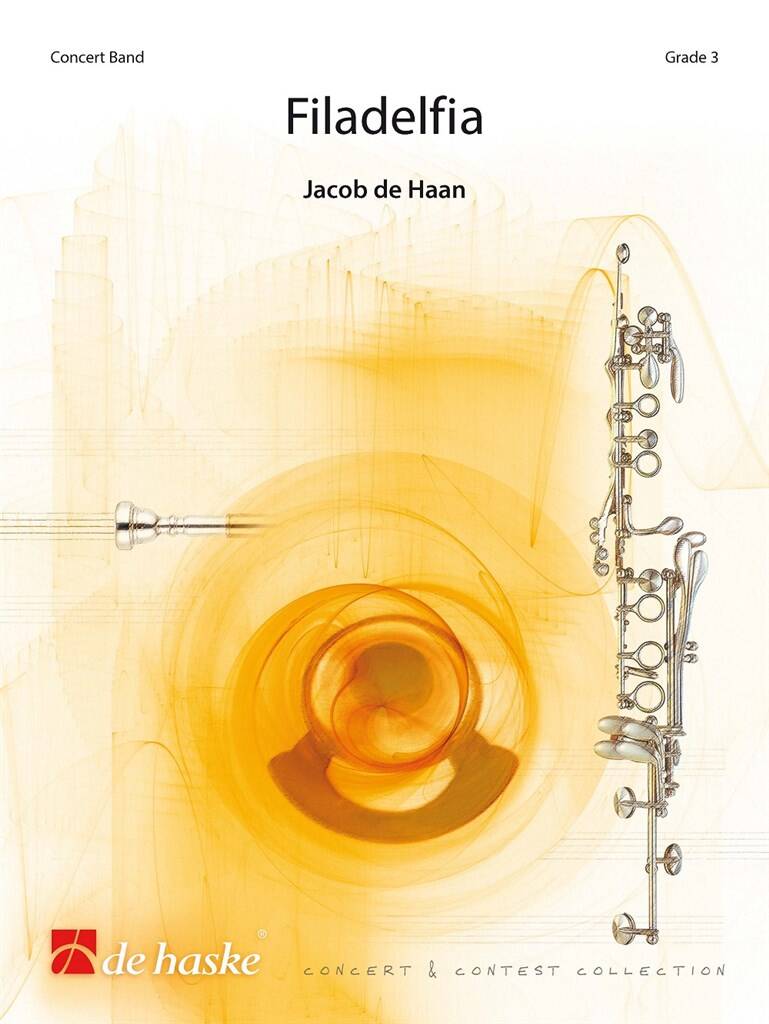
Filadelfia - Jacob de Haan
Filadelfia is a small town in the province of Vibo Valentia in the southern Italian region of Calabria. In 1783 the town suffered a devastating earthquake. This work depicts the events before and after the disaster, and starts peacefully, with dance-like music sounding in the streets. After this the earthquake destroys everything, causing deep despair. In the end, the town is being rebuilt, which calls for a festive celebration!
Estimated dispatch 7-14 working days
-
 £115.60
Riv i hjertet - Sondre Justad
The singer/ songwriter Sondre Justad was born in Lofoten in the north of Norway in 1990. His first album Riv i hjertet was released in 2015, and it became a huge success. He got very fine reviews in some of the largest norwegian newspapers, and the title-song was played frequently on the national radio-stations. The song title could loosely be translated as pulling at my heartstrings, and the song has a deep and dark meaning, with the opening lyrics sounding: If I knew - that I would be dying soon, would I be happy with the way I am living my life
Estimated dispatch 7-14 working days
-
 £131.00
Winds of Hope - Franco Cesarini
Winds of Hope is an overture for wind orchestra that celebrates the zest for life, the ability to look beyond the horizon and always find a way, even in adversity.Through a musical journey that opens with a lyrical and airy theme, like a wind that brings with it promises of renewal, the music comes alive with rhythmic and vibrant bursts, full of energy and determination. In the central part the lyrical and expressive character re-emerges, like a deep breath that instils a sense of calm and invites reflection. The finale culminates in an overwhelming rhythm that envelops the listener like an enchanted carousel in a whirlwind of light and motion. Winds of Hopeis an ode to fortitude and the will to embark on life's journey with courage, letting oneself be guided by the wind of hope.
Estimated dispatch 7-14 working days
-
£106.95
Dream, Imagine, Live - Larry Clark
The inspiration for this piece comes from one of Henry David Thoreau's most famous quotes - Go confidently in the direction of your dreams! Live the life you've imagined. It was Thoreau's vision that we contemplate a simpler life and be deep thinkers about what we want our lives to be. The piece is divided into three distinct sections based on the same three-note motive. The first section is intense and bold, the second is introspective and lyrical and the third is dance-like, almost reminiscent of a Celtic folk song, in lilting in 6/8. This perfect contest or festival selection will highlight your band's strengths.
Estimated dispatch 7-14 working days
-
 £98.99
ConnectUS - Carol Brittin Chambers
Commissioned by the ATSSB All-State band ConnectUS is all about the deep and personal connections we all form as human beings. Uniquely human, this new work is full of positive emotional peaks, as well as gentle reminders of lower points in life, all culminating in the wonder that is our short, yet remarkable existences in the cosmos!
Estimated dispatch 7-14 working days
-
 £91.99
Fanfare & Hymn - Bert Appermont
This composition begins with a stately brass fanfare, which leads to a tuneful hymn. After gradual development, both melodies sound together in a grand tutti.Fanfare & Hymn was commissioned by the Royal Concert Band Ons Verlangen, Beverst (Belgium), as a tribute to the committee members and musicians Edgard Thijssen and Jos Appermont. They were like father figures who, with their lasting commitment, helped the band become the thriving music society that it is to this day.Based on this theme, I have tried to evoke various emotions and atmospheres: the pride that characterises the group, nostalgia for the wonderful time both musicians experienced in the band, and finally, deep gratitude for everything they did.Bert Appermont
Estimated dispatch 7-14 working days
-
 £139.99
Golden Peak - Thierry Deleruyelle
Golden Peak is a concert piece that takes us deep into the world of volcanoes of the Auvergne in central France. They are dormant volcanoes whose origins date back from 7,000 to over 65 million years ago. Among the most well-known are the 80 volcanoes of the Chane des Puys, a spectacular natural environment ranking among the most fascinating landscapes in the world. The title of this dynamic and rhythmic piece is a reference to the local spa town of Mont-Dore and calls upon all sections of the orchestra. The central theme is very mellow yet riveting and the music depicts both the dynamism and tranquillity of the region.
Estimated dispatch 7-14 working days
 View Music