
Results
-
 £67.32
Dancing With The Wind
A distinctive and stimulating concert piece for intermediate level bands and an outstanding choice for any contest or concert performance. Bold and dynamic, it effectively conveys the invigorating interplay of wind and motion as you hear sections that represent a brisk wind, a relaxing breeze and an approaching storm. Includes attainable challenges for every section of the band! EXTREMELY NICE!
Estimated dispatch 7-14 working days
-
£54.95
GHOST DANCING (Easy Concert Band) - Karrick, Brant
Introduce your young band to contemporary compositional techniques through this modern piece with edgy, biting dissonance - drawing some of its inspiration from the musical style of Bartok. Relief from the tension is provided by a contrasting lyrical middle section that leads back to the aggressive main theme.
Estimated dispatch 7-14 working days
-
 £104.99
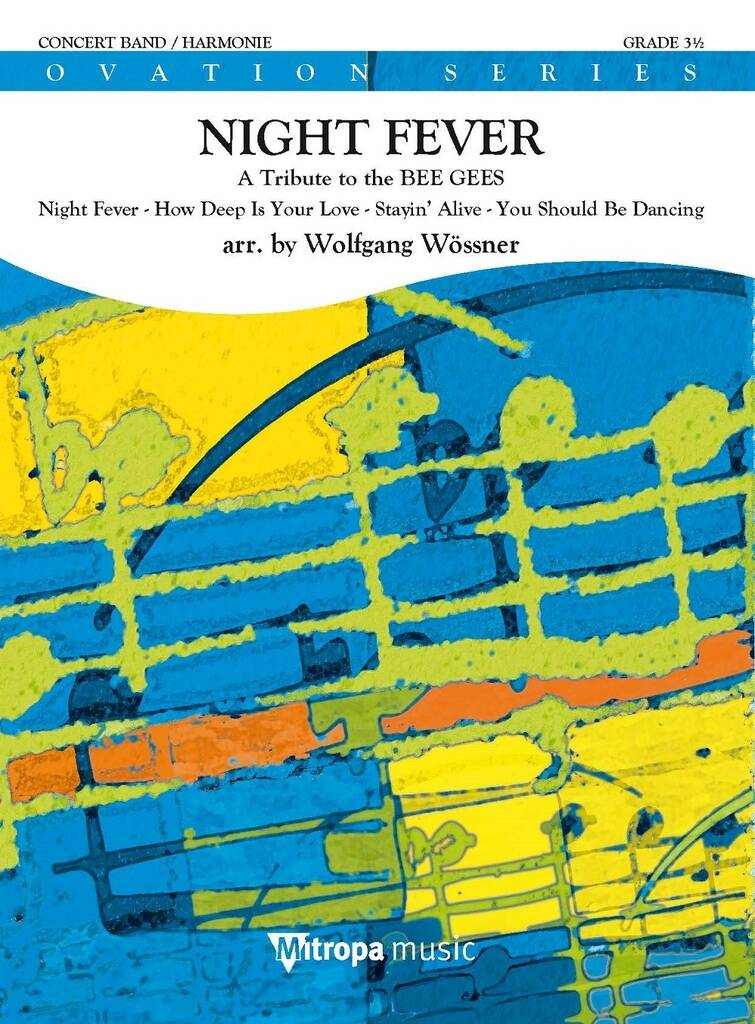
NIGHT FEVER - A Tribute to the BEE GEES
Experience the glory days of disco with NIGHT FEVER - A Tribute to the BEE GEES. This spectacular medley, arranged by Wolfgang Wssner, brings the greatest hits of the legendary pop group Bee Gees back to life. Enjoy the irresistible disco beats of Night Fever, the romantic ballad How Deep Is Your Love, the iconic rhythms of Stayin' Alive, and the danceable grooves of You Should Be Dancing. Let's go back to a time of glitter, glamour and endless dancing fun!
Estimated dispatch 7-14 working days
-
£164.99
Four Colonial Country Dances - James Curnow
Throughout the colonial period in America, country dancing was the principal recreation of all social classes. Americans had inherited this tendency from Elizabethan England, and many continental Europeans also took up English country dancing as their own. Four Colonial Country Dances feature country dance tunes that were indigenous to New England and particularly to the Boston area.
Estimated dispatch 7-14 working days
-
 £113.30
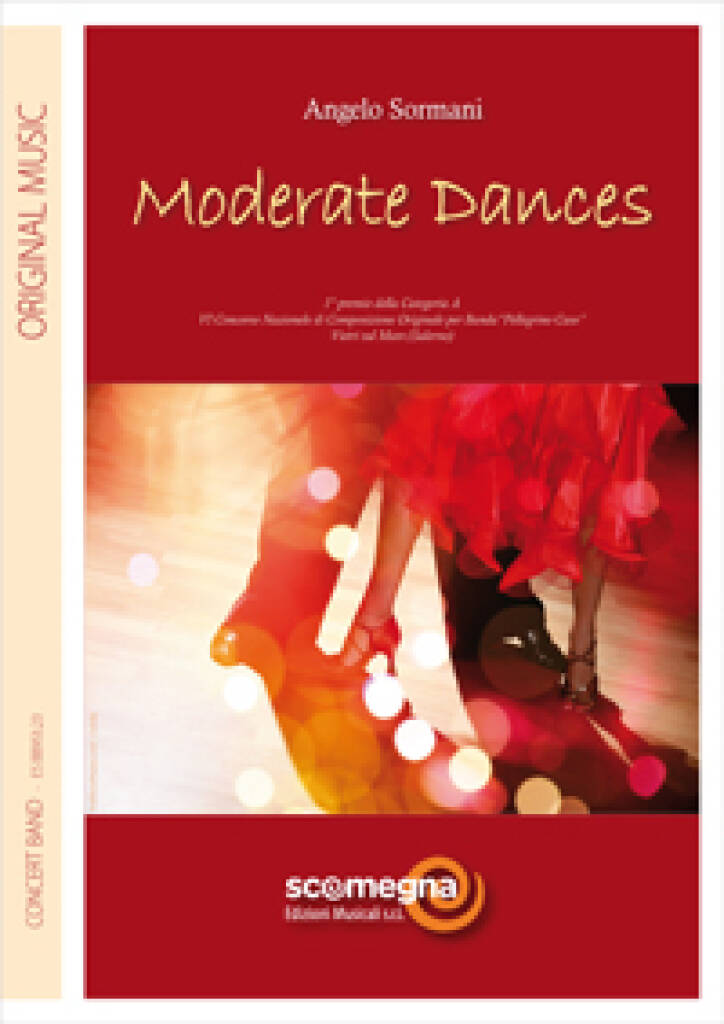
Moderate Dances - Angelo Sormani
This piece is a tribute to dance music, especially passionate, intense and meditative dance music. "Moderate Dances" is divided into three movements: a "Tango", a "Slow Waltz" and a "Bossa Nova". Each movement and each dance has its own particular characteristics but, when combined, these different rhythmic beats and times give the piece a feeling of completeness and uniformity. The Tango started to flourish in the suburbs of Buenos Aires in around 1880. There is still some doubt as to its origins, which may be Cuban (Habanera) but are probably African. It was most popular in Argentina and Brazil: here the male protagonist was originally the "gaucho" with his inseparable guitar, later to be replaced by the proud, elegant "compadre". By around 1910 the Tango had spread to Italy and France. New clubs opened, where the upper classes could watch and dance the Tango. Here the dance also underwent some rapid transformations. The exaggerated and extravagant gestures and body movements disappeared. Slow, gliding steps replaced the old rotational movements. The women's red ankle-boots and the partners "staring into each other's eyes" accentuated the erotic nature and sensuality of this dance. So much so that, in 1913, the German government banned soldiers from dancing the Tango. Those who broke the law were immediately discharged from the army. From a strictly musical perspective, the basic instruments were a flute, a harp (the diatonic harp typically played by the Indians of Paraguay) and a violin, or flute, guitar and violin or even clarinet, guitar and violin. These instruments were easy to transport, ideal for playing at parties, in the streets and in courtyards. The musicians played by ear, frequently improvising: there were no scores, no records, which is the main reason why it is impossible to trace the Tango back to its exact origins. However, the Tango's evolution (and growing popularity) was once again fostered by its fundamental ability to absorb "other" cultures, languages and sounds. And it was the arrival of the "bandoneon" (an accordion-like instrument that was invented in Germany and brought to Rio de la Plata by some immigrant), which replaced the flute, that marked the beginning of the Tango's huge success outside Argentina. A number of talented composers, above all the great Astor Piazzola (1921-1992), transformed the bandoneon from a simple accompanying instrument to a solo instrument that was to become the distinguishing feature of the 20th century Tango. The Slow Waltz originated from the Waltz, the typical dance of the Bavarian and Tyrolese peasants in the 1700s. It was composers like Johann Strauss, father and son, who carried the Waltz to its zenith in the 1800s, creating the sensual and melancholy yet joyful and charming dance we are all familiar with. When the Waltz first became popular in Germany, the members of respectable society were shocked at the closeness of the dancing partners, who had always previously danced apart. The main difference between the Waltz and Slow Waltz is that the latter has a slower, more expressive rhythm: the men wear tails and the women wear ball gowns decorated with beads and feathers and couples dance in graceful rotational movements. "Bossa Nova" is the title of the last movement in the piece. Jobim, the great Brazilian musician, described this musical genre as a combination of modern Jazz and Samba. Bossa Nova means "new wave". This was the name of the artistic and musical movement that evolved in Brazil in the late Fifties and was extremely popular throughout the Sixties. The songs are usually about love or social matters, drawing inspiration from the slums of Rio De Janeiro and the lives of their inhabitants. Bossa Nova, with its original compositions and the artistic talent of its musicians, also became hugely popular in the United States and Europe, and top Jazz musicians (Ella Fitzgerald, Stan Getz, Bob Cooper, Charlie Bird, Sonny Rollins, Dexter Gordon, Dizzy Gillespie) started to include Bossa in their repertoires.
Estimated dispatch 7-14 working days
-
 £72.99
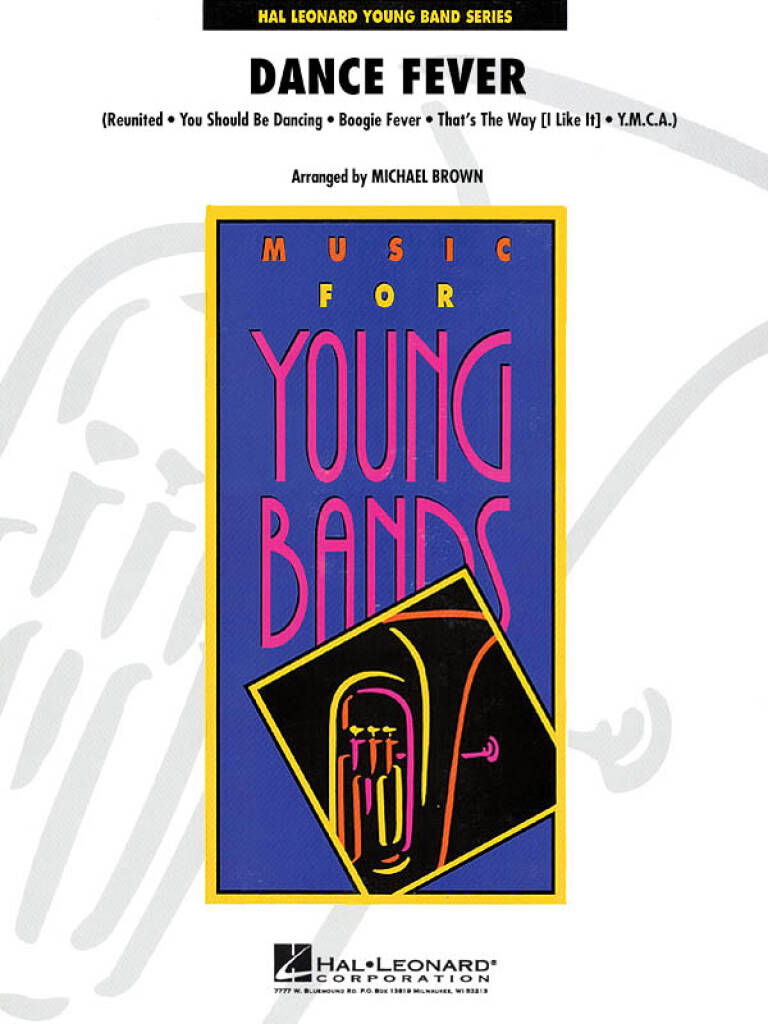
Dance Fever
The dance music of the '70s and the disco age is popular again thanks in part to TV shows like Dancing with the Stars. Here is an entertaining medley featuring some of the best riffs and grooves from that era. Includes: You ShouldBe Dancing (Bee Gees), Boogie Fever (The Sylvers), Reunited (Peaches & Herb), That's the Way (I Like It) (KC & the Sunshine Band) and Y.M.C.A. (Village People). Dur: 5:30
Estimated dispatch 7-14 working days
-
 £60.99
Hip, Hip, Jorge! - Jorge L. Vargas
This percussion leads the party in this sensational Latin work with a catchy title and even catchier melody that will keep your kids practicing and your audience dancing. Based on the son clave rhythm, this work is full of syncopations and salsa rhythms and covers a wide variety of dynamics and articulations. All sections enjoy amazing parts. A must-have in every library!
Estimated dispatch 7-14 working days
-
 £72.99
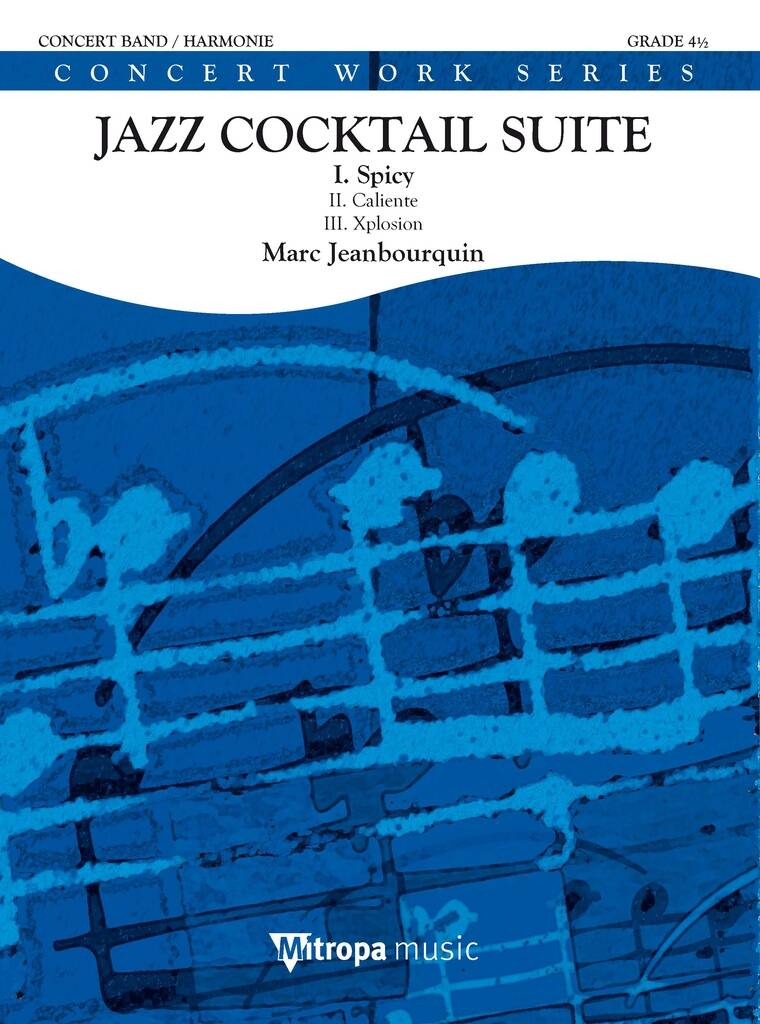
Jazz Cocktail Suite - I. Spicy - Marc Jeanbourquin
Jazz Cocktail Suite is a sparkling work in three movements where every note is an explosion of flavours! The light and festive first movement (Spicy) begins with sparkling brass and dancing rhythms, then we're off to Latin America, with its bewitching rhythms and sunny melodies, for the second movement (Caliente). Finally, the third movement (Xplosion) tops it all off with a musical explosion of swing, groove, solos, and pure energy.This piece can be performed as a whole, but it is also possible to play just one of the movements, which can be ordered by way of the following edition numbers:2260-26-010 MI. SPICY2261-26-010 MII. CALIENTE2262-26-010 MIII. XPLOSION
Estimated dispatch 7-14 working days
-
 £76.99
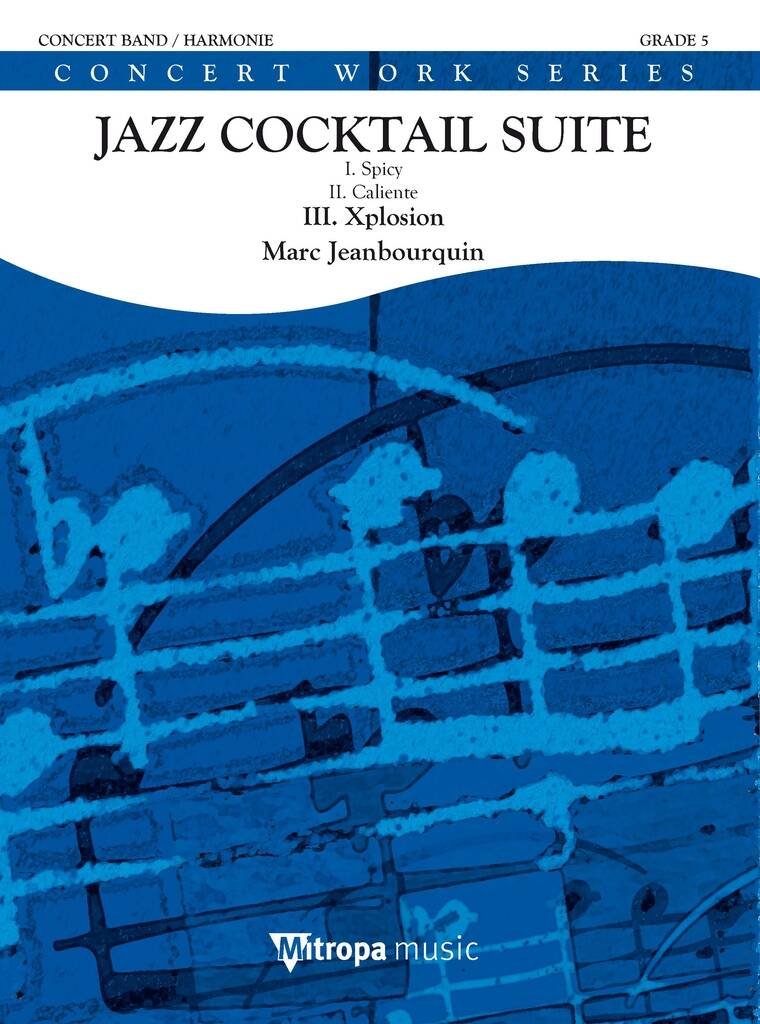
Jazz Cocktail Suite - III. Xplosion - Marc Jeanbourquin
Jazz Cocktail Suite is a sparkling work in three movements where every note is an explosion of flavours! The light and festive first movement (Spicy) begins with sparkling brass and dancing rhythms, then we're off to Latin America, with its bewitching rhythms and sunny melodies, for the second movement (Caliente). Finally, the third movement (Xplosion) tops it all off with a musical explosion of swing, groove, solos, and pure energy.This piece can be performed as a whole, but it is also possible to play just one of the movements, which can be ordered by way of the following edition numbers:2260-26-010 MI. SPICY2261-26-010 MII. CALIENTE2262-26-010 MIII. XPLOSION
Estimated dispatch 7-14 working days
-
 £68.99
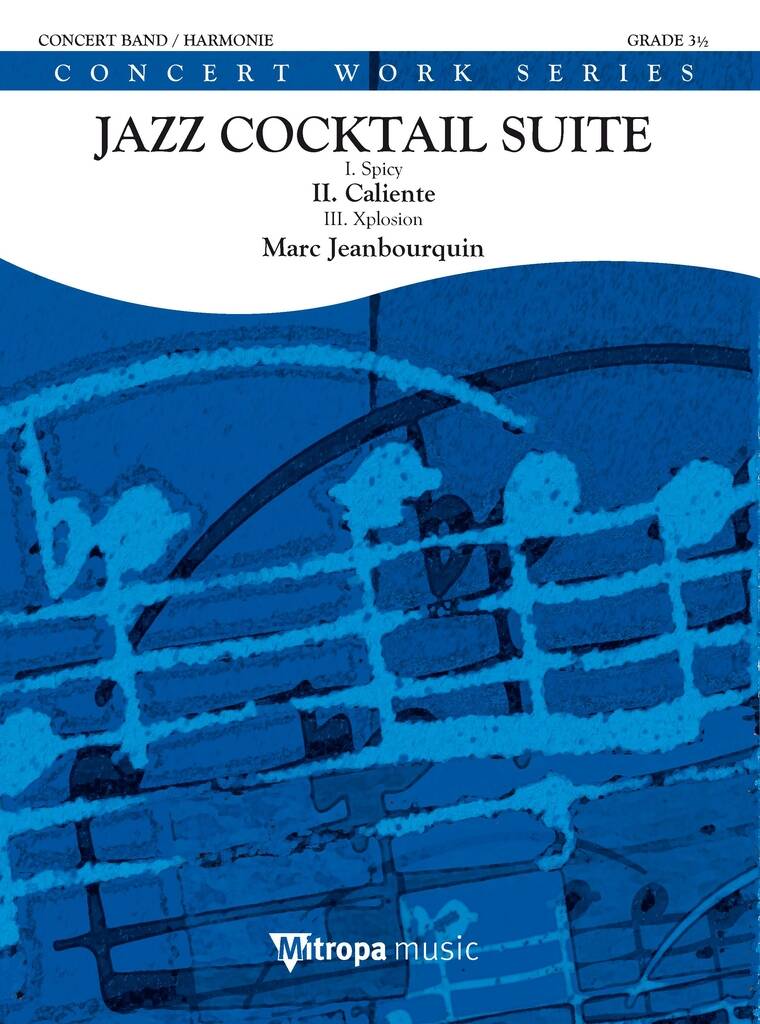
Jazz Cocktail Suite - II. Caliente - Marc Jeanbourquin
Jazz Cocktail Suite is a sparkling work in three movements where every note is an explosion of flavours! The light and festive first movement (Spicy) begins with sparkling brass and dancing rhythms, then we're off to Latin America, with its bewitching rhythms and sunny melodies, for the second movement (Caliente). Finally, the third movement (Xplosion) tops it all off with a musical explosion of swing, groove, solos, and pure energy.This piece can be performed as a whole, but it is also possible to play just one of the movements, which can be ordered by way of the following edition numbers:2260-26-010 MI. SPICY2261-26-010 MII. CALIENTE2262-26-010 MIII. XPLOSION
Estimated dispatch 7-14 working days
 View Music