
Results
-
 £55.00
Folk Dance and Carol (concert band) - Tim Paton
A festive, musical cocktail by Tim Paton for concert band, bringing together a folk-feel dance motif and a familiar carol, to create the atmosphere of a village celebration.Opening with a lively Jig, where the music joyfully dances around the band, the piece then settles to offer the tranquility of Gustav Holst's beautiful melody In the Bleak Mid-Winter.This peacefulness is soon overtaken by the reintroduction of the dance motif, finishing off the musical celebration with the dance and the carol mingling together.A very nice addition to Christmas repertoire, presenting a little bit of tradition amidst some lovely, imaginative scoring.Also available for brass band.
In stock: Estimated delivery 1-3 days
-
£13.95
Spirit of the Dance
1Their Finest HourNigel ClarkeRoyal Northern College of Music Wind Orchestra5.002A Norfolk RhapsodyMartin EllerbyRoyal Northern College of Music Wind Orchestra10.113Looking InTom DavorenRoyal Northern College of Music Wind Orchestra10.054-6Cinnamon ConcertoMartin EllerbyRob Buckland (Alto Saxophone) with Royal Northern College of Music Wind Orchestra I. The Fast Lane 5.57 II. The Night hawks 8.23 III. The Razzle Dazzle! 3.467Harlech VariantsDuncan StubbsRoyal Northern College of Music Wind Orchestra9.398-10Spirit of the DanceRob WiffinRoyal Northern College of Music Wind Orchestra I. Stomping Dance 4.29 II. Waltz Interlude 3.54 III. Duende 4.09
Estimated dispatch 7-14 working days
-
 £113.30
Moderate Dances - Angelo Sormani
This piece is a tribute to dance music, especially passionate, intense and meditative dance music. "Moderate Dances" is divided into three movements: a "Tango", a "Slow Waltz" and a "Bossa Nova". Each movement and each dance has its own particular characteristics but, when combined, these different rhythmic beats and times give the piece a feeling of completeness and uniformity. The Tango started to flourish in the suburbs of Buenos Aires in around 1880. There is still some doubt as to its origins, which may be Cuban (Habanera) but are probably African. It was most popular in Argentina and Brazil: here the male protagonist was originally the "gaucho" with his inseparable guitar, later to be replaced by the proud, elegant "compadre". By around 1910 the Tango had spread to Italy and France. New clubs opened, where the upper classes could watch and dance the Tango. Here the dance also underwent some rapid transformations. The exaggerated and extravagant gestures and body movements disappeared. Slow, gliding steps replaced the old rotational movements. The women's red ankle-boots and the partners "staring into each other's eyes" accentuated the erotic nature and sensuality of this dance. So much so that, in 1913, the German government banned soldiers from dancing the Tango. Those who broke the law were immediately discharged from the army. From a strictly musical perspective, the basic instruments were a flute, a harp (the diatonic harp typically played by the Indians of Paraguay) and a violin, or flute, guitar and violin or even clarinet, guitar and violin. These instruments were easy to transport, ideal for playing at parties, in the streets and in courtyards. The musicians played by ear, frequently improvising: there were no scores, no records, which is the main reason why it is impossible to trace the Tango back to its exact origins. However, the Tango's evolution (and growing popularity) was once again fostered by its fundamental ability to absorb "other" cultures, languages and sounds. And it was the arrival of the "bandoneon" (an accordion-like instrument that was invented in Germany and brought to Rio de la Plata by some immigrant), which replaced the flute, that marked the beginning of the Tango's huge success outside Argentina. A number of talented composers, above all the great Astor Piazzola (1921-1992), transformed the bandoneon from a simple accompanying instrument to a solo instrument that was to become the distinguishing feature of the 20th century Tango. The Slow Waltz originated from the Waltz, the typical dance of the Bavarian and Tyrolese peasants in the 1700s. It was composers like Johann Strauss, father and son, who carried the Waltz to its zenith in the 1800s, creating the sensual and melancholy yet joyful and charming dance we are all familiar with. When the Waltz first became popular in Germany, the members of respectable society were shocked at the closeness of the dancing partners, who had always previously danced apart. The main difference between the Waltz and Slow Waltz is that the latter has a slower, more expressive rhythm: the men wear tails and the women wear ball gowns decorated with beads and feathers and couples dance in graceful rotational movements. "Bossa Nova" is the title of the last movement in the piece. Jobim, the great Brazilian musician, described this musical genre as a combination of modern Jazz and Samba. Bossa Nova means "new wave". This was the name of the artistic and musical movement that evolved in Brazil in the late Fifties and was extremely popular throughout the Sixties. The songs are usually about love or social matters, drawing inspiration from the slums of Rio De Janeiro and the lives of their inhabitants. Bossa Nova, with its original compositions and the artistic talent of its musicians, also became hugely popular in the United States and Europe, and top Jazz musicians (Ella Fitzgerald, Stan Getz, Bob Cooper, Charlie Bird, Sonny Rollins, Dexter Gordon, Dizzy Gillespie) started to include Bossa in their repertoires.
Estimated dispatch 7-14 working days
-
 £116.40
Telemark Fantasy - Kees Vlak
While the mountains are still covered with a thick snow cloth and many passroads are still closed, the fruitblossoms next to the fjords are in full bloom and the days are growing longer and warmer. This is Springtime in Norway. The love of the Telemark people of their native country is sounding in the 'Norges Hymn'. The joy of Spring is expressed by means of a 'Springdans', a kind of Norwegian country dance. The variety of the changing Norwegian landscapes is matched by that of the changing tone colours of this dance. In memory of the famous playwright Henrik Ibsen (born in Skien, the capital of Telemark), the composer included in this fantasy a song similar to the theatre music Edvard Grieg wrote for Ibsen's play 'Peer Gynt'. This 'Hagars-Sang' is full of melancholy and romanticism. The Final consists of a 'Halling Dance'. This cheerful dance music was originally played on the fiddle, just like the American square dance. The work closes with a thrilling panoramic view on the Hardangervidda highland from the Gausta mountain, the highest peak in Telemark.
Estimated dispatch 7-14 working days
-
£65.99
Polish Dance No. 1, Slavonic Dance No. 1 - Xaver Scharwenka
Estimated dispatch 7-14 working days
-
£137.00
Salome's Dance (Dance of the Seven Veils) - Richard Strauss
Estimated dispatch 7-14 working days
-
 £131.30
Hymns And Dances II - J. Slothouwer
In 1990 Jochem Slothouwer composed Hymns and Cances II. This work for symphonic band and harp (ad libitum) is based on Hymns and Dances I for piano, mixed choir and percussion. The compostition is based on the contrast between hymnlike melodies and dance music episodes. The work, in five connected parts, seems to look for a reconciliation of both melodic and rythmical elements. The initial theme with the horns and the answer of the band form the base of the first part.The second part, charcterized by a vitorous dance rhythm, is dominated by the percussionn and syncopated motifs with the brass. A melody with the euphoniums almost imperceptibly slips into the ensemble and gradually gets to the foreground. The dance and the hymn reach a real climax interrupted by a short and dark intermezzo (part three). The clear sonority of part four, a fiery tarantella with many small byt virtuoso solos, is a new contras. The final adagio reuses the previously developed ideas of part one and ends in sheer ecstasy.
Estimated dispatch 7-14 working days
-
 £78.20
Kunstler Quadrille - Johann Strauss Jr.
Everybody knows that waltzes, marches and polkas were extremely popular in Vienna in the 19th century. But at least as popular was the quadrille which unfortunately has fallen into oblivion nowadays. It has its origins in the French dance music which explains the typical six part form. It is sheer entertainment and dance music in the shape of a medley. The composer used already existing tunes and could borrow with impunity melodies from contemporary composers.
Estimated dispatch 7-14 working days
-
 £90.30
Las Vegas Strip - Marcel Peeters
Here is a fine piece of rhythmical and appealing dance music by means of which Marcel Peeters evokes the well-known American gamble paradise with plenty of casinos, one-armed bandits (slot machines), bars, hotels and imitations of famous monuments. This is a real gem of well orchestrated light swing music which incites more than one to dance.
Estimated dispatch 7-14 working days
-
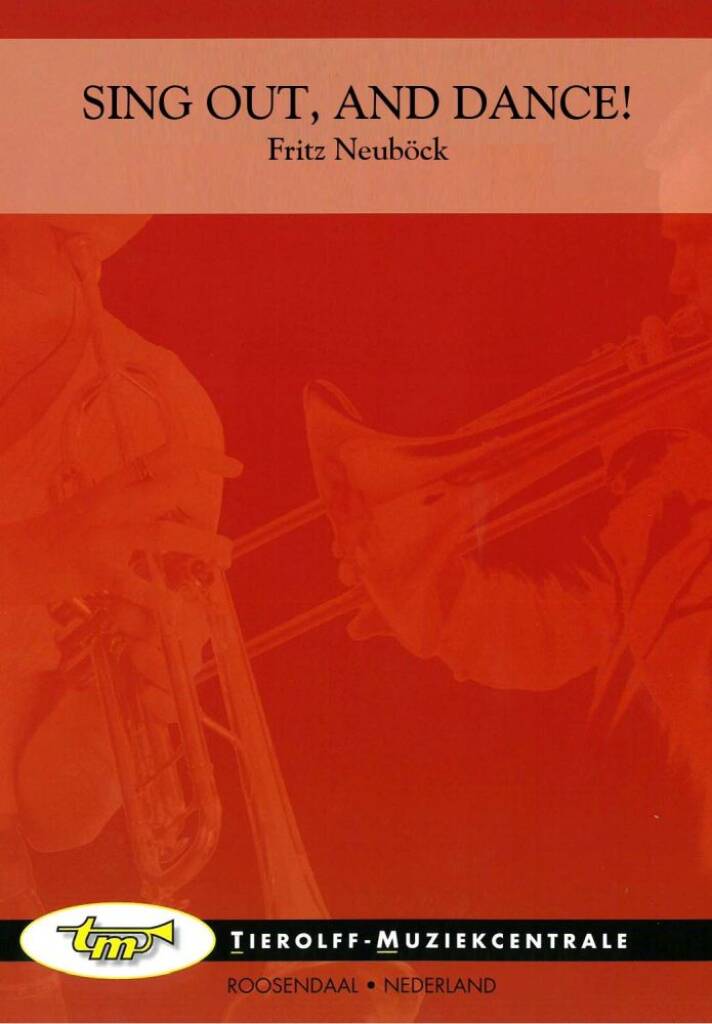 £110.00
 View Music