
Results
-
 £148.00
Trois Rag - Caprices (Concert Band - Score and Parts) - Milhaud, Darius - De Meij, Johan
The French composer Darius Milhaud (1892-1974) was a member of the Groupe des Six. This group of six composers gathering Honegger, Poulence, Auric, Durey, Tailleferre and Milhaud, imitated Erik Satie by revolting against the deeply rooted traditional conventions of that time. They reacted against impressionism (Debussy) and romanticism (Wagner, Mahler) and felt very strongly about the music of Satie and Stravinsky. Milhaud's most popular work is undoubtedly the ballet La Creation du Monde, one of the most striking examples of jazz influences in classical music. The premiere at the Theatre des Champs Elysees in October 1923 caused a real scandal with the Paris public. The Trois Rag-Caprices for piano were composed one year earlier, in the summer of 1922, and could be considered as a kind of preliminary sketch for La Creation du Monde. There are indeed clear similarities between both compositions as to the rhythmical and harmonic aspects. The Trois Rag-Caprices were orchestrated for symphony orchestra by Milhaud himself some time later. The same happened to Saudades do Brasil (1920), a piano composition punctuated with Latin-American influences, which was written after his stay in Rio de Janeiro (1917-18) exactly as his ballet Le Boeuf sur le Toit. Johan de Meij's orchestration of Trois Rag-Caprices for symphonic band is a most welcome addition next to the original band works of Milhaud, such as Suite Francaise (1945) and West Point Suite (1951).Duration: 8.00
Estimated dispatch 7-14 working days
-
 £179.90
Schola Vitae (Concert Band - Score and Parts) - Sadeler, Georges
Schola Vitae, dedicated to the former director of UGDA Music School in Luxembourg, Paul Scholer, describes in an 8-minute piece that learning and playing music is a school for life. Starting with popular scales that ascend and descend through various keys, an essential tool familiar to every musician appears: the metronome. It sets the tempo, and musicians practice their themes together or against each other, register by register. In music, however, it's not just about technique and precision, but also about emotions. Music connects people, fosters friendships, and accompanies them through the highs and lows of life. The sense of togetherness in music becomes increasingly audible. Everyone works together and pulls in the same direction to ultimately achieve something great.Georges Sadeler, born in 1988 is a Luxembourgish composer and saxophonist with the Grand Ducal Military Band of Luxembourg. His father kindled his interest in composing and arranging at an early age, a study he later continued under his two teachers Marco Ptz and Claude Lenners, both of whom taught at the Conservatoire of Music, Luxembourg. He gradually began to establish his own style, combining the enormous range of possibilities of contemporary music and classical music and, in the years that followed, he won six first prizes at various national and international composition competitions. His works have since been performed all over Europe.Duration: 8.00
Estimated dispatch 7-14 working days
-
 £189.99
Masked - Alex Shapiro
Masked by Alex Shapiro is composed in the exact shape of a Classical Minuet and Trio waltz, though the music--a whimsical if somewhat demented masked ball (or, balls, in this case)--bears little connection to that of Mozart or Haydn. Historically, third movement Minuets gave way to the joke-like Scherzo, and the Trio section tips its hat to some welcome levity. This is one of four movements in Suspended, a piece is composed in the tradition of an 18th century Classical symphony: four contrasting movements which serve specific functions and reveal a story. The work begins in absolute rage and chaos, then alternates between moments of grief and bleakness. Grim reality shifts to a macabre, circus-like insanity, and by the end, flickers of genuine hope contrast a pervasive sense of dread, and finally arrive at more optimistic possibilities. To perform the piece, you'll need an audio system capable of playing the prerecorded audio tracks from a laptop computer via a small digital audio interface connected to an audio mixer. Download information is provided in the printed piece.
Estimated dispatch 7-14 working days
-
 £72.95
Song Of India - Nikolai Rimsky-Korsakov
This sultry classical favorite from Rimsky-Korsakov is faithfully arranged for young bands by Andrew Balent. Andy has a knack for retaining the essence of standard classical epertoire, while toning the technical difficulties down to the students' ability levels. Paying close attention to dynamic changes and ensemble balance will make this a winner in contest and festival settings.
Estimated dispatch 7-14 working days
-
 £50.60
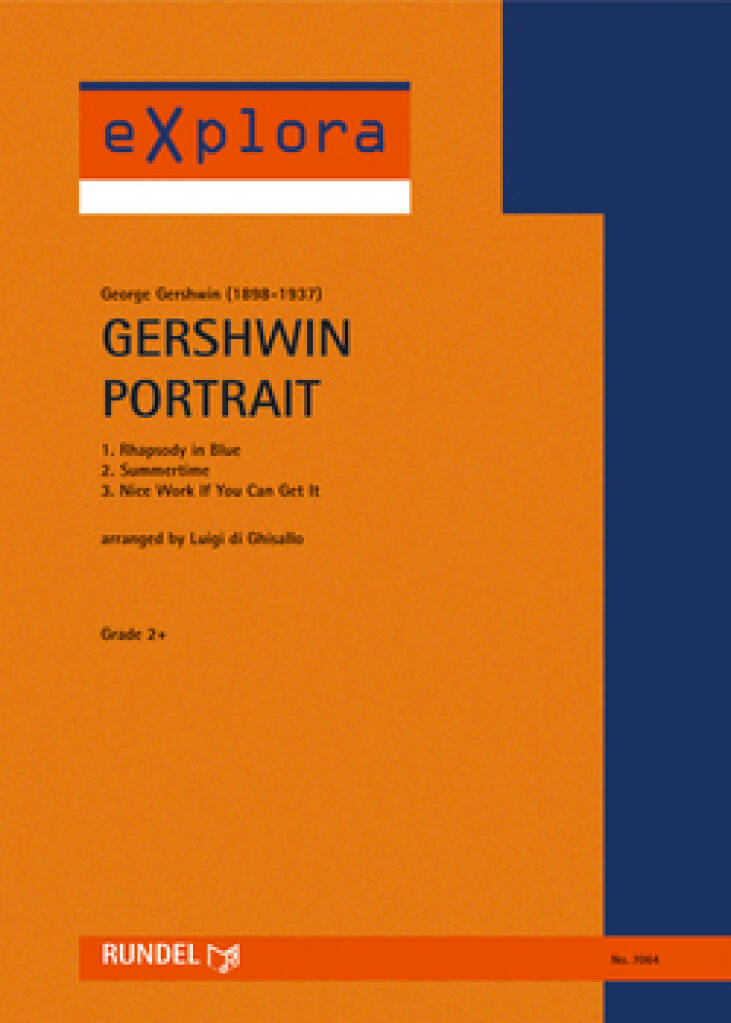
Gershwin Portrait - George Gershwin
George Gershwin is one of the greatest composers of the 20th century. His works include classical compositions, musicals and soundtracks which often employ elements of jazz. Many of his melodies have became jazz classics. In this enjoyable GERSWHINPORTRAIT Luigi di Ghisallo assembled three of Gershwin's most popular melodies: "Rhapsody in Blue", his best-known classical work, "Summertime", a famous song from the opera "Porgy and Bess" and "Nice Work If You Can Get It" from the soundtrack of "ADamsel in Distress".
Estimated dispatch 7-14 working days
-
 £82.50
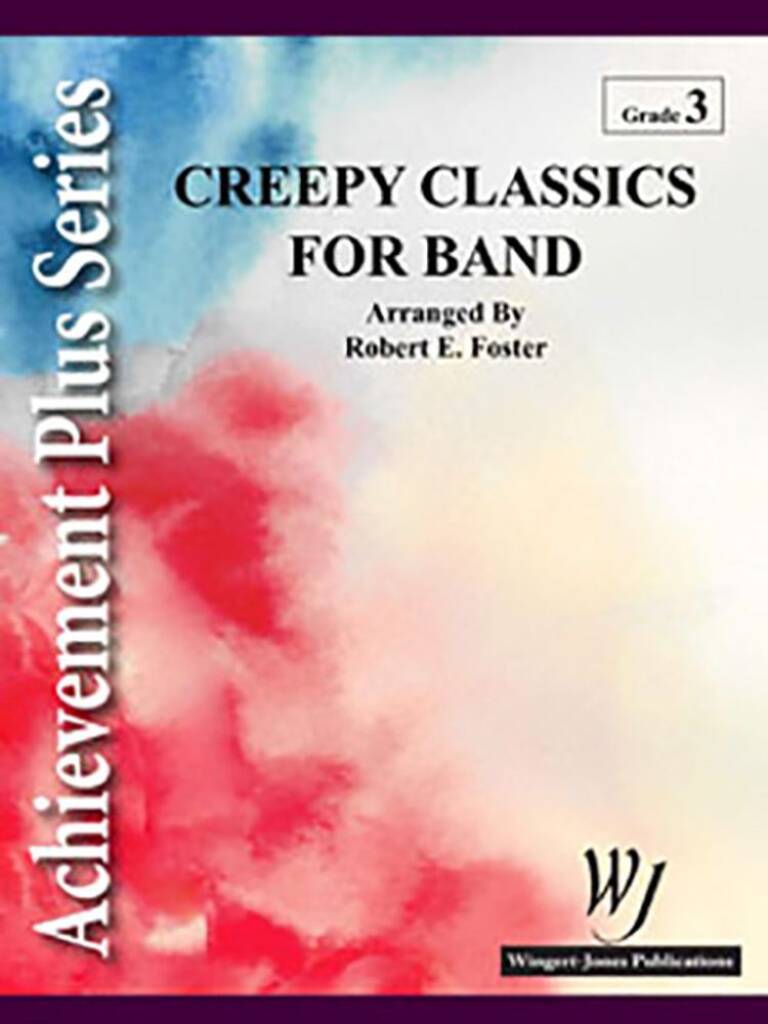
Creepy Classics For Band - Robert E. Foster
A great way to introduce some of the best-known themes from classical literature in a fun and spooky package! Four of the most haunting classical themes: In the Hall of the Mountain King; The Sorcerers Apprentice; Danse Macabre and A Night on Bald Mountain conjure up images of ghosts, witches, sorcerers and all manner of creepy, spooky creatures. Especially suitable for Halloween concerts, youll want to program this all year round!
Estimated dispatch 7-14 working days
-
 £102.99
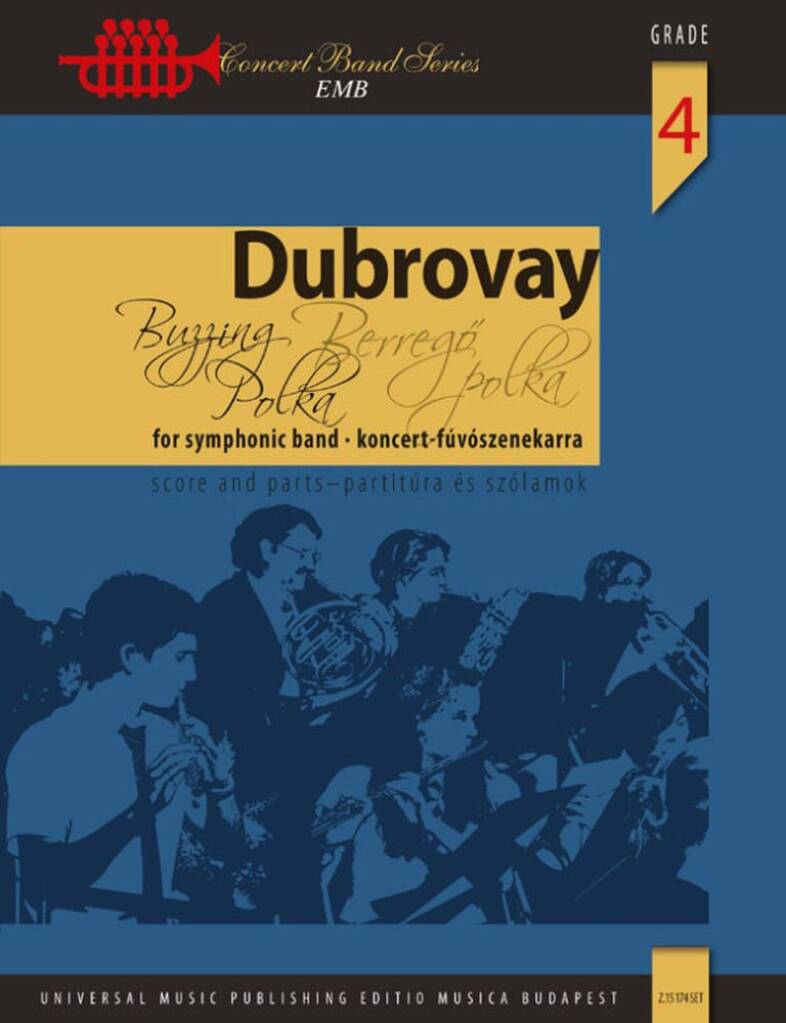
Buzzing Polka - Dubrovay László
Buzzing Polka, composed in 1993, is one of the earliest compositions by Lszl Dubrovay (*1943) for concert band, which has become a huge success due to use of special timbres and effects which had been unexploited in the genre earlier. Already the title tells that classical musical values and surprising moments of special brass instrument techniques can be both found in the work. Every second in the striking character piece is made interesting by the excellent balance between the pillar-like harmonies enriched by distant overtones and horizontal melody formation. Performing Buzzing Polka is a great opportunity for conveying the message and values of the music of the 20th and 21st centuries through the contrast between classical melodies and new ways of instrumentation.
Estimated dispatch 7-14 working days
-
£67.50
Andante from the Surprise Symphony - Franz Joseph Haydn
"He alone has the secret of making me smile, and touching me to the bottom of my soul," said Mozart about "Papa" Haydn and his music. The "Surprise" Symphony (No.94), incidentally written during the final year of Mozart's short life, has become one of Haydn's most memorable works.Since this symphony was written during the zenith of the Classical period, Timothy Johnson's skillful arrangement gives you a perfect opportunity to teach your young band "lightness" and control as essentials of Classical style playing. You can introduce the concept of making the staccato notes "separated" instead of just "short" in order to best approximate the sound of the times. It's a naturalselection for your next festival or concert! Why not give your young band a chance to meet "Papa" Haydn through this charming arrangement?
Estimated dispatch 7-14 working days
-
 £116.40
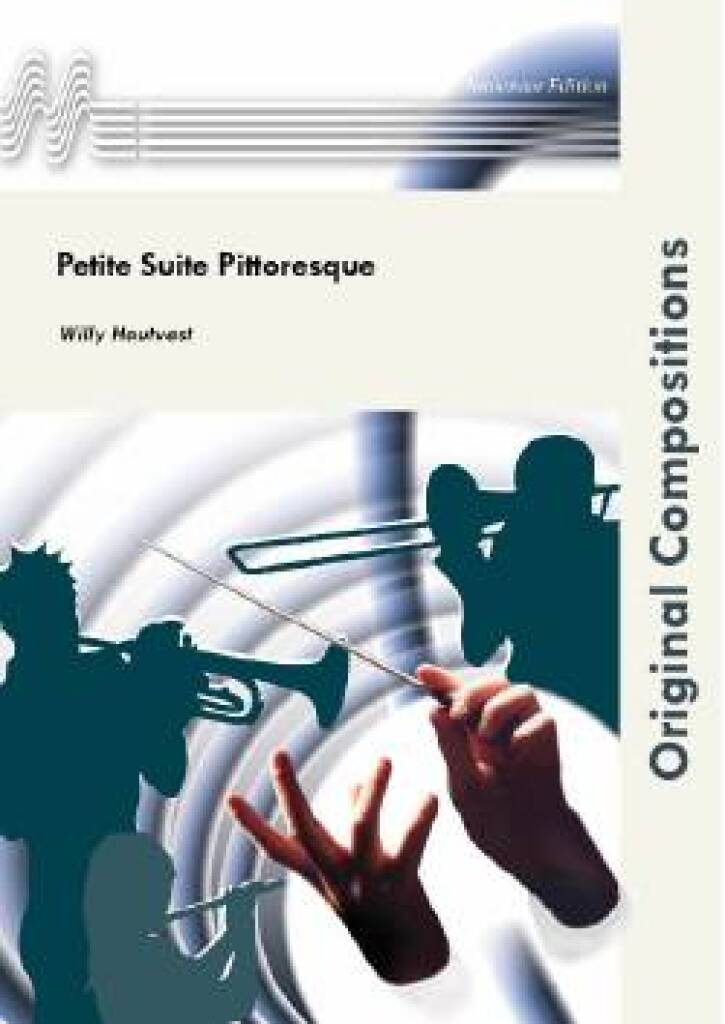
Petite Suite Pittoresque - Willy Hautvast
This four part suite consists of four contrasting paintings:a.Classical Prelude is a melody based on classical chords.b.Popular Dance, although using irregular music forms, provides rather easy listening tunes.c.Modern Intermezzo is based on more modern chords.d.Baroque Final mixes baroque sounds, treated in fugue form, with a rhythmical beat.
Estimated dispatch 7-14 working days
-
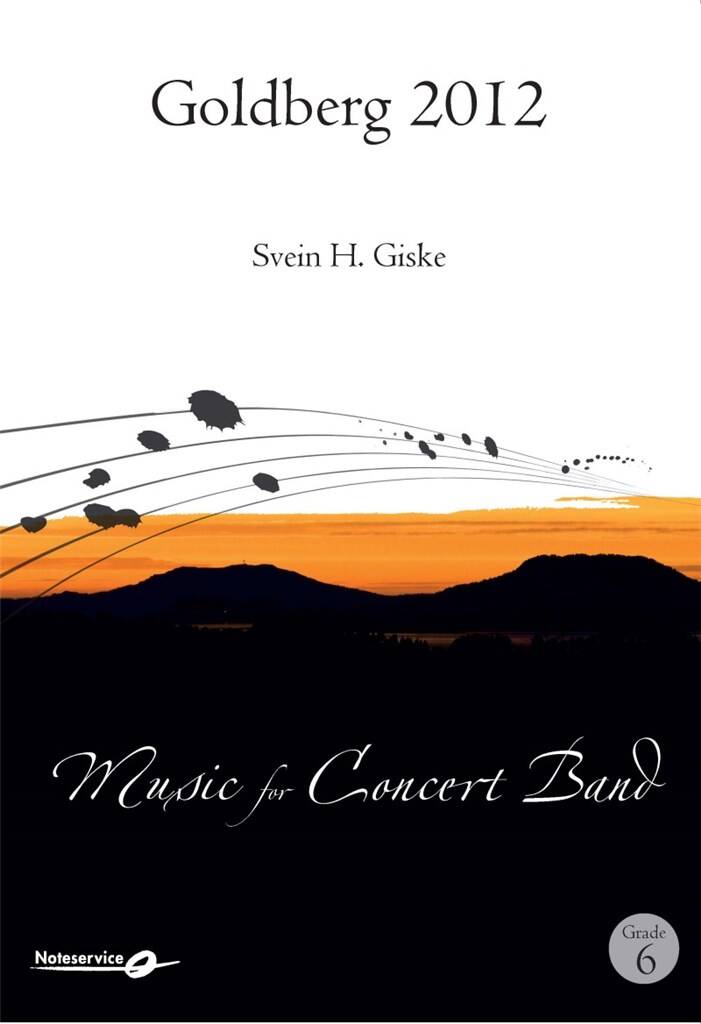 £435.40
Goldberg 2012 - Svein H. Giske
The first time I heard Bach's Goldberg Variations was in the movie Silence of the lambs, in the early 1990s. I noticed the beautiful background music in one of the scenes, but at that time I didn't know what it was. A few years later, when I was studiying at the Grieg Academy, I got to know the entire piece. For me, this is a piece of music which I can listen to countless times. I think it sounds as fresh today as it did more than 15 years ago and it never ceases to inspire me. Both Bach's composition and Glenn Gould's famous 1955 recording (which was the first one I heard) still makes a great impression on me. Before Gould recorded it at age 22, it wasn't a highly ranked piece amongst pianists and Bach was by many viewed as a bit old-fashioned. The young Canadian turned all this around. He managed to portray Bach in a reformed way, producing fine nuances in phrasing and making the many layers in Bach's music more transparent than anyone before him. Thus he plunged both himself and Bach (back) onto the international music scene. When The Norwegian Band Federation (NMF) asked me to write the test piece for NM in 2012, it was only natural for me to use the Goldberg Variations as a starting point and inspiration for my work. Since I was a teenager at NMF's summer courses in the mid eighties I've always listened to many different styles of music. Growing up in Sunnmre with the Brazz Brothers as teachers and mentors, jazz-, pop/rock- and folk music were early on a natural part of my musical background. I also have my classical education from the Grieg Academy on trumpet. As the title of my piece implies, I've wanted to bring Bach to the present and put his music into various modern musical landscapes. I think you can bring about a special kind of energy when music from different genres are mixed and I've tried to do this by mixing Bach with artists and musical styles from the present. In Goldberg 2012, the music is often constructed by several layers, which in a way are living parallel musical lives. They are seemingly moving or floating freely, almost unaware of each other, but bound together by the same basic pulse. The rythms, however, are often notated on a different rythmic subdivision level than the usual 8th- or 16th note levels. By doing this, I hope to achieve transparent sounds that rythmically are perceived as more free and detached from each other. In large sections of the piece, pop/jazz is fusioned with elements from Bach. I guess you could have this little scene as a synopsis for the piece: picture a group of musicians meeting: some are classical performers, some are jazz. They start to improvise together, each in their own voice or musical dialect and I'm sort of in the middle, trying to write down what they are playing. This is what I feel much of Goldberg 2012 is about. The foundation of the piece, in addition to Bach and references from pop/jazz music, lies also in my own material. This material, basically two chords, is heard in it's purest form in the 1st movement. I use these chords to create scales, new chords and different motifs which contribute to blend together the different moods of the piece. It has not been my intention to copy Bach's form (theme and 30 variations), but rather to use the bits and pieces that I like the most as an inspiration for my own variations. The 1st movement, Aria 2, is for my 3rd son, Olav, who was born on the 21st of April 2011, and the 5th movement, From long ago, is dedicated to the memory of my father, Svein J. Giske, who passed away on the 6th of June 2011. -Svein H. Giske, January 2012-
Estimated dispatch 7-14 working days
 View Music