
Results
-
£87.99
All Cried Out
At the beginning of the 1980s Alison Moyet was discovered by Vince Clarke, who - in search of greater independence - had left the successful band Depeche Mode. The soulful singing style of Moyet and the electronic, innovative pop that Clarke made melded well together in the group Yazoo with hits such as Only You and Don't Go. However, after a number of years Moyet went her own way and forged a solo career, during which she demonstrated a somewhat more traditional sound. She recorded several covers (such as The First Time I Ever Saw Your Face and That Ole Devil Called Love) but she also wrotefine songs herself, such as Love Resurrection and, of course, the expressive song AllCried Out. This arrangement by Peter Kleine Schaars does justice to the atmosphere of the original song.
Estimated dispatch 7-14 working days
-
£76.99
Hornpipe Highlights - Johan Nijs
The Hornpipe is a typical Celtic solo dance, traditionally danced and performed by English sailors. A sound often associated with the Hornpipe is that of the Bdhran, an Irish drum made with a sheep's skin head. John Nijs has taken great care in creating an authentic-sounding Hornpipe in which the Bdhran part is played by the tambourine, but sounds just as good!
Estimated dispatch 7-14 working days
-
 £58.50
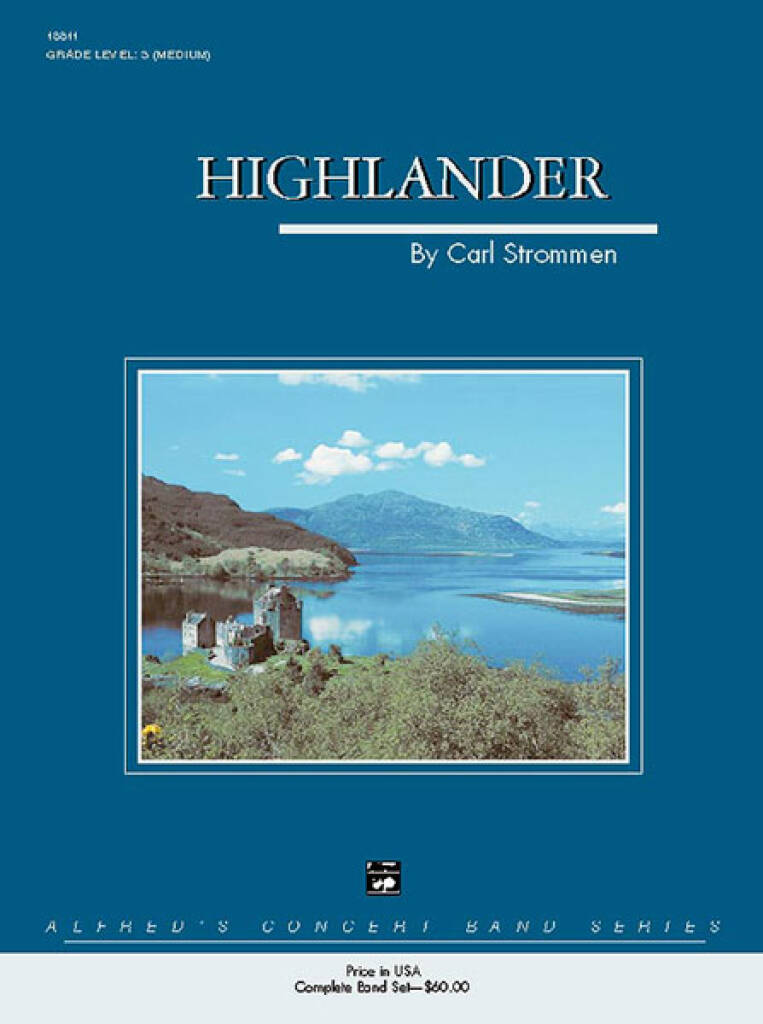
Highlander - Carl Strommen
This energetic concert or festival opener is sure to make your band sparkle! Highlander is full of bright melodies for the woodwinds and trumpets juxtaposed with bagpipe-like drones in the low brass, calling to mind images of old Scotland. Generous use of the piccolo adds to the Scottish flair. A lovely woodwind chorale provides for an interesting contrast in the middle section, only to be interrupted by the exciting main melody which modulates and brings Highlander to a fantastic finish. Highlander is another sparkling concert or contest showpiece by Carl Strommen!
Estimated dispatch 7-14 working days
-
£53.95
Three Scottish Songs - Hugh M. Stuart
This unique work features three original song settings which were inspired by three poems written by an obscure Scottish poet. Images of a fickle bonnie lass, monsters in the mist and the banks of Loch Ness are conjured up in the poems and are beautifully interpreted in the music. Simple rhythms, easy instrument ranges and lilting Scottish-style melodies make this piece highly accessible to maturing players. A great addition to any concert, any time of the year.
Estimated dispatch 7-14 working days
-
 £77.50
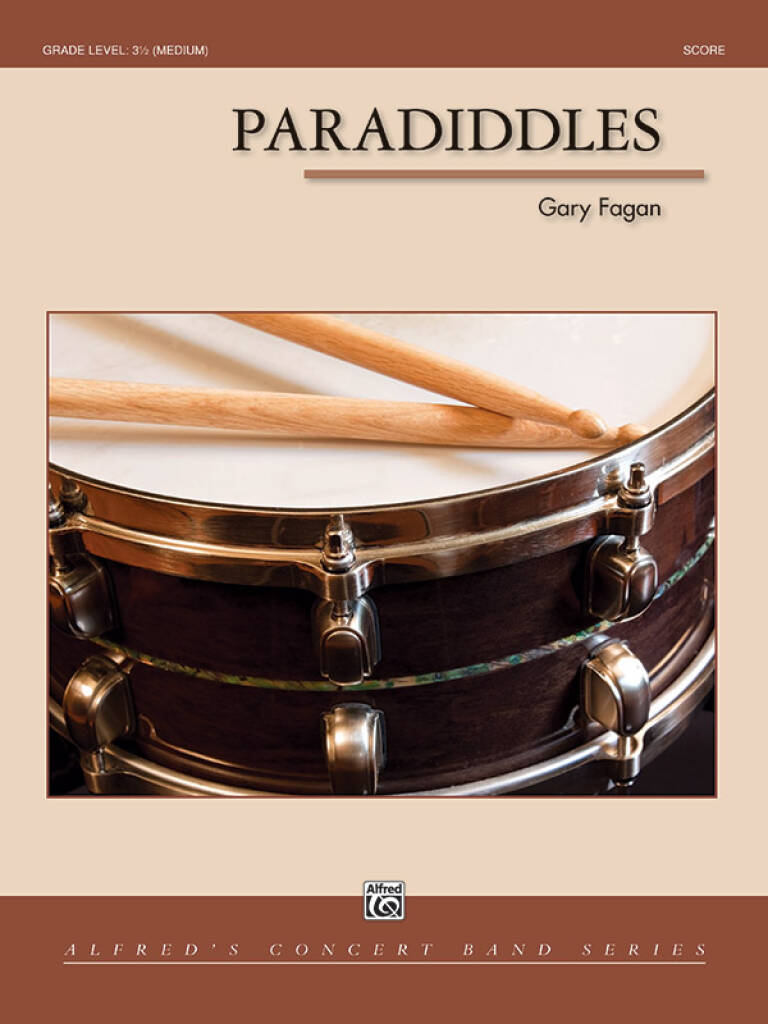
Paradiddles - Gary Fagan
Percussionists must learn both the rudiments and the scales. This piece provides the wind players some exposure to the rudiments. Paradiddles creates patterns played by the winds that mimic two types of paradiddles---the single paradiddle and the double paradiddle. This may be the first piece for concert band inspired by, and based on, percussion rudiments. (5:50)
Estimated dispatch 7-14 working days
-
 £64.95
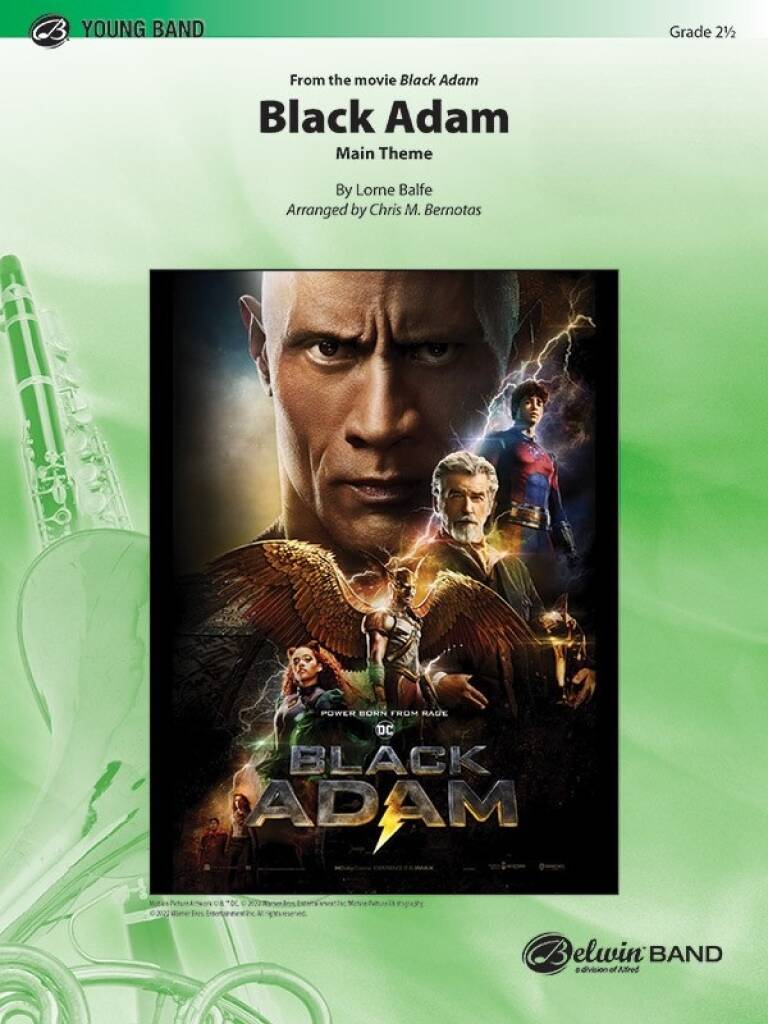
Black Adam - Lorne Balfe
The powerful theme from the action-packed DC Superhero adventure Black Adam comes to life in this fantastic arrangement by Chris M. Bernotas. The epic theme is dark and bold, and all sections of the concert band have engaging and exciting parts. The original score by Lorne Balfe is brilliant. This arrangement will be a hit at your next concert.
Estimated dispatch 7-14 working days
-
 £53.95
Irish Tune from County Derry
It has been called the "Irish National Anthem," and has been adopted as a favorite tune by millions beyond the shores of that country. It also has served as the theme song for entertainers, and appeared in soundtracks on television and in motion pictures. This beautifully sensitive scoring brings the song into the concert band arena, playable by bands and ensembles of almost any level of skill. Gracious and elegant. (3:00)
Estimated dispatch 7-14 working days
-
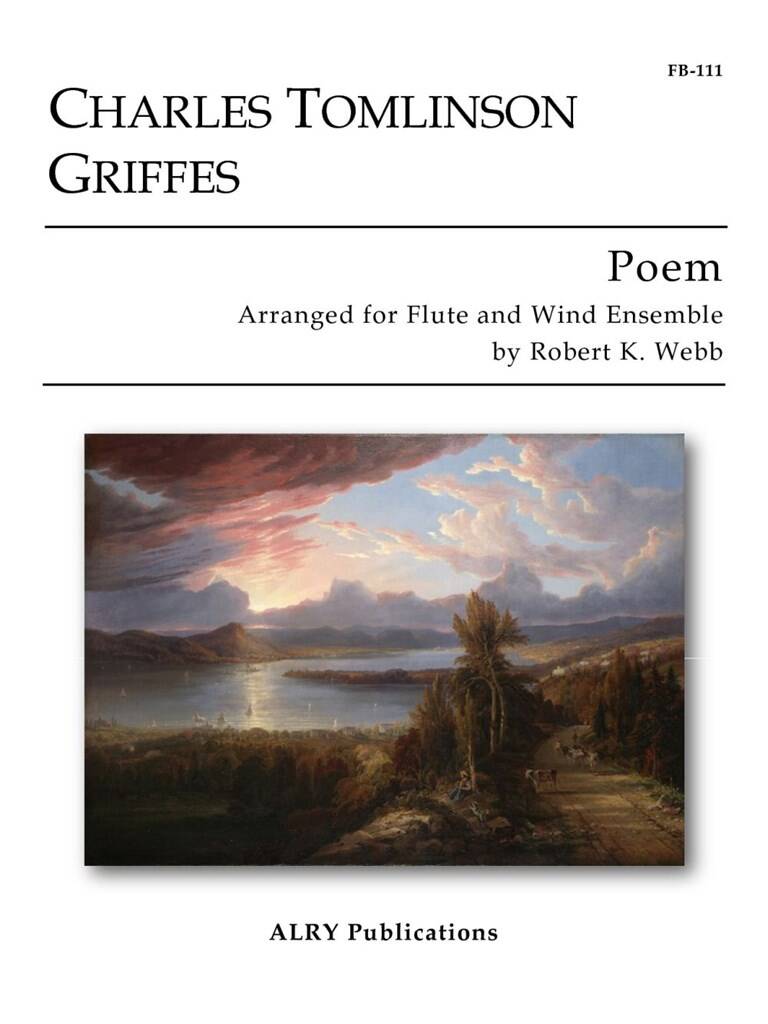 £79.00
Poem for Flute and Concert Band - Charles Tomlinson Griffes
Poem, originally for flute and piano, composed by Charles Tomlinson Griffes (1884 - 1920). This wind ensemble arrangement is designed to make this composition playable by most high school clarinetists and instrumentalists. Please note that the B-flat instruments are written with a key signature of 3 flats, not one of six sharps. This was done to keep the clarinets playing in a familiar key with ample accidentals to ease the reading of the parts. The bass clarinets and the bassoons play identical parts and can be substituted or augmented as desired. Though a minimum of two double bassists is ideal, an alternate part for tuba is also provided (also divisi).
Estimated dispatch 7-14 working days
-
£149.99
Trois Rag-Caprices - Darius Milhaud
The French composer Darius Milhaud (1892-1974) was a member of the 'Groupe des Six'. This group of six composers gathering Honegger, Poulence, Auric, Durey, Tailleferre and Milhaud, imitated Erik Satie by revolting against the deeply rooted traditional conventions of that time. They reacted against impressionism (Debussy) and romanticism (Wagner, Mahler) and felt very strongly about the music of Satie and Strawinsky. Milhaud's most popular work is undoubtedly the ballet 'La Cration du Monde', one of the most striking examples of jazz influences in classical music. The premire at the 'Th?tre des Champs Elyses' in October 1923 caused a real scandal with the Paris public.The 'Trois Rag-Caprices' for piano were composed one year earlier, in the summer of 1922, and could be considered as a kind of preliminary sketch for 'La Cration du monde'. There are indeed clear similarities between both compositions as to the rhythmical and harmonic aspects. The 'Trois Rag-Caprices' were orchestrated for symphony orchestra by Milhaud himself some time later. The same happened to 'Saudades do Brasil' (1920), a piano composition punctuated with Latin-American influences, which was written after his stay in Rio de Janeiro (1917-18) exactly as his ballet 'Le Boeuf sur le Toit'. Johan de Meij's orchestration of 'Trois Rag-Caprices' for symphonic band is a most welcome addition next to the original band works of Milhaud, such as 'Suite Fran?aise' (1945) and 'West Point Suite' (1951).
Estimated dispatch 7-14 working days
-
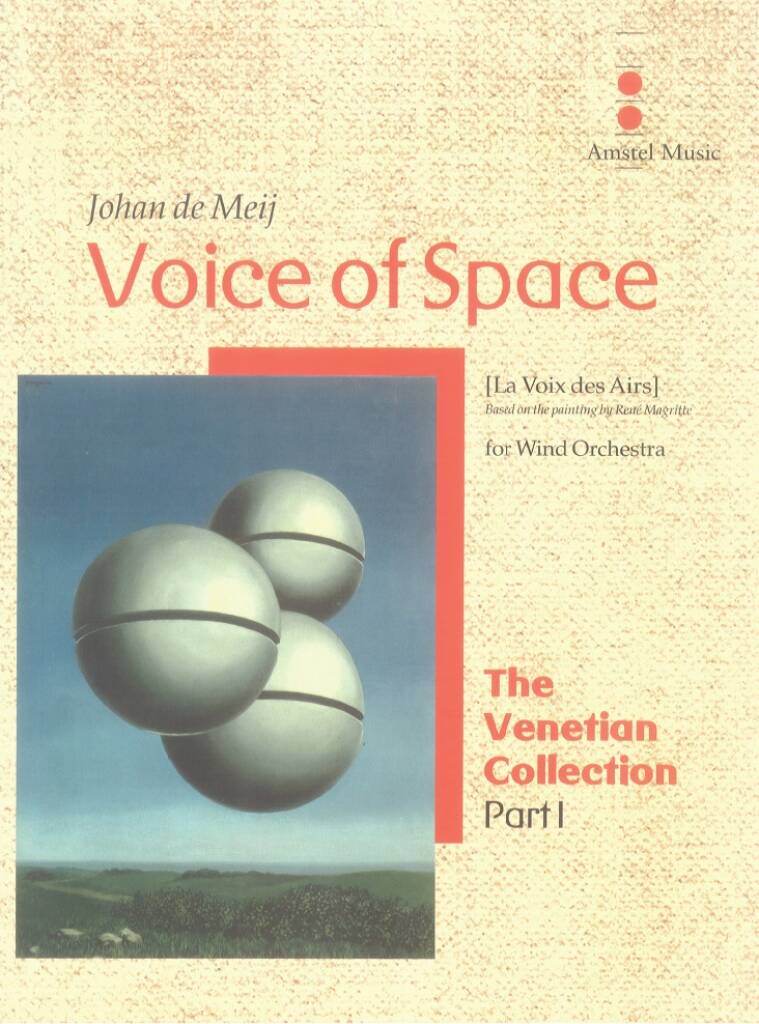 £149.99
Voice of Space - Johan de Meij
This is the 1st Movement of The Venetian Collection and was inspired by a painting of the surrealistic Belgian painter Ren Magritte [1898 - 1967]. Voice of Space was commissioned by l'Orchestre d'Harmonie de Strasbourg [France]on the occasion of the band's 155th anniversary. (Duration 9:15)
Estimated dispatch 7-14 working days
 View Music