
Results
-
 £149.40
Hei New York - Lillebjørn Nilsen
"Hi New York" was released for the first time in 1982 as a part of the LP-recording "Original Nilsen", one of the greatest successes by Norwegian artist Lillebjrn Nilsen. Unlike most of the music by Nilsen, this one is written in a latin-flavour. The original recording is strongly characterized by extensive use of horns which makes the song itself very suited for Concert Band.
Estimated dispatch 7-14 working days
-
 £104.99
Festive Overture - Satoshi Yagisawa
This work was commissioned by the civilian wind orchestra Shimizu il compagno, based in Shimizu City, Shizuoka Prefecture, Japan, as a commemorative work for their 10th Anniversary. The world premiere was performed by the ensemble, conducted by Hiromichi Hamada in 2017. Having held discussions with the head of the orchestra, Tomohiro Tsuji, and members of the group, Satoshi Yagisawa settled on a central motif for this commemorative work: fellow, or companion, in the sense of the Italian il compagno, which features in the orchestra's name. The work also strives to describe the characteristic friendliness of Shimizu city, a place known for itswarmth and kindness which is visible from both Mount Fuji and the sea. The composition is written in Yagisawa's typical dramatic style with an atmosphere of scintillating light and lyrical warmth, making it an excellent choice for opening a concert.
Estimated dispatch 7-14 working days
-
 £69.99
Marchalade - Peter Riedemann
Marchalade is a straightforward, refreshing new march by Peter Riedemann. Following a compelling introduction, the descant presents a light, playful theme, which is repeated with a legato countermelody in the tenor register. The second reprise is characterized by the alternation of descant and bass. The trio part is initially played cantabile, followed by a bold marcato repetition.
Estimated dispatch 7-14 working days
-
 £252.10
Tales and Myths of Gothia - Jerker Johansson
Jerker Johansson has lived in Gothenburg, on the Swedish West Coast, since 1984, and is deeply interested in the history of the country. Gothia is the most southern part of Sweden, and Gothenburg, which was founded in 1621, is since many years an important centre for trade and shipping. Old paintings of the harbour with its gigantic sailing ships gave impulse to the heroic character of the piece. The opening fanfare is followed by a lively allegro, which eventually leads to a calm section, containing reminiscences of the fanfare. The flutes introduce a cantabile theme, and a dance reminding of the Renaissance precede a recapitulation of the allegro theme. Gothia ends withthe fanfare, the cantabile theme and the dancelike Renaissance music. Tales and Myths of Gothia was premiered on 8 September 2017 by Gothenburg Wind Orchestra conducted by Niklas Willn.
Estimated dispatch 7-14 working days
-
 £169.99
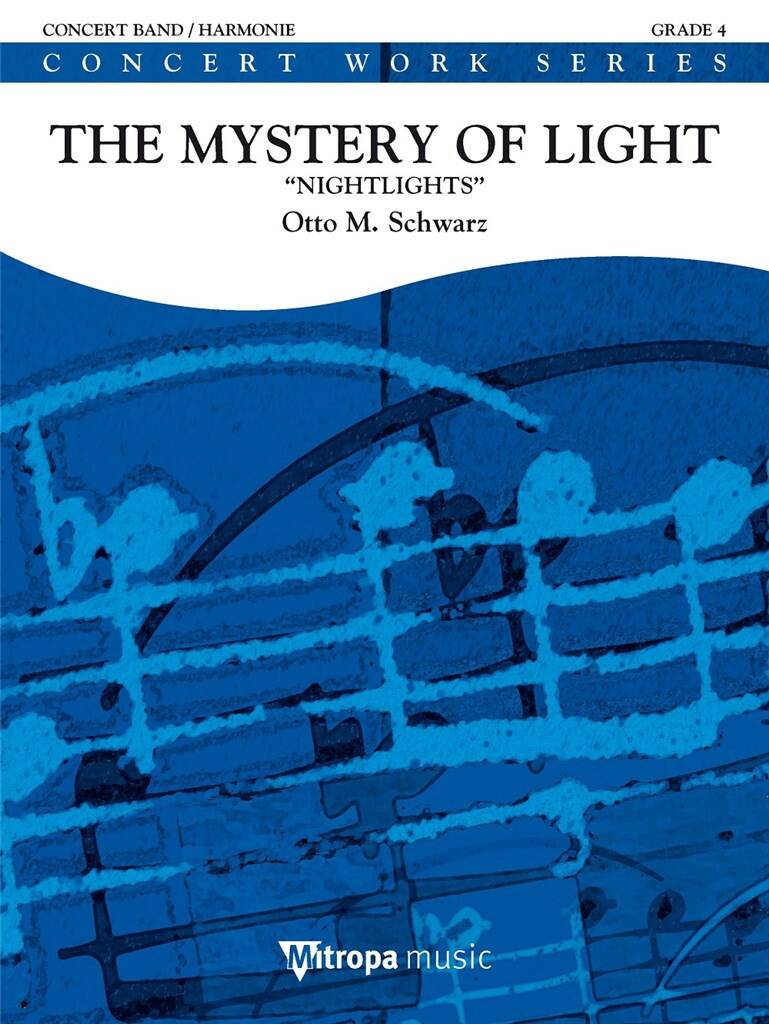
The Mystery of Light - Otto M. Schwarz
Light, sun, moon, stars: there has always been a connection to faith, the occult and mysticism. Different constellations were supposed to predict the future, and some phenomena have been interpreted as punishment by different Gods. From sunrises and solar eclipses, through rainbows, the scattering of light, sunset in the daytime, moonrises, the northern lights, the new moon, crescent moons and stellar constellations, to shooting stars... our observations encompass all this and much more. The Mystery of Light is the first of a series of pieces with the same theme. 'NIGHTLIGHTS' deals with lights of the night: created partly by nature and partly by man himself and consists ofthree movements: Opener and Star Shower, Lunar Eclipse and Aurora and Fireworks.
Estimated dispatch 7-14 working days
-
 £119.99
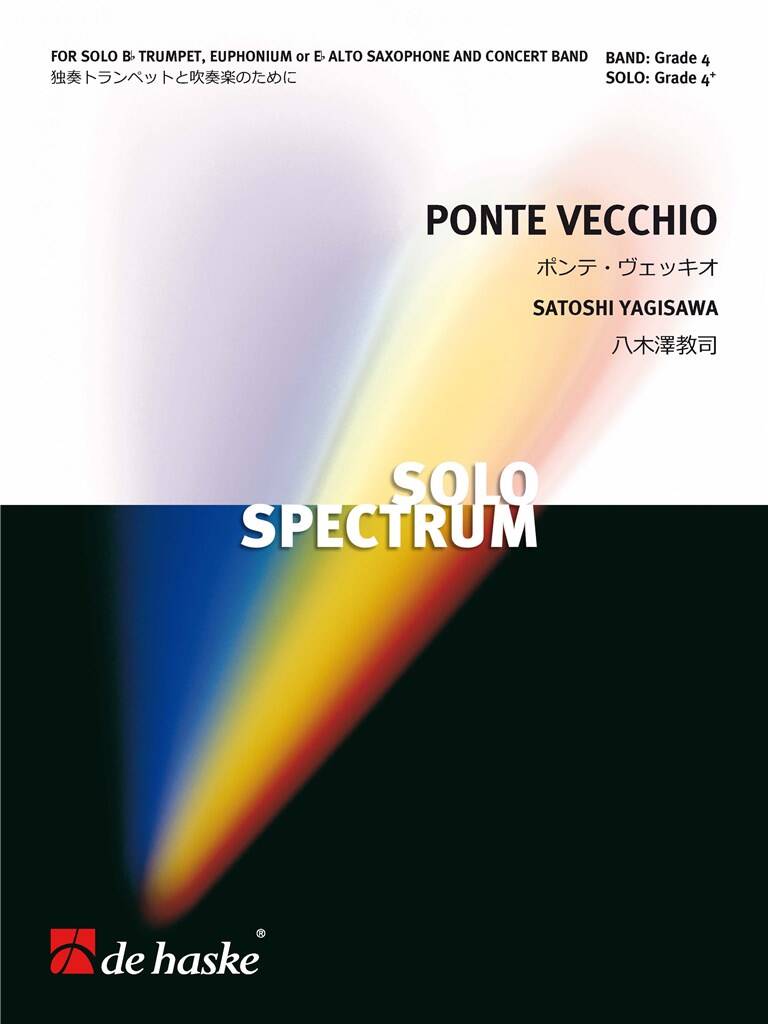
Ponte Vecchio - Satoshi Yagisawa
This work was commissioned by the Osaka Kyoiku University Wind Orchestra. The world premiere took place with trumpet soloist, Osamu Kumashiro and was conducted by the composer, who was inspired by the famous Ponte Vecchio (the old bridge) during a visit to Florence. The solo part can also be performed on euphonium or alto saxophone.
Estimated dispatch 7-14 working days
-
 £104.99
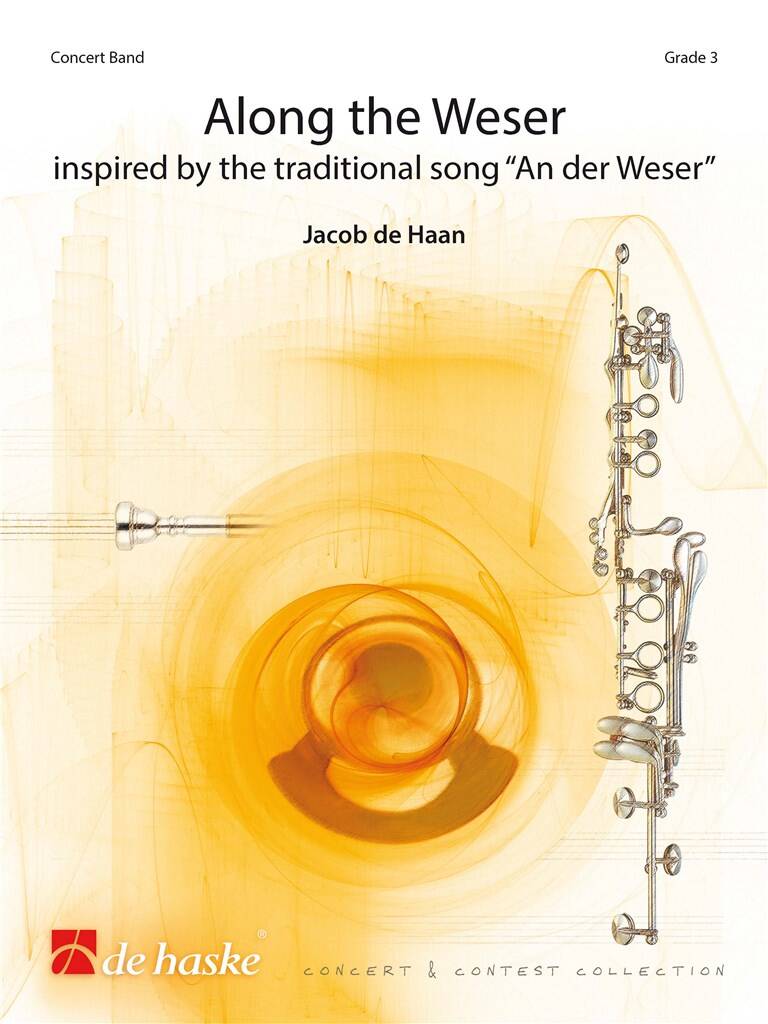
Along the Weser - Jacob de Haan
Along the Weser, as the title suggests, is an homage to the river Weser, the beautiful waterway that meanders through Northern Germany. With its exuberant rhythms and lyrical melodic lines, the work mirrors the strong bond between theinhabitants of the region and the river itself. The connecting thread is the melody of the well-known 'An der Weser', composed by Gustav Pressel to lyrics by Franz von Dingelstedt, which has been incorporated in three different ways. The result is acomposition that is sure to be enjoyed by both musicians and audience alike.
Estimated dispatch 7-14 working days
-
 £57.50
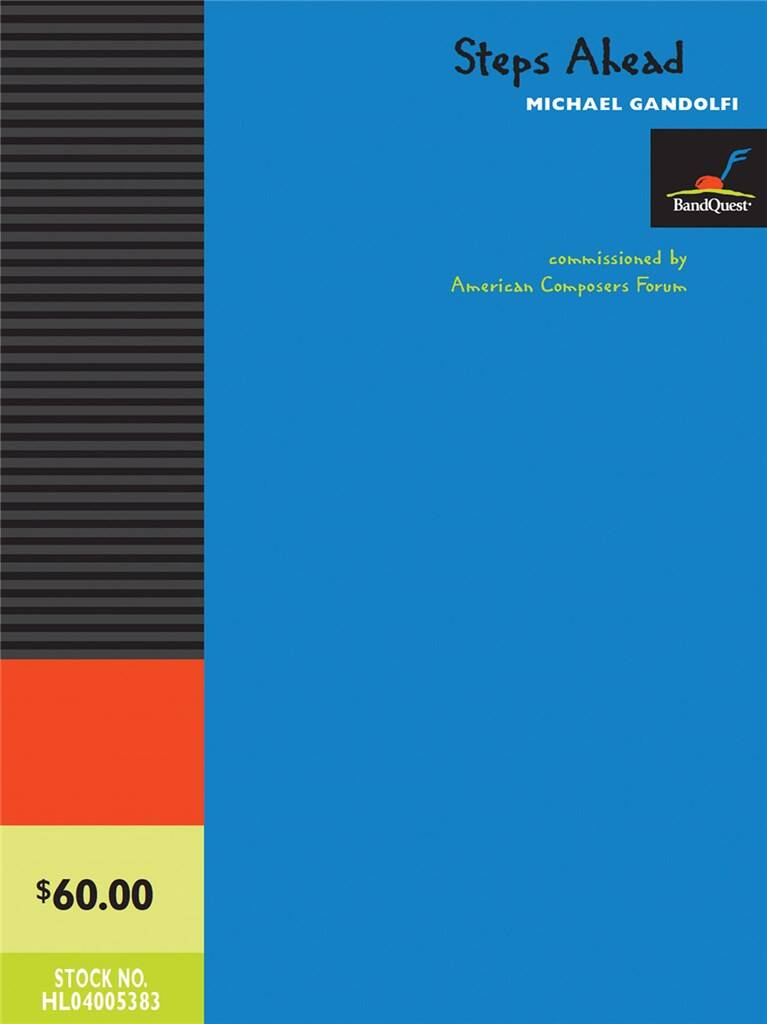
Steps Ahead - Michael Gandolfi
Steps Ahead is a work by Michael Gandolfi that takes young players on a journey! Along the way, there are musical elements that are intended to educate the performers about basic compositional techniques that are intended to educate the performers about basic compositional techniques. Steps Ahead is a delightful piece with something interesting for every instrument in the ensemble. Each of its three sections addresses a kind of compositional technique - transposition, tutti (a 2-part homophonic section) and developing tutti (parts of the band enter to build to a 2-part homophonic tutti). Less experienced players might enjoy the challenges of easy syncopation and musical lines constructed with larger intervals. -Tom Duffy, series editor. BandQuest, an exciting series of new music and accompanying curricula for band, is a program published by the American Composers Forum. The series was started as a response to feedback from music educators that there is a pressing need for new, fresh band music. The heart of this program is new works written by a diverse group of leading American composers who have created challenging pieces that are a true departure from standard middle school repertoire. Visit www.bandquest.org to learn more about this innovative series, and email [email protected] request a free downloadable audio catalog.
Estimated dispatch 7-14 working days
-
 £106.99
Festival Prelude Ad Excel - Philip Sparke
Festival Prelude 'Ad Excel' was commissioned by the AD Concert Band, from Solihull in the UK, to celebrate their 40th Anniversary in 2016. The title, Ad Excel, is a play on words: it is Latin for 'to excel' but also celebrates the band's anniversary as XL is 40 in Roman numerals. The work opens with a bright fanfare with frequent changes of meter. This leads to a playful main subject, played first by woodwinds, followed by full band. A bridge passage leads to a legato second subject, played twice. The bridge passage returns to introduce the both main melodies in new keys and instrumentations before a coda, derived from the opening fanfare, brings the work to a close.
Estimated dispatch 7-14 working days
-
 £82.80
Mxima - Eric Swiggers
The march Mxima was written by Eric Swiggers, commisioned by the "Koninklijke Marechaussee". It premiered in the gardens of country estate Eikenhorst in the presence of Princess Mxima and Prince Willem-Alexander, performed by de fanfare band of the "Koninklijke Marechaussee". The, at the time still, princely couple was delighted with the new march. Mxima is now also available for wind band.
Estimated dispatch 7-14 working days
 View Music