
Results
-
 £74.00
Galop - Amilcare Ponchielli
La Gioconda, with a libretto by Arrigo Boito, is the most successful theatrical work by Amilcare Ponchielli (1844-1886). In this work there are two dance pieces: the Furlana at the conclusion of the 1st act and the Danza delle ore in the 3rd act. The Dance of the Hours has a precise choreographic outline: it is a masked ball which includes the "hours" of dawn, day, evening and night successively, and ends with a wild finale of galop. The latter is a sort of fast polka, in binary rhythm and unbridled pace. A French variant of it is the can-can. The finale in galop time of the Dance of the Hours recalls certain playful dances by the composer Jacques Offenbach, such as the famous Can-can that concludes the overture of the operetta Orphe au enfers.
Estimated dispatch 7-14 working days
-
 £256.00
14 Motetten - Anton Bruckner
Anton Bruckner (b. 4.9.1824, Ansfelden, d. 11.10.1896, Vienna) didn't have it easy. Throughout his life, the Austrian composer was plagued by self-doubt. Anton Bruckner came from a simple, rural background. After the death of his father, he was accepted as a choirboy at the monastery of Sankt Florian in 1837. After several years as a school assistant and his own organ and piano studies, he first worked as organist in St. Florian, then from 1855 as cathedral organist in Linz. Introduced to music theory and instrumentation by Simon Sechter and Otto Kitzler, he discovered Richard Wagner as an artistic role model, whom he admired throughout his life and also visited several times in Bayreuth.In 1868 Anton Bruckner became professor of basso continuo, counterpoint and organ at the Vienna Conservatory; ten years later court organist; and in 1891 finally honorary doctor of the University of Vienna. He was considered an important organ virtuoso of his era, but had to wait a long time for recognition as a composer. It was not until Symphony No.7 in E major, composed between 1881 and 1883, with the famous Adagio written under the effects of Wagner's death, that he achieved the recognition he had hoped for, even if he was reluctant to accept it given his inclination towards scepticism and self-criticism.Anton Bruckner was a loner who did not want to follow a particular school or doctrine. He composed numerous sacred vocal works, such as his three masses, the Missa Solemnis in B flat minor (1854), the Te Deum (1881-84) and numerous motets. As a symphonic composer, he wrote a total of nine symphonies and many symphonic studies from 1863 onwards, tending to revise completed versions several times over. Bruckner's orchestral works were long considered unplayable, but in fact were merely exceptionally bold for the tonal language of their time, uniting traditions from Beethoven through Wagner to folk music, on the threshold between late Romanticism and Modernism.Anton Bruckner composed about 40 motets during his lifetime, the earliest a setting of Pange lingua around 1835, and the last, Vexilla regis, in 1892.Thomas Doss has compiled some of these motets in this volume for symphonic wind orchestra.These motets show many characteristics of personal expression, especially Bruckner's colourful harmony in the earlier works, which is in places aligned with Franz Schubert (changes between major and minor; and movements in thirds). Later works are characterised by many components which, in addition to the expanded stature of the movements, include above all a sense of the instrumentation as an outward phenomenon and the harmony as a compositional feature that works more internally. Some aspects of Bruckner's work are the result of his long period of study, which familiarised him not only with the tradition of his craft, but also gave him insights into the "modernity" of his time in such composers as Wagner, Liszt and Berlioz.From this developed his personal standpoint, which always pursues the connection between the old and the new.
Estimated dispatch 7-14 working days
-
 £204.00
L'Arlesienne Suite No. 2 - Georges Bizet
The arrangement for wind orchestra of Georges Bizet's L'Arlsienne Suite No. 2 by Franco Cesarini came about after the composer had long sought a version of the work that would satisfy him.Franco Cesarini remains completely faithful to the original version by revealing and highlighting each section and all the facets of the wind orchestra.The premiere of L'Arlsienne Suite No. 2 was held in Lugano on 27 March 2022, during the Spring Concert of the Civica Filarmonica conducted by Franco Cesarini.
Estimated dispatch 7-14 working days
-
 £90.00
Bright Dawn Overture, Op. 59 - Franco Cesarini
Bright Dawn Overture was commissioned to Franco Cesarini by the Swiss Band Association as part of a project for the renewal and expansion of the artistic repertoire. "There was never a night or a problem that could defeat sunrise or hope.". This sentence by the English philosopher Bernard Williams inspired Franco Cesarini in composing this overture. In fact, even the darkest night is always followed by the sunrise and metaphorically, in every moment of difficulty, man clings to the hope of a better future. Bright Dawn Overture is written in the classic form of an Italian overture (fast-slow-fast). It is intended as a hymn of hope of recovery after a period of great difficulty. A single theme characterizes the composition, passing through the various registers and presents itself in new forms, while constantly being transformed. In the central part the theme takes on an almost mystical character, while in the finale it presents itself in a heroic guise and the composition concludes with a gesture of decisive optimism.A piece accessible to most concert bands, perfect as an opening work!
Estimated dispatch 7-14 working days
-
 £52.95
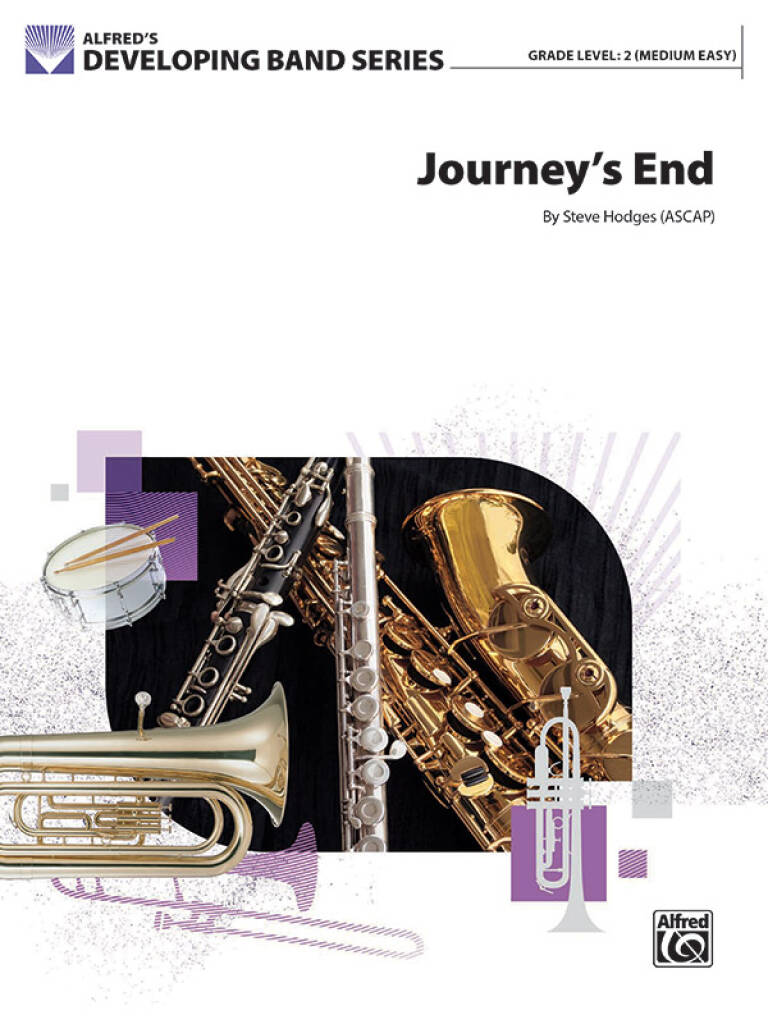
Journey's End - Steve Hodges
Upon completion of an activity, an event, or other meaningful experiences, there is a time for reflection for what has been accomplished and what is to follow. This lyrical piece features a memorable melody that is presented by all sections of the band. These reflective presentations lead into a slightly faster minor section indicating the anticipation of plans for the future. The final presentation of the melody indicates a positive feeling of accomplishment and features a moving countermelody by the woodwinds leading to a quiet, contemplative ending. Check out Journey's End, composed by Steve Hodges. (2:48)
Estimated dispatch 7-14 working days
-
 £87.50
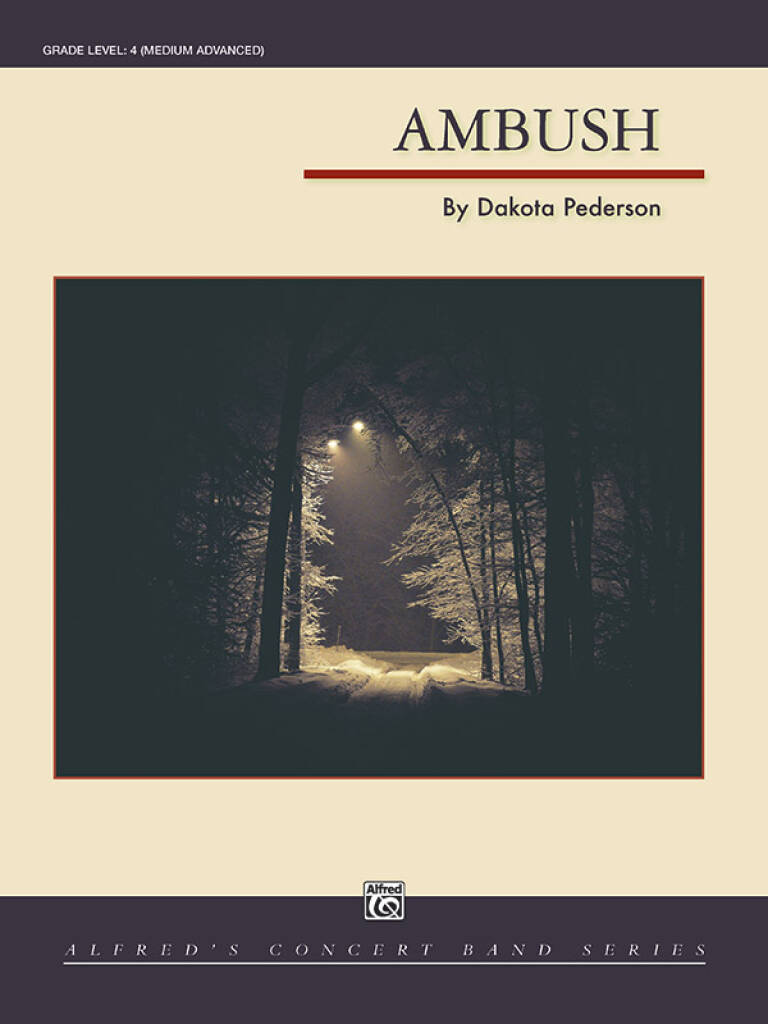
Ambush - Dakota Pederson
Ambush by Dakota Pederson is a work that describes the fight of war and recounts a flanking ambush set out by soldiers as they close in on a victory. A fiery chord opens the work and is followed by a relentless melody, which is expressed through precise articulation. The work challenges performers to focus on articulation and expression, while giving the percussion section a driving rhythm to maintain the energy. Strong harmonies in the brass and bold melodies throughout make this piece a fierce statement of war and victory. (4:12)
Estimated dispatch 7-14 working days
-
 £152.99
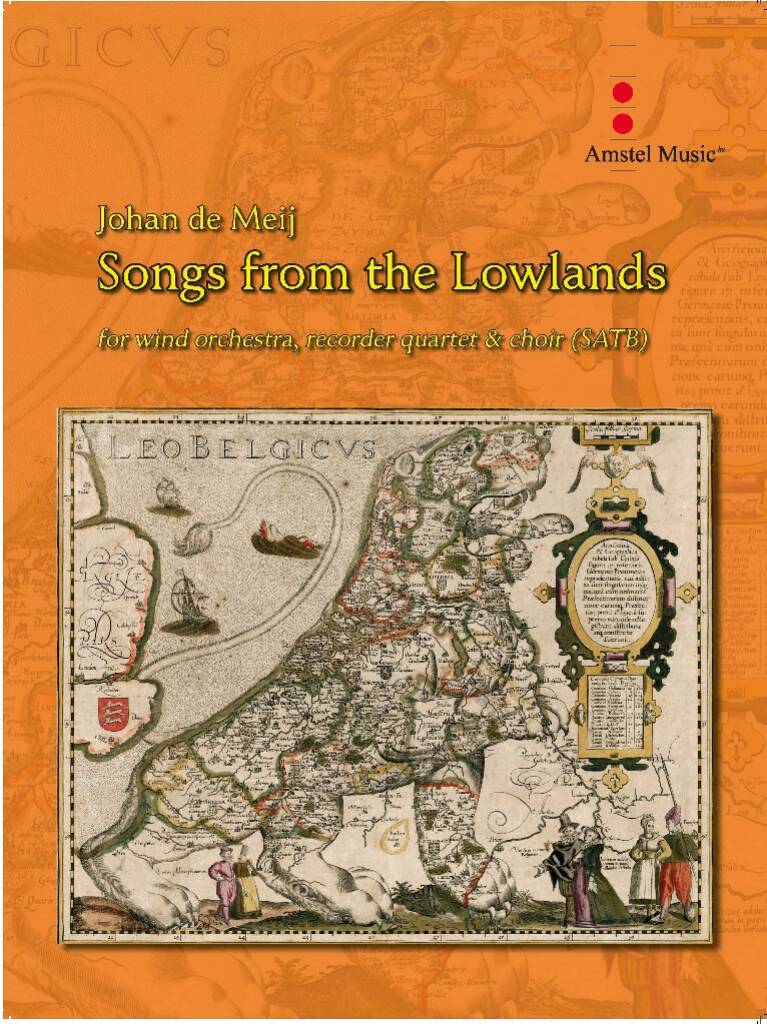
Songs from the Lowlands - Johan de Meij
Songs from the Lowlands is a collection of songs from the 16th and 17th centuries from my native country The Netherlands, formerly known as The Low Countries. They are, by turns, patriotic songs by Adriaen Valerius from the time when our country was occupied by Spain, naughty love songs and a drinking song, Peeckel-Haringh. Songs from the Lowlands was written for the farewell concert of my dear friend Jim Yarnell, who has been the director of bands at The American School of The Hague for four decades. Jim conducted the premire at his final concert, April 8, 2022, and now enjoys a well-deserved retirement. Songs from the Lowlands can be performed instrumental or with choir (SATB).
Estimated dispatch 7-14 working days
-
 £79.99
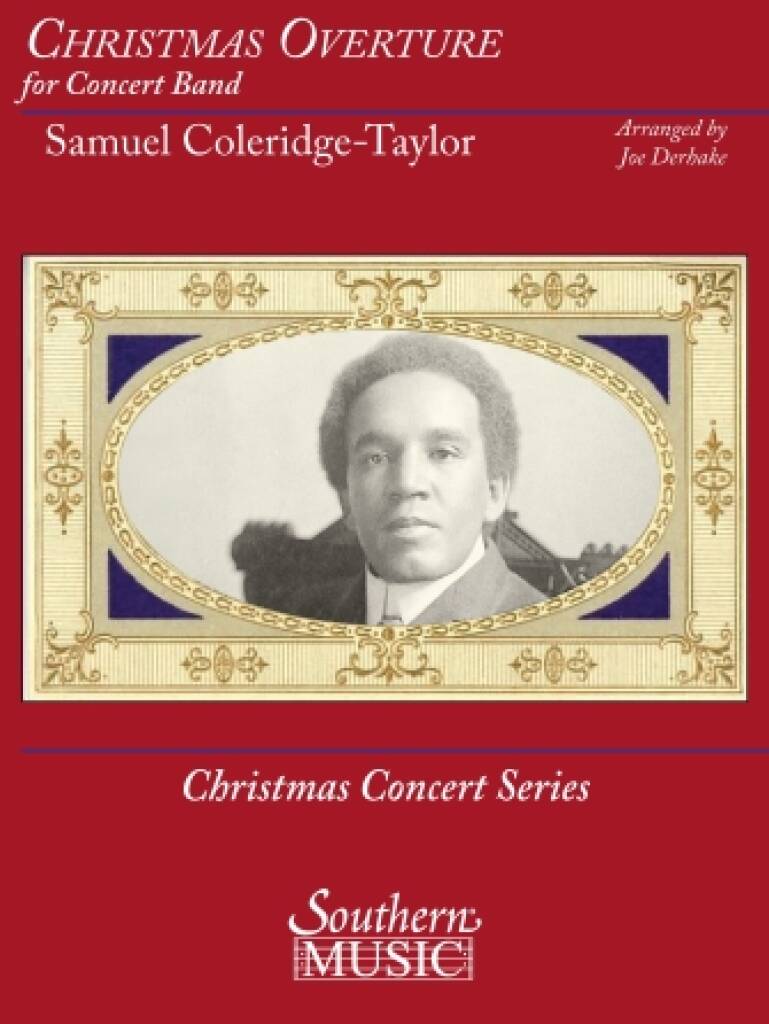
Christmas Overture - Samuel Coleridge-Taylor
Samuel Coleridge-Taylor's Christmas Overture appeared posthumously in 1925. Originally orchestrated by Sydney Baynes, it features God Rest Ye Merry Gentlemen and Hark the Herald Angels Sing. It is thought by some to have been put together from incidental music he wrote for a children's play called The Forest of Wild Thyme. This band arrangement, based on Baynes' orchestra score, omits the largely developmental middle section of the original, shortening the performance time by two minutes, while retaining all of the traditional carol material.
Estimated dispatch 7-14 working days
-
 £244.00
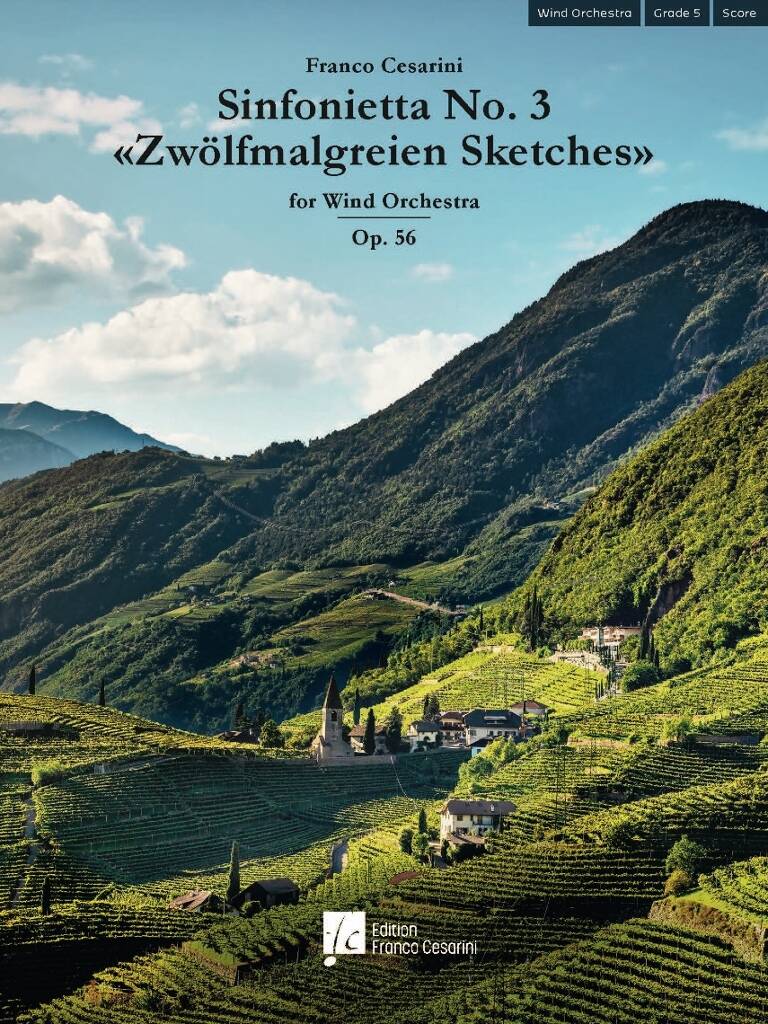
Sinfonietta No. 3 "Zwlfmalgreien Sketches" Op. 56 - Franco Cesarini
In composing the Sinfonietta No. 3 "Zwlfmalgreien Sketches" , Franco Cesarini was inspired by the municipality of Zwlfmalgreien made up of twelve towns, villages and scattered districts which were incorporated into the city of Bolzano (South Tyrol, Italy), over one hundred years ago. The peculiarity of these places, different from each other, but all characterized by rare beauty have contributed to the creation of this 3-movement piece.The first movement - City Life- illustrates activities, tourists and shopping in some of the villages, followed by Mountain Shadowsa slow movement that describes the mountain hamlets where there is little sun in winter. The third and last movement - Classic Vineyards- is lively, in vivid contrast to the previous one. Lots of sun and warmth of the typical wine regions, with echoes of folk dances and Bacchic festivals coming from far away.
Estimated dispatch 7-14 working days
-
 £104.99
The Flood - Filip Ceunen
The Flood was commissioned by Music Society Maris Sonores from Biddinghuizen, the Netherlands, on the occasion of its 55th anniversary. In this colourful composition, the name of the society has been inventively woven into the music - Maris Sonores meaning sounds of the sea - by means of key clicks in the flutes and clarinets, wind effects in various brass and woodwind instruments along with timpani, as well as sound effects in the small percussion. In addition, the history of the town is also reflected musically. Many centuries ago, around the year 800, a hamlet by the name of Bidningahusum already existed; unfortunately, it fell victim to the water of the then Zuiderzee. Later, the catastrophic flood of 1170 dealt the final blow. In the 1960s, there was a call for pioneers to once more build a town carrying the name Biddinghuizen in the polder of Eastern Flevoland - and so it happened. This versatile work, which is available for concert band as well as fanfare band, has been written in such a way that many bands will be able to play it. Each instrument group comes out well, so that The Flood will be a joy for players and listeners alike.
Estimated dispatch 7-14 working days
 View Music