
Results
-
 £118.99
South Pacific Medley (Concert Band - Score and Parts) - Hammerstein & Rodgers - Yokouchi, Shoji
In this medley, the arranger combines four titles from the hit musical South Pacific, written by Richard Rodgers and Oscar Hammerstein. Many songs from the tragically-beautiful musical concern love, war and racial prejudice, set against the background of a dreamlike island in the South Pacific during the Second World War. South Pacific is generally considered to be one of the greatest musicals of all time and is as popular today as ever.Duration: 9:00
Estimated dispatch 7-14 working days
-
 £84.99
Eventide (Concert Band - Score and Parts) - De Haan, Jacob
Eventide (Song of Liberation) has as its theme the European liberation from the Second World War. After a solemn introduction, one hears the melody of the hymn Abide with Me, which was sung frequently during the war. Variations on the theme follow, finally leading to the magisterial conclusion that represents the ultimate liberation. Bring a bit of nostalgic history to life with this stirring composition.
Estimated dispatch 7-14 working days
-
 £137.99
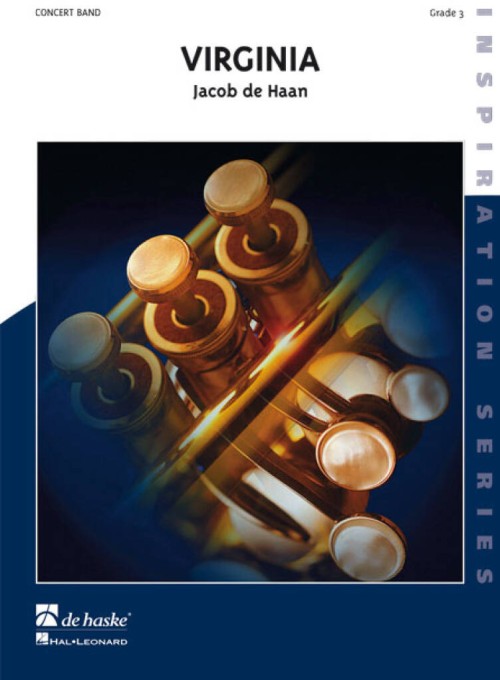
Virginia (Concert Band - Score and Parts) - De Haan, Jacob
This expressive piece depicts three periods that play an important role in the history of the American state of Virginia, the colonization, slavery, and the American Civil War. The first movement describes the adventures and hardships of the first colonists through lively American sounding themes. The expressive slow movement, in which a melancholic minor theme forms the starting point, depicts, with clever use of blues elements, the oppressed slaves on the tobacco plantation. This is followed by a illustration of the Civil War, heralded by ceremonial figures from the brass section. The work is brought to a close with a slow but optimistic theme heralding hope for the future.Duration: 9.15
Estimated dispatch 7-14 working days
-
 £134.99
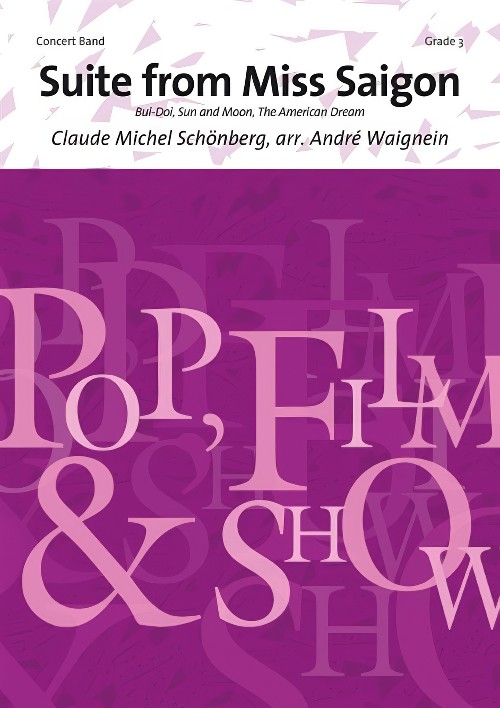
Suite from Miss Saigon (Concert Band - Score and Parts) - Schonberg, Claude-Michel - Waignein, Andre
The musical Miss Saigon was a massive hit in London, Broadway and throughout the world. Based on Puccini's opera, Madame Butterfly, this epic production centres on the romance between a strong-willed Vietnamese woman and an American soldier during the Vietnam War. The story tells of two young lovers torn apart by war yet still held together by a burning passion. This medley features three of the best songs from the musical and mixes desperate love with optimism and joy. Relive the hit show with this catchy medley.Duration: 10:30
Estimated dispatch 7-14 working days
-
 £59.95
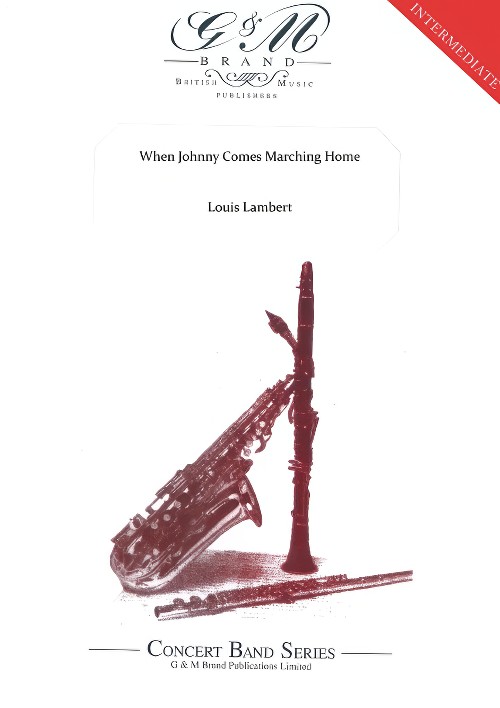
When Johnny Comes Marching Home (Concert Band - Score and Parts) - Lambert, Louis - Jacob, Gordon
A stirring arrangement of this popular song from the?American Civil War?that expressed people's longing for the return of their friends and relatives who were fighting in the war
Estimated dispatch 7-14 working days
-
£11.95
When Johnny Comes Marching Home (Concert Band - Score Only) - Lambert, Louis - Jacob, Gordon
A stirring arrangement of this popular song from the?American Civil War?that expressed people's longing for the return of their friends and relatives who were fighting in the war
Estimated dispatch 7-14 working days
-
 £21.95
FORGOTTEN HEROES (Prestige Concert Band Extra Score) - Clarke, Nigel
Extra Score. This concert march emulates the type of march - overture which you might encounter in an epic war movie, and is, therefore, cinematic in style. A common phrase from veterans when discussing war service in interviews tells the younger generation 'never forget those that laid down their lives in the name of freedom'. The title of this march is a small contribution, from the composer, to keeping their memory alive. Performance time 5'06" (Recorded on QPRM150D CHIVALRY, Royal Northern College of Music Wind Orchestra)
Estimated dispatch 7-14 working days
-
£107.95
FORGOTTEN HEROES (Prestige Concert Band Set) - Clarke, Nigel
Score and Parts. This concert march emulates the type of march - overture which you might encounter in an epic war movie, and is, therefore, cinematic in style. A common phrase from veterans when discussing war service in interviews tells the younger generation 'never forget those that laid down their lives in the name of freedom'. The title of this march is a small contribution, from the composer, to keeping their memory alive. Performance time 5'06" (Recorded on QPRM150D CHIVALRY, Royal Northern College of Music Wind Orchestra)
Estimated dispatch 7-14 working days
-
 £1.95
£1.95IN FLANDERS FIELDS (Programme Concert Band /opt. SATB Part) - Wiffin, Rob
SATB Choral part only. John McCrae (1875-1918), who was killed in the final period of World War I , left this moving poem which ensured that the poppies in Flanders would be a permanent reminder of the Great War. Duration: 3:49 Grade 3
Estimated dispatch 7-14 working days
-
 £11.95
IN FLANDERS FIELDS (Programme Concert Band Extra Score) - Wiffin, Rob
Extra Score only. John McCrae (1875-1918), who was killed in the final period of World War I , left this moving poem which ensured that the poppies in Flanders would be a permanent reminder of the Great War. Duration: 3:49 Grade 3
Estimated dispatch 7-14 working days
 View Music