
Results
-
 £239.99
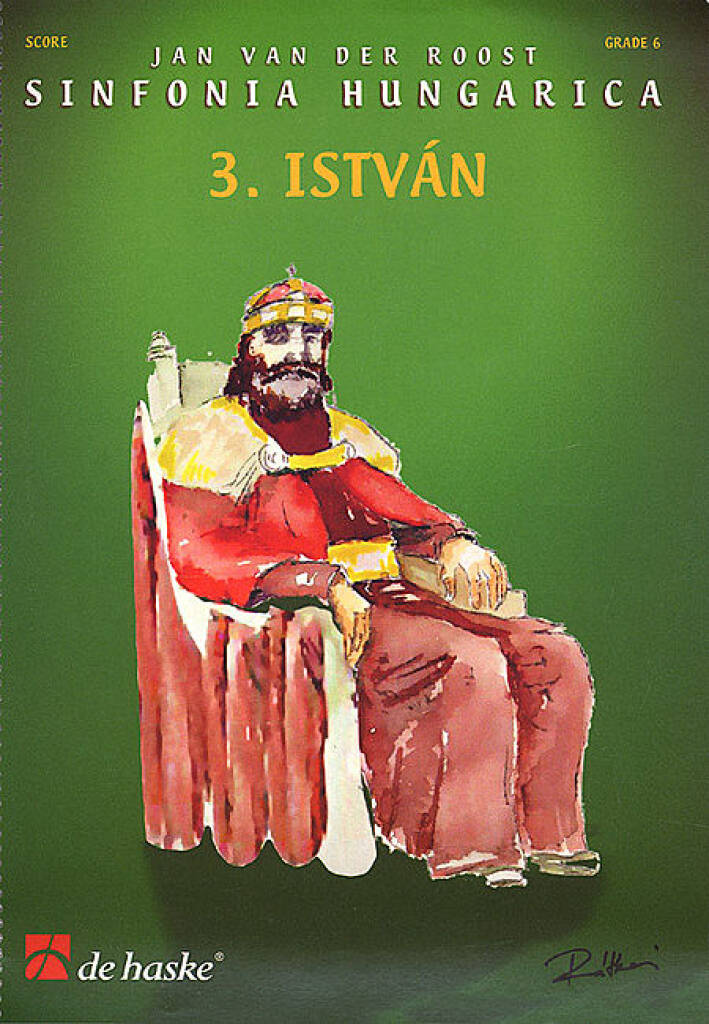
Istvn (part 3 from 'Sinfonia Hungarica') - Jan Van der Roost
Sinfonia Hungarica is a three-movement symphony that depicts the history of Hungary. All three movements were inspired by historical key figures, wars, and other important events from this country. This symphony is a celebration of Hungary's millennium in 2001.The final movement is named after ISTVAN, the King who introduced Christianity into Hungary and who was crowned by Pope Silvestro II on January 1, 1001. A rather solemn start leads to another war-like passage, ending with some loud crashes. This symbolizes the fact that the body of the pagan Koppany was cut into four pieces, and sent to the four castles of the country as an example. After a quiet, almost religiousintermezzo, the National Hymn of Hungary is introduced. This broad "grandioso" ending also has a symbolic meaning: after ten centuries, Hungary has many reasons to look back on the past with pride, and to look forward to the future with optimism and confidence.
Estimated dispatch 7-14 working days
-
 £248.99
Volcano - Jan Van der Roost
Volcano is a work commissioned by the Municipal Wind Orchestra of Endingen in Germany. The three creative impulses which provided the basis for this symphonic poem are inspired by outside sources. They are closed linked with the history of the Orchestra and the region in which it performs. In this region is the Kaiserstuhl, an enormous rock situated on the edge of the Black Forest. Volcano is a stimulating, lyrical, brilliant and festive work.
Estimated dispatch 7-14 working days
-
 £420.99
Tre Sentimenti - Jan Van der Roost
At last the bass clarinet can shine in this major new solo work for bass clarinet and concert band. This composition begins with a rather mysterious opening passage with atmospheric sounds and effects. The soloist plays - preferably backstage - a number of fragments and melodic patterns, without actually "starting" the piece. After this somewhat hesitant introduction, a lively, cheerful allegro entitled Con Giocondita (with joy) bursts out. It is swarming with irregular meters, changing tempos, and polyrhythm, through which the listeners (and sometimes also the musicians) constantly get the feeling that they are being tossed around. The second movement brings rest andpeace making careful use of sound colours. The upbeat finale, titled Con Allegria (with cheerfulness), is the most significant movement for the soloist. This is a challenging piece of music that demands great virtuosity, but with the correct performer it will be a real highpoint in any concert..
Estimated dispatch 7-14 working days
-
 £239.99
Stonehenge - Jan Van der Roost
This piece attempts to portray atmospheric pictures through music. The opening section evokes the somewhat misty and hazy early morning atmosphere surrounding the ancient monument. When the band reaches its first dynamic climax it is as if the massive boulders are audible, even touchable through the use of minor 3rd chords. The main theme - constructed on the notes CAFBG symbolises the arrangement of the central boulders in the shape of a horseshoe, which forms the focal point of this huge collection of stones. Towards the end of the work you will experience a fantastic effect when five soloists play a five part hymn whilst other members of the band create a specialatmosphere by imitating a choir of monks and druids. A fantastic major new concert work for advanced bands.
Estimated dispatch 7-14 working days
-
 £239.99
Ballad for Bass Trombone - Jan Van der Roost
Izumi Shibata commissioned the Ballad for Bass Trombone as a unique and thoughtful birthday present for her husband, who happens to play this very instrument. Thanks to her gift, bass trombone players around the world received a stunning addition to their repertoire. The ballad will be a welcomed challenge for every soloist and an interesting, though not particularly demanding, job for the accompanying ensemble.
Estimated dispatch 7-14 working days
-
 £84.99
The Soldier's Wife - Jan Van der Roost
The Soldier's Wife is a short and simple piece commissioned by the Singapore Ministry of Education. It was originally intended as a compulsory piece for the 2012 Singapore Youth Festival. Because many school bands in Singapore areincomplete, the composer was specifically asked to create a work that could equally be played by a limited ensemble - which explains various doubled and optional parts.
Estimated dispatch 7-14 working days
-
 £137.99
Contrasten - Jan Van der Roost
Estimated dispatch 7-14 working days
-
£84.99
Music by Candlelight - Jan Van der Roost
Estimated dispatch 7-14 working days
-
 £104.99
Signature - Jan Van der Roost
This fantastic opener opens with a soft and lyrical middle section follows on the powerful opening fanfare which, if the technical equipment is available, can be used as background music for a spoken text or presentation. The finale is distinctly rhythmical in character, and develops into a somewhat unusual ending. Here, the composer piles ten different notes on top of each other, representing the BBMB anniversary in a musical way.
Estimated dispatch 7-14 working days
-
 £179.99
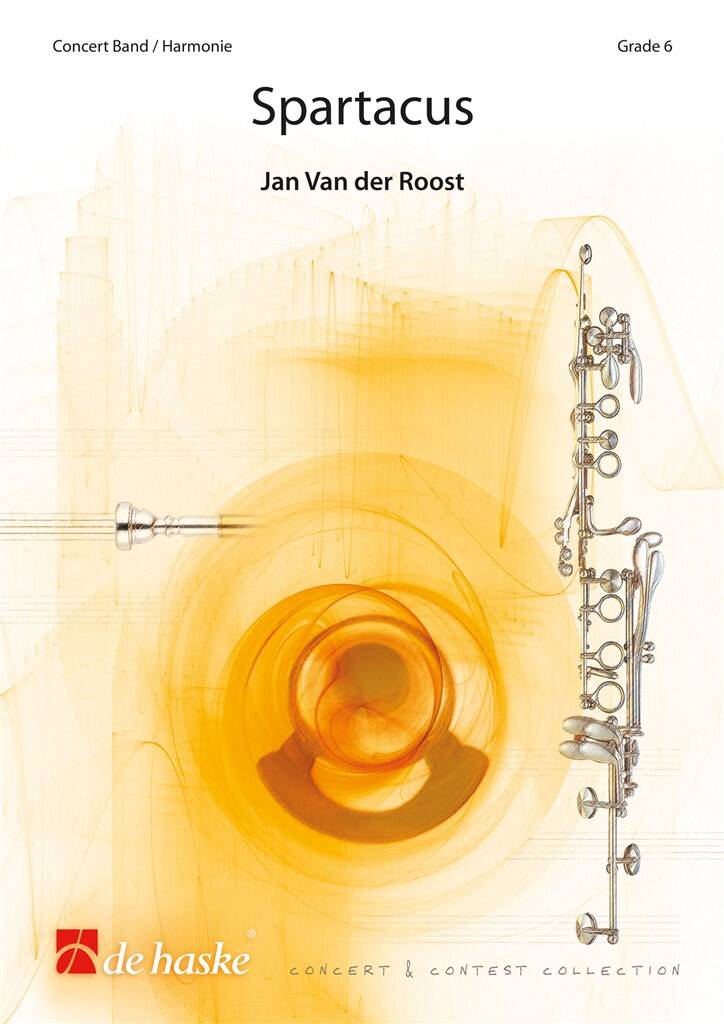
Spartacus - Jan Van der Roost
Spartacus is a "Symphonic Tone Poem" with 3 joints. Each section has its own melodical materials, however: in the final movement the main theme from the second section returns in a 'grandioso'-tutti. The last bar but one recaptures the 'oriental' atmosphere of the very beginning. The first section (= from the beginning till J) builds up a climax by repeating and accumulating some melodical and rhythmical stuctures. The oriental character of the melodical fragments refers to the origin of the Roman slaves. The second section evokes the love between Spartacus and his loveby giving a peaceful atmosphere. The mean theme (presented the first time at letter L) has a broad andwide character and refers slightly to filmmusic. In this part of the composition, a special attention is given to the orchestration. The final section is more agressive and martial and refers to the revolt of the slaves against the Roman oppressors. In the middle of this movement, an accumulation of the 12 tones symbolizes the crucifixion of the slaves: the english horn resumes partly the cadenza of the flute (at letter J), as if he wants to show again the eternal love between Spartacus and his love a very last time ... The theme at the third bar of letter T is actually based on the 2nd theme of this section (which starts at the fifth bar of letter R), but has been worked out rhytmically.
Estimated dispatch 7-14 working days
 View Music