
Results
-
 £78.00
Coronation March - Giacomo Meyerbeer
Giacomo Meyerbeer (1791-1864) was a German opera composer of Jewish origins, who has been described as perhaps the most successful stage composer of the nineteenth century. From 1831 until his death, he remained a dominating figure in the world of opera. His contemporary Hector Berlioz summed up his public career claiming that he 'has not only the luck of being talented, but the talent to be lucky'. His works made him the most frequently performed composer at the world's leading opera houses in the nineteenth century. Giacomo Meyerbeer composed his opera Le Prophte in 1849. In this opera a coronation is preceded by a splendid march. Although the opera itself is rarely performed, the Coronation March has gained a place in the concert repertoire.Franco Cesarini's arrangement for concert band of the Coronation March stands out for its skillful instrumentation which underlines the powerful sounds of this classic concert march.
Estimated dispatch 7-14 working days
-
 £122.50
Music With Chequered Ears - Árpád Balázs
Television viewers of nearly a hundred countries have experienced rpd Balzs's touching melodies. The series of cartoons have neither dialogue nor text: the music presents the amiable and entertaining adventures of the rabbit with chequered ears and its friends. Balzs has rephrased and developed the well-known melodies and as a result a ''children's story symphony'' of seven movements has been created in which, in contrast with Prokofiev's Peter and the Wolf, there is no narrator but the instruments themselves represent the story-tellers. The composer has again associated the groups of instruments with one another in a colourful and varied manner, skilfully alternating the modes of solo, chamber orchestra and orchestra. Movements I, II, IV and VII represent a ''short suite'' that can be independently performed, thus due to its duration of four minutes and easier level, ensembles with more modest opportunities can also perform it. The most well-known parts of the cartoon series music - the main title and the ending - are included in both versions.
Estimated dispatch 7-14 working days
-
 £68.99
Requiem Aeternam - Giacomo Puccini
Giacomo Puccini was commissioned to write a second opera after the resounding success of his first, Le Villi. However, the original four-act, grand opera Edgar, to a libretto by Ferdinando Fontana, received a rather lukewarm reception at its premire in La Scala in Milan in 1889 - initially, the work was only performed three times. Of all the planned performances in the subsequent two years, only one took place, in Lucca, Puccini's birthplace. There, the work was well received. Nevertheless, the composer decided to make drastic changes to Edgar the most radical being the reduction of the opera to three acts, as well as altering a few arias, charactersand instrumental parts. In its revised form, the work was even less popular than before. The discarded fourth act later provided material for Tosca (the duet Amoro sol' per te), but Puccini never felt the need to defend Edgar - as he did other less fortunate operas, such as La Rondine and Suor Angelica. On a piano excerpt for his female friend Sybil Seligman he even corrupted the title to 'E Dio ti GuARda da quest' opera' (may God preserve you from this opera). This did not prevent Arturo Toscanini performing the Requiem from the third act at Puccini's funeral in Milan Cathedral on 3 December 1924. The Requiem in the third act is being played when the long funeral procession carries the alleged body of Edgar - the confusedyoung man hesitating between the love of the virtuous Fidelia and the exotic Tigrana. The mass hails Edgar as a hero, but a monk claims that he has betrayed his country for a few gold pieces. When the soldiers try to desecrate the body, they discover that the armor contains none. The monk reveals himself as Edgar. He wants to leave with his faithful Fidelia, but the vengeful Tigrana stabs him and kills Fidelia. Edgar grieves over the lifeless body of his beloved, while Tigrana is arrested and the people submerge into prayer.
Estimated dispatch 7-14 working days
-
 £138.00
San Pedro de Alcntara - Valdemar Gomes
The Spanish war galleon with 64 cannons, built in Cuba between 1770 and 1771 for an English shipowner in the service of the King of Spain left Peru for Cadiz in 1784 with a huge cargo of copper, gold, silver and other valuables on board. There were also more than 400 people on board, including passengers, crew and Inca prisoners after a revolt. The Atlantic crossing went smoothly, passing Portugal to take advantage of favourable winds. The shipwreck off Peniche was the result of human error, apparently due to French maps with dramatic errors in the position of the islands of Berlengas and neighbouring islets. On 2 February 1786, the sea was calm and the night clear, but they hit the rock formation Papoa and the hull immediately broke in two. The bottom sank quickly, while the deck remained afloat for some time. 128 people lost their lives, including many Indians who were trapped in the basement. This shipwreck is considered one of the most important in maritime history.What the composer wants to convey, and what can be felt as one listens, is first of all the sound of power, of hope, of the glory of conquest, of the splendour of wealth. This is followed by the perception of the maritime environment, the harmony with the softness of the ocean, the gliding of the hull in the foam of the sea on sunny, blue days. But along with this tranquillity, you soon hear a rhythmic chain that makes you feel a representation of the hustle and bustle, of the busy crew, of the hard work of a sailor, of the desperation of an exotic people imprisoned in a dark, damp cellar. A distinct rhythm that reminds us of the "salero" of Andalusia, with its Arab influences and its people, the soothing of the resignation of others who are forced to submit. Then we clearly hear a crescendo that makes us imagine the agony of the collision that precedes the shipwreck. The breaking of the hull, the water flooding everything, the despair, the clash of bodies on the rocks, the tragedy to come. Before the "grand finale", in which the return of musical softness reminds us that the story is over. The supremacy of nature over human greed. The waves, though gentle, sweep the wreckage, the lives and the treasures of the New World to the bottom of the sea.
Estimated dispatch 7-14 working days
-
 £149.40
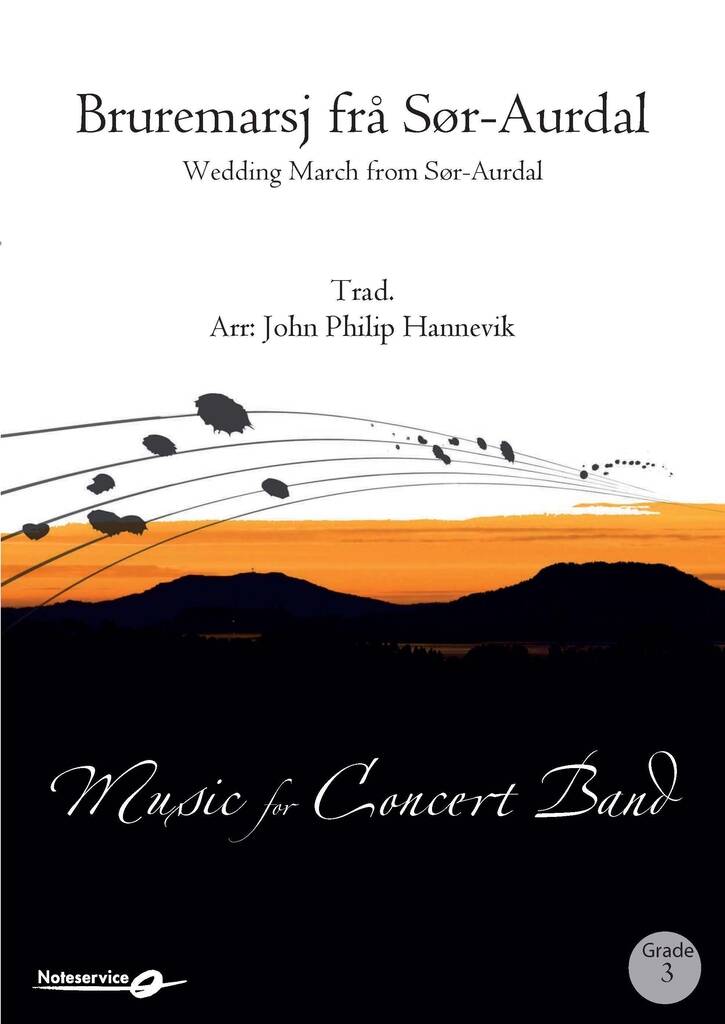
Bruremarsj fr Sr-Aurdal
This wedding march originates from the Valdres region in Norway. The municipality of Southern Aurdal is known for its two beautiful Stave churches, probably built around 1160-1190.The wedding march is not among the most well-known of its kind in Norway, but it still has a wonderful melody and a nice rhythmical lilt. Make sure that the tunes are played in a flowing and singing style.
Estimated dispatch 7-14 working days
-
 £104.50
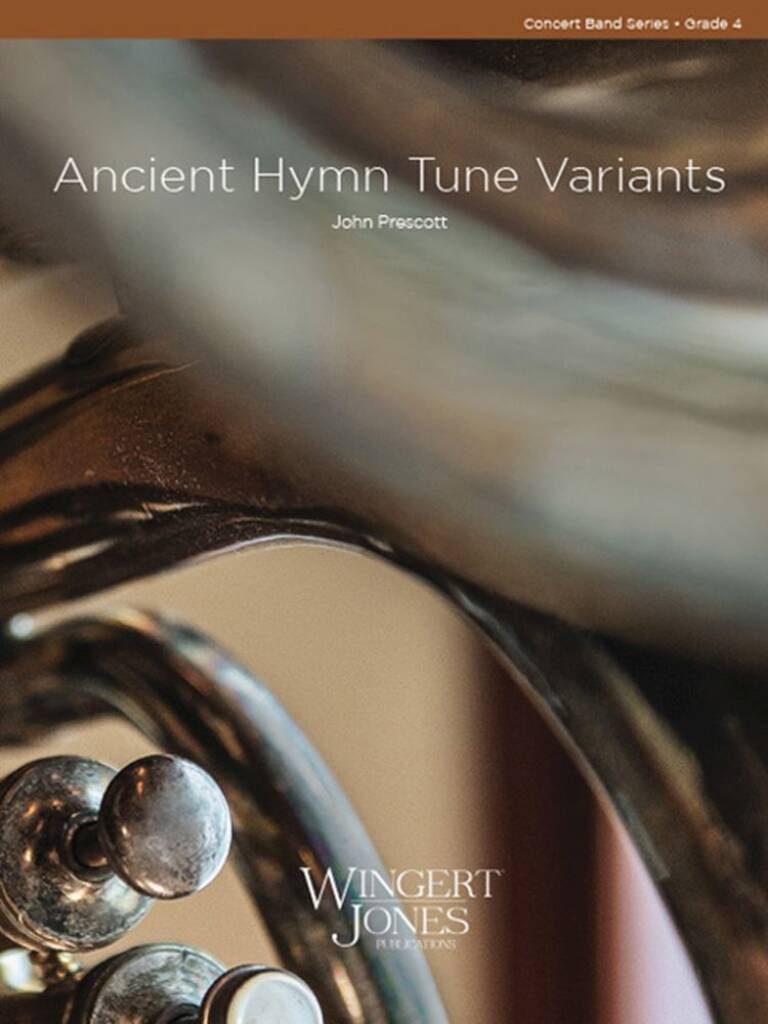
Ancient Hymn Tune Variants - John Prescott
The medieval plainchant melody Divinum Mysterium is used as the source material for this piece, as its melodic elements are constantly varied throughout. Beginning in a slow, stately tempo as it might have been heard in a cathedral in the middle ages, the initial setting ultimately gives way to fast, driving rhythms which support more and more variations on the tune. The arch-like form of the plainchants final phrase is mirrored in the brasses three times within the piece, the most dramatic of which occurs near the end as Ancient Hymn Tune Variants reaches its exciting and triumphant conclusion.
Estimated dispatch 7-14 working days
-
 £109.99
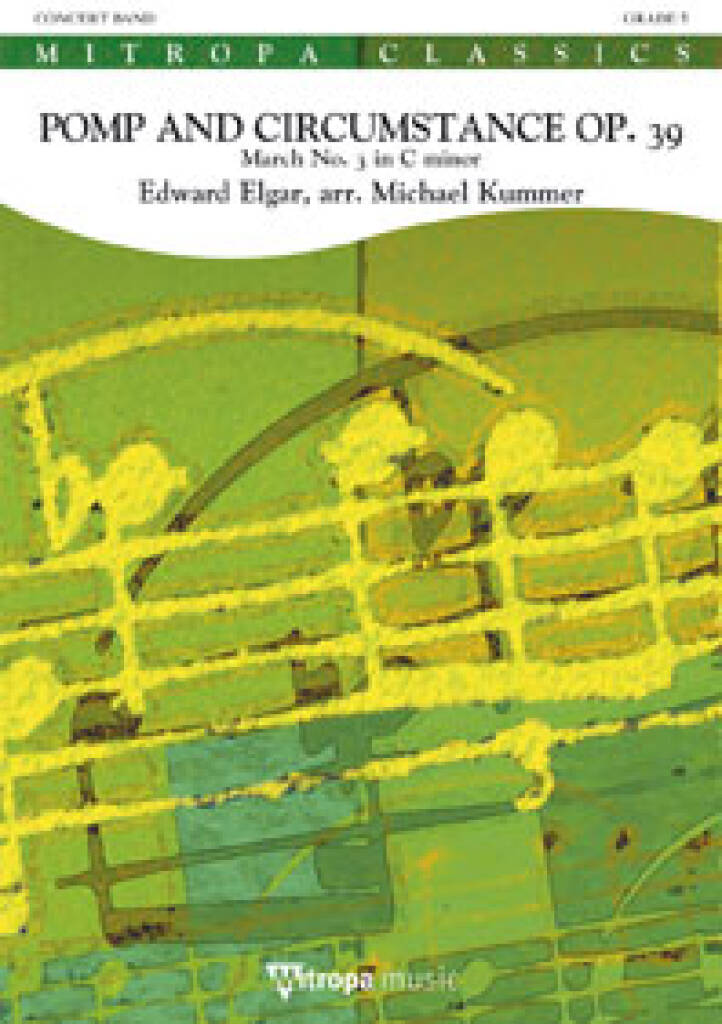
Pomp and Circumstance Op. 39 - Edward Elgar
The English composer Sir Edward Elgar wrote the five Pomp and Circumstance marches between 1901 and 1930, the time of the British Empire, when the colonial and strategic world power of England was at its peak. March No. 3 in C minor, although less well-known then March No.1, was regarded by the composer as the most successful of the marches in terms of composition technique and musical content. The dark colours of the minor tonality and the hopeful sounding cantabile theme are extremely impressive, giving the march its unique character. This is a great chance to bring British pomp andsplendour to your performance.
Estimated dispatch 7-14 working days
-
£202.99
Nazca Lines - Satoshi Yagisawa
The Nazca lines are a series of geoglyphs located in the Nazca Desert, a high arid plateau that stretches more than 80 km (50 miles) between the towns of Nazca and Palpa on the Pampas de Jumana in Peru.The glyphs are believed to have been created by the Nazca culture between 200 BC and AD 700. They include hundreds of individual figures, ranging in complexity from simple lines to stylized hummingbirds, spiders, monkeys, etc... The creators of the lines and why they were made are unknown. Though many theories exist, such as sun calendars or alien guidance, one by Maria Reiche, German-born mathematician and archaeologist, suggesting that "Ancient people drew geoglyphs of constellations that are most related to water" fascinated me the most.The renderings are explained as part of a practice involving the worship of deities associated with the availability of water, and thus the fertility of crops. The lines were interpreted primarily as sacred paths leading to points of worship and the figures were of sacred animals and objects to invoke their aid. Also, a massive, exactly symmetric arrow more than 50 km long was discovered when NASA launched its Landsat imagery. This geoglyph can only be seen from space. Was this also created by ancient people?(Satoshi Yagisawa)
Estimated dispatch 7-14 working days
-
£154.99
Poet and Peasant Overture - Franz von Suppé
Preludes and overtures were often written to set the mood of Viennese folk plays and therefore might be used for more than one production. Such was the case for Poet and Peasant, which introduced a comedy of the that name in 1846. The piece had already been heard as the overture to the play Lots of money, short of sleep and may also have prefaced two other plays. This overture did not belong to an opera until several years after its 1845 composition date. The themes from this overture are among the most often quoted material for comic effects for stage productions and animated cartoons. Probably, they represent, in sound, an era of nostalgia from the old-time park band concerts andare familiar to audiences of all age groups. This composition deserves to be heard in its original context as a serious, but highly entertaining, selection.
Estimated dispatch 7-14 working days
-
£134.99
Milestone Overture - Dirk Brossé
This work was written at the pivotal point of both two centuries and two millennia. With its hopeful melodies and triumphant parts in the brass section, the opening pictures the dawning of a new era of great expectations, characterized by the high speed of communicating all over the world, which is one of the most important aspects of life in the 21st century. This is achieved by musical themes being rapidly transferred from one musician to another. In this vortex of information and fast business transactions, the sense of individuality threatens to become extinct. At this point, Brosse silences the orchestra (a symbol of society) and draws attention to those peoplewho are less fortunate than most of us. This focus on other people culminates with an orchestral climax in which all powers come together with a feeling of euphoria.
Estimated dispatch 7-14 working days
 View Music