
Results
-
 £89.99
Gold - Gary Kemp
At the beginning of the eighties trendy English boy band, Spandau Ballet, made it big with hits like True and Gold. Millions of records were sold worldwide, and the group became one of the most successful bands of the eighties. Why not bring a little 80?s pop magic to any concert with the zesty disco tempo and jazzy chords of this arrangement.
Estimated dispatch 7-14 working days
-
£184.99
Rubicon - Bert Appermont
The Rubicon is a river in Northern Italy which Julius Caesar crossed with his army in 49 BC in defiance of the leaders of Rome, who feared his power. A civil war against rival Pompey ensued, which culminated in Caesar seizing power as the absoluteruler of Rome. The phrase "crossing the Rubicon" therefore refers to any person committing himself irrevocably to a risky, decisive and irrevocable of course of action.The work consists of three parts that deal with this important moment in history.Part 1 (Meditation) symbolises Caesars request to the Gods to assist him in his difficult choice. In a slow introduction we hear the melancholy and beseeching sounds of the duduk (alternatively, this part can be played by a soprano saxophone)and of the soprano solo singer over the bourdon accompaniment. The soprano solo singer then sings "dona tibi pacem" (give him rest) in a melodious and probing theme.In Part 2 (Battle of Pharsalus) trumpets and trombones resound alternately ina stately Roman fanfare, producing a stereophonic effect. This develops into a martial theme in which Caesars impressive army goes to battle against the army of rival Pompey. While the theme of Caesars army fades away, Pompeys theme emerges as anaive dance in six-eight time. His army is definitely in the majority and it believes it can easily defeat the enemy. Suddenly trumpets and trombones clash on two sides of the orchestra: Caesars army advances and attacks. A fierce battle ensues inwhich the two themes are played alternately as well as simultaneously. Thanks to his shrewd battle tactics, Caesar manages to win this legendary battle after all: his theme resounds ever louder in trumpets and horns until everything dies out andchanges into a kind of reconciliation between the soldiers of the two armies. The melancholy "dona tibi pacem" from part 1 now serves as a reconciliation theme.Caesar is now the sole ruler of the New Roman Empire, which would be destined to leave itsmark on our Western civilisation to this day. The third part is a sparkling succession of dance music (Dance) with many Greek and Roman elements in which Caesars victory is praised and celebrated. It is common knowledge that the culture(arts, gods, etc.) of the Romans drew heavily on Greek culture. I have therefore used an authentic Greek theme (the Seikolos song) several times in this part (bar 17 in the euphonium, bar 60 in the base section, bar 68 in the sopranosaxophone) to suggest the music of that era and to evoke the right atmosphere. After a gradual increase in tempo in the entire orchestra, the opening melody gloriously resounds once more, surrounded by virtuoso dance music. The work ends withbombastic brass fanfares in which Caesars theme triumphs once more.NOTE FOR THE CONDUCTOR:The Armenian duduk and the monochord that are used in the introduction give a special tone to the music, but could be substituted (soprano saxophone instead ofthe duduk) or left out (monochord). The soprano solo is also doubled within the orchestra and could therefore also be left out if necessary, although it does provide the work with an extra dimension. The male voices in the introduction and the finalecould possibly be replaced with a synthesizer with choral setting.As a visual and acoustic element in part 2, the trumpets, the e-flat cornet, the small drum and trombones can be stood up and placed at two sides of the orchestra (bar 80).Seen fromthe point of view of the conductor, put the trumpets, the e-flat cornet and the small drum in the left section and the trombones in the right section of the orchestra. This also helps to create a visual contrast between the two themes of the secondpart. The players can be seated again at bar 97 or bar 121. The soprano soloist can be placed in or in front of the orchestra, depending on what gives the best result. For the conclusion of the work the soprano solo can be sung from afar (from thewings) to create additional atmosphere.This work was composed especially for the "St Joseph" brass band from Pey/Echt (Belgium) with conductor Mark Prils.
Estimated dispatch 7-14 working days
-
£202.99
Nazca Lines - Satoshi Yagisawa
The Nazca lines are a series of geoglyphs located in the Nazca Desert, a high arid plateau that stretches more than 80 km (50 miles) between the towns of Nazca and Palpa on the Pampas de Jumana in Peru.The glyphs are believed to have been created by the Nazca culture between 200 BC and AD 700. They include hundreds of individual figures, ranging in complexity from simple lines to stylized hummingbirds, spiders, monkeys, etc... The creators of the lines and why they were made are unknown. Though many theories exist, such as sun calendars or alien guidance, one by Maria Reiche, German-born mathematician and archaeologist, suggesting that "Ancient people drew geoglyphs of constellations that are most related to water" fascinated me the most.The renderings are explained as part of a practice involving the worship of deities associated with the availability of water, and thus the fertility of crops. The lines were interpreted primarily as sacred paths leading to points of worship and the figures were of sacred animals and objects to invoke their aid. Also, a massive, exactly symmetric arrow more than 50 km long was discovered when NASA launched its Landsat imagery. This geoglyph can only be seen from space. Was this also created by ancient people?(Satoshi Yagisawa)
Estimated dispatch 7-14 working days
-
 £140.50
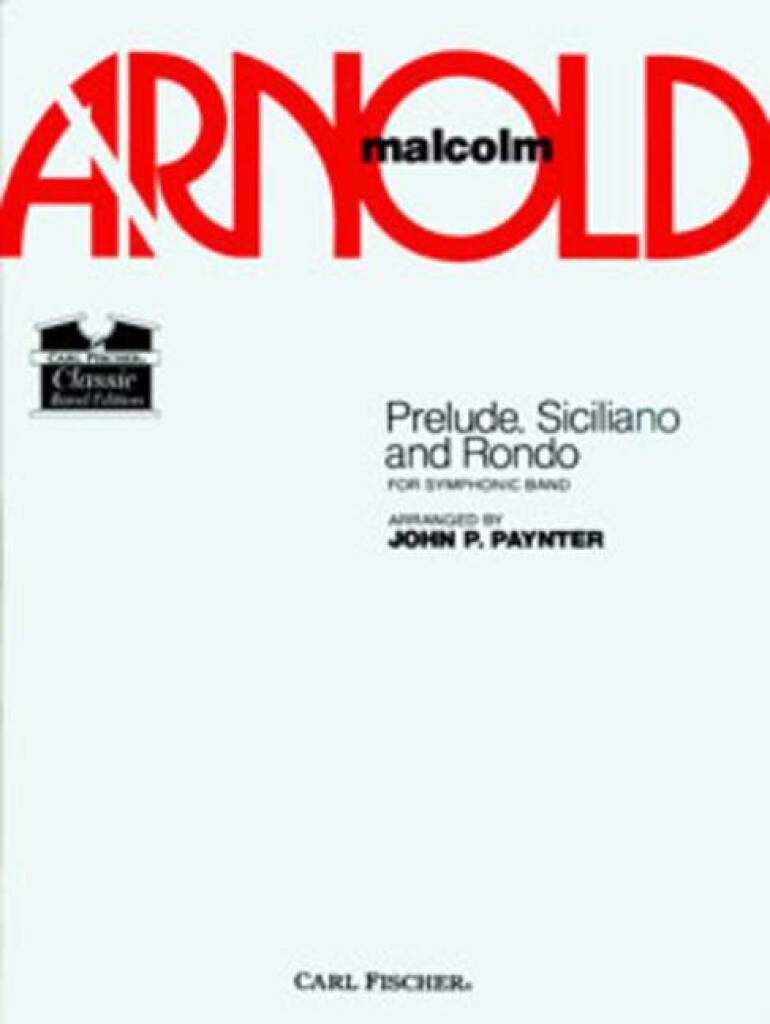
Prelude, Siciliano, and Rhondo - Malcolm Arnold
Taken from Arnold's Little Suite for Brass, Op. 80, John Paynter's splendid arrangement retains the breezy, folk-like quality of the original. Solos highlight the siciliano while the technical brilliance of the rondo features the entire ensemble.
Estimated dispatch 7-14 working days
-
£179.99
Amazonia - Jan Van der Roost
This major concert work cosists o five movements.1st movement: La Laguna del ShimbeSituated high up in the Andes mountains in Northern Peru are the Huaringas, a group of lagoons in isolated and mysterious surroundings. The water has healing powersand for centuries traditional healers have settled there in small villages. From far the sick come to the Huaringas to be treated in nightly rituals, in which the hallucinating juice of the San Pedro cactus gives the prophet a look inside hispatient. The biggest lagoon is the "Laguna del Shimbe", one of the countless wells of the immense Amazon stream.2nd movement: Los AguarunasFurther downstream in Northern Peru we come across the rain tribe of Los Aguarunas. It's a proud, beautiful andindependent race, which has never succumbed to domination, not even from the Incas. They live from everything the forest has to offer: fish, fruit, plants, ... . They also grow some crops and live as semi-nomads. They take their fate into their ownhands and after having made contact with modern civilisation, they have integrated new elements into their lives without betraying their own ways.3rd movement: MekaronMekaron is an Indian word meaning "picture", "soul", "essence". The Indians are theorigina inhabitants of the Amazon region. They either live in one place as a group or move around a large region. They all have their own political system, their own language and an intense social life. At the same time they are master of music andmedicine. "Everywhere the white man goes, he leaves a wilderness behind him", wrote the North American Indian leader Seatl in 1885. As a result of these contacts with the whites, the disruption of most Indian societies began. (In this century alone,80 tribes have vanished completely).4th movement: KtuajThis is the name of the initiating ceremony of the Krah tribe in the Brazilian state of Goias, in which young boys and girls enter adult life. They are cleansed with water, painted with redpaint and covered with feathers, after which the ritual dance holds the entire tribe spell-bound.5th movement: Paulino FaiakanIn 1988 the Indian chiefs Faiakan and Raoni Kaiapo came to Europe to protest against the building of the Altamira dam inBrazil. As a result of the dam the Indians would be driven from their traditional land and enormous artificial would be created. The project was supported financially by, amongst others, the European Community. In February 1989 the Indian tribesaround Altamira held a protest march for the first time in their history together. Amongst other things they paid tribute tot Chico Mendez, who, murdered in 1988, was the leader of the rubber syndicate and a fierce opponent of the destruction of theBrazilian rain forest. Brazilian and world opinion was awakened. The building of the dam was -albeit temporarily - stopped.
Estimated dispatch 7-14 working days
-
 £90.30
Hymne de Fraternite - Serge Lancen
Choir set available at 130224040!This Hymn of Fraternity is in fact the final movement of Serge Lancen's 'Oecumenical Poem'. This large religious composition, lasting over 80 minutes, was written for solo voices, mixed choir, children's choir, organ and symphony orchestra. It was premiered in Our Lady's Cathedral at Laon. The composer made a new orchestration for wind band of this 'Hymn of Fraternity' in 1980. The text was translated into English, Dutch and German.
Estimated dispatch 7-14 working days
-
£71.50
The Race - Anthony Susi
Straight from the 80's this new work for concert band is a major harmonic throwback to what the kids might now call "ancient". Perfect for your audiences - this one is a winner!
Estimated dispatch 7-14 working days
-
 £11.42
Alfred's Drum Method, Book 1: Snare Drum Book - Dave Black and Sandy Feldstein
, Book 1 (of 2) is the ideal teaching tool to help prepare beginning players for all styles of snare drum and percussion performance. This best-selling book contains 80 pages of excellent sequential instruction covering rudimental studies, roll studies, contest solos, and bass drum and cymbal technique, as well as 23 solos suitable for recitals and contests. This title is available in MakeMusic Cloud.
Estimated dispatch 3-5 working days
-
 £100.80
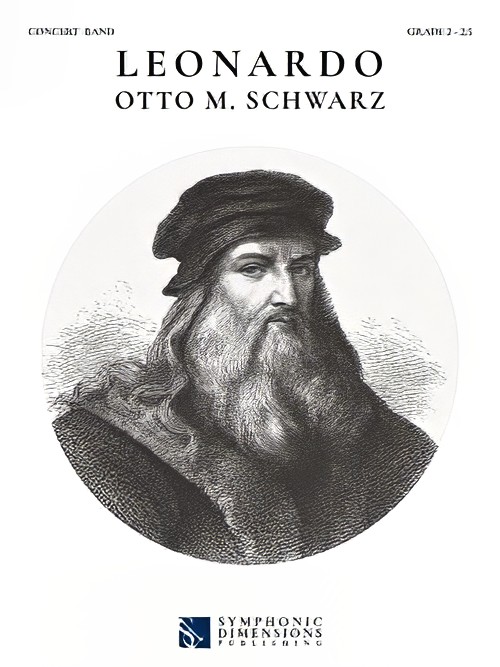
Leonardo (Concert Band - Score and Parts) - Schwarz, Otto M.
Leonardo da Vinci (1452-1519) was a painter, sculptor, inventor, philosopher and researcher. He is renowned as the original 'Renaissance Man'. 'I will preserve the memory of myself in the minds of others' was one of his maxims. Among his most famous works of art are the Mona Lisa, The Last Supper and the Vitruvian Man. He left an extensive collection of handwritten documents in his notebooks. These books, known as codices, survive in various volumes such as the Codex Atlanticus, Codex Madrid, Codex Trivulzianus etc.). They include sketches of ground-breaking inventions as well as studies and commentaries which span the gamut of human study. The left-handed da Vinci wrote the texts in mirror writing. Through wars and other upheavals, the documents were scattered throughout Europe and much of his work disappeared. Leonardo da Vinci wanted to leave a kind of encyclopaedia for posterity and, although it is estimated that up to 80% of his manuscripts were lost, some 6,000 individual documents survive to this day, the contents of which in many cases were only understood centuries later.Duration: 6.00
Estimated dispatch 7-14 working days
-
 £156.00
A Midsummer Night's Dream (Concert Band - Score and Parts) - Mendelssohn, Felix - De Meij, Johan
Suite from the Incidental Music. Felix Mendelssohn Bartholdy (1809 - 1847) composed the music for William Shakespeare's play A Midsummer Night's Dream at two different times. In 1826, at the age of 16, he wrote a concert overture (Op. 21). Sixteen years later, in 1842, he composed the incidental music (opus 61) for King Frederick William IV of Prussia, in which he incorporated the existing overture. The overture premiered in Stettin (then in Prussia, now Szczecin, Poland) on February 20, 1827, conducted by Carl Loewe. Mendelssohn had to travel 80 miles through a raging snowstorm to get to the concert, which became his first public appearance. The first British performance of the overture was conducted by Mendelssohn himself on June 24, 1829, at the Argyll Rooms in London. After the concert, Thomas Attwood was given the score of the overture for safekeeping, but left it in a taxi and was never found. Mendelssohn later rewrote the overture entirely from memory.Duration: 14.45
Estimated dispatch 7-14 working days
 View Music