
Results
-
 £155.00
Training Montage (from Rocky 4) (Concert Band - Score and Parts) - DiCola, Vince - King, Peter
Duration: 3.30
Estimated dispatch 7-14 working days
-
 £3.95
£3.95ZOO BALL (Part 4 in B flat BC) - Strachan, Keith
Trombone, Euphonium (for Continental Europe)
Estimated dispatch 7-14 working days
-
£3.95
ZOO BALL (Part 4 in B flat TC) - Strachan, Keith
Tenor Saxophone, Baritone, Trombone, EuphoniumThe Zoo Ball is a suite of twelve light-hearted pieces for the young wind of brass band by Keith Strachan.It can be seen from the titles that the young player is introduced to a variety of dance rhythms that are both fun to play and enjoyable to listen to.It is scored in five parts (some of which divide in places) so can be played by ensembles of aroung ten players up to full band. When a fuller instrumentation is available, teachers and conductors are encouraged to vary the scoring as appropriate, particularly in repeated sections. This will allow players to rest occasionally and add changes of colour to the band sound by avoiding excessive doubling.Contents:Lion's PrideHippo's WaltzKangaroo HopEel CongaElephants' MarchSnake, Rattle and RollPanther TangoPenguin PolkaBuffalo BluesBlack Mamba SambaTiger RagMonkey Swing
Estimated dispatch 7-14 working days
-
£3.95
ZOO BALL (Part 4 in C BC) - Strachan, Keith
1st Bassoon, 1st Trombone, EuphoniumThe Zoo Ball is a suite of twelve light-hearted pieces for the young wind of brass band by Keith Strachan.It can be seen from the titles that the young player is introduced to a variety of dance rhythms that are both fun to play and enjoyable to listen to.It is scored in five parts (some of which divide in places) so can be played by ensembles of aroung ten players up to full band. When a fuller instrumentation is available, teachers and conductors are encouraged to vary the scoring as appropriate, particularly in repeated sections. This will allow players to rest occasionally and add changes of colour to the band sound by avoiding excessive doubling.Contents:Lion's PrideHippo's WaltzKangaroo HopEel CongaElephants' MarchSnake, Rattle and RollPanther TangoPenguin PolkaBuffalo BluesBlack Mamba SambaTiger RagMonkey Swing
Estimated dispatch 7-14 working days
-
 £53.50
Palladio - Karl Jenkins
Although this composition sounds like it came straight out of the Baroque period, it is actually the first movement of a suite written in 1996 by Karl Jenkins. Instantly recognized as the 'diamond commercial' theme, its relentless pulse and dramatic nature make it a natural for bands. Robert Longfield's skilled arrangement puts it within reach of most groups.score and parts - 4 Flute I, 4 Flute II, 2 Oboe, 4 Bb Clarinet I, 4 Bb Clarinet II, 4 Bb Clarinet III, 2 Bb Bass Clarinet, 2 Bassoon, 2 Eb Alto Saxophone I, 2 Eb Alto Saxophone II, 2 Bb Tenor Saxophone, 2 Eb Baritone Saxophone, 2 F Horn I, 2 F Horn II, 3 Bb Trumpet I, 3 Bb Trumpet II, 3 Bb Trumpet III, , 3 Trombone I,3 Trombone II, 2 Baritone B.C., 2 Baritone T.C., 4 Tuba, I String Bass, I Timpani, 2 Percussion I, 2 Percussion II - wind/concert band
Estimated dispatch 7-14 working days
-
£62.95
Blue Ridge Impressions - Brian Balmages
A festival-winning contemporary overture in Bb with limited instrumentation, Brian Balmages' Blue Ridge Impressions is destined to be a classic. The skillfully written structure around a 4/4, 3/4, 4/4 framework offers exciting material from the opening themes through a classic maestoso ending.
Estimated dispatch 7-14 working days
-
 £126.50
Beating Beats - Jan Van der Roost
Beating Beats rhythmically is a rather special piece: more conventional metres are manipulated in such a way that the listener (without score) may be confused and even misled at various points! The 'regular four beat accents in a 4/4 measure for example are often not adhered to, giving the impression of a different metre altogether. However, at the same time it may be that some instruments do follow this "normal" 4/4 metre, thus confusing everyone - performers and listeners alike! On one hand, it is a "simple" piece with very playable and melodic themes, but their mysterious rhythmic makes it not only sound more complicated, but also makes for a greater challenge for both players and the conductor! As is mostly the case with Jan Van der Roost's works, the orchestration is both colourful and contrasting, with every section of the modern wind orchestra used equally. All in all, it's a work full of surprises with some unexpected harmonies and special melodic lines but above all, with metrical and rhythmical sure to catch you unawares!
Estimated dispatch 7-14 working days
-
 £76.99
Pasovario - Wim Laseroms
The compound title of this work reflects its musical content. 'Vario' refers to the two different meters 3/4 and 2/4 in which this paso doble has been written. The compact, powerful opening is in 3/4 time: it is followed by a melodic, cantabile second theme, in the beautiful chalumeau register, in 2/4 time. This refreshing piece sets a great tone for your concert!
Estimated dispatch 7-14 working days
-
£53.95
Eight Chorales for Elementary Band - Quincy C. Hilliard
Considered by many to be one of the country's top music educators, Quincy C. Hilliard has written this set of eight chorales to develop the intonation of your beginning band. These chorales teach much more than lyrical playing by covering the keys of Bb, Eb, and F Major, and time signatures in 4/4, 3/4, and 2/4. Also, all instrumental parts are very easy so you can focus on tone and musicianship. A must for every beginning band library!
Estimated dispatch 7-14 working days
-
 £82.50
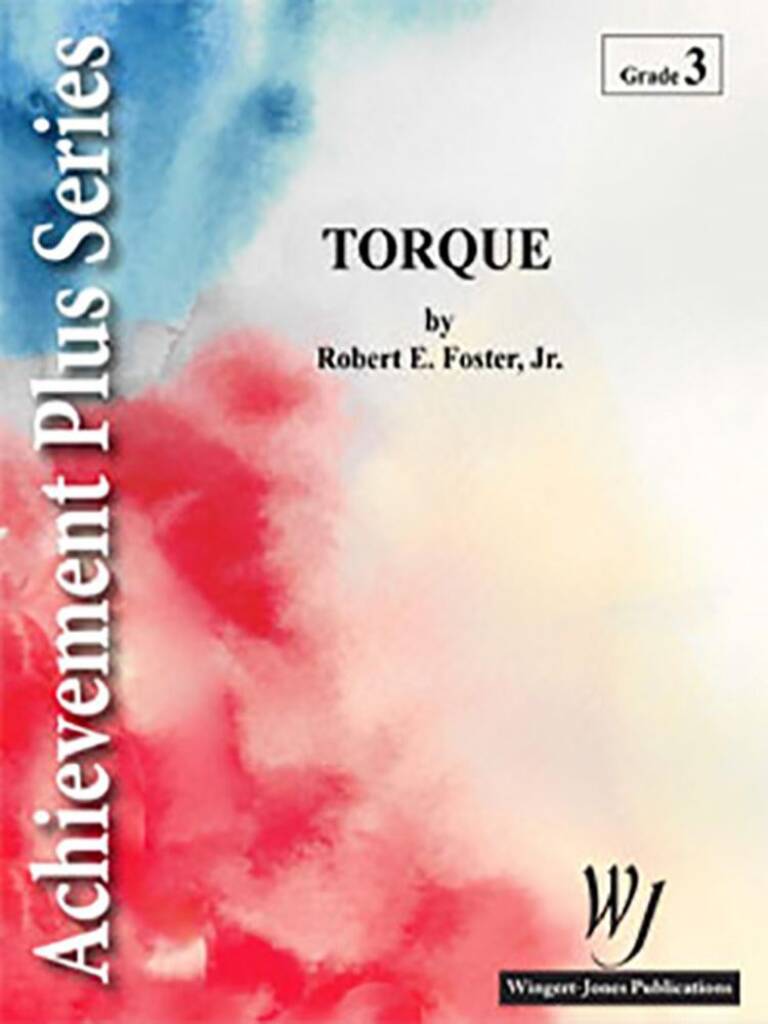
Torque - Robert E. Foster Jr.
Torque is the perfect way to "rev up" your concert program. Written as a contest piece for middle school bands, this high-energy rhythmic selection provides a contemporary flair and introduces your ensemble to mixed meters alternating between 4/4 ,3/4 , and 2/4 time signatures. Just the vehicle to excite audiences and impress the judges at your bands contests and festivals.
Estimated dispatch 7-14 working days
 View Music