
Results
-
 £64.99
Pegasus - James Curnow
A new and different approach to the young band overture! This engaging grade 1 1/2 composition is a wonderful contrast to whatever you program for your concert or festival appearance. Quality music at this level is educationally critical but has heretofore been hard to find. The bridge between grade 1 and grade 2 literature also acts as the pathway from "beginner" music to truly expressive band compositions. James Curnow's Pegasus will help you move your band in the right direction. You may also wish to use Pegasus as a cross-curricular connection with other disciplines.Solid!
Estimated dispatch 7-14 working days
-
£72.99
Europa - Marc-Antoine Charpentier
Jan de Haan combines a famous prelude and a famous finale from the pens of two famous European composers. Both familiar themes are still frequently played today. The prelude, from Marc Antoine Charpentier's Te Deum, is featured asthe theme for today's Eurovision Song Contest. The finale, from the final movement of Beethoven's Ninth Symphony, has become the European Anthem. Your band will enjoy performing these master works that have been carefully scoredin a four-part flexible instrumentation. Dur: 2:40 (Grade 2)
Estimated dispatch 7-14 working days
-
 £154.99
Celtic Concertino - Bruce Fraser
This little concerto for clarinet was written for Peter Holligan , a friend of its composer, and the Fife Youth Concert Band (Scotland). The work was based on traditional Celtic music, and consists of three movements. 1. Reel - a fast dance ending in an atmospheric but virtuoso cadenza. 2. Lament - a slow and melancholy song hinting at the sound of bagpipes. 3. A fast and virtuoso dance in 6/8 time with Irish influence. The work is a wonderful audience-pleaser and an absolute 'must' for all clarinet-players. The band too is called upon and by all means does have its part to play in the piece. Band grade 4, soloist grade 5. Dit Concertino voorklarinet werd geschreven voor Peter Holligan , een vriend van de componist, en de Fife Youth Concert Band (Schotland). Het werk is gebaseerd op de traditionele Keltische muziek, en bestaat uit drie delen. 1. Reel - een snelle dans die eindigt in een sfeervolle, maar virtuoze cadens. 2. Lament - een trage en melancholische melodie die het geluid van doedelzakken verbeeldt.3. Een snelle en virtuoze dans in 6 / 8 maatsoort met Ierse invloeden. Voor het publiek een heerlijk werk om naar te luisteren en een uitdaging voor de solist(e)! Het orkest ondersteunt deze om het tot een kleurrijk geheel te maken! Orkest graad 4, solo graad 5.
Estimated dispatch 7-14 working days
-
 £70.60
Spiral - Marc Jeanbourquin
Marc Jeanbourquin composed 'Spiral' during a music camp, for himself and 9 other fellow musicians. Due to the success of this piece, some years later, he has taken the main theme and developed it, with a kind of tribute to Camille Saint-Saens, one of his favourite composers. The constant changes between the minor and major keys, and between the often changing 2 and 3 feeling, with the occasional 2/4 bar thrown in, do not disrupt the flow of the piece in the slightest; in fact it is what has inspired the title. A percussion interlude, which is broken up by the unregularly occurring meter, brings the piece to a restatement of the original theme, which then ends in a large crescendo. Spiral is perfectly suited to either the opening or the close of any concert.
Estimated dispatch 7-14 working days
-
£184.99
Rubicon - Bert Appermont
The Rubicon is a river in Northern Italy which Julius Caesar crossed with his army in 49 BC in defiance of the leaders of Rome, who feared his power. A civil war against rival Pompey ensued, which culminated in Caesar seizing power as the absoluteruler of Rome. The phrase "crossing the Rubicon" therefore refers to any person committing himself irrevocably to a risky, decisive and irrevocable of course of action.The work consists of three parts that deal with this important moment in history.Part 1 (Meditation) symbolises Caesars request to the Gods to assist him in his difficult choice. In a slow introduction we hear the melancholy and beseeching sounds of the duduk (alternatively, this part can be played by a soprano saxophone)and of the soprano solo singer over the bourdon accompaniment. The soprano solo singer then sings "dona tibi pacem" (give him rest) in a melodious and probing theme.In Part 2 (Battle of Pharsalus) trumpets and trombones resound alternately ina stately Roman fanfare, producing a stereophonic effect. This develops into a martial theme in which Caesars impressive army goes to battle against the army of rival Pompey. While the theme of Caesars army fades away, Pompeys theme emerges as anaive dance in six-eight time. His army is definitely in the majority and it believes it can easily defeat the enemy. Suddenly trumpets and trombones clash on two sides of the orchestra: Caesars army advances and attacks. A fierce battle ensues inwhich the two themes are played alternately as well as simultaneously. Thanks to his shrewd battle tactics, Caesar manages to win this legendary battle after all: his theme resounds ever louder in trumpets and horns until everything dies out andchanges into a kind of reconciliation between the soldiers of the two armies. The melancholy "dona tibi pacem" from part 1 now serves as a reconciliation theme.Caesar is now the sole ruler of the New Roman Empire, which would be destined to leave itsmark on our Western civilisation to this day. The third part is a sparkling succession of dance music (Dance) with many Greek and Roman elements in which Caesars victory is praised and celebrated. It is common knowledge that the culture(arts, gods, etc.) of the Romans drew heavily on Greek culture. I have therefore used an authentic Greek theme (the Seikolos song) several times in this part (bar 17 in the euphonium, bar 60 in the base section, bar 68 in the sopranosaxophone) to suggest the music of that era and to evoke the right atmosphere. After a gradual increase in tempo in the entire orchestra, the opening melody gloriously resounds once more, surrounded by virtuoso dance music. The work ends withbombastic brass fanfares in which Caesars theme triumphs once more.NOTE FOR THE CONDUCTOR:The Armenian duduk and the monochord that are used in the introduction give a special tone to the music, but could be substituted (soprano saxophone instead ofthe duduk) or left out (monochord). The soprano solo is also doubled within the orchestra and could therefore also be left out if necessary, although it does provide the work with an extra dimension. The male voices in the introduction and the finalecould possibly be replaced with a synthesizer with choral setting.As a visual and acoustic element in part 2, the trumpets, the e-flat cornet, the small drum and trombones can be stood up and placed at two sides of the orchestra (bar 80).Seen fromthe point of view of the conductor, put the trumpets, the e-flat cornet and the small drum in the left section and the trombones in the right section of the orchestra. This also helps to create a visual contrast between the two themes of the secondpart. The players can be seated again at bar 97 or bar 121. The soprano soloist can be placed in or in front of the orchestra, depending on what gives the best result. For the conclusion of the work the soprano solo can be sung from afar (from thewings) to create additional atmosphere.This work was composed especially for the "St Joseph" brass band from Pey/Echt (Belgium) with conductor Mark Prils.
Estimated dispatch 7-14 working days
-
 £57.50
British Masters Suite
Master Level (correlates with Book 2, p. 32) Drawing on the marvelous tradition of British composers, John Moss has created a varied suite of classic works adapted for young bands. Includes Marching Song by Holst, Nimrod fromElgar's Enigma Variations and Sine Nomine by Vaughan Williams. A terrific setting for contest or festivals! Includes CD. Dur: 4:30 (Grade 2)
Estimated dispatch 7-14 working days
-
 £47.50
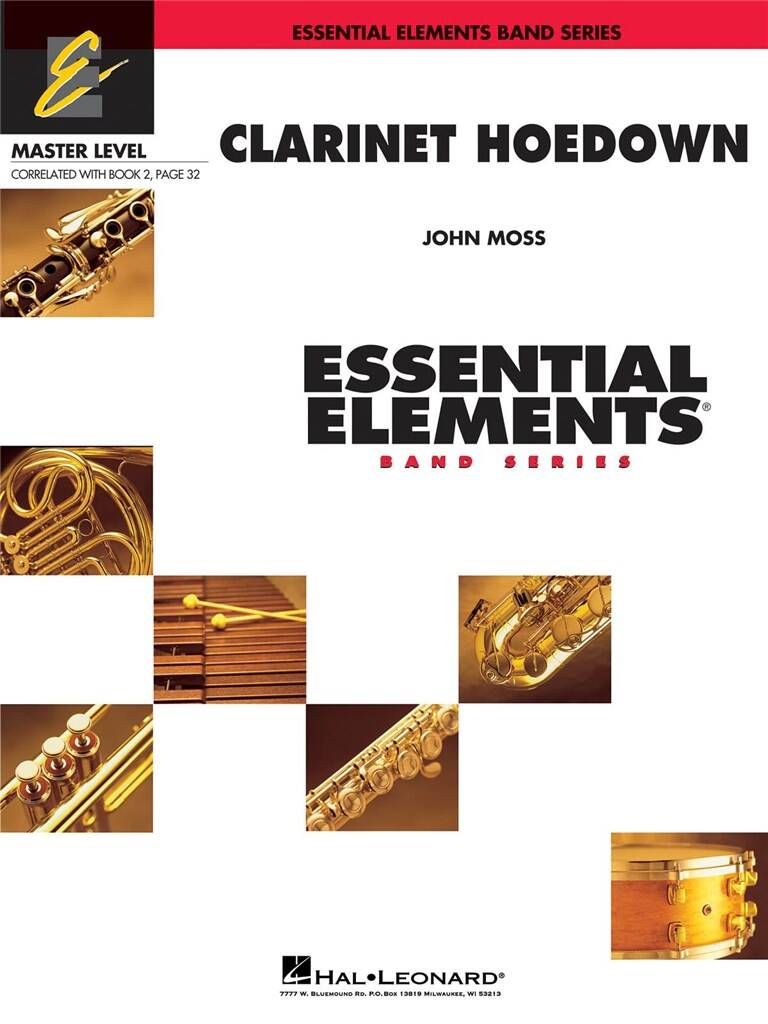
Clarinet Hoedown - John Moss
Master Level (correlates with Book 2, p. 32) Not only will your clarinets have a ball with this section feature, but there is something here for every section of the band. In a style reminiscent of Copland, John Moss uses livelythemes, clever harmonies and effective percussion writing in creating this appealing composition. (2:55)
Estimated dispatch 7-14 working days
-
 £57.50
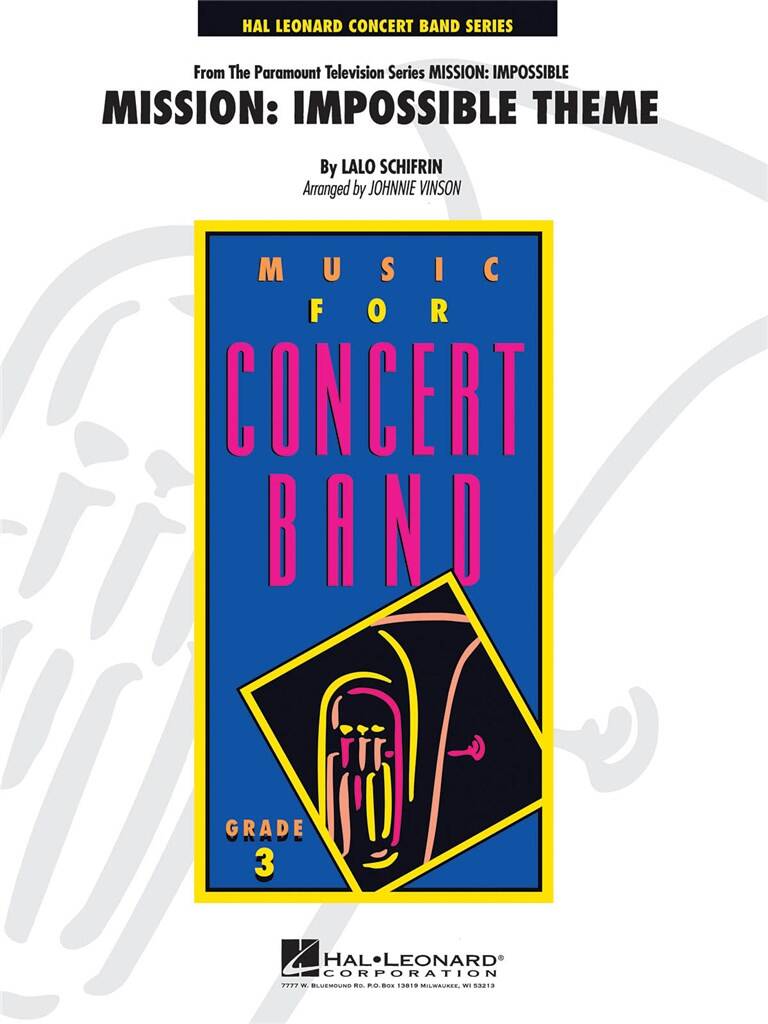
Mission: Impossible Theme - Lalo Schifrin
The Mission: Impossible Theme arranged by Johnnie Vinson for Concert Band. Score and Parts.instrumentation number of parts pages per part full score 1 16 piccolo 1 1 flute 8 1 oboe 2 1 bassoon 2 1 bb clarinet 1
Estimated dispatch 7-14 working days
-
 £47.50
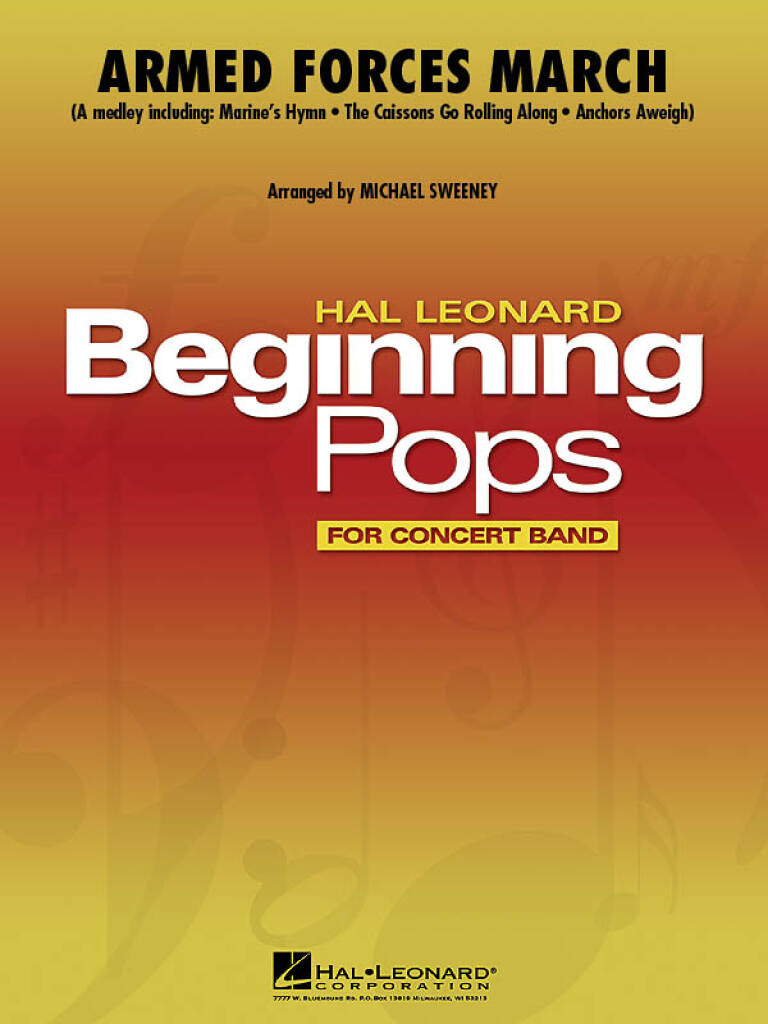
Armed Forces March
Beginning Pops - Grade 1 These traditional themes have never sounded so good at this easy of a level! Written in 2/4 rather than cut time, this arrangement includes interesting parts for all instruments - including the low brass and percussion. Featuring Marine's Hymn, Anchors Aweigh and The Caissons Go Rolling Along, this is the perfect concert closer for beginning bands. (2:00)
Estimated dispatch 7-14 working days
-
 £57.50
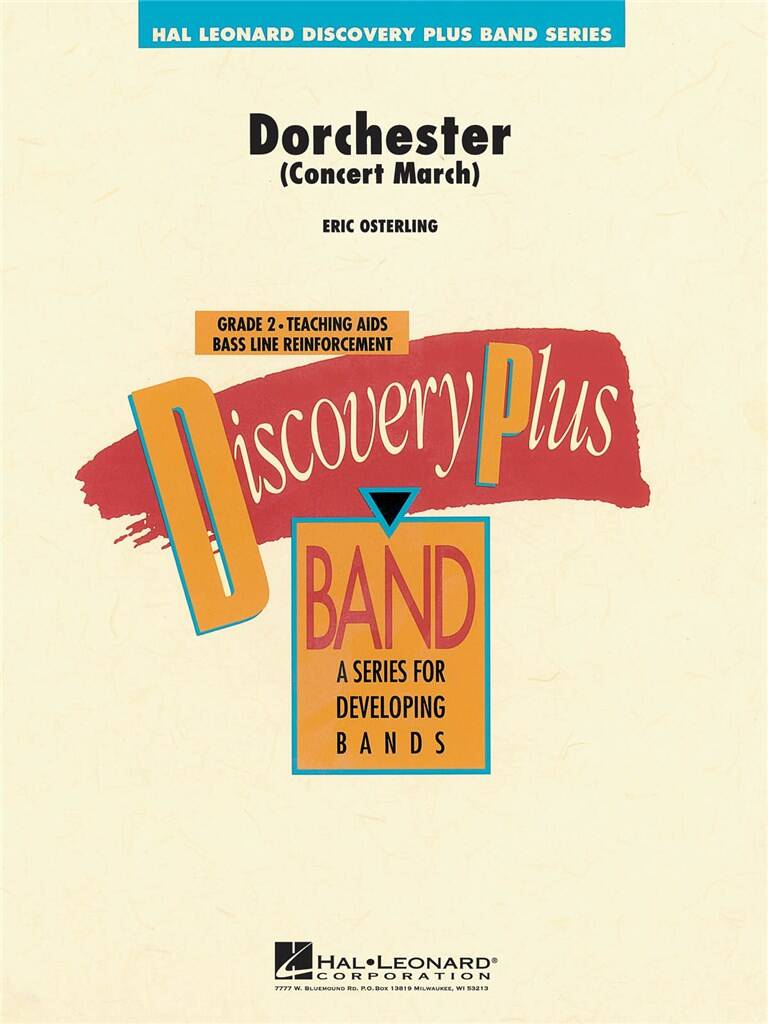
Dorchester ( Concert March ) - Eric Osterling
Veteran composer Eric Osterling has provided us with many great marches over the years and this energetic 2/4 march is one of his best. Solid ensemble writing, easy-to-teach stylistic features, and great audience appeal make this a wonderful addition for any band program. (2:00)
Estimated dispatch 7-14 working days
 View Music