
Results
-
 £96.40
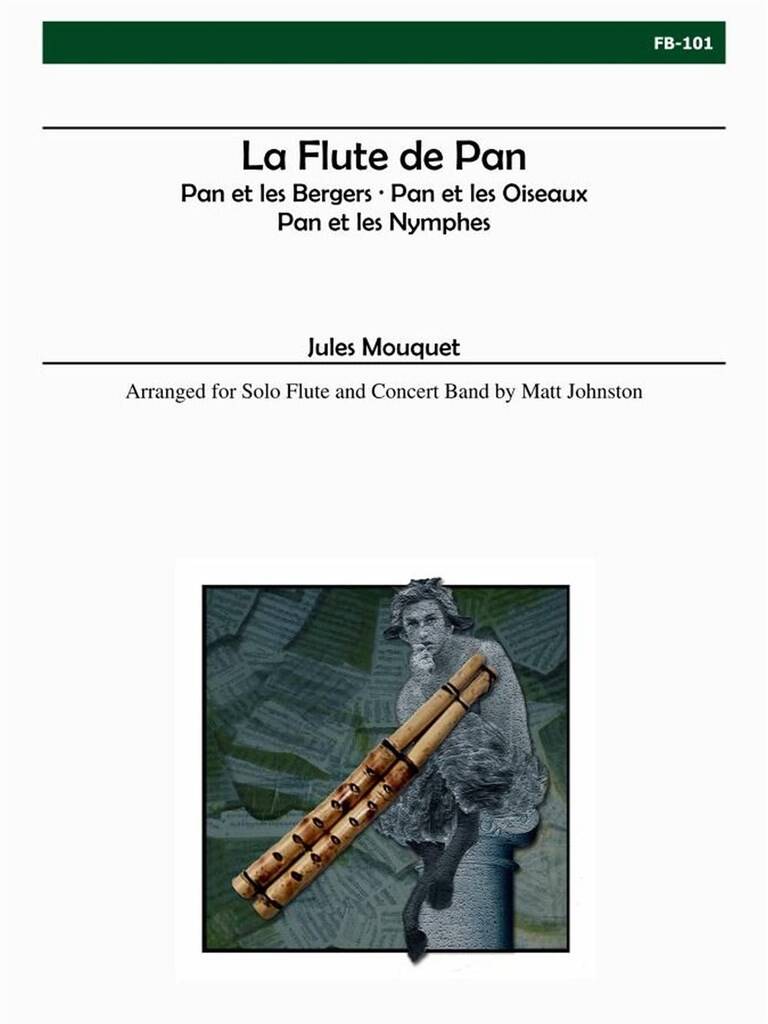
La Flute De Pan - Jules Mouquet
This arrangement features a colorful, yet light accompaniment to this delightful flute solo. A great piece to feature your first chair flute player. The first movement is appropriate for bands of all ages, while the latter two movements are a most likely appropriate for high school groups and up. Instrumentation: Solo Flute, Flute 1/2, Oboe, Bassoon, Clarinet 1/2, Bass Clarinet, Alto Saxophone 1/2, Tenor Saxophone, Baritone Saxophone, Trumpet 1/2, Horn 1/2, Trombone, Euphonium (BC and TC), Tuba, Snare Drum/Bass Drum, Triangle/Suspended Cymbal, Bells
Estimated dispatch 7-14 working days
-
 £110.99
T-Bone Concerto, Part I - Rare - Johan de Meij
The T-Bone Concerto was Johan de Meij's first composition for solo instrument and symphonic band. It consists of three movements called respectively 'Rare', 'Medium' and 'Well Done'. In addition to the solo trombone, an important role has been allotted to a kind of chamber music ensemble within the band. This group introduces new thematic material and accompanies the soloist, thus creating a delightful transparant accompaniment. The ensemble consists of a double wind quintet (2 flutes, 2 oboes, 2 clarinets, 2 french horns and 2 bassoons) plus a cor anglais and a double bass. Part I is written in the A-B-A form and allow the soloist to display both the technical and the lyricalcharacteristics of the instrument.
Estimated dispatch 7-14 working days
-
£110.99
T-Bone Concerto, Part II - Medium - Johan de Meij
The T-Bone Concerto was Johan de Meij's first composition for solo instrument and symphonic band. It consists of three movements called respectively 'Rare', 'Medium' and 'Well Done'. In addition to the solo trombone, an important role has been allotted to a kind of chamber music ensemble within the band. This group introduces new thematic material and accompanies the soloist, thus creating a delightful transparant accompaniment. The ensemble consists of a double wind quintet (2 flutes, 2 oboes, 2 clarinets, 2 french horns and 2 bassoons) plus a cor anglais and a double bass. Part II is written in the A-B-A form and allow the soloist to display both the technical and the lyricalcharacteristics of the instrument. Part III at first develops into a kind of neo-baroque style using the thematic material of the first and second movement, and finally leads to a triumphant finale and a virtuoso conclusion.
Estimated dispatch 7-14 working days
-
 £110.99
T-Bone Concerto, Part III - Well Done - Johan de Meij
The T-Bone Concerto was Johan de Meij's first composition for solo instrument and symphonic band. It consists of three movements called respectively 'Rare', 'Medium' and 'Well Done'. In addition to the solo trombone, an important role has been allotted to a kind of chamber music ensemble within the band. This group introduces new thematic material and accompanies the soloist, thus creating a delightful transparant accompaniment. The ensemble consists of a double wind quintet (2 flutes, 2 oboes, 2 clarinets, 2 french horns and 2 bassoons) plus a cor anglais and a double bass. Part III at first develops into a kind of neo-baroque style using the thematic material of the first andsecond movement, and finally leads to a triumphant finale and a virtuoso conclusion.
Estimated dispatch 7-14 working days
-
 £340.99
T-Bone Concerto (Complete Edition) - Johan de Meij
The T-Bone Concerto was Johan de Meij's first composition for solo instrument and symphonic band. It consists of three movements called respectively 'Rare', 'Medium' and 'Well Done'. In addition to the solo trombone, an important role has been allotted to a kind of chamber music ensemble within the band. This group introduces new thematic material and accompanies the soloist, thus creating a delightful transparant accompaniment. The ensemble consists of a double wind quintet (2 flutes, 2 oboes, 2 clarinets, 2 french horns and 2 bassoons) plus a cor anglais and a double bass. Parts I and II are written in the A-B-A form and allow the soloist to display both the technical and thelyrical characteristics of the instrument. Part III at first develops into a kind of neo-baroque style using the thematic material of the first and second movement, and finally leads to a triumphant finale and a virtuoso conclusion.
Estimated dispatch 7-14 working days
-
 £64.99
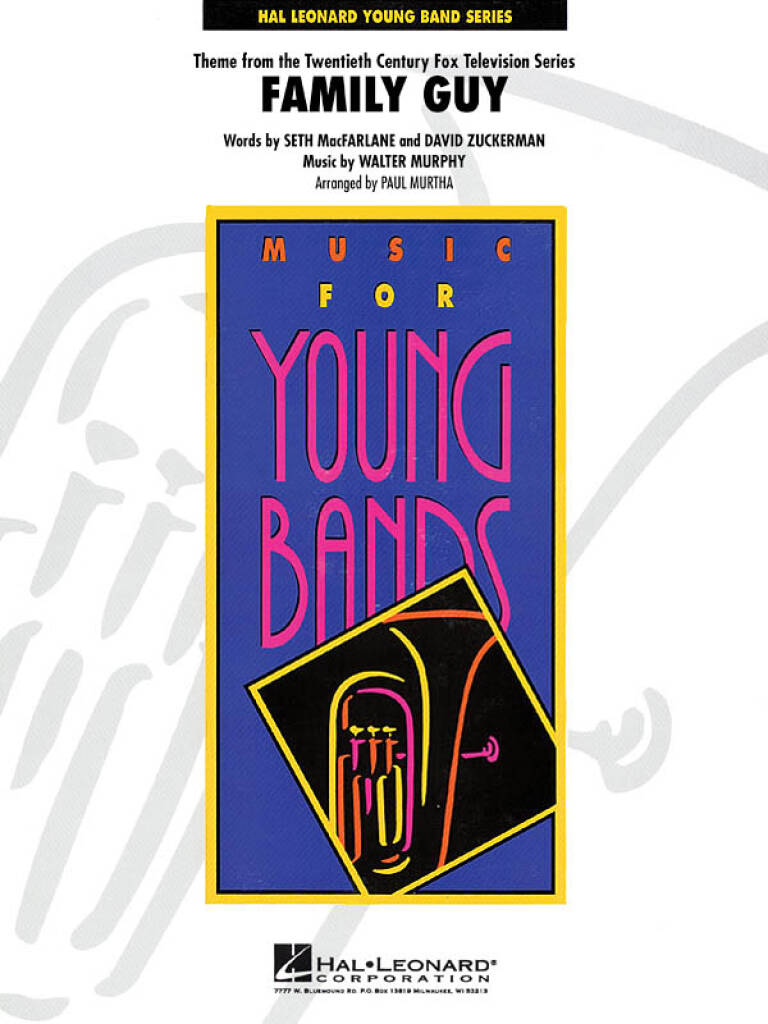
Theme From Family Guy - Murphy
From the wildly popular animated TV series Family Guy comes this swinging and thoroughly enjoyable theme. Solidly scored in the style of a Las Vegas show band, this is sure to be a hit with all audiences.InstrumentationTrombone 1 (x3)Trombone 2 (x3)Baritone - Bass Clef (x2)Baritone Treble Clef (x2)Tube (x4)Double Bass (x1)Percussion (x2)Timpani (x1)Mallet Percussion (x2)Piccolo (x1)Flute (x8)Oboe (x2)Bassoon (x2)B Flat Clarinet 1 (x4)B Flat Clarinet 2 (x4)B Flat Clarinet 3(x4)E Flat Alto Clarinet (x1)B Flat Bass Clarinet (x2)E Flat Alto Saxophone 1 (x2)E Flat Alto Saxophone 2 (x2)B Flat Tenor Saxophone (x2)E Flat Baritone Saxophone (x1)B Flat Trumpet 1 (x3)B Flat Trumpet 2 (x3)B Flat Trumpet 3 (x3)French Horn 1 (x2)French Horn 2 (x2)
Estimated dispatch 7-14 working days
-
 £60.99
Broadway! - Johnnie Vinson
Reminiscent of a musical style from the heyday of Broadway musicals, Johnnie Vinson has created this lively and entertaining cut time march. Composed using the traditional march form, Broadway! includes interesting lines for all instruments and a nice variety in scoring and dynamics. Dur: 2:30. Instrumentation: Flute, Oboe, Bassoon, Bb Clarinet 1, Bb Clarinet 2, Bb Clarinet 3, Eb Alto Clarinet, Bb Bass Clarinet, Eb Alto Saxophone 1, Eb Alto Saxophone 2, Bb Tenor Saxophone, Eb Baritone Saxophone, Bb Trumpet 1, Bb Trumpet 2, F Horn, Trombone, Baritone B.C., Baritone T.C., Tuba, String Bass, Percussion 1, Percussion 2, Mallet Percussion,Timpani.
Estimated dispatch 7-14 working days
-
 £267.99
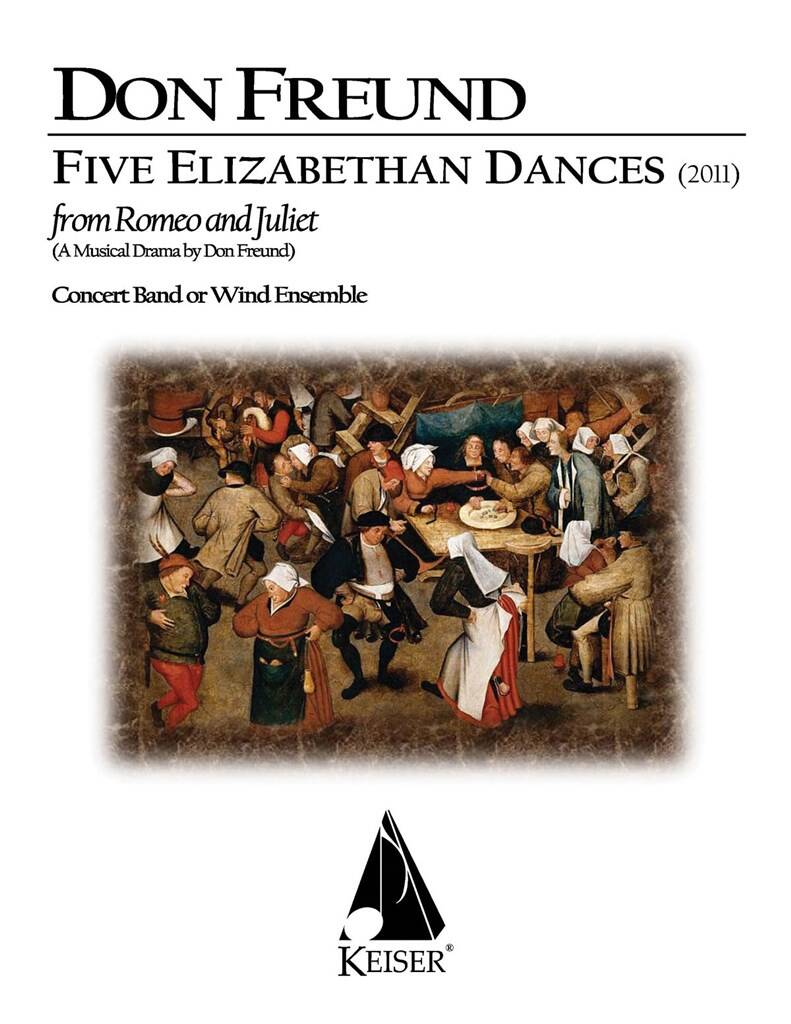
Five Elizabethan Dances from 'Romeo & Juliet' - Don Freund
Five Elizabethan Dances is drawn from the music that sets the scene and provides the accompaniment for the Ballroom Scene from Don Freund's Romeo and Juliet: A Shakespearean Music Drama for singing actors and piano. The style of the dances is freely drawn from dances found in the Fitzwilliam Virginal Book (music from ca. 1562 to 1612), spiced up with changing meters and chromatic twists of melody and harmony reflecting a more recent musical language. Each of the dances represents a pivotal scene-within-a-scene. Excludes part doubling: 2+1.2+EH(opt).3+EbCl+BCl+CltoCl(opt).2+Cbsn(opt): AATB Saxes: 3.4.3.2Euph.2 Tuba: Perc(5)
Estimated dispatch 7-14 working days
-
 £57.50
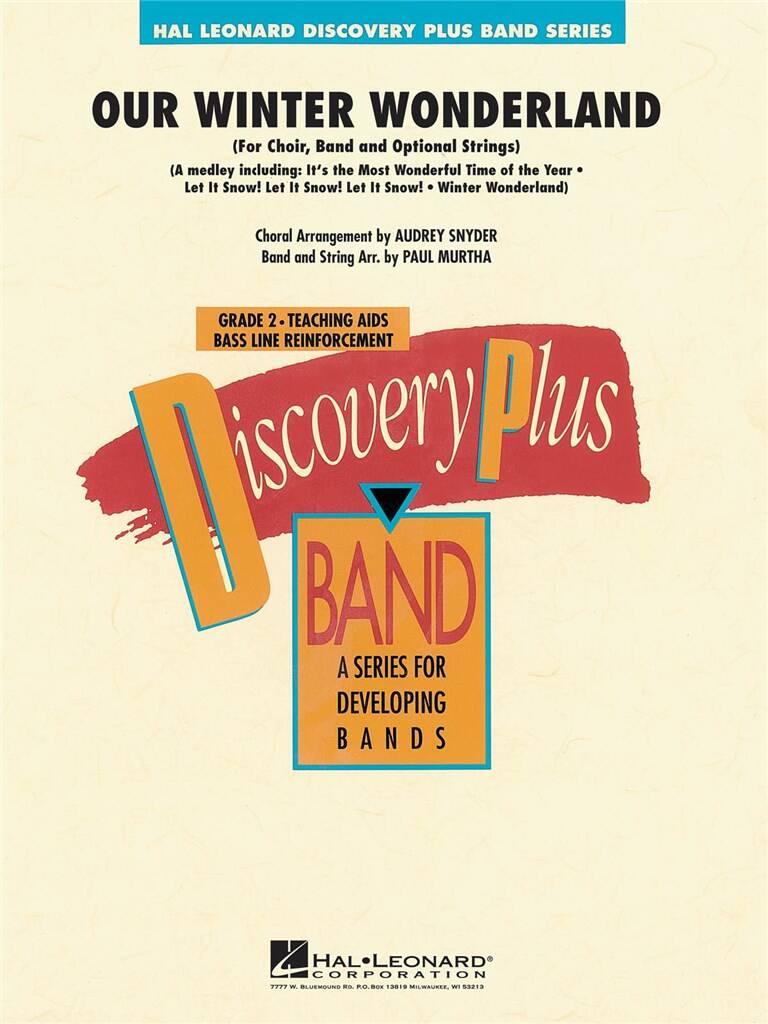
Our Winter Wonderland
Band with opt. Choir - Grade 2 The winter holiday season seems to bring out songs that simply make you feel good! Here is a collection of gems arranged in an easy-flowing style that is easy to learn and a joy to perform. The band arrangement is designed to be performed with or without the choir or strings. Includes: The Most Wonderful Time of the Year, Let It Snow! Let It Snow! Let It Snow! and Winter Wonderland. 08744127 SATB: $2.25 08744128 SAB: $2.25 08744129 2-Part: $2.25 04490326 String Pak: $40.00 08744130 Accompaniment/Full Performance CD: $35.00
Estimated dispatch 7-14 working days
-
 £248.99
Missa Brevis - Jacob de Haan
Missa Brevis, written for choir and wind band, was commissioned by the Conseil Dpartemental pour la Musique et la Culture de Haute-Alsace (Dir.: Philippe Pfisterer) in Guebwiller (France), in celebration of the millennium of Pope Leon IX'sbirth in guisheim (France). The composer conducted the first performance on June 23, 2002. It was performed live for the French television channel France 2. The mass movements Kyrie, Gloria, Credo, Sanctus, Benedictus, and Agnus Deiare very suitable for the Catholic as well as the Protestant liturgy. For this mass, various ways for performing in diverse variable strengths are possible. An instrumental performance is possible if the brass represents the choir parts. In thisoption, it is desirable for the brass to be positioned separately from the rest of the band (on a gallery, for example), so that the idea of two choirs is approached. In a performance with a large choir, the brass can work very well as a support. Inthat case, the dynamics of the brass should be adapted somewhat, since these are actually intended for an instrumental performance. You can also leave out the brass entirely for the benefit of the choir. For the accompaniment of smaller choirs, youcan opt for a small ensemble from the band. This can also be a quartet, put together as desired. For the performance of this mass, the obvious choice is one of the above options. However, as an alternative, a performance with a combination of theseoptions (vocally/instrumentally) is also possible not just from an artistic point of view (variation), but also from a practical starting point for example in the case that the choir has rehearsed only two movements. With a full strength, theconductor can vary the instrumentation to his or her liking. Then the brass can also play a role in the accompaniment (instead of supporting the choir). The following combinations are possible:1. clarinet choir (from Eb Clarinet to BassClarinet)2. clarinet choir + saxophones3. brass (flugelhorns, horns, euphoniums, bass section)4. brass (2 trumpets / 2 trombones)5. double reeds (optional + flute, optional + string bass)6. tutti7. all winds8. allbrassIn a performance by brass band and choir, it is usually advisable to leave out option 1 (choir + brass + band). The choir sings self-reliantly, accompanied by a full brass band. In an instrumental performance, you can consider a combinedquartet (two cornets and two trombones) + brass band.Choral parts available separately.
Estimated dispatch 7-14 working days
 View Music