
Results
-
 £104.50
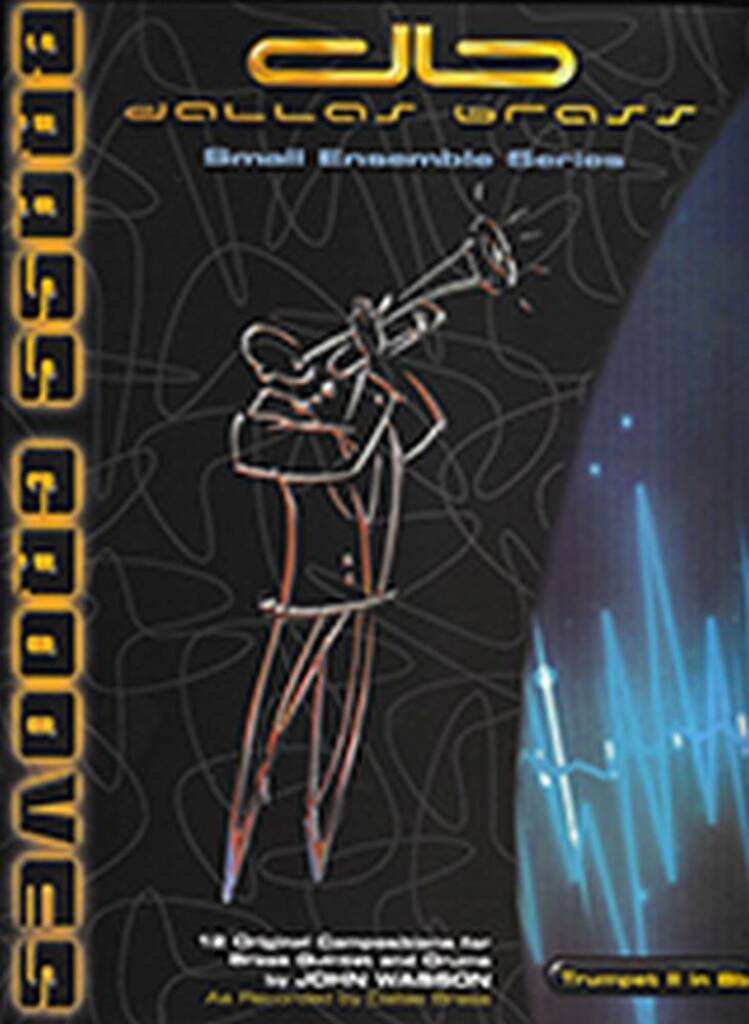
Brass Grooves - Advanced - John Schuberg
A collection of 12 original compositions by Dallas Brass arranger and composer, John Wasson. The pieces are written in a variety of music styles, Swing, Salsa, Blues, Reggae, Funk, and Broadway. They are scored for brass quintet and drums, but will also work for brass alone.Fun to listen to and even more fun to play, the difficulty level is appropriate for accomplished high school players on up. Accessible in regard to range, endurance and technique, these pieces will challenge each musician to play with good articulation, intonation and rhythm - all essential elements of any musical style. The collection is also great for gigging quintets!The COMPLETE SET includes books for:Director, Trumpet I, Trumpet II, Horn, Trombone, Tuba, Drums, and Trombone/Baritone/ Trumpet III substitute for Horn.Plus a full performance CD recorded by the Dallas BrassCONTENTS:Senor Salsa, Balloon Ride, Next Stop Funksville, Basically Basie, Surfside, Swingtime, Hearland, Catwalk Blues, Island Holiday, The Hipster, Beyond The Clouds, Curtain Call
Estimated dispatch 7-14 working days
-
 £67.95
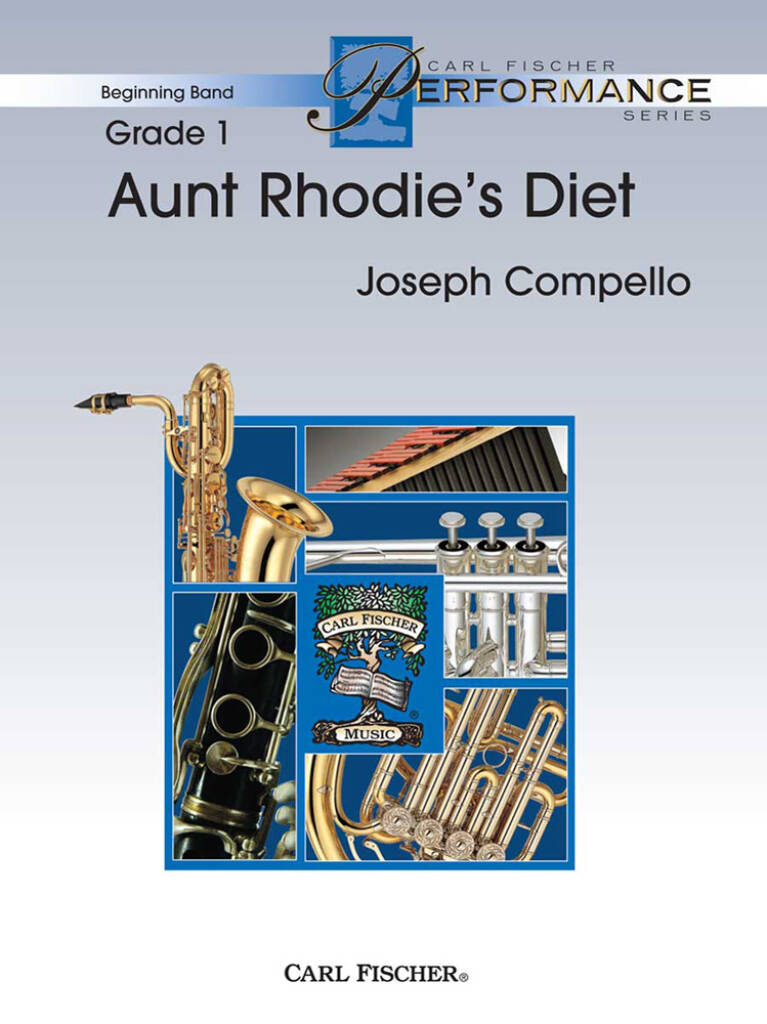
Aunt Rhodie's Diet - Joseph Compello
Aunt Rhodie's Diet is a sequel to the incredibly popular Aunt Rhodie's Appetite. Both arrangements are novel settings in which a beginning band can perform the standard folk songs found in the first few pages of most band methods. Because they are so easy to play, these arrangements by themselves would not make much of a concert, even for a beginning group. However, when used as incidental music to the story, the songs become sufficiently interesting to the audience, without taxing the capabilities of students who have only been playing for about 10 to 12 weeks.
Estimated dispatch 7-14 working days
-
 £141.99
Fantasia di Falcone - James Curnow
Fantasia di Falcone is a four movement suite of fantasy variations composed as a showpiece for your outstanding Euphoniumsoloist. The piece opens with an expressive 12 measure soliloquy which presages the dynamic, modern variations, and diversionsthat fully explore the moods of the Euphonium. Exquisite orchestration contrasts and effects give the soloist perfect supportas the ensemble reinvents itself again and again, revealing surprising new facets to this gem of the compositional art.Significant!
Estimated dispatch 7-14 working days
-
£154.99
Castellum - Jan Van der Roost
This work, in two movements, was written for the 50th anniversary of "Harmonie St. Cecilia" in Oudenburg, Belgium, and is dedicated to its conductor, Arne Wyntin.The first part is rather quiet and pastoral in character, and is written in a gently rocking 12/8 time. The tranquility of the area around the medieval town of Oudenburg, a rustic region not far from the North Sea, is expressed in a striking fashion. After a beautiful orchestral climax, the second part begins, which is inspired by the Roman past of Oudenburg. A somewhat oppressive and impending introduction leads to the musical reflection of an army parade: Oudenburg was a so-called "castellum," and the remains ofthe fortress are still visible in the current town plan. A more dynamic passage follows featuring the low brass. After that, the solemn rhythm of the parade is recaptured, culminating in a triumphant ending.
Estimated dispatch 7-14 working days
-
£42.50
Hillbilly Serenade - Robert Kelly
Complete Concert Set includes: Full Score, Condensed Score, picc, 2 fl, 2 ob, 6 cl, al cl, bs cl, 2 bsn, 2 al sax, tn sax, 6 crt, 8 hrn, 4 tbn, 2 tbn/bs, 2 bar, 3 bs, tm, 2 percSymphonic Set includes: Full Score, Condensed Score, 2 picc, 3 fl, 2 ob, 12 cl, al cl, bs cl, 2 bsn, 2 al sax, tn sax, 8 crt, 8 hrn, 2 tbn, 2 tbn/bs, 2 bar, 3 bs, tm, 4 perc
Estimated dispatch 7-14 working days
-
£79.50
When Spirits Soar - Brian Balmages
Let the emotion pour off your stage with this powerful new composition by Brian Balmages. Combining the undeniable spirit of youth along with the emotional passing of a spirit, this work will carry your audience through an arrayof emotions. Opening with exciting woodwind flourishes and contrasting fanfares, the piece eventually moves into a sensitive passage featuring beautiful chamber writing. Special effects are employed (including tuned wine glassesand singing) in an ethereal presentation of the melody using piano, bells, and vibraphone. As the piece builds one final time, the beautiful sweeping lines of the lyrical section return under soaring woodwind ostinatos. Thisworktruly soars! (6:12)
Estimated dispatch 7-14 working days
-
 £89.99
Aviation march - Wilco Moerman
Mankind has always had the desire to fly. Initially we tried to imitate birds to fly, which eventually resulted in the invention of balloons, airships, gliders and powered aircrafts. The first airship in the world that could fly in a controlled way, was invented by Henri Giffard. This airship flew on September 25, 1852 from Paris to Trappes. The ship was 43 meters long and flew 8 km per hour over a distance of 27 km. Other key names for the many changes and developments of the aviation industry, are the Wright brothers on December 17, 1903 with their first motorized flight, of 12 seconds over a distance of 37 meters with a homemade motorized aircraft called the Flyer. Later the same day this record was improved by a flight of 60 seconds over a distance of 260 meters. The first flight across the Channel between England and France was made by Louis Blriot on July 25, 1909. The distance of about 45 km was covered in a time of 37 minutes. In 1910, the first woman, a French pilot (Raymonde de LaRouche), made her first solo flight. She was also the first woman who got a license to fly.This march is a tribute to the many years of development within the aviation industry and gives voice of the pride, the romance, the heroism and the status of this way of transportation.
Estimated dispatch 7-14 working days
-
 £159.60
Sculptures Of An Exhibition - Kees Vlak
This composition was commissioned by the village of Midden-Beemster to commemorate the 375th anniversary of the polder of the same name. It was premiered in august 1987 by the Beemster Fanfare Band. On this occasion some twenty sculptors were invited to create a work of art. Those sculptures were set up at the most picturesque areas of the polder. On a 40 km long bicycle route one can admire the curious statues wile enjoying the beautiful scenery as well. The compostition is based on two themes: a main theme and the promenade theme.1.Introduction: After the grandiose presentation of the main theme, on the dominant, we leave the village to the sound of some pretty music.2.Promenade and Watchman: After some time, we discover a dark statue hidden in the bushes; it is shaped like a square standing on one of its corners. It is called "Watchman". We hear the promenade theme as a solo and all next themes will be variations.3.A Building of Willow-trees: Far away on a dike, we discover the huge skeleton of a kind of house. It is a construction of skilfully interwoven willow-branches. The musical themes are also interwoven. The sculpture is called "Construction of wood used by the farmers".4."Die Flsse, ah die Flsse"and Promenade: We continue our trip and see now a horn of plenty, made of brown ceramics and set up on the green slope of an old fortress. The sun shines on the sheep being at pasture under the willow-trees. No doubt, this scene will have something to do with abundance.5.Cardplayers in front of the Nightingale: A statue in cast iron, representing two carplayers, has been erected in front of the windmill called "The Nightingale". This sculpture suggests a rather animate atmosphere. The opponents with the trumpets and the trombones suggest the cardgame. The trumpets are constantly changing from players. At a certain moment the trumpet gets hold of the decisive trick and starts a victorious blow. The trombone, however, repeats this shout of joy with quite some perverse delight and in a completely wrong pitch. The game continues and after a climax all cards are finally thrown on the table.6.Autumn and Promenade: The trip now brings us a white sculpture in ceramics, decorated with some autumn leaves. Is this a seated man or a chair? Anyway, it looks very nostalgic. This is the time for a moment of reflection with the oboe or the saxophone. It is called "Autumn".7. The Powerlifter: Somewhat hidden in a ditch, we discover a small statue in cast iron, representing a powerlifter who is going to give way under the weight. The music uses the main theme with powerlifting euphoniums, saxophones and clarinets.8.The Bull: Here we have another cast iron sculpture, but this time it is a really powerful figure. This "Bull" statue uses the same theme as that of the powerlifter, but it gets a stronger foundation from the bass insturments.9.Mirror and Promenade: While strolling alongside the channel we suddenly see four mirrors. They not only reflect themselves, but also mirror in the water of the channel. These reflections are suggested by the use of tuned percussion. The promenade theme is also used in mirror image.10.Reflictions or...?: On top of the dike we have a nice view on a farmyard with its orchard. A very big net, coverd with sparkling tin plates, has been stretched between the trees. This sculpture is called "Reflections of ...?. Of what? Yes, of course, reflections of the times when the polder was a lake and the sun was reflecting in the wild waves.11.Willpower: Finally we discover a big statue in cast iron. It is not clear whether it is a man or a woman. Anyway the enormous bundles of muscles in the legs and the thighs are striking. This sculpture is called "Willpower". The idea of determination is musically suggested by a very long preamble to the promenade theme in one great stringendo, leading to the conclusion of the trip.12.The beautiful country: Here we have the most beautiful picture. The magnificent Beemster Polder in bloom. We see a nice windmill with decorated wings. We hear the main theme, now on the tonic.
Estimated dispatch 7-14 working days
-
 £186.20
Remerciements - Serge Lancen
Remerciements' (Thanksgivings) is the fourth religious composi-tion by Serge Lancen. It is a song of praise and thanksgiving, piously devoted to God. As the composer is very happy to live here on earth he wants to express this happiness in his musical language, accompanied by a text glorifying our Creator. The work is written for symphonic band. The text, quoted from or inspired by Psalms and prayers, can either be recited in whatever language or sung in French by a baritone or mezzo-soprano, accompanied by a harp or an organ. There is the 'Sign of the cross' which can be heard up to 12 times. The work consists of five movements: the first one is a call for prayer. In the second one the composer expresses his Thanksgivings to God. This movement is taken from Lancen's 'Pome Oecumnique' (1975) then sung by a soprano accompanied by symphony orchestra. Now it is only played by the band. The third movement is a homage to God using the theme of the 'Benedicamus Domino', dating from the tenth century and already quoted in the introduction. The fourth movement is serious and moving, it implores the beloved ones who have left us. The finale glorifies God. Hallelujah.
Estimated dispatch 7-14 working days
-
 £140.80
Piece Heroique - César Franck
Csar Franck (1822-1890) was born in Liege, Belgium, and his great musical talent was discovered when he was still a small boy. When he was 12 years old, his family moved to Paris. In the French capital he was active as a teacher, an organist and a conductor. In 1858 he was appointed organist at the Sainte Clotilde Church in Paris; that church boasted brand new Cavaill-Coll organ. For this instrument Franck wrote Six pices pour grand orgue (Six pieces for grand organ) in 1862 and in 1878 Trois pices pour grand orgue (Three pieces for grand organ), one of those pieces being Pice Hroque . This energetic and lively composition starts with the typical rhythm of a traditional French overture. The central choral is in a major key, but then major and minor keys alternate and the work ends with a powerful fortissimo.
Estimated dispatch 7-14 working days
 View Music