
Results
-
 £59.95
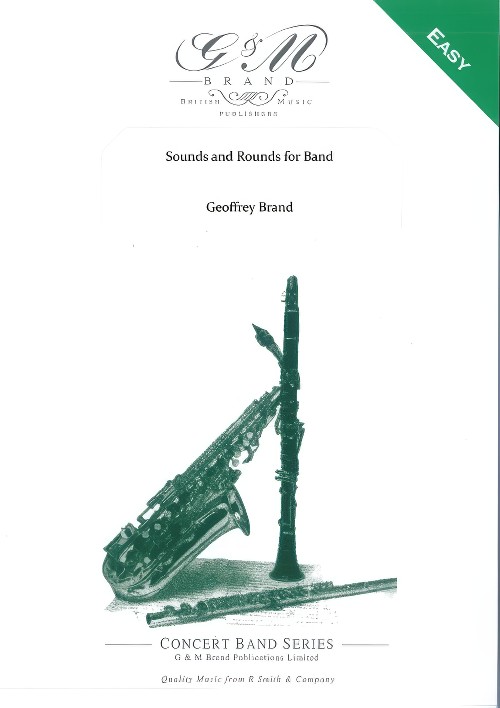
Sounds and Rounds for Band (Concert Band - Score and Parts) - Brand, Geoffrey
If you have ever stood before a Concert Band and wondered how you may best help them to sound better then SOUNDS will help. SOUNDS are exercises designed to improve DYNAMICS, RHYTHM, CRESCENDO and DIMINUENDO, INTERVALS, RESTS and ACCENTS. The exercises can also be used for warm-up purposes. They are interesting to play whilst creating an awareness of some of the fundamentals of good performance. ROUNDS are a form of Canon in unison (or octaves) with the players entering at regular rhythmic periods. The first Rounds were printed in 1609 so people have enjoyed performing this form of music for a very long time and still do. Kookaburra comes from Australia, Row Row Row the Boat is English, Frre Jacques is French and in this version a variation on the original melody has been added which also works as a round and adds to the fun. A full score has been provided in order to facilitate rehearsal.
Estimated dispatch 7-14 working days
-
£11.95
Sounds and Rounds for Band (Concert Band - Score Only) - Brand, Geoffrey
If you have ever stood before a Concert Band and wondered how you may best help them to sound better then SOUNDS will help. SOUNDS are exercises designed to improve DYNAMICS, RHYTHM, CRESCENDO and DIMINUENDO, INTERVALS, RESTS and ACCENTS. The exercises can also be used for warm-up purposes. They are interesting to play whilst creating an awareness of some of the fundamentals of good performance. ROUNDS are a form of Canon in unison (or octaves) with the players entering at regular rhythmic periods. The first Rounds were printed in 1609 so people have enjoyed performing this form of music for a very long time and still do. Kookaburra comes from Australia, Row Row Row the Boat is English, Frre Jacques is French and in this version a variation on the original melody has been added which also works as a round and adds to the fun. A full score has been provided in order to facilitate rehearsal.
Estimated dispatch 7-14 working days
-
 £18.95
MOUNTAIN SONG (Prestige Concert Band Extra Score) - Sparke, Philip
Extra Score. Mountain Song is a description of a short mountain walk the composer took in the Austrian Ziller Valley. As he climbed even higher, the only sound was the rustle of branches and the gentle tolling of the church bell in the valley below. On reaching the peak, the full panorama of the Alps opened up. The work ends with the church bell tolling quietly. (Grade 4-5) Performance time 7'05" (Recorded on QPRM124D MIGHTY VOICE, Great British Music for Wind Band Vol.3)
Estimated dispatch 7-14 working days
-
£94.95
MOUNTAIN SONG (Prestige Concert Band Set) - Sparke, Philip
Score and Parts. Mountain Song is a description of a short mountain walk the composer took in the Austrian Ziller Valley. As he climbed even higher, the only sound was the rustle of branches and the gentle tolling of the church bell in the valley below. On reaching the peak, the full panorama of the Alps opened up. The work ends with the church bell tolling quietly. (Grade 4-5) Performance time 7'05" (Recorded on QPRM124D MIGHTY VOICE, Great British Music for Wind Band Vol.3)
Estimated dispatch 7-14 working days
-
 £420.99
Tre Sentimenti Wind Band Set (Score & Parts)
At last the bass clarinet can shine in this major new solo work for bass clarinet and concert band. This composition begins with a rather mysterious opening passage with atmospheric sounds and effects. The soloist plays - preferably backstage - a number of fragments and melodic patterns, without actually "starting" the piece. After this somewhat hesitant introduction, a lively, cheerful allegro entitled Con Giocondita (with joy) bursts out. It is swarming with irregular meters, changing tempos, and polyrhythm, through which the listeners (and sometimes also the musicians) constantly get the feeling that they are being tossed around. The second movement brings rest and peace making careful use of sound colours. The upbeat finale, titled Con Allegria (with cheerfulness), is the most significant movement for the soloist. This is a challenging piece of music that demands great virtuosity, but with the correct performer it will be a real highpoint in any concert..
Estimated dispatch 7-14 working days
-
 £51.95
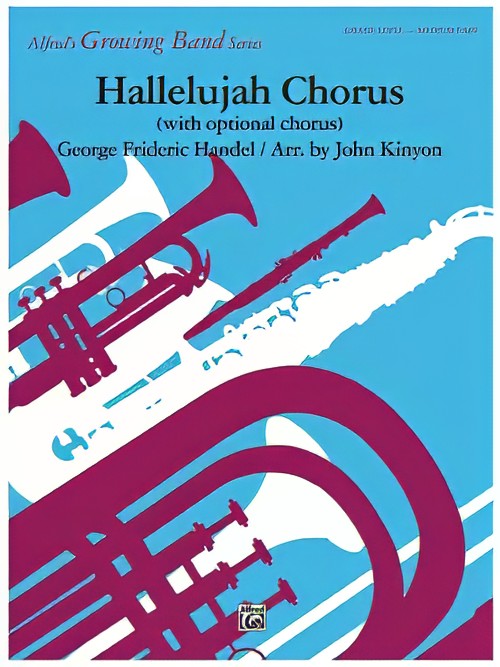
Hallelujah Chorus (Concert Band with Optional Chorus - Score and Parts) - Handel, George Frideric - Kinyon, John
The Hallelujah Chorus is the best known and most dramatic section from The Messiah, an oratorio first performed in Dublin in 1742 with the composer conducting. In addition to the chorus, the original orchestration called for two oboes, two bassoons, two horns, timpani, strings and keyboard instruments. King George III, in attendance at the premier performance, is said to have suddenly leaped to his feet on hearing the opening chords. Historians disagree, however, as to whether his majesty was merely showing his appreciation of the music or whether, as one story goes, he had been startled out of a sound sleep. Whichever, the entire audience followed the regal example, thereby instituting a tradition which has persisted for more than two centuries. Even today it is customary for an audience to rise during the performance of this exciting work. Duration: 4.00
Estimated dispatch 7-14 working days
-
 £1.95
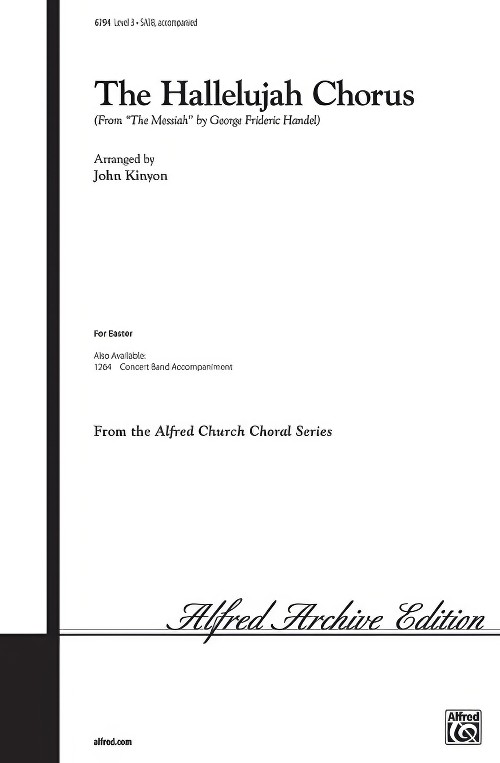
Hallelujah Chorus (SATB Choral Octavo) - Handel, George Frideric - Kinyon, John
The Hallelujah Chorus is the best known and most dramatic section from The Messiah, an oratorio first performed in Dublin in 1742 with the composer conducting. In addition to the chorus, the original orchestration called for two oboes, two bassoons, two horns, timpani, strings and keyboard instruments. King George III, in attendance at the premier performance, is said to have suddenly leaped to his feet on hearing the opening chords. Historians disagree, however, as to whether his majesty was merely showing his appreciation of the music or whether, as one story goes, he had been startled out of a sound sleep. Whichever, the entire audience followed the regal example, thereby instituting a tradition which has persisted for more than two centuries. Even today it is customary for an audience to rise during the performance of this exciting work. Duration: 4.00
Estimated dispatch 7-14 working days
-
 £79.95
Variations on 'Was Lebet' (Concert Band - Score and Parts) - Wainwright, Andrew
Variations on 'Was Lebet' is based on the German chorale of the same name, the first line of which translates as 'O worship the Lord in the beauty of holiness!' The opening fanfare figure in the Trumpets should be supported by bold, organ-like sostenuto chords in the lower band. Ensure that the fanfare in the Trumpets and Trombones from bars 25 to 28 is given equal articulation and volume in the antiphonal parts. After this majestic introductory section, the first of five contrasting variations is presented, although the tune is never realised in full form until the final variation, with fragments gradually being revealed as the piece progresses.Variation I is somewhat classical in approach, with its energy coming from a regular contrast between cantabile references to the theme, set against lively staccato figures. Ensuring a lightness of touch will be important here; the music should be poised and never sound frantic. As a result, careful attention should be paid to the tempo marking, being no quicker than 136 beats per minute. Snippets of the chorale come and go, with the last phrase of the hymn completing the movement. This final statement, at bar 95, should be an immediate change in tempo and a separate statement to the music that comes before.Variation II is plaintive in mood, giving the listener the chance to reflect on the following words, which form part of the second verse: 'Comfort thy sorrows and answer thy prayerfulness, Guiding thy steps as may best for thee be.' There is opportunity for rubato in this movement, at the discretion of the conductor.Variation III is somewhat quirky and volatile in nature, and takes its inspiration from the 3rd and 4th verses which describe the fearful times in life that we must entrust to the Lord. Driven by the Percussion section in particular, there are references here to Variation I with its chorale-like figures and hurtling scalic figures, and there is a feeling of a lack of resolution. A somewhat abrupt ending suggests that our sense of completeness in Christ is yet to be resolved. It is important that clarity and tempo are maintained in the bass line between sections L and M. Aim for consistency of line in the bass parts, particularly with the trade-offs between players here.There is a French romantic feel to the waltz in Variation IV, with the opportunity for various soloists to display their musicianship. A sense of ironic humour pervades throughout. The Clarinet and Bassoon duet from section U should be playful and display a lightness of touch, with that sense of style continued throughout the movement.Variation V is fugal in nature, with each section of the band being handed the theme at various points. Again it is important that a steady tempo is set at Y in order to maintain control. The sense of momentum gradually increases to a grandiose presentation of the full theme, beginning at section CC, affirming our completeness in the Lord, with the words of the first and last verses reiterated: O worship the Lord in the beauty of holiness! Bow down before him, his glory proclaim; With gold of obedience and incense of lowliness, Kneel and adore him, the Lord is his name.Duration: 11.45
Estimated dispatch 7-14 working days
-
 £15.95
Variations on 'Was Lebet' (Concert Band - Score only) - Wainwright, Andrew
Variations on 'Was Lebet' is based on the German chorale of the same name, the first line of which translates as 'O worship the Lord in the beauty of holiness!' The opening fanfare figure in the Trumpets should be supported by bold, organ-like sostenuto chords in the lower band. Ensure that the fanfare in the Trumpets and Trombones from bars 25 to 28 is given equal articulation and volume in the antiphonal parts. After this majestic introductory section, the first of five contrasting variations is presented, although the tune is never realised in full form until the final variation, with fragments gradually being revealed as the piece progresses.Variation I is somewhat classical in approach, with its energy coming from a regular contrast between cantabile references to the theme, set against lively staccato figures. Ensuring a lightness of touch will be important here; the music should be poised and never sound frantic. As a result, careful attention should be paid to the tempo marking, being no quicker than 136 beats per minute. Snippets of the chorale come and go, with the last phrase of the hymn completing the movement. This final statement, at bar 95, should be an immediate change in tempo and a separate statement to the music that comes before.Variation II is plaintive in mood, giving the listener the chance to reflect on the following words, which form part of the second verse: 'Comfort thy sorrows and answer thy prayerfulness, Guiding thy steps as may best for thee be.' There is opportunity for rubato in this movement, at the discretion of the conductor.Variation III is somewhat quirky and volatile in nature, and takes its inspiration from the 3rd and 4th verses which describe the fearful times in life that we must entrust to the Lord. Driven by the Percussion section in particular, there are references here to Variation I with its chorale-like figures and hurtling scalic figures, and there is a feeling of a lack of resolution. A somewhat abrupt ending suggests that our sense of completeness in Christ is yet to be resolved. It is important that clarity and tempo are maintained in the bass line between sections L and M. Aim for consistency of line in the bass parts, particularly with the trade-offs between players here.There is a French romantic feel to the waltz in Variation IV, with the opportunity for various soloists to display their musicianship. A sense of ironic humour pervades throughout. The Clarinet and Bassoon duet from section U should be playful and display a lightness of touch, with that sense of style continued throughout the movement.Variation V is fugal in nature, with each section of the band being handed the theme at various points. Again it is important that a steady tempo is set at Y in order to maintain control. The sense of momentum gradually increases to a grandiose presentation of the full theme, beginning at section CC, affirming our completeness in the Lord, with the words of the first and last verses reiterated: O worship the Lord in the beauty of holiness! Bow down before him, his glory proclaim; With gold of obedience and incense of lowliness, Kneel and adore him, the Lord is his name.Duration: 11.45
Estimated dispatch 7-14 working days
-
 £66.95
Inspiration Fanfare (Concert Band - Score and Parts) - Sims, Adrian B.
Fuelled by the inspiration of morning sunlight, Adrian Sims has written this colourful fanfare depicting joy and opportunity. The opening statement transforms throughout the piece, providing musically engaging parts for all. Extremely playable yet sophisticated in sound, Inspiration Fanfare creates a sense of anticipation and excitement. A joyful celebration of music!Duration: 2.15
Estimated dispatch 7-14 working days
 View Music