
Results
-
 £239.99
Stonehenge Wind Band Set (Score & Parts) - Takahashi, Tohru
This piece attempts to portray atmospheric pictures through music. The opening section evokes the somewhat misty and hazy early morning atmosphere surrounding the ancient monument. When the band reaches its first dynamic climax it is as if the massive boulders are audible, even touchable through the use of minor 3rd chords. The main theme - constructed on the notes CAFBG symbolises the arrangement of the central boulders in the shape of a horseshoe, which forms the focal point of this huge collection of stones. Towards the end of the work you will experience a fantastic effect when five soloists play a five part hymn whilst other members of the band create a special atmosphere by imitating a choir of monks and druids. A fantastic major new concert work for advanced bands. 0:14:30
Estimated dispatch 7-14 working days
-
 £88.95
Downtown Diversions (Concerto for Trombone and Wind Band) (Trombone Solo with Concert Band - Score and Parts) - Gorb, Adam
The piece all trombonists have been shouting for; a triumph of Gorb's stylish, almost casual brilliance, immaculate timing, melodic invention and instinctive mastery of resources. Scoring is deft, even delicate, the solo writing rewardingly characteristic while avoiding all those cringe-making trombone clichs. The gently swung, bluesy second movement is some of the best cod Jazz you will ever hear. A delight on every page and all done with the lightest of hands.Please note: This set of parts does not include music for the soloist. A piano reduction including solo part is available for purchase separately.Duration: 17:30
Estimated dispatch 7-14 working days
-
 £66.95
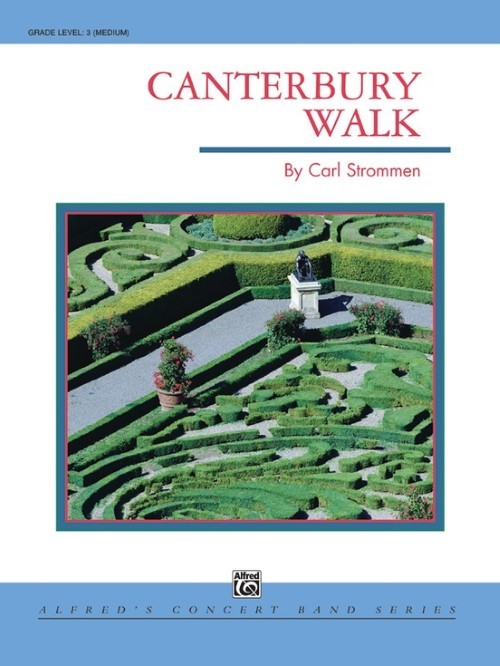
Canterbury Walk (Concert Band - Score and Parts) - Strommen, Carl
Written in the grand tradition of British wind band music, Canterbury Walk is perfect for concert or contest! Canterbury Walk opens and closes with a light marchlike melody in the woodwinds. The contrasting middle section is lush and lyrical, and features the brass section. Light percussion is utilized throughout. Another winner from the pen of Carl Strommen! Duration: 2.30
Estimated dispatch 7-14 working days
-
£134.99
A Tribute to Edith Piaf Wind Band Set (Score & Parts)
Legend has it that Edith Piaf, one of the greatest stars of the French music scene, was born under a lamp post in Paris and spent much of her childhood roaming the streets, singing in front of a fascinated audience. Out of the poor streets developed a singer who was to become the darling of French cabaret. A Tribute to Edith Piaf is a wonderful arrangement for band of four of the most well-known songs of this romantic, spontaneous, desperate and everlasting legend. 0:07:00
Estimated dispatch 7-14 working days
-
£144.99
Andante & Rondo Wind Band Set (Score & Parts)
Antonio Capuzzi (August 1, 1755 - March 28, 1818) was an Italian violinist and composer who studied violin with Nazari and composition with Bertoni. In 1805 he moved to Bergamo, where he was professor of violin at the Instituto Musicale and leader of the orchestra at Teatro Riccardi. He was highly regarded there both as a teacher and a performer. Although popular in his day, most of his music is now forgotten; his most commonly performed piece today is the Concerto for Double Bass. All of Capuzzi's known compositions were written during his Venetian years. It was in Venice that Capuzzi became close friends with Domenico Dragonetti, Beethoven's virtuoso bassist. It is speculated that Capuzzi wrote his Concerto for Double Bass for Dragonetti. Gerald Oswald has made a fine arrangement of the second (Andante) and third (Rondo) movements of the concerto to feature either euphonium or tuba with concert band. The solo part is also available in an edition with piano accompaniment. 09:05
Estimated dispatch 7-14 working days
-
£84.99
Arioso Wind Band Set (Score & Parts)
Even the most basic understanding of Western music must include an intimate familiarity with the magnificent body of works by J.S.Bach. The charming beauty of the ARIOSO from BWV 156 must almost certainly appear on anyone?s personal list of the world's most beautiful melodies. What a wonderful vehicle for the study of artful phrasing and expression! Don't let the Grade 2 designation make you overlook this exquisite rendition for bands that normally play at grades 4, 5, and 6. Musicians at any level of ability will find great rewards here.As the perfect festival centerpiece or as a lovely introspective moment on any concert, Jacob de Haan's touching arrangement of Bach's incomparable ARIOSO, speaking its own inherent and spiritual truth, is sure to find a permanent home in your concert band library. 0:03:50
Estimated dispatch 7-14 working days
-
 £13.95
ATLANTIC ODYSSEY (The Music of Philip Sparke) (Wind Band CD)
Concert Band of the German Armed Forces conducted by Walter Ratzek. Includes: Birthday Fanfare; Blazon; Overture for a Great City; Flowerdale; Exultation; Centennial Salute; A Winter's Tale; Second City Ceremony; Concertino Classico; Hail the Dragon!; Atlantic Odyssey
Estimated dispatch 7-14 working days
-
£69.99
Caribbean Sketches Wind Band Set (Score & Parts)
Latin Music in three variations. Caribbean Sketches takes the band and audience from the reggae sound of Beach Party, to the siesta Lazy Afternoon and concludes with a rousing finale in Let's dance. Don't forget your sunglasses! 04:30
Estimated dispatch 7-14 working days
-
£149.99
Cossack Folk Dances (Wind Band - Score and Parts)
The Cossacks played an integral part in Russia's history which finally ended with the Soviet occupation in the 1920s. Franco Cesarini had the opportunity to attend performances by an ethnic group of Cossacks from Kuban. He was deeply touched by the beauty of the songs and traditional dances of the Cossacks and has written this work for concert band which faithfully retains the essential spirit of this seductive music.Duration:10:40
Estimated dispatch 7-14 working days
-
 £118.99
Donna Diana Wind Band Set (Score & Parts)
Emil Nikolaus V. Reznicek was born on May 4,1860. Though he was originally destined for ajudicial career, his nature (that of a true musician)soon pointed him in the direction of music. As anorchestral conductor and a highly regarded musicteacher he made his mark in a number of cities,including Mannheim and Berlin. As a composer hesprang to fame with his opera Donna Diana(1894), a lasting success which placed him in theforefront of German composers. The overture toDonna Diana is unique in its freshness and sunnycheerfulness. Wil van der Beek, who has alreadywritten many arrangements of classical pieces forwind band, has maintained the spirit of theoriginal composition. 0:05:30
Estimated dispatch 7-14 working days
 View Music