
Results
-
 £38.50
Rock & Roll - Part II (The Hey Song) (Concert Band - Score and Parts) - Glitter & Leander - Lavender, Paul
Paul has skilfully arranged this stadium anthem so that even beginning bands can "rock on". What a great motivational tool for your young players!
Estimated dispatch 7-14 working days
-
 £64.99
Oklahoma!, Highlights from (Concert Band - Score and Parts) - Hammerstein & Rodgers - Moss, John
Oklahoma!' remains as one of the most enduring of Broadway shows and many of its songs are regarded as timeless treasures. John Moss pays tribute to writers Rodgers and Hammerstein in his new young band medley that features: Oh, What A Beautiful Mornin'. Kansas City, People Will Say We're In Love. The Surrey With The Fringe On Top, and Oklahoma!
Estimated dispatch 7-14 working days
-
 £45.54
Matrix March (Concert Band - Score and Parts)
What a great way to teach "march style" to your young players! The limited technical demands and ranges allow focus on spacing and stylistic issues which are so important to march performances. Yet, it sounds "mature" and more difficult than it really is.
Estimated dispatch 7-14 working days
-
 £50.00
Slippery Elm Rag (Concert Band - Score and Parts) - Woods, Clarence - Rhoads, William
What a delightful way to feature your entire flute section. The lively ragtime rhythms and easy accompaniment are sure to make this an interesting and fun addition to your program.
Estimated dispatch 7-14 working days
-
 £53.60
Spirituals (Flexible Ensemble - Score and Parts) - Wood, Stephen D.
4 Part Flexible Ensemble and PercussionContains:O Lord What A Morning (All Night, All Day)Amazing GraceGome And Go With Me (Oh, Freedom)
Estimated dispatch 7-14 working days
-
£65.00
WHEN THE STARS BEGAN TO FALL (Concert Band) - Allen, Fred J.
(My Lord What a Mourning) American Grade 2
Estimated dispatch 7-14 working days
-
 £274.99
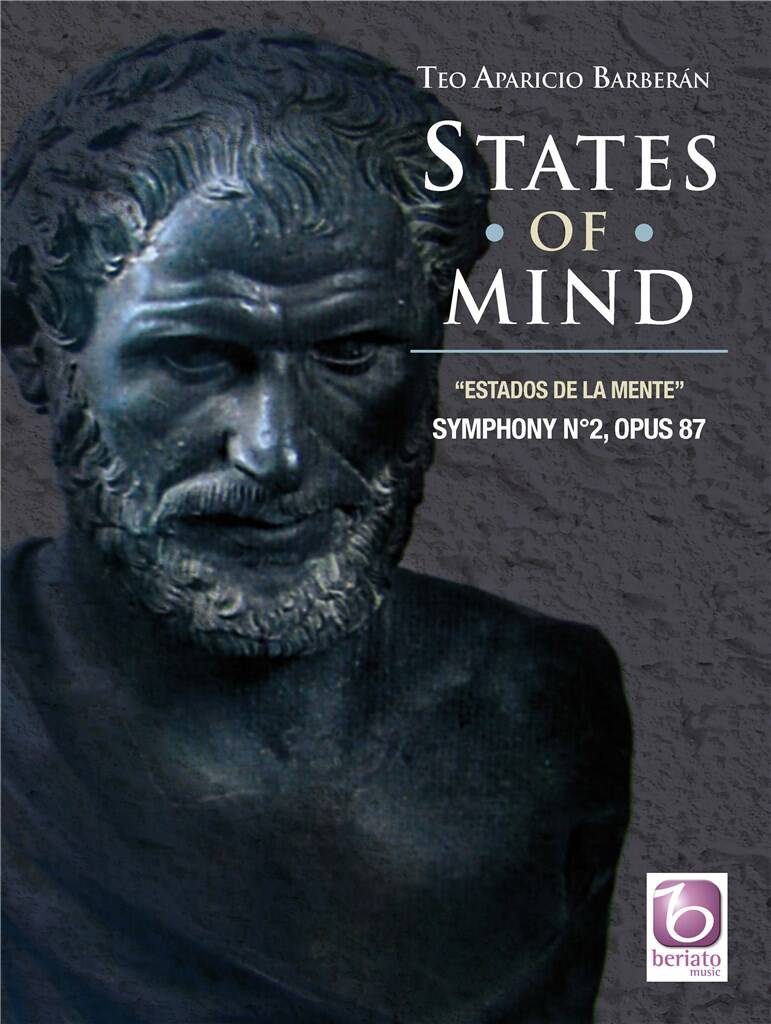
Symphony No. 2: States Of Mind, Opus 87 - Teo Aparicio-Barberán
I- Logos (reason)II- Pathos (emotion)III- Ethos (credibility)The ancient Greeks believed that music shaped the character of man. In Egyptian temples, music was an essential part of the magical rites to alter the course of nature or to treat illness.And today we know that sound can actually alter matter. The secret of music lies in harmony and mathematics, as many great musicians and experts have always known.One of the most important qualities of music is that it enables the listener to focushis attention inwards instead of on what is around him. It is indisputable that music can inspire emotion. Music leads us into a universe of emotions that are difficult to put into words. In short, music reaches into corners of our soul and thoughtsthat words cannot reach and makes it possible to more clearly describe these different States of mind.The composer of this symphony also believes that each "musical argument" must be constructed so that it will induce the desired reaction in thelistener.Music: more than wordsIn recent times, most orchestral symphonies have been based on a story, a text or something similar so that their composition must be structured accordingly.The intention of this work by Teo Aparicio-Barbern is quitedifferent. The composer describes the three elements of the argument as the only formal structure of the work. Since certain philosophers in world history were able to subdivide grammatical argument, why shouldnt that also be possible for the musicalargument?Since ancient times the power of the spoken word has captivated mankind. How can an argument move people and mobilise the masses? Where does the power of words come from today? The answer lays not so much in what people say but in how theysay it.Rhetoric is one of the oldest humanist disciplines in Western civilisation. Aristotle, in the 4th century BC, called it the art of persuasion. Indeed, the terms rhetoric and persuasion are mutually interchangeable.More than 2000 years agoAristotle structured his rhetoric according to the following three elements: the logos, the pathos and the ethos.Logos (words, reason) is the reasoning that gives freedom to the structure of the text by expressing what one wishes to say usingspecialist terms. With logos we create arguments to receive public approval and to defend our ideas.Pathos, the second element, refers to the effective use of public psychology. Pathos can be considered as the capacity to induce the desired emotionalresponse in the public, by creating an emotional connection with the public so that they accept our message.The third element, ethos (credibility), refers to the character of the speaker and is perhaps the most important of the three elements.Aristotle based his concept of ethos upon his belief that truth and justice will always have the upper hand over anger. He believed that what was true and good was easier to prove and was more persuasive.This second orchestral symphony from thecomposer from Enguera follows these three parameters of the argument according to Aristotle. Each movement tries to summon a different state of mind in the listener so that the message itself can be better understood and appreciated. Apart from thesethree general concepts the music is only structured, as Claude Debussy would say, in a "formative way".The first movement, logos, is based on a scherzo melody that undergoes various changes in rhythm and harmony. The arguments are presented by meansof conventional techniques of composition. The second movement, pathos, is characterised by suggestions of sound. It is subdivided into two large parts. The first part is based on a five seven sequence with five sounds that are repeated in differentenvironments, structures and dynamics. The second part, which is largely tonal, brings out more directly the emotional overtones that each argument must have. The third movement, ethos, is a faithful rendition of the composers personality. In thislast part, clear rhythmic sequences stand out, there are large dynamic contrasts and lots of tone variation. In addition, and this is quite in keeping with the composers earlier work, the harmony in States of Mind is handled in a manner that is bothoriginal and efficient, as a result of which Aparicio-Barberns message is well understood by the listener.This second symphony by Teo Aparicio-Barbern is devoted to "my dear Henrie Adams, a guiding light in this eternally dark musical world. Thankyou for everything."
Estimated dispatch 7-14 working days
-
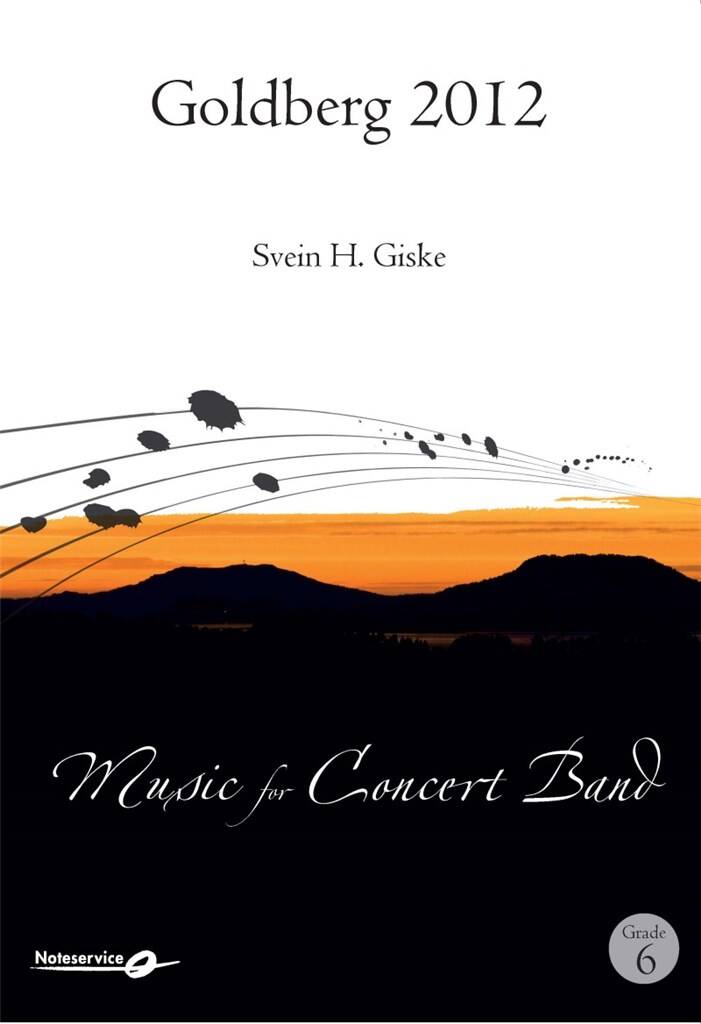 £435.40
Goldberg 2012 - Svein H. Giske
The first time I heard Bach's Goldberg Variations was in the movie Silence of the lambs, in the early 1990s. I noticed the beautiful background music in one of the scenes, but at that time I didn't know what it was. A few years later, when I was studiying at the Grieg Academy, I got to know the entire piece. For me, this is a piece of music which I can listen to countless times. I think it sounds as fresh today as it did more than 15 years ago and it never ceases to inspire me. Both Bach's composition and Glenn Gould's famous 1955 recording (which was the first one I heard) still makes a great impression on me. Before Gould recorded it at age 22, it wasn't a highly ranked piece amongst pianists and Bach was by many viewed as a bit old-fashioned. The young Canadian turned all this around. He managed to portray Bach in a reformed way, producing fine nuances in phrasing and making the many layers in Bach's music more transparent than anyone before him. Thus he plunged both himself and Bach (back) onto the international music scene. When The Norwegian Band Federation (NMF) asked me to write the test piece for NM in 2012, it was only natural for me to use the Goldberg Variations as a starting point and inspiration for my work. Since I was a teenager at NMF's summer courses in the mid eighties I've always listened to many different styles of music. Growing up in Sunnmre with the Brazz Brothers as teachers and mentors, jazz-, pop/rock- and folk music were early on a natural part of my musical background. I also have my classical education from the Grieg Academy on trumpet. As the title of my piece implies, I've wanted to bring Bach to the present and put his music into various modern musical landscapes. I think you can bring about a special kind of energy when music from different genres are mixed and I've tried to do this by mixing Bach with artists and musical styles from the present. In Goldberg 2012, the music is often constructed by several layers, which in a way are living parallel musical lives. They are seemingly moving or floating freely, almost unaware of each other, but bound together by the same basic pulse. The rythms, however, are often notated on a different rythmic subdivision level than the usual 8th- or 16th note levels. By doing this, I hope to achieve transparent sounds that rythmically are perceived as more free and detached from each other. In large sections of the piece, pop/jazz is fusioned with elements from Bach. I guess you could have this little scene as a synopsis for the piece: picture a group of musicians meeting: some are classical performers, some are jazz. They start to improvise together, each in their own voice or musical dialect and I'm sort of in the middle, trying to write down what they are playing. This is what I feel much of Goldberg 2012 is about. The foundation of the piece, in addition to Bach and references from pop/jazz music, lies also in my own material. This material, basically two chords, is heard in it's purest form in the 1st movement. I use these chords to create scales, new chords and different motifs which contribute to blend together the different moods of the piece. It has not been my intention to copy Bach's form (theme and 30 variations), but rather to use the bits and pieces that I like the most as an inspiration for my own variations. The 1st movement, Aria 2, is for my 3rd son, Olav, who was born on the 21st of April 2011, and the 5th movement, From long ago, is dedicated to the memory of my father, Svein J. Giske, who passed away on the 6th of June 2011. -Svein H. Giske, January 2012-
Estimated dispatch 7-14 working days
-
£149.99
Jello, The Colours Of My Soul - Ben Haemhouts
Jello...The Colours of my Soul is an assignment that was written to be a lasting memory of the untimely, dramatic death of a young child. The work came about due to various conversations between the father and the composer whereby the final resultmust be seen as an attempt by the composer to musically translate the feelings of the parents.The first part of the title, "Jello", is a combination of the names of the two children of the commissioner, namely Jelle and Lobcke, and "the Colours of mySoul" are the colours of the soul of the parents who despite the loss of one of their children, continue to cherish their two children. The introduction provides the atmosphere of grieving for the loss, whereby use is made of pure fifths in order toportray the solidarity with nature, as we are familiar with in symphonies by Bruckner. A little later a bit of the first theme is suggested, which develops into a real funeral march.The Dies Irae, as this occurs in Berlioz's Fantastic Symphony (F, E,F, D, E, C, D), forms a leitmotiv through the entire work in order to symbolise the constant battle between life and death.Shortly before the storm-passage, (where a wind machine is used) which announces disaster, fragments from children's songs areplayed to the accompaniment of a rising choir piece from behind the stage, which strengthens the imminent confrontation with death.After the introduction of the two themes in the long introduction, a quick passage follows in which all kinds ofbeautiful memories are recalled. There is story telling, laughing, and dancing. One of the previous children's songs is also cited. The Dies Irea is heard once again, this time short and fast.Bit by bit happy elements are steadily distorted untilseriousness breaks through again, like an unavoidable and unstoppable evil. The entire piece becomes evermore stirring, as if a big climax will follow. At this moment a very long fermata makes a sudden end to the hysterical allegro. The crucialmoment in the work follows...How does one deal with something as tragic as the death of one's own child? Does one mourn for what no longer is and what never will be? Or does one try to cherish the beautiful moments and continue to live with thesecolourful memories?A subdued, dignified choir piece captures the beautiful memories and ends in a positive, hopeful tone.
Estimated dispatch 7-14 working days
-
£68.99
Fairy Tail Suite - Tsutomu Tajima
This work was complete in January 2013 to commemoration the 50th anniversary of the Iwate Prefecture Band Association. Conditions at the request were as follows:1: Does not have to be particularly relating to Iwate. It should be something that would be widely familiar to the whole country. 2: Should suit the contest piece requirements. 3: Must be a song that can be used at a graduation ceremony for student procession and recessional.4: Must include vocal parts with a beautiful melody.5: Must be a march.6: Must be a song that would be loved by many.They are difficult requests. I hope to satisfy at least one of them.We selected Yanagida Kunio's book "Tono Monogatari" as the cornerstone of the work, chose four stories that fit the image, and stuck close to the source of the story. Then, "prelude music" was added, making it a suite consisting of five movements.I. "Prelude" What kind of story will it be? An exciting opening expresses such a feeling.II. "Zashikiwarashi" Spirit that brings good fortune and wealth. It appears at midnight and makes mischief, something silly, not serious. Zashikiwarashi moves quickly, dances, plays its games, hiding and reappearing often. These characteristics are considered cute and the music depicts such a mischievous Zashikiwasi.III. "Oshirasama" A girl and her horse love each other. Her father forbids this, and kills the horse. The beautiful daughter clings to the horse and cries. Eventually, the daughter and the horse rise to heaven, slowly and gradually, remembering former happy days. The music captures this ascension to heaven.IV. "Yamanba (Mountain witch)" Run away, run away, its chasing, still chasing. Run away, and still chasing. The girls hides. Yamanba searches. It keeps chasing, endlessly, following her everywhere. Chasing, chasing, and finally... Seriously and comically depicting the chase situation in fugue style.V. "Kappa" Staring into the distance. It looks gallant. What is it looking at? Staring beyond the mountain? Perhaps it is longing for hope and happiness. This is an homage, a march, and cheering song for Kappa who never gives up and embraces dreams and hope.It is my wish that many people become familiar with this song.(2013.3.31 Tsushima Tashima)
Estimated dispatch 7-14 working days
 View Music