
Results
-
 £94.99
Stratosphere - Otto M. Schwarz
What do the American Joseph Kittinger and the Austrian Felix Baumgartner have in common? They both jumped from over 30km high with a parachute. While Kittinger's attempt on 16 August 1960 was from a height of 'only' 31,333 meters, Felix Baumgartner broke this record on 14 October 2012 with a breath-taking 38,969 meters.This composition Stratosphere describes the adventure, from climbing into the capsule with help of a balloon, to the short pause in the stratosphere, and the jump, the turbulence during the free-fall descent, and finally the opening of the parachute and the safe landing.
Estimated dispatch 7-14 working days
-
 £64.95
Halo Theme - Michael Salvatori
Kids love video games, so what better way to get them excited about playing music? This Robert Sheldon arrangement will be familiar to all your video-game-playing students. A symphonic sound is ensured with this classic video game overture-style theme. Video Games Live is an interactive experience that drew over 10,000 people to a concert at the Hollywood Bowl last year. Visit videogameslive.com for more information on this ground-breaking music event. (4:15)
Estimated dispatch 7-14 working days
-
 £48.95
Heavy Metal - Scott Watson
'Heavy Metal' has the right elements to get young players excited about band! With its driving rock beat, catchy hook, and infectious power chord rhythm, your students will beg you to rehearse it and be excited about performing it in concert. And what'
Estimated dispatch 7-14 working days
-
 £70.50
Star Wars Main Theme - John Williams
Darth Vader lives! Seldom has a series of films had such an impact on the entertainment world. We relive each episode and await what will be next. The marvelously exciting music of John Williams has created a magical aura, and Calvin Custermasterfully presents a fresh version of this gigantic anthem. (duration 2:32)
Estimated dispatch 7-14 working days
-
 £249.99
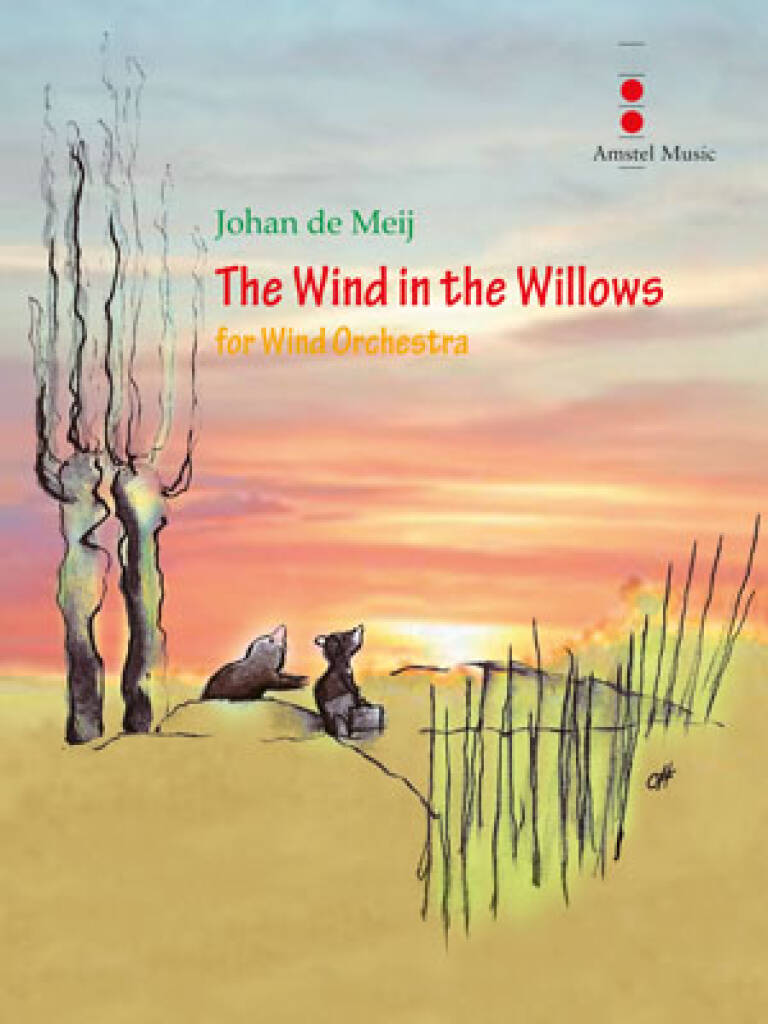
The Wind in the Willows - Johan de Meij
"A book for those who keep the spirit of youth alive in them; of life, sunshine, running water, woodlands, dusty roads, winter firesides" said author Kenneth Grahame (1859-1932) about his children's book The Wind in the Willows. Initially, he wrote the stories about Ratty, Mole, Badger and Toad to read to his visually handicapped son Alistair, but after the publication in book form in 1908, it became a worldwide success. It was later also turned into a film and a television series. What appealed ti the composer most is the friendly, very cosy atmosphere that Grahame has managed to create with his optimistic narrative style full of high spirits, an atmosphere that reminds thecomposer of his own carefree youth. It was therefore a great pleasure to set this book to music! The four movements successively describe:I) The River- The river, which flows through the habitat of the animals like a lifeline, regularly is the scene of pleasant boat trips and picnics. The animals lead their untroubled lives here. The four-tone main motif [A-C-D-C] is extensively presented by the brass section, and returns in the following movements as a countermelody. II) Ratty and Mole -The bright, energetic Rat and the melancholy doubter Mole are inseparable friends and have many adventures. Their opposite characters are illustrated by separate musical themes. III) Mister Toad - The wilful, haughty Mister Toad is indeed a unique case: time after time, he runs into tricky situations, and with his indomitable passion for fast - preferably stolen - cars he causes quite a lot of damage...IV) The Return of UlyssesAfter Toad Hall, the majestic residence of Mister Toad, is recovered from the weasels and stoats of the Wild Wood, who had captured the estate in a cowardly way, our friends get ready for a banquet. They celebrate the victory with a triumphant parade, and so both the book and the music conclude with a happy ending.
Estimated dispatch 7-14 working days
-
 £87.99
The Black Horse Troop - John Philip Sousa
What a way to open any concert. The Black Horse Troopis one of John Philip Sousa?s best known marches and was described by the great Frederick Fennell as ?a regimental march of classic content and proportions,one which serves as a model for all that are similar to it ...? Treat your band with this fantastic march.
Estimated dispatch 7-14 working days
-
 £91.99
Prelude on an Irish Folk Tune - Philip Sparke
The Irish folk tune, which appears towards the end of the piece, is Slane, a hymn tune version of the much older folk melody The Banks of the Bann. In Prelude on an Irish Folk Tune, fragments of the folk tune hint at what is to come later in the piece, but another folk-like tune is predominant. This later acts as a descant to Slane when it finally appears. Add a little Sparke sparkle to any concert with this lovely interlude.
Estimated dispatch 7-14 working days
-
 £137.99
The Roaring Forties - Philip Sparke
This new work by Philip Sparke was commissioned to celebrate the 40th anniversary of the Australian Army Bands Corps. The Roaring Forties is what seamen call the region between the 40th and 50th degrees of latitude in the southernhemisphere (due to the boisterous and prevailing westerly winds). A fanfare, chorale and an energetic vivo all capture this untameable region. Dur: 5:45
Estimated dispatch 7-14 working days
-
 £76.99
The Gift of Christmas
There is no greater gift around the holiday season than the wonderful joy of traditional Christmas carols. All three of these popular selections capture the spirit and true meaning of what Christmas is all about during this very special time of the year. Band directors will discover how accessible the music is to prepare, while students will simply enjoy the fun that it takes to perform this exciting work. Merry Christmas!
Estimated dispatch 7-14 working days
-
 £65.99
Chanson Triste - Pyotr Ilyich Tchaikovsky
A new setting of one of Tschaikovski's most beautiful and haunting melodies. Alfred Reed again displays his craft with this adaptation for contemporary wind group of what was originally a piano piece in such a manner as to make it seem as if the composer had originally intended the music for band.
Estimated dispatch 7-14 working days
 View Music