
Results
-
£95.00
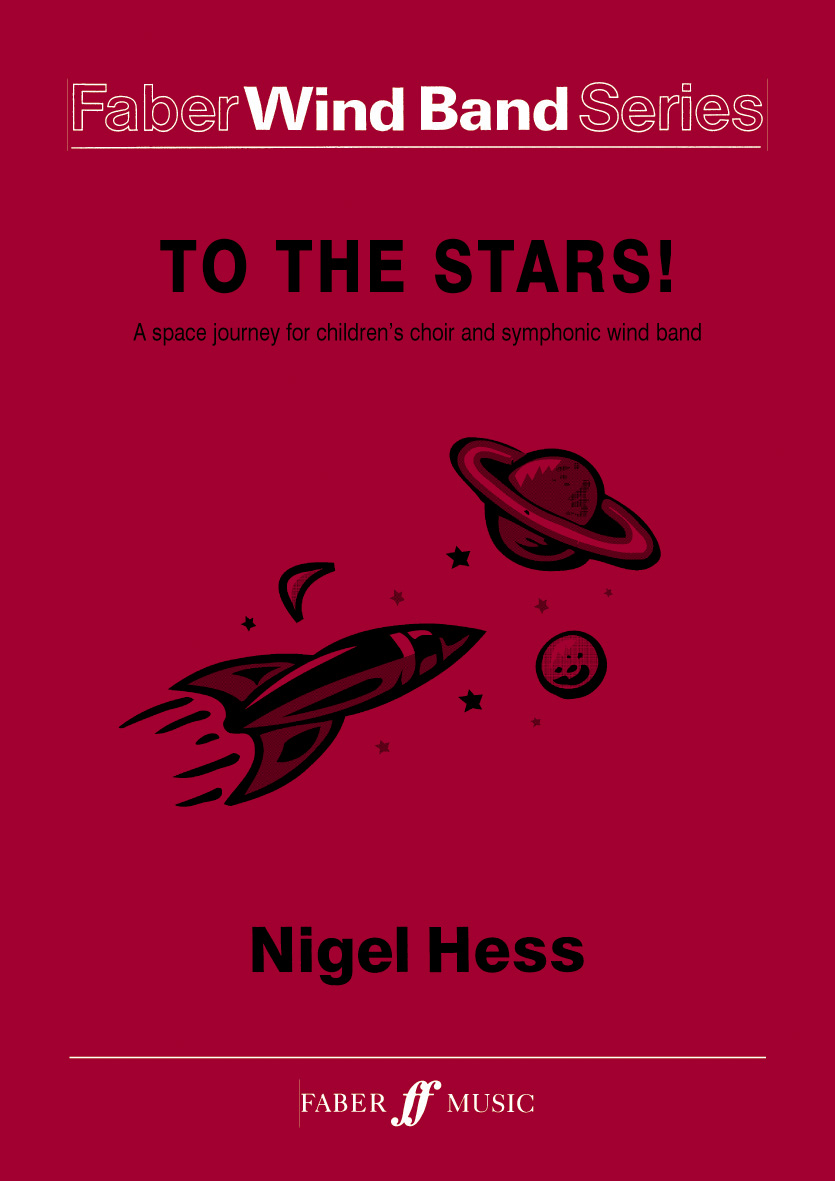
To The Stars! - Nigel Hess
'To the Stars!' is the fruit of a unique collaboration between Nigel Hess and the children of several Bedfordshire schools who were asked to contribute ideas for a libretto based on the themes of space travel and exploration. The work was then performed during a concert at the Royal Albert Hall showcasing the work of Bedfordshire County Music Services. The unusual combination of children's choir and symphonic wind band is wonderfully exciting, and To the Stars! provides an incomparable performing experience for both band and choir, and is also technically demanding and challenging. After a rousing introduction, we hear a countdown to our rocket's 'blast off', and suddenly we are heading out to the planets where we meet aliens with blue eyes and pink ears! After a brief but terrifying skirmish with a black hole we head off to a 'world of many wonders', and as we leave our solar system behind, the piece finishes with a spectacular shout of 'Fly with us - to the stars!'.
In stock: Estimated delivery 1-3 days
-
£185.00
East Coast Pictures - Nigel Hess
East Coast Pictures was commissioned by the British Youth Wind Orchestra with funds from the National Westminster Bank plc. These three short 'pictures' were inspired by several visits to a small part of the American East Coast, an area that provides great extremes in the geography and the people. Movement 1: Shelter Island is a small island situated near the end of Long Island, a few hours drive east of New York. In the summer it becomes a crowded tourist trap; but in the winter it is gloriously deserted and bravely faces the onslaught of the turbulent Atlantic, shrouded in sea mists and driving rain. This 'picture' is a fond memory of a winter weekend on Shelter Island. Movement 2: In upstate New York lie the Catskills Mountains--an extraordinary combination of tranquillity and power, peace and majesty. Once seen, they call you back again and again. Movement 3: New York - or to be more precise, Manhattan. For anyone who is familiar with this bizarre and wonderful city, here is a 'picture' that needs no explanation. For those not yet hooked this is a foretaste of things to come!
In stock: Estimated delivery 1-3 days
-
£75.00
New York - Nigel Hess
New York - or to be more precise, Manhattan. For anyone who is familiar with this bizarre and wonderful city, here is a 'picture' that needs no explanation. For those not yet hooked this is a foretaste of things to come! This piece forms the final movement of 'East Coast Pictures', commissioned by the British Youth Wind Orchestra with funds from the National Westminster Bank plc. It is a suite of three short 'pictures' that were inspired by several visits to a small part of the American East Coast, an area that provides great extremes in the geography and the people.
In stock: Estimated delivery 1-3 days
-
£55.00
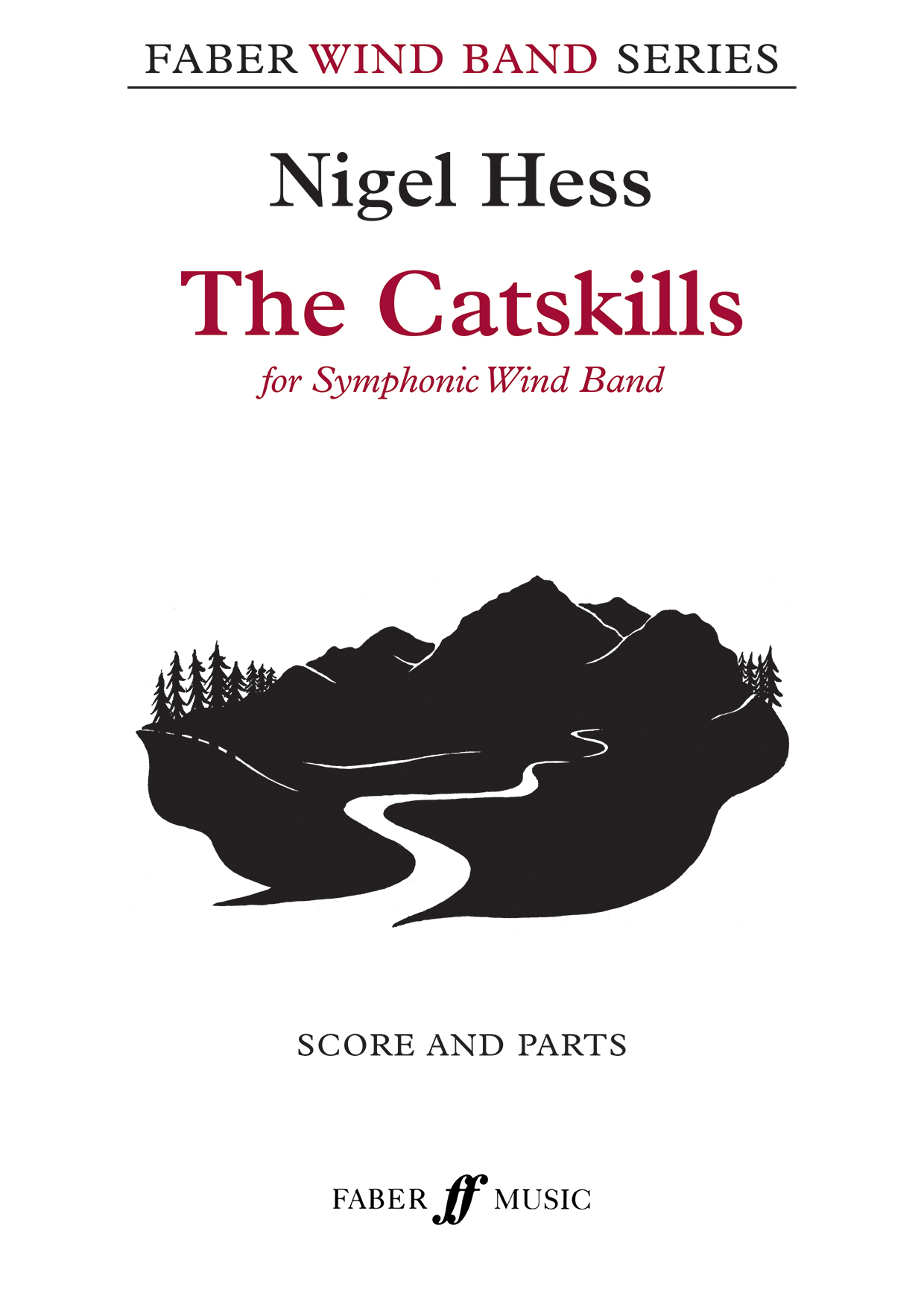
The Catskills - Nigel Hess
In upstate New York lie the Catskills Mountains - an extraordinary combination of tranquillity and power, peace and majesty. Once seen, they call you back again and again. The Catskills forms the second movement of East Coast Pictures, commissioned by the British Youth Wind Orchestra with funds from the National Westminster Bank plc. It is a suite of three short 'pictures' that were inspired by several visits to a small part of the American East Coast, an area that provides great extremes in the geography and the people.
In stock: Estimated delivery 1-3 days
-
£75.00
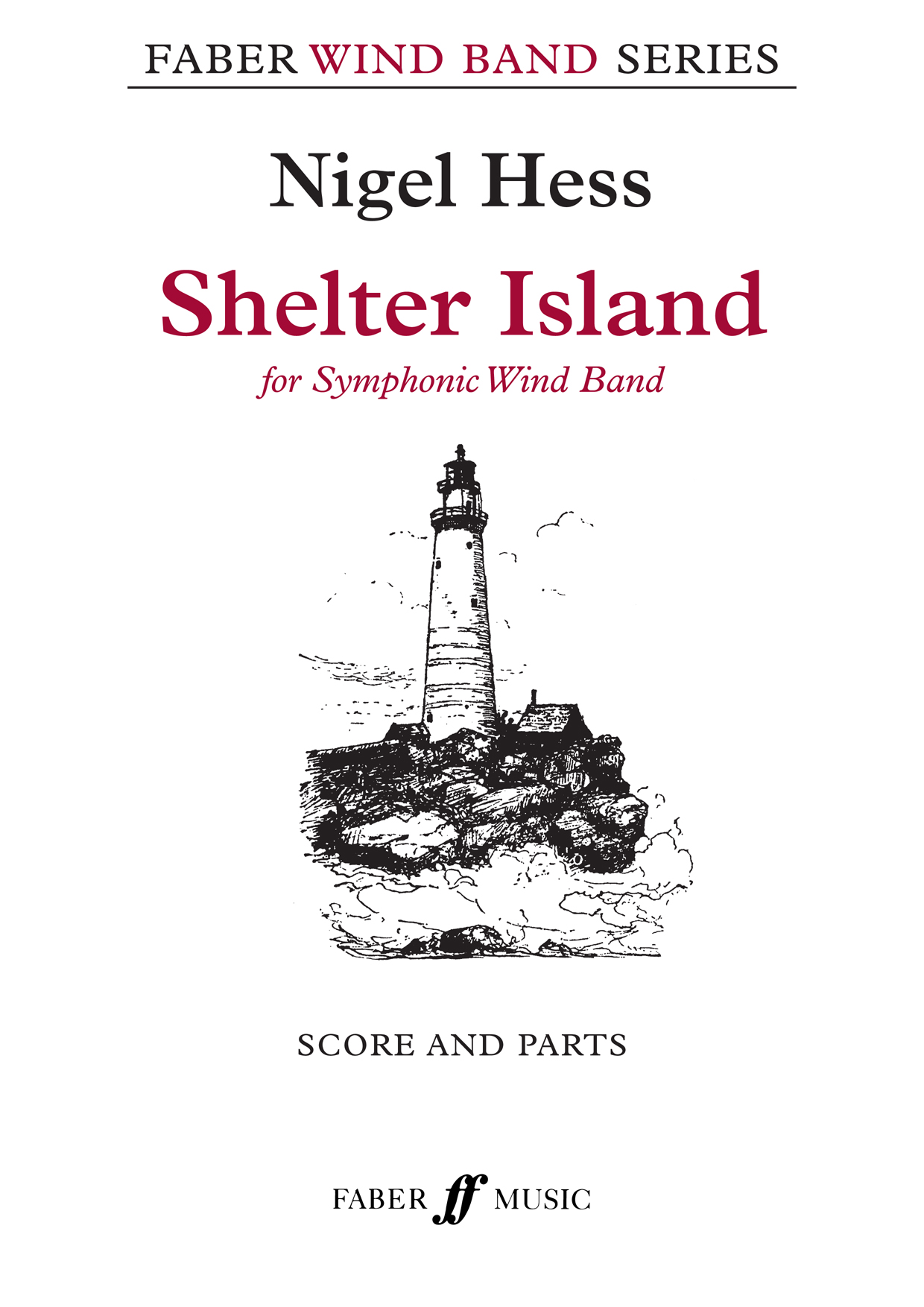
Shelter Island - Nigel Hess
Shelter Island is the first movement of East Coast Pictures. It is a depiction of the Shelter Island itself, a few hours drive east of New York. In the summer it becomes a crowded tourist trap; but in the winter it is gloriously deserted and bravely faces the onslaught of the turbulent Atlantic, shrouded in sea mists and driving rain. This 'picture' is a fond memory of a winter weekend on Shelter Island. East Coast Pictures was commissioned by the British Youth Wind Orchestra with funds from the National Westminster Bank plc. These three short 'pictures' were inspired by several visits to a small part of the American East Coast, an area that provides great extremes in the geography and the people.
In stock: Estimated delivery 1-3 days
-
Fenix Blue - Peter Meechan
Fenix Blue is a solo work for alto saxophone and wind ensemble, commissioned by and written for British saxophonist, Tim Watson.A wild blues inspired opening for unaccompanied saxophone gives way for a slow, dirty blues! More blues elements appear in the following slow funk section, driven by the percussion section and drum kit.Slow reflective music follows before a return to the slow funk - this time with plenty of the original blues music interjected around the band and from the soloist, leading to a loud conclusion!The title makes reference to the large blues influence in the piece, but the Fenix referred to in the title is a dedication to the Phoenix 2 capsule that rescued the 33 Chilean minors who were trapped underground for 69 days last year, the last of whom was brought to the surface in the capsule as I was finishing this piece.
Estimated dispatch 5-14 working days
-
 £84.99
Bread and Games Wind Band Set (Score & Parts)
Panem et Circenses', Bread and Games were essential for keeping the citizens of ancient Rome in check. While the bread was meant for the poorest among the Romans, the Games were Popular Pastime Number One for everybody.There were different kinds of games, such as chariot races (especially popular with female spectators), or wild-beast fights, where lions, tigers, bulls or bears were set on one another or even on human beings. Most popular, however, were the Gladiator fights. In 'Bread and Games' William Vean depicts one of the many fights in the antique Colosseum. 1. Entrance of the Gladiators: By powerful bugle-calls the attention of the people was asked for, after which the Gladiators entered the Arena at the sound of heroic marching-music.2.Swordfight: We can hear that the fights were not mere child's play in this part.On the contrary, they were a matter of life and death and were fought accordingly.3.Mercy of the Emperor: Sometimes a wounded gladiator could be fortunate, depending on the mercy of the audience. Waving one's handkerchief meant mercy, a turned-down thumb meant no pardon. The Emperor had the right to take the final decision, but he usually complied with the wish of the majority of the public. 4.Lap of Honour: Gladiators were mainly selected among slaves, convicted criminals, or prisoners of war. Consequently, winning was very important, as it would mean fame, honour and sometimes even wealth. A lap of honour, therefore, was the winner's due reward. 06:00
Estimated dispatch 7-14 working days
-
 £205.70
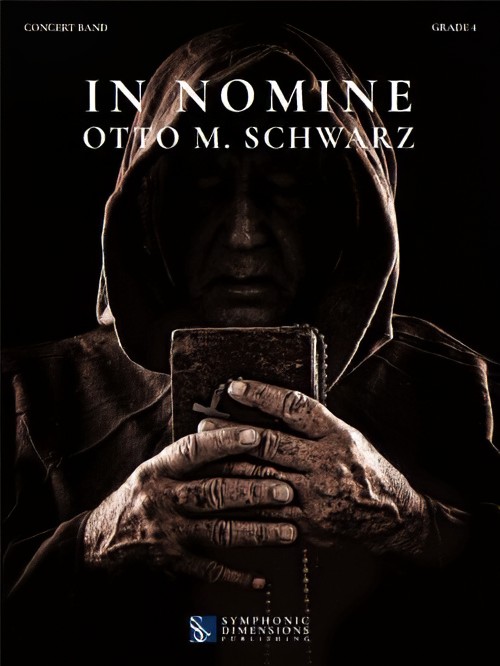
In Nomine (Concert Band - Score and Parts) - Schwarz, Otto M.
How often has something been justified by, declared to be, or blessed as 'in the name of' some cause or other? How can it be that opposing armies and the use of weapons are ever 'in the name of...'? This is a common thread in the history of different faiths. Good was created but evil was committed and all 'in the name of...' This thread is also found in the history of the Premonstratensian Abbey at Wadgassen. The abbey was built in the 12th century on unfertile, desolate moorland, which later evolved into the most powerful religious community in the Saarland. The history of the abbey records quite astounding achievements under the motto desertum florebit quasi lilium ('the desert will bloom like a lily'); but also the harsh treatment of delinquents. The order had its own school, in which children were taught the seven liberal arts (which included music as well as geography and astronomy), but the poor were left to starve outside the abbey walls and were only allowed to eat from the members' leftovers on feast days. The medieval witch trials demanded their pound of flesh, and one group that fell victim were ecstatic dancers who moved wildly to music, which was interpreted as the devil's work. The result: a show trial that sentenced the dancers to death by fire. All in the name of... The year is 1789: Abbot Bordier is in the tenth year of his command. He does not yet know that he is to be the last abbot of an almost 700-year tradition. Not far from the abbey is the French border, which has long been making itself felt with the sound of gunfire, and the brothers continue to keep a nervous eye on it. The first portents of the French Revolution loom, but no one wants to believe it, that is, until the French pound the door down, storm the abbey and come right into the brothers' chambers. In a blind fury, all the pipes of the abbey organ are torn out, icons beheaded with swords and brothers beaten death while numerous buildings are set on fire. The abbey church is in flames. A frantic and desperate escape begins. Abbot Bordier and a handful of brothers make their getaway via the River Saar, adjacent to the abbey, to the neighbouring village of Bous. They survive, but their life, the Premonstratensian abbey, is destroyed. While they flee towards Prague and the sanctuary of the Strahov Monastery, the abbey at Wadgassen is razed to the ground and becomes a stone quarry. The desert blooms once more, however. A few short decades later, a glasswork arises from the foundations of the abbey. As peace returns to the region, it brings jobs and a new vision for its people.Duration: 11.15
Estimated dispatch 7-14 working days
-
 £375.00
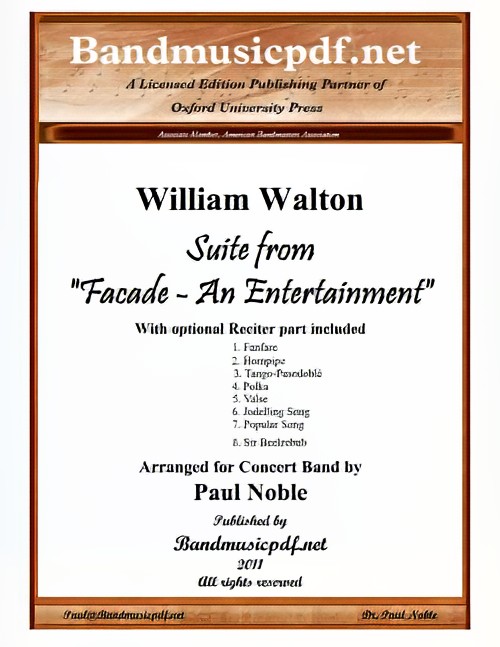
Facade - An Entertainment, Suite from (Concert Band with Optional Narrator - Score and Parts) - Walton, William - Noble, Paul
This Suite from Facade - An Entertainment, composed by William Walton, with poems by Dame Edith Sitwell, presents for the first time a grouping of movements selected and arranged by Paul Noble for Concert Band and optional Reciter. The original composition was written between 1921 and 1928, containing forty-three numbers. They had their origin in a new style of poetry that Edith Sitwell evolved in the early 1920s, poems that her brother Osbert later described as 'experiments in obtaining through the medium of words the rhythm and dance measures such as waltzes, polkas, foxtrots... Some of the resulting poems were sad and serious... Others were mocking and gay... All possessed a quite extraordinary and haunting fascination.' Possibly influenced by the dance references in some of the numbers, Osbert declared that the poems might be further enhanced if spoken to a musical accompaniment. The obvious choice of composer was the young man who lived and worked in an attic room of the Sitwell brothers' house in Carlyle Square W[illiam] T[urner] Walton, as he then styled himself. The now historic first performance of the Facade Entertainment took place in an L-shaped first-floor drawing-room on January 24, 1922. Accompaniments to sixteen poems and two short musical numbers were performed by an ensemble of five players. The performers were obscured from the audience by a decorated front curtain, through which a megaphone protruded for Edith to declaim her poems. This was, as she put it, 'to deprive the work of any personal quality'. The first public performance of Facade was given at the Aeolian Hall on June 12, 1923. By now, fourteen poems had been set, others revised or rejected, and an alto saxophone added to the ensemble. The occasion gave rise to widespread publicity, both pro and contra, and the name of the twenty-one year old W. T. Walton was truly launched. In the ensuing years the Facade has gone through revisions and additions, with full orchestral arrangements of selected movements being made without the Reciter. Former Band Director Robert O'Brien arranged some movements for band, again without Reciter, which are now out of print. So this 'history making' addition is the first opportunity for Concert Bands to present some movements of Facade with poems as originally intended. The luxury of electronic amplification allows the full ensemble to perform without necessarily overshadowing the Reciter. And the arrangements are written with considerable doubling so that the ensemble may play in full, or reduced in size as may be desired for proper balance. And, though not encouraged, the arrangements are written so that the band can perform the music without the Reciter. Program notes are adapted in part from those written by David Lloyd-Jones and published by Oxford University Press in the Study Score of William Walton's Facade Entertainments.
Estimated dispatch 7-14 working days
-
 £94.99
O Christmas Tree (Concert Band - Score and Parts) - Well, David
The tradition of the Christmas tree in Western Europe dates back to a time long before any Christianization had taken place. During the severely cold winter nights, so it was believed, evil spirits tried to 'kill' nature. Needle-leaved trees were the only ones which kept their green colour throughout the year, and therefore became symbols of immortality. These 'living' trees, said to be the work of benign spirits, were brought into people's houses to ward off evil, life-threatening powers. In the 14th century people first started to decorate Christmas trees. It was a pagan custom, originated by the inhabitants of Alsace. This custom was taken over by the Church in the course of the 15th and 16th century. At first the decoration consisted mainly of edibles, such as apples and wafers, but later small presents were added. Legend has it that the reformer Martin Luther was the first person to decorate a Christmas tree with candles. The flickering candle flames were meant to create the image of a starry sky in which Christ's apparition could be recognized. The German organ-player Ernst Anschutz from Leipzig was the first person to notate the song 'O Tannenbaum', the melody being a well-known folk song. Next to 'Stille Nacht' 'O Tannenbaum' is the most famous German Christmas song, now known throughout the world. In the United States of America the melody of 'O Tannenbaum' has even been used in four States (among which the State of Maryland) for their State song. In David Well's arrangement the song is first heard as many of us know it. After this introduction, however, it is transformed into a solid rock version, and the beat has been changed. In the second part the familiar three-four time is back, but here the rhythm is different from the original. After the richly ornamented rock beat the basic theme can be heard once again and the composition is concluded in a festive manner.Duration: 3:15
Estimated dispatch 7-14 working days
 View Music