Results
-
£118.99
In A Chinese Temple-Garden - Albert Ketèlbey
A few flavoursome introductory bars carry the listener off to a temple garden in Manchuria in North-eastern China. Mysterious incantations of the priests in the temple and the scent of incense set the scene, while the melody tells of two lovers. A Manchurian wedding procession passes by outside. In the street the coolies are becoming restless. Within the temple, all is calm. Again we hear the incantations of the priest before the lovers' theme is heard in birdsong, with short quotes from the temple theme and coolie theme to end the piece.Vocal score available separately: 1883-12-050 MS
Estimated dispatch 7-14 working days
-
 £99.99
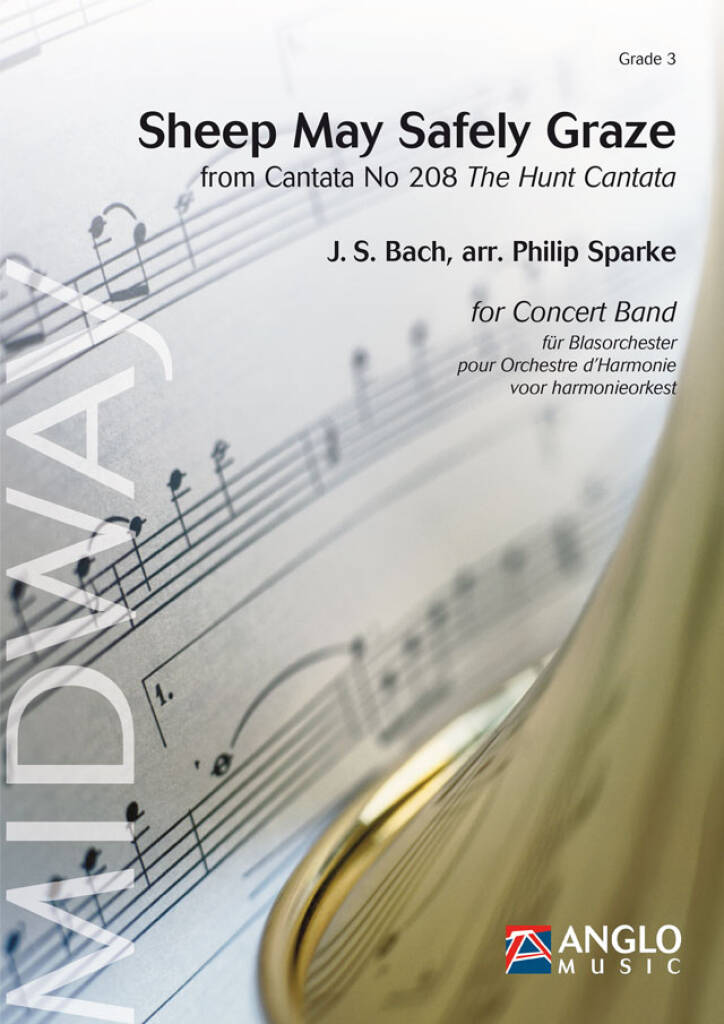
Sheep May Safely Graze - Johann Sebastian Bach
There are just over twenty secular cantatas in Bach's prolific output, which include The Coffee Cantata (No 211), The Wedding Cantata (No 202), Phoebus and Pan (No 201) and the Hunt Cantata (No 208) which contains the famous aria Sheep May Safely Graze. Written for four vocal soloists it was originally scored for a relatively large orchestra (including flutes (recorders), oboes and horns) and mixed choir. Although secular in character, the words describe how well a faithful shepherd keeps watch over his flock and hence has obvious allusions to the teachings of the Christian church. Bring a bit of the Baroque era to your concert with this first class arrangement by Philip Sparke.
Estimated dispatch 7-14 working days
-
 £87.99
Processional - Philip Sparke
Philip Sparke composed Processional as a wedding present for two of his friends. It is an extremely versatile piece as it can be played simply as a concert piece but has been designed specifically for occasions such as weddings or graduation ceremonies, where its duration can be altered according to your needs. A must for any ceremonial occasion.
Estimated dispatch 7-14 working days
-
 £87.99
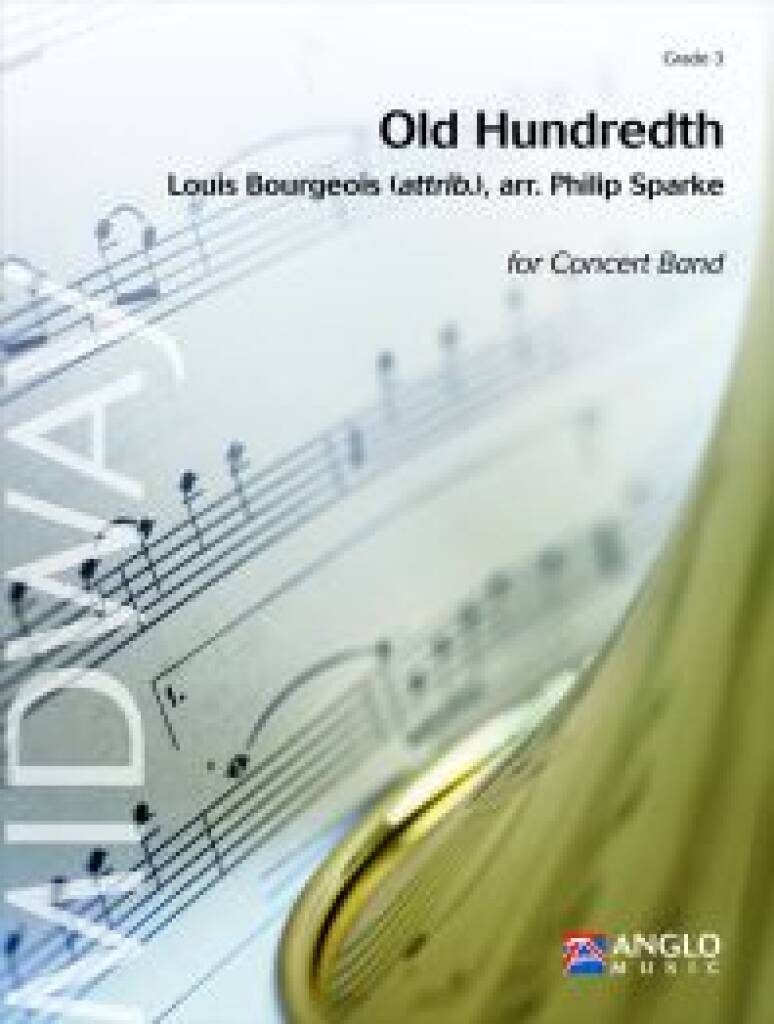
Old Hundredth - Louis Bourgeois
The tune Old Hundredth is one of the best-known melodies in all Christian musical traditions and first appeared in the 1551 psalter "Pseaumes Octante Trois de David", where it is used as a setting for a version of Psalm 134; it is usually attributed to the French composer Louis Bourgeois (c.1510 - c.1560). The melody was then used in 1561 by the Scots clergyman, William Kethe in Sternhold and Hopkins' Psalter for his paraphrase of Psalm 100 - All People that on Earth do Dwell, which is still the most familiar hymn sung to this noble tune. When Tate and Brady's "New Version of the Psalms" was published in 1696, the melody became know as the 'old' version - henceits current title. This arrangement presents three contrasting verses and is effective as a concert piece as well as an instrumental interlude as part of a church service or wedding.
Estimated dispatch 7-14 working days
-
 £84.99
Wind Capsule - Naoya Wada
Composer Naoya Wada wrote his new work Wind Capsule for his old school pal and his wife Asako for their wedding. Befitting this happy occasion, it's a cheerful, bubbly and dynamic work that radiates oodles of energy!
Estimated dispatch 7-14 working days
-
 £84.99
Mara Gil Herrero - Ferrer Ferran
Maria Gil Herrero is named after the woman for whose golden wedding anniversary this piece was written. It is in the form of a traditional paso doble and, with solo passages for alto saxophone, trumpet and flute, an interesting proposition forany concert band. Its typically Spanish character is sure to win over your audience!
Estimated dispatch 7-14 working days
-
 £122.50
Dance of the Jesters - Pyotr Ilyich Tchaikovsky
The Dance Of The Jesters was composed as incidental music for the ballet The Snow Maidens. The ballet is not based on the Hans Christian Andersen story, but on a contemporary Russian fantasy-play Snegourochka. The Snow Maiden, daughter of Father Frost, falls in love with a human, Misgir, and plans to marry him. However, Misgir is already betrothed to Coupava. The Snow Maiden follows him southward to interrupt his wedding, but she falls victim to the warmth of the sun and melts. The Dance is an incredibly lively affair that has stood out from the songs, dances, and choruses of the ballet. It captures the color and zest of Russian folk dance.
Estimated dispatch 7-14 working days
-
 £144.99
Scottish Dances Wind Band Set (Score & Parts)
Scottish Dances is based on three Scottish traditionals: Cock of the North, The Bonnie Bank's O'Loch Lomond and Marie's Wedding. I. Cock of the North's name is used for multiple things or events. For example for a locomotive to a famous, it seems, delicious liqueur, and rallies to snowboard competitions. Furthermore is "Cock O' the North " a nickname of a famous Duke. (The 4th Duke of Gordon). In this composition Cock of the North (a Jig) is a traditional Scottish bagpipe tune, regularly played on tattoos by Pipe Bands. Not infrequently the drummers sing the text. Auntie Mary, had a canary, Up the leg of her trousers While she was sleeping I was peeping Up the leg of her trousers. II. " The Bonnie Bank's O'Loch Lomond " is about a sad story that took place during an revolt against the British. In 1745 Bonnie Prince Charlie had to retreat. Two of his men were captured. One was convicted and executed, while the other was released. The spirit of the executed soldier would arrive in Scotland via the 'low road' (underworld) before his companion, who had still a long way to go. You'll take the high road And I'll take the low road And I'll be in Scotland afore ye But me and my true love will never meet again On the Bonnie Bonnie Banks of Loch Lomond III. In a Scottish wedding, after the official ceremonies, there is often danced. This is called a ceilidh. For this we use traditional Scottish music such as "Marie's Wedding '. Mid dance we go back to the church, where a lovely song in honor of the couple sounds. Marie's Wedding has been recorded by Van Morrison (among many others). Step we gaely, on we go, heel for heel and toe for toe Arm and arm and on we go, all for Marie's wedding 07:00
Estimated dispatch 7-14 working days
-
£70.00
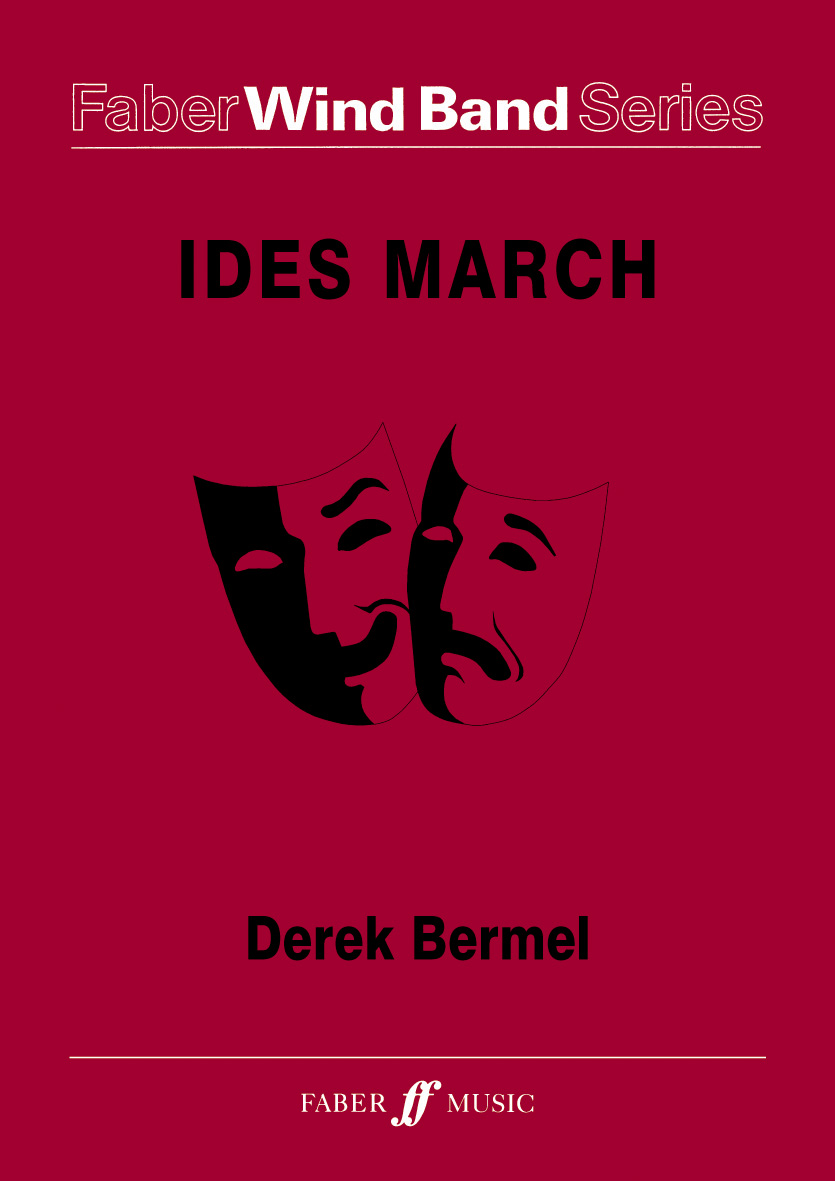
Ides March (Score & Parts) - Derek Bermel
Ides March was commissioned by William Brine in 1990, Bermel's first commission. Brine requested that the work be a march suitable for performance at both a wedding and a funeral. Although originally titled Brine's March, when the composer learned that the march was to receive its premiere on 15 March, he changed the title to Ides March in a umorous nod to the Shakespearean admonition 'Beware the Ides of March'; in his youthful view a sentiment appropriate for either a wedding or a funeral. However, a line from Cole Porter was the inspiration behind the major key to minor key interplay of the work: 'What could be any finer? But how strange the change from major to minor, every time we say goodbye', a line that captured the composer's attempt to write a march that did justice to both the melancholy and triumphant.
In stock: Estimated delivery 1-3 days
-
 £110.00
I Was Glad When They Said Unto Me (Choir with Concert Band - Score and Parts) - Parry, Hubert C. - Noble, Paul
I Was Glad is an introit commonly used in the Anglican Church, and also used as an anthem traditionally sung at the coronation of the British monarch. Its most famous setting was written in 1902 by Sir Hubert Parry. Parry's version was composed for the coronation of King Edward VII in 1902, and revised in 1911 for that of King George V, when the familiar introduction was added. This setting employs antiphonal choir effects and brass fanfares. Apart from the imperial splendour of the music, the chief innovation is the incorporation in the central section of the acclamations Vivat Rex... or Vivat Regina... (Long live King/Queen...) with which the King's or Queen's Scholars of Westminster School have traditionally greeted the entrance of the monarch since the coronation of King James II in 1685. This section is generally omitted when the anthem is performed on other occasions. At the last coronation, that of Elizabeth II in 1953, the acclamation took the form of Vivat Regina Elizabetha. Parry's setting of I Was Glad was performed on 29 April 2011 at the Westminster Abbey wedding of Prince William, Duke of Cambridge and Catherine, Duchess of Cambridge (formerly Kate Middleton) as the processional music for the bride and her father and the bridal attendants. It had previously been performed at the wedding of the Duke's parents, Charles, Prince of Wales and Diana, Princess of Wales in 1981.
Estimated dispatch 7-14 working days
 View Music