
Results
-
 £274.99
Symphony No. 2: States Of Mind, Opus 87 - Teo Aparicio-Barberán
I- Logos (reason)II- Pathos (emotion)III- Ethos (credibility)The ancient Greeks believed that music shaped the character of man. In Egyptian temples, music was an essential part of the magical rites to alter the course of nature or to treat illness.And today we know that sound can actually alter matter. The secret of music lies in harmony and mathematics, as many great musicians and experts have always known.One of the most important qualities of music is that it enables the listener to focushis attention inwards instead of on what is around him. It is indisputable that music can inspire emotion. Music leads us into a universe of emotions that are difficult to put into words. In short, music reaches into corners of our soul and thoughtsthat words cannot reach and makes it possible to more clearly describe these different States of mind.The composer of this symphony also believes that each "musical argument" must be constructed so that it will induce the desired reaction in thelistener.Music: more than wordsIn recent times, most orchestral symphonies have been based on a story, a text or something similar so that their composition must be structured accordingly.The intention of this work by Teo Aparicio-Barbern is quitedifferent. The composer describes the three elements of the argument as the only formal structure of the work. Since certain philosophers in world history were able to subdivide grammatical argument, why shouldnt that also be possible for the musicalargument?Since ancient times the power of the spoken word has captivated mankind. How can an argument move people and mobilise the masses? Where does the power of words come from today? The answer lays not so much in what people say but in how theysay it.Rhetoric is one of the oldest humanist disciplines in Western civilisation. Aristotle, in the 4th century BC, called it the art of persuasion. Indeed, the terms rhetoric and persuasion are mutually interchangeable.More than 2000 years agoAristotle structured his rhetoric according to the following three elements: the logos, the pathos and the ethos.Logos (words, reason) is the reasoning that gives freedom to the structure of the text by expressing what one wishes to say usingspecialist terms. With logos we create arguments to receive public approval and to defend our ideas.Pathos, the second element, refers to the effective use of public psychology. Pathos can be considered as the capacity to induce the desired emotionalresponse in the public, by creating an emotional connection with the public so that they accept our message.The third element, ethos (credibility), refers to the character of the speaker and is perhaps the most important of the three elements.Aristotle based his concept of ethos upon his belief that truth and justice will always have the upper hand over anger. He believed that what was true and good was easier to prove and was more persuasive.This second orchestral symphony from thecomposer from Enguera follows these three parameters of the argument according to Aristotle. Each movement tries to summon a different state of mind in the listener so that the message itself can be better understood and appreciated. Apart from thesethree general concepts the music is only structured, as Claude Debussy would say, in a "formative way".The first movement, logos, is based on a scherzo melody that undergoes various changes in rhythm and harmony. The arguments are presented by meansof conventional techniques of composition. The second movement, pathos, is characterised by suggestions of sound. It is subdivided into two large parts. The first part is based on a five seven sequence with five sounds that are repeated in differentenvironments, structures and dynamics. The second part, which is largely tonal, brings out more directly the emotional overtones that each argument must have. The third movement, ethos, is a faithful rendition of the composers personality. In thislast part, clear rhythmic sequences stand out, there are large dynamic contrasts and lots of tone variation. In addition, and this is quite in keeping with the composers earlier work, the harmony in States of Mind is handled in a manner that is bothoriginal and efficient, as a result of which Aparicio-Barberns message is well understood by the listener.This second symphony by Teo Aparicio-Barbern is devoted to "my dear Henrie Adams, a guiding light in this eternally dark musical world. Thankyou for everything."
Estimated dispatch 7-14 working days
-
 £137.99
Odyssee - Jan Bosveld
The Odyssee tells the story of Odysseus, the undaunted hero. In times long ago the blind poet Homer wrote this famous epic. The "Odyssey" follows the "Iliad", the story of the bloody war between the Greek and the Trojans. This battle endsafter ten years thanks to the Odysseys famous trick. the Trojan Horse. The Odyssey is not a war epic, but a story about perseverance, loyalty, adventure, and the survival instinct of its ingenious hero. In The Odyssey, Homer describes howOdysseus, the king of Ithaca, had to endure another ten years of affliction after the ten years of war in Troy before he could finally return to his home land. During those years, his wife, Penelope, had to try and keep her many admirers away.These men not only wanted het hand but also the kingship. To prove her husbands worth, she played a trick: "As soon as I have finished weaving this shroud for my father-in-law, Laertes, I will choose one of you to become my husband", she promisedthem. But during the night, she secretly loosened what she had woven during the day, prolonging the time until Odysseus would finally return. After twenty long years, when he finally stood at the door, she wondered: Is this really my husband? Ishe an imposter? Cunningly, she asked him to move the bed, because only she and her husband know that the bed was immovable and was build around an old three trunk! Odysseus was deeply moved: this really was his wife, his Penelope! Nearly threethousands years later, the loyalty and strength of this character, and all the dangerous adventures that Odysseus survived thanks to courage and intelligence, still moves us today. Odyssee by Jan Bosveld is not just an adventure story, butrather a characteristic piece in which memories of Homers story can be heard. The composition opens with a firm, stirring theme describing our hero, Odysseus, in detail: This man is not to be taken lightly. The further development of thisshort introduction completes this character sketch: trustworthy, perseverant, and a genius. After that we can picture Odysseus on the lonely beach of Ogygia. Do the trumpets depict his memories of the war of Troy? Does he think of his wife, as werecognise the weaving loom of Penelope in the murmuring eighth? In the solemn, plaintive part that follows, we can imagine Penelope feeling lonely, sitting in the womens room with her servants.One of the girls plays the harp, but that does notclear the sombre atmosphere. Then we can imagine seeing the sorceress Circe, who changed Odysseus men into swine. After she gives a simple magic sign something follows that reminds us of the sound of pigs grunting. Then the Odysseus theme resounds:the hero comes to savi his comrades. Assisted by Hermes, he forces Circe to lift the spell. The piece ends the same way as it began, with an animated theme: Odysseus is still the same, undefeated and not to be taken lighty!
Estimated dispatch 7-14 working days
-
 £54.99
Christmas Gloria - Robert E. Foster Jr.
A Christmas selection young bands will sound great playing! This setting is based on the well-known carol, Angels We Have Heard on High. The limited ranges (5-6 notes) with simple rhythms and exciting percussion parts will provide your young musicians with a chance to be successful with a familiar holiday classic. This arrangement will certainly be recognizable by your students and audience, and will be a band favorite as well as a crowd pleaser!
Estimated dispatch 7-14 working days
-
 £104.99
Disney Villains Medley
Who doesn't like the bad guys in the movies? We all know they will lose in the end, but maybe we're rooting for them a little. Enjoy this Disney Villains medley!
Estimated dispatch 7-14 working days
-
£106.95
Gryphon - Tyler Arcari
New composer Tyler Arcari depicts the mythical Gryphon in this delightful piece. You will hear the contrasting lighter-than-air sounds of a soaring eagle followed by the more dark and aggressive sounds of the lion. This is a fresh new piece from a fresh new composer who we are very excited to be adding to the Carl Fischer Music catalog. Tyler's different approach to composition is refreshing, and his scoring, melodic vision and harmonic choices are so wonderful. We expect great things from this young man in the years to come. Alert your festival music list committee about this piece and the name Tyler Arcari!
Estimated dispatch 7-14 working days
-
£106.95
Dream, Imagine, Live - Larry Clark
The inspiration for this piece comes from one of Henry David Thoreau's most famous quotes - Go confidently in the direction of your dreams! Live the life you've imagined. It was Thoreau's vision that we contemplate a simpler life and be deep thinkers about what we want our lives to be. The piece is divided into three distinct sections based on the same three-note motive. The first section is intense and bold, the second is introspective and lyrical and the third is dance-like, almost reminiscent of a Celtic folk song, in lilting in 6/8. This perfect contest or festival selection will highlight your band's strengths.
Estimated dispatch 7-14 working days
-
£52.50
Abaco Beach Vacation - Mike Hannickel
Sometimes though, it's hard to find performance literature that lets us continue teaching the basics while we prepare the beginning band for a concert. We need easy performance music that helps make basic techniques come alive for the students. Composed by a full-time "young band" director, Abaco Beach Vacation is designed to do just that. There are a lot of great suggestions included in the "Notes to the Director," which will help get them playing the way you'd like them to.Let them have fun while they learn!
Estimated dispatch 7-14 working days
-
 £93.50
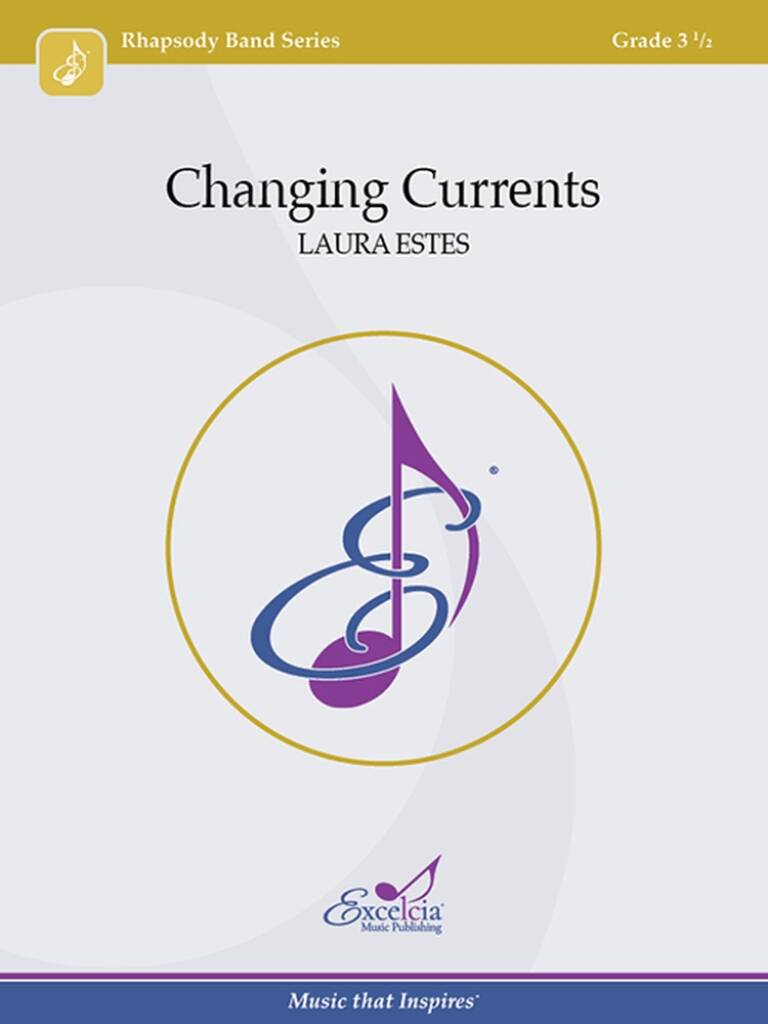
Changing Currents - Laura Estes
Written for her mom, composer Laura Estes creates a charming and emotional tribute in Changing Currents. As educators, we can apply so much to this work utilizing its title and material, there is a lot to teach in this one. We know you will love this new work by Laura!
Estimated dispatch 7-14 working days
-
 £60.99
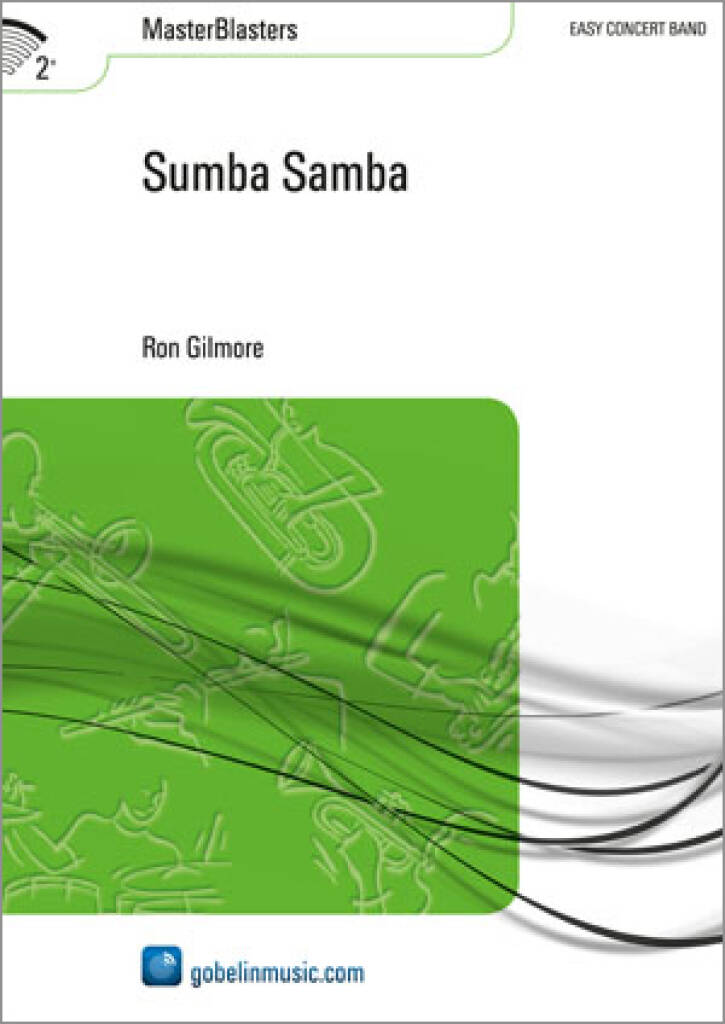
Sumba Samba - Ron Gilmore
The Samba is a Latin American dance, which is mostly associated with parties, as a result of the fast tempo in which it is usually played. 'Sumba Samba' forms an exception to this rule. In order to get this samba to swing it is important to stick to the tempo prescribed. 'Sumba Samba' starts with a motif which will play an important role throughout the piece. This motif can be heard in the first notes of the 'refrain' and, as said before, has been used in the introduction, as well as in the transition after the middle part (letter G). Furthermore, it plays an important role in the middle part itself (letter E), in which the samba has momentarily disappeared and acompletely different atmosphere has been created. At letter H we pick up where we left off with the samba and swing to the end of this composition.
Estimated dispatch 7-14 working days
-
 £123.40
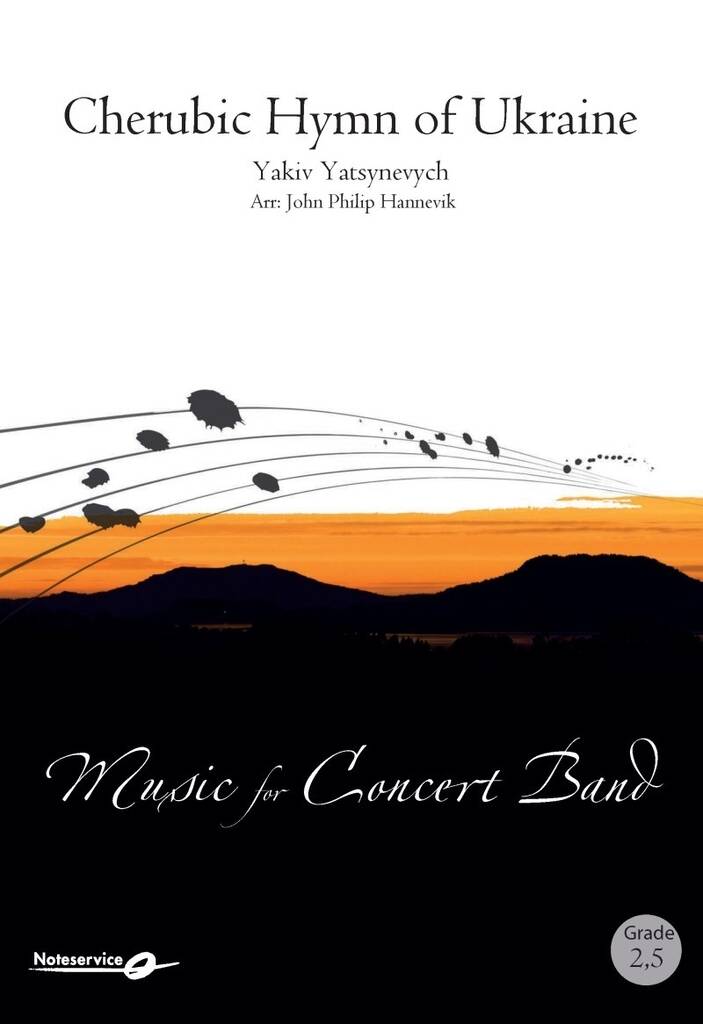
Cherubic Hymn of Ukraine - Yakiv Yatsynevych
Ukraine was invaded on February 24, 2022, and the world again became spectators to a conflict between unequal opponents. Once again we saw lies, injustice and brutality up close.I must admit that a feeling of powerlessness arose when experiencing this, an empty feeling of not being able to do anything useful.One early Monday morning, a few weeks into the conflict, I sat down to listen to Ukrainian music.I hardly knew any Ukrainian music, but I was familiar with the composer Mykola Leontovych, the man who composed "Carol of the Bells". He was a member of the Ukrainian liberation movement, and he was assassinated by a Soviet agent in 1921.One of his contemporary colleagues was the composer, teacher and conductor Yakiv Yatsynevych (1869-1945). He wrote church music and choral music, and I became very taken by his Hymn to the Cherubim, a part of the Orthodox Mass.I could not find any sheet music for this. But I have listened to numerous choral recordings, and I have tried to notate the music as I believe the composer himself has done originally.I chose to do the arrangement for a solo group of 4 players. These players can be placed at a distance from the ensemble, maybe on a gallery or at the back of your concert hall.The arrangement was made for Brttum Brass for their participation in the Oslo Brass Festival in April 2022.The performance in the church this particular night was met with a long-lasting silence after the last note. The warm respect, the moving response and love we felt from the audience is a memory I will carry with me for a long time.In the lyrics to this psalm, one finds the phrase:Let us now lay aside all earthly cares- John Philip Hannevik - |
Estimated dispatch 7-14 working days
 View Music