
Results
-
 £256.00
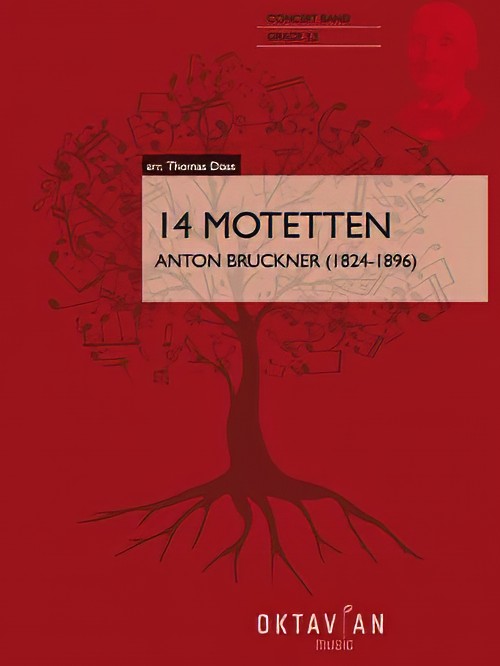
14 Motetten (Concert Band - Score and Parts) - Bruckner, Anton - Doss, Thomas
Anton Bruckner (b. 4.9.1824, Ansfelden, d. 11.10.1896, Vienna) didn't have it easy. Throughout his life, the Austrian composer was plagued by self-doubt. Anton Bruckner came from a simple, rural background. After the death of his father, he was accepted as a choirboy at the monastery of Sankt Florian in 1837. After several years as a school assistant and his own organ and piano studies, he first worked as organist in St. Florian, then from 1855 as cathedral organist in Linz. Introduced to music theory and instrumentation by Simon Sechter and Otto Kitzler, he discovered Richard Wagner as an artistic role model, whom he admired throughout his life and also visited several times in Bayreuth. In 1868 Anton Bruckner became professor of basso continuo, counterpoint and organ at the Vienna Conservatory; ten years later court organist; and in 1891 finally honorary doctor of the University of Vienna. He was considered an important organ virtuoso of his era, but had to wait a long time for recognition as a composer. It was not until Symphony No.7 in E major, composed between 1881 and 1883, with the famous Adagio written under the effects of Wagner's death, that he achieved the recognition he had hoped for, even if he was reluctant to accept it given his inclination towards scepticism and self-criticism. Anton Bruckner was a loner who did not want to follow a particular school or doctrine. He composed numerous sacred vocal works, such as his three masses, the Missa Solemnis in B flat minor (1854), the Te Deum (1881-84) and numerous motets. As a symphonic composer, he wrote a total of nine symphonies and many symphonic studies from 1863 onwards, tending to revise completed versions several times over. Bruckner's orchestral works were long considered unplayable, but in fact were merely exceptionally bold for the tonal language of their time, uniting traditions from Beethoven through Wagner to folk music, on the threshold between late Romanticism and Modernism. Anton Bruckner composed about 40 motets during his lifetime, the earliest a setting of Pange lingua around 1835, and the last, Vexilla regis, in 1892. Thomas Doss has compiled some of these motets in this volume for symphonic wind orchestra. These motets show many characteristics of personal expression, especially Bruckner's colourful harmony in the earlier works, which is in places aligned with Franz Schubert (changes between major and minor; and movements in thirds). Later works are characterised by many components which, in addition to the expanded stature of the movements, include above all a sense of the instrumentation as an outward phenomenon and the harmony as a compositional feature that works more internally. Some aspects of Bruckner's work are the result of his long period of study, which familiarised him not only with the tradition of his craft, but also gave him insights into the modernity of his time in such composers as Wagner, Liszt and Berlioz. From this developed his personal standpoint, which always pursues the connection between the old and the new.Duration: 39.00
Estimated dispatch 7-14 working days
-
 £95.99
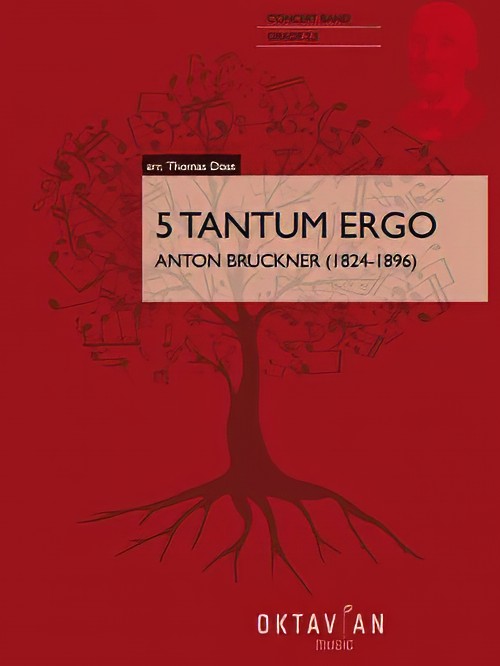
5 Tantum Ergo (Concert Band - Score and Parts) - Bruckner, Anton - Doss, Thomas
Anton Bruckner (b. 4.9.1824, Ansfelden, d. 11.10.1896, Vienna) didn't have it easy. Throughout his life, the Austrian composer was plagued by self-doubt. Anton Bruckner came from a simple, rural background. After the death of his father, he was accepted as a choirboy at the monastery of Sankt Florian in 1837. After several years as a school assistant and his own organ and piano studies, he first worked as organist in St. Florian, then from 1855 as cathedral organist in Linz. Introduced to music theory and instrumentation by Simon Sechter and Otto Kitzler, he discovered Richard Wagner as an artistic role model, whom he admired throughout his life and also visited several times in Bayreuth. In 1868 Anton Bruckner became professor of basso continuo, counterpoint and organ at the Vienna Conservatory; ten years later court organist; and in 1891 finally honorary doctor of the University of Vienna. He was considered an important organ virtuoso of his era, but had to wait a long time for recognition as a composer. It was not until Symphony No.7 in E major, composed between 1881 and 1883, with the famous Adagio written under the effects of Wagner's death, that he achieved the recognition he had hoped for, even if he was reluctant to accept it given his inclination towards scepticism and self-criticism. Anton Bruckner was a loner who did not want to follow a particular school or doctrine. He composed numerous sacred vocal works, such as his three masses, the Missa Solemnis in B flat minor (1854), the Te Deum (1881-84) and numerous motets. As a symphonic composer, he wrote a total of nine symphonies and many symphonic studies from 1863 onwards, tending to revise completed versions several times over. Bruckner's orchestral works were long considered unplayable, but in fact were merely exceptionally bold for the tonal language of their time, uniting traditions from Beethoven through Wagner to folk music, on the threshold between late Romanticism and Modernism. Hymns for four-part mixed choir a cappella (1846, St. Florian) No. 1 in E flat major (WAB 41/3): Quite Slow No. 2 in C major (WAB 41/4): Andante No. 3 in B flat major (WAB 41/1): Slow No. 4 in A flat major (WAB 41/2): Slow Hymn for five-part (SSATB) mixed choir and organ No. 5 in D major: Solemnly They are simple works, completely subordinate to their liturgical use, which nevertheless already show numerous characteristics of personal expression. These small pieces were able to stand up to the harsh scrutiny of the mature master: in 1888, Bruckner subjected them to a revision in which he made only minor corrections.Duration: 11.00
Estimated dispatch 7-14 working days
-
 £18.99
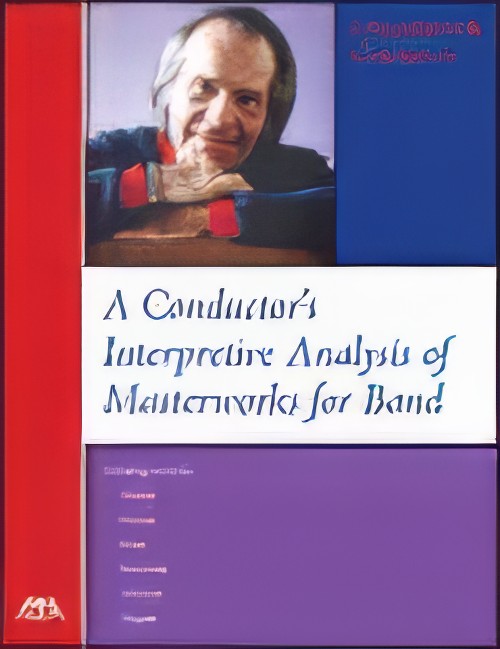
CONDUCTOR'S INTERPRETIVE ANALYSIS OF MASTERWORKS FOR BAND, A - Fennell, Frederick
Frederick Fennell, widely acknowledged as the 'dean of American band conductors,' has freely shared what he called'"long-distilled thoughts' about the world's greatest music for band. In this collection, he covers original scores by Persichetti, Hanson, Schuman and Chance, as well as classic works by Wagner and Holst. Fennell's clear and to-the-point analysis/interpretations are based on a lifetime of careful research, rehearsals, and professional performances. In this informative work, you will find inspiration for a truly superior presentation of these masterworks for band. Includes: Divertimento for Band (Persichetti) Symphony for Band (Persichetti) Elsa's Procession to the Cathedral (Wagner) Chorale and Alleluia (Hanson) George Washington Bridge (W. Schuman) A Moorside Suite (Holst) Variations on a Korean Folk Song (Chance) I Really Do Love Marches! (Fennell).
Estimated dispatch 7-14 working days
-
 £61.95
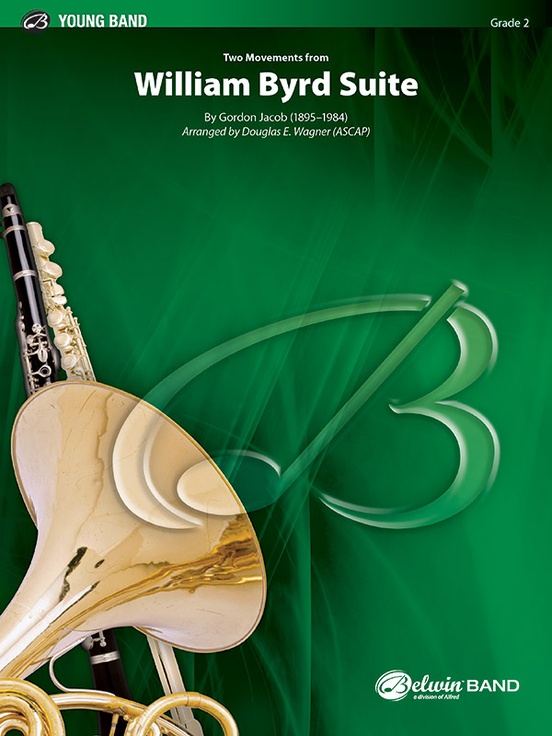
William Byrd Suite, Two Movements from (Concert Band - Score and Parts) - Jacob, Gordon - Wagner, Douglas E.
Of all of Gordon Jacob's major contributions to the British wind band repertoire, the William Byrd Suite (written in 1923) stands as his most-often programmed work. Though originally based on six movements from William Byrd's Fitzwilliam Virginal Book, this setting for developing band incorporates two contrasting movements including "The Earle of Oxford's Marche" and "Wolsey's Wilde." Like Jacob's wind band work, the music is not a mere transcription from the original keyboard collection, but rather stylized with his own inventive musical spirit for modern concert band. A wealth of material here that opens doors to teachable moments as musical textures (dynamic contrasts, articulations, scoring options) are continually changing. Bravo! Duration: 2.30
Estimated dispatch 7-14 working days
-
 £56.50
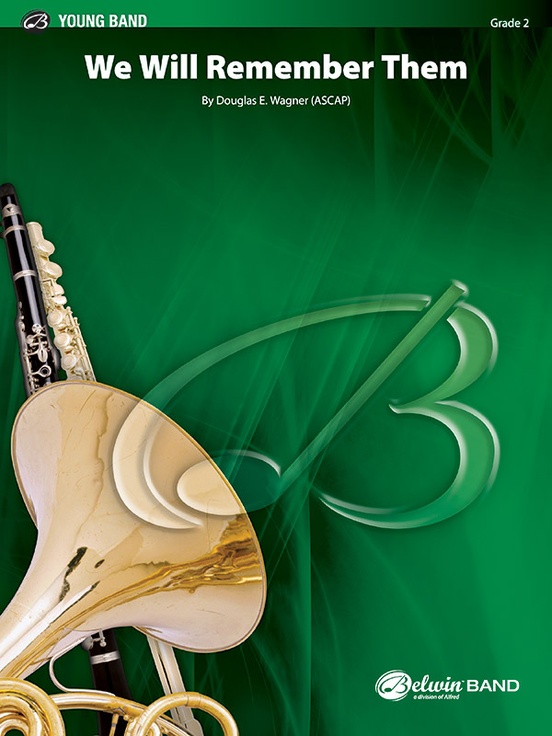
We Will Remember Them (Concert Band - Score and Parts) - Wagner, Douglas E.
The worldwide pandemic of 2020 left in its wake devastating numbers of lives lost, resulting in unspeakable suffering for families coping with the grief for their now absent loved ones. This is especially true for the first responders, frontline personnel, doctors, nurses, scientists, medical support teams, and healthcare staff members whose selfless dedication and devotion to caring for others tragically resulted in their own passing. Guided by their personal, deep sense of duty and obligation to heal and help, they put themselves in harm's way, paying the ultimate price so that others might live. Celebrate their lives with Douglas Wagner's composition, We Will Remember Them. May their bright stars ever spread the night sky, piercing the darkness to continue bringing light, hope, and inspiration to us all. At the going down of the sun and in the morning, we will remember them. Duration: 3.15
Estimated dispatch 7-14 working days
-
 £52.95
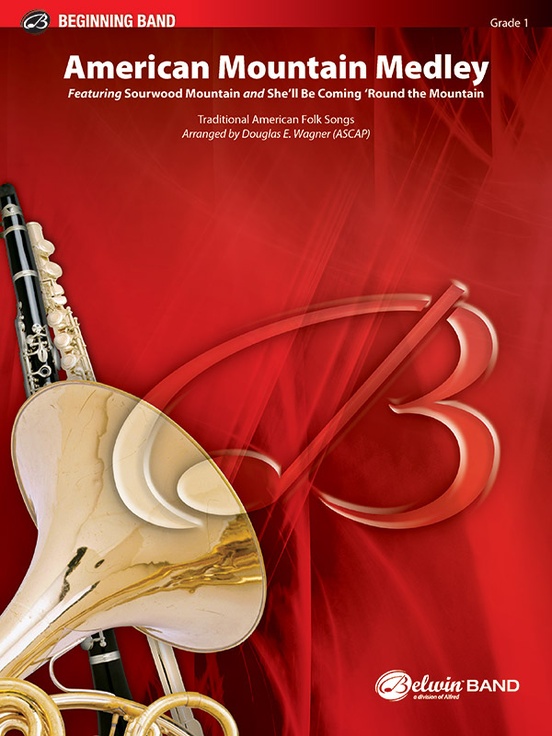
American Mountain Medley (Concert Band - Score and Parts) - Wagner, Douglas E.
The folk music of Appalachia reflects the unwavering spirit of those early settlers who toiled and sacrificed to build the foundations of this country. Combining "Sourwood Mountain" and "She'll Be Coming 'Round the Mountain," their story is told in the songs of love, rivers, and mountains that are still with us today. Your students will love Douglas Wagner's American Mountain Medley. Duration: 1.30
Estimated dispatch 7-14 working days
-
 £68.00
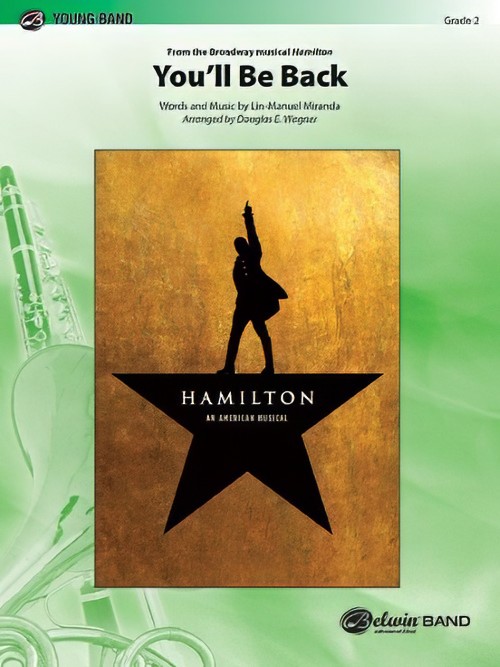
You'll Be Back (from Hamilton) (Concert Band - Score and Parts) - Miranda, Lin-Manuel - Wagner, Douglas E.
The familiar favourite tune from the award-winning Broadway musical is set in a laid-back, light rock style with clever melodic nuances and richly conceived harmony, perfectly scored for developing band. Easy to play, this one is a winner! Duration: 3.15
Estimated dispatch 7-14 working days
-
 £61.95
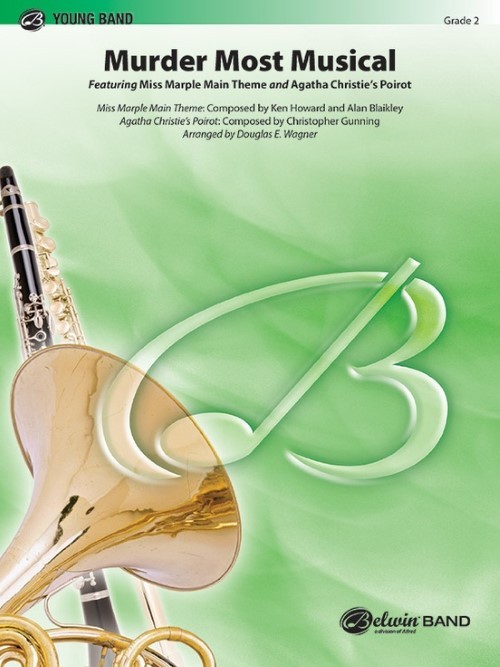
Murder Most Musical (Concert Band - Score and Parts) - Wagner, Douglas E.
Agatha Christie is the undisputed master of murder mysteries. The charismatic opening themes from the television shows included are the "Miss Marple Main Theme" and "Agatha Christie's Priot." Featuring the alto saxophones in the second tune, this ear wig theme duo is perfect for a Halloween concert or any program that would benefit from a bit of mystery. Duration: 2:30
Estimated dispatch 7-14 working days
-
 £71.95
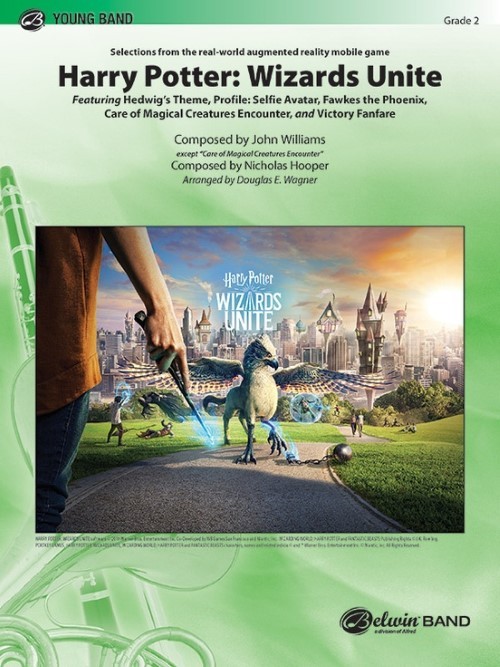
Harry Potter: Wizards Unite (Concert Band - Score and Parts) - Wagner, Douglas E.
Players combat fantastic beasts, brew potions, find magical artifacts, and cast life-changing spells along with their favorite characters. Familiar to any fan, the diverse augmented reality mobile game music includes: Hedwig's Theme, Profile: Selfie Avatar, Fawkes the Phoenix, Care of the Magical Creatures Encounter, and Victory Fanfare. So, my wizarding friends, wands at the ready! Here we go! Duration: 3:30
Estimated dispatch 7-14 working days
-
 £61.95
Variations on L.B.I.F.D. (London Bridge is Falling Down) (Concert Band - Score and Parts) - Reed & Wagner
Alfred Reed needs no introduction for those who admire his distinguished concert band works. This arrangement for concert band draws from five movements of his original 28 composed for brass quintet based on "London Bridge Is Falling Down." Included are: "Statement," "Waltz," "March Fo(u)rth!," "A Little Funeral Music, Please (Eine Kleine Trauermusik)," and "Finale." A demonstration of compositional techniques practiced during the past three centuries, the work is filled with captivating and highly musical moments. Even though players will encounter a few changes in tonal centers, meters, and tempo throughout, there is not much that would get in the way of having a fun experience learning and performing. Duration: 2:45
Estimated dispatch 7-14 working days
 View Music