
Results
-
 £135.70
Romanesco - Luís Cardoso
Romanesco is a Symphonic Poem of an epic narrative depicting the medieval fights between the Christians and Moors. It begins with the plain-chant of the monks, inside the walls of the monastery who are then interrupted by the arrival of the Moors entering the walls disguised as jongleurs, and thereby provoking a battle. The central section is a Adagio Elegiaco, where our hero travels all over the village and laments all the destruction. Relying strongly on the main themes, the last section develops into the glorious final battle. This work is predominantly based around the environment modal and the polyrhythmic characteristics of medieval music. Conducted by the composer with his own band in the Ateneu Vilafranquense International Wind Band Contest, Romanesco achieved the biggest applause and the highest recognition of the public and the international jury.
Estimated dispatch 7-14 working days
-
 £116.40
Gaudium - Luís Cardoso
After a solo flgelhorn/trumpet introduction, the first group of themes is developed and flows into a melodious central theme,The end resumes one of the initial subjects, under a rhythmic ostinato that guarantees the strength of a Grand Finale.
Estimated dispatch 7-14 working days
-
 £159.60
Mais Alto e mais Longe - Afonso Alves
This beautiful overture by the Portuguese composer Afonso Alvares starts with a broad andante that soon turns into a partly rhythmical partly singing allegro evoking the world of thrilling adventures in grandiose settings. The atmosphere calms down and becomes more lyrical in the spinned out adagio that describes inner feelings and yet refers from time to time to the suggested adventures. Repetition of several themes leads to an impressive climax.
Estimated dispatch 7-14 working days
-
 £135.70
Sea Journey through India - Samuel Pascoal
Portuguese Discoverers in 15th century have been an inspiration for many artistic works. The composer, inspired by the words of Portuguese writer 'Cames', in 'Lusadas' (Epic poem), wrote this piece with 5 different themes, where he illustrates the troubles and joys of this fantastic poetic journey.
Estimated dispatch 7-14 working days
-
 £108.40
Draco - Alex Poelman
This composition is based on an old Chinese myth about the constellation Draco which is still to be seen in the firmament between the Great Bear and the Little Bear. The Chinese people believed that when there was en eclipse, Draco was eating the sun. They tried to drive away the dragon with heavy drum beatings. The score boasts two main themes evoking respectively the sun and the Chinese people. You can hear successively the Chinese worshipping the rising sun, the threat of Draco and the triumph of the sun and the Chinese over the dragon. Because of the Asiatic sounds you will imagine to make a short trip through the ancient Chinese Empire.
Estimated dispatch 7-14 working days
-
 £155.80
Pegasus - Alex Poelman
The composition 'Pegasus' tells us the legend of the mythological flying horse. The birth of Pegasus, his integration with the stars, his spectacular flights and the sufferings of Bellerophon are described by means of a rich orchestration. Pegasus's swiftness, his pride and beauty, as described in the first and second parts, give way to the dark sounds evoking the sufferings of Bellerophon. In the fourth part, Pegasus arrives at Mount Olympus, home place of the Gods, and the themes of the first and second parts are heard again, this time in a warm heroic sounding orchestration. This is a striking musical evocation of one of the most famous characters of the Greek mythology
Estimated dispatch 7-14 working days
-
 £104.20
Unity in Harmony - Dirk Keijzer
Unity in Harmony is a composition in three unbroken sections. It's fast, energetic and highly rhythmic opening movement leads into a more relaxed middle section where themes from the opening movement return in different variations.
Estimated dispatch 7-14 working days
-
 £92.00
A Farewell to Arms - Harrie Janssen
A thrilling and joyous spectacle! That's the best way to describe A Farewell to Arms. The chorale "Mach mit mir, Gott, nach deiner Gut", BWV 377, inspired a magnificent piece of music in which all the instrumental sections of the orchestra shine. The composer uses traditional techniques such as the fugato and the chorale. With lots of percussion and epic themes, this masterpiece is a perfect opening number.
Estimated dispatch 7-14 working days
-
 £78.20
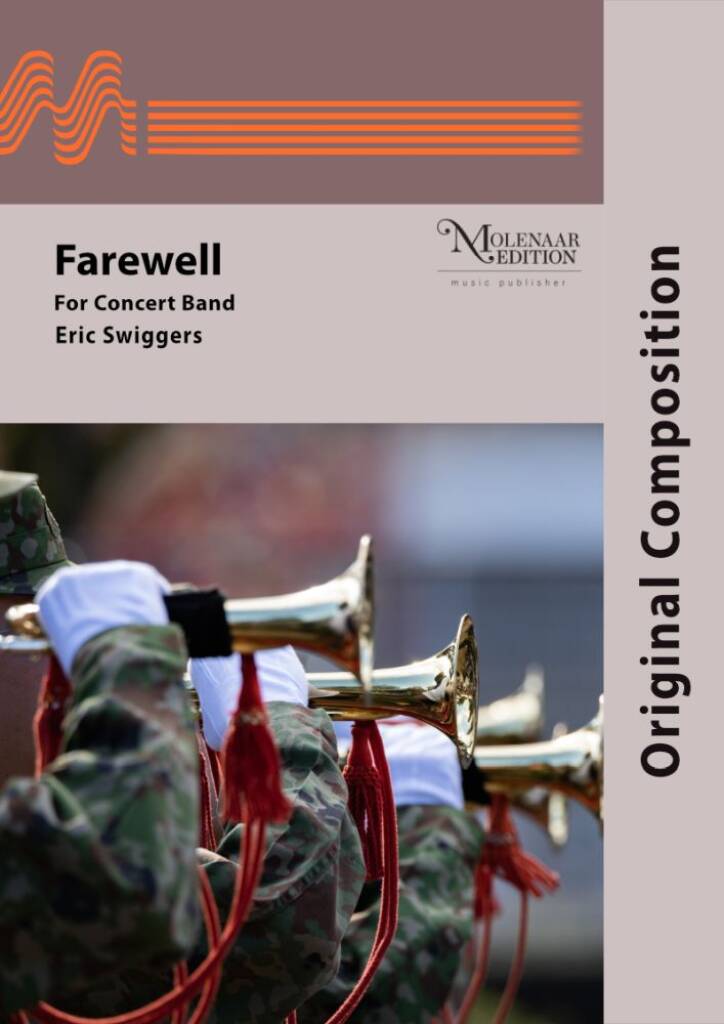
Farewell - Eric Swiggers
Farewell was composed at the farewell of Fanfare Trompetterkorps Der Cavalerie in 1993. The work is based on 2 of the most famous tattoo signals in military music: "Reveille" and "Tattoo." Farewell opens festively with blasting trumpets and then continues with a somewhat melancholy melody based on the reveille theme. After interweaving all the signals and themes in the work's climax, the work ends quietly, with "in the distance" a lone trumpet playing the tattoo signal....
Estimated dispatch 7-14 working days
-
 £228.70
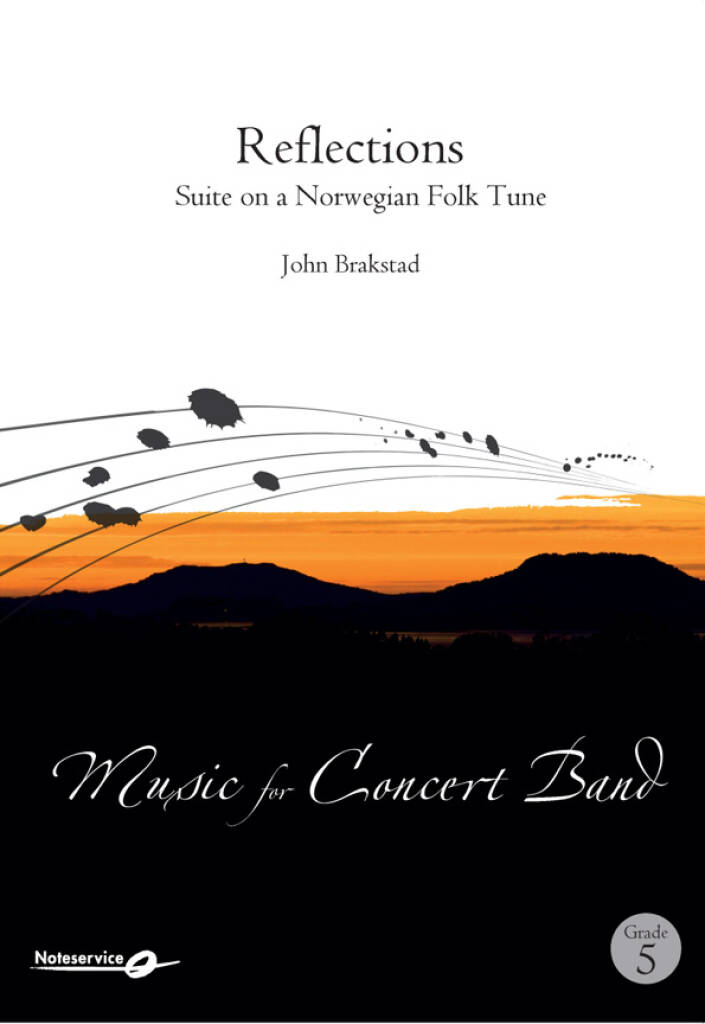
Reflections - Suite on a Norwegian Folk Tune - John Brakstad
The suite is constructed around a Norwegian folk tune. The melody is called "Dark Forebodings", and the words of the song revolve around thoughts and reflections on a future that can take unexpected, insecure, or perhaps dramatic and tragic turns.This is essentially a sad song with a beautiful melody. The folk tune itself is presented in the 2nd movement. In the 1st movement, the folk tune is joined with fleeting themes that indicate the unexpected; as if the music sometimesis confused as to which way to go. There are constant changes in atmosphere and feeling, from the harsh and dissonant, to the harmonious and melodic. The 3rd movement presents a more lively variant of thefolk tune, showing optimism andhappiness, even though the "halting" character of the rhythm underscores the unpredictable. The title "Reflections", therefore, refers to thoughts we can have about life. To the Conductor:The 2nd movement has an alternativeending which is may be used if the movement is played as an independent lyrical piece in a concert.It is advisable to begin first rehersal with the 2nd movement so that the main theme is known, before beginning on the 1st movement with itsmore semi-tonal parts. Intervals and intonation can provide much of the challenge in this movement.The 3rd movement can be more technically challenging, but there is considerable leeway in the tempo marking! It is important to maintain theenergy and intensity of the music through the whole movement.
Estimated dispatch 7-14 working days
 View Music