
Results
-
 £82.50
Kickstart - John Prescott
This driving, energetic, and exciting original work is the perfect vehicle to show off your percussion section. Solid scoring and comfortable ranges make this very accessible while making your developing band sound professional. Wind players have an excellent opportunity to reinforce articulations and dynamics, and the low brass will enjoy the opportunity to show off! A 3/4 section in the middle will give the band a fun exercise in rhythmic counting.
Estimated dispatch 7-14 working days
-
 £104.50
Celebre - Robert E. Foster Jr.
Celebre is a lively show piece that explores a fun and frolicking melody, is complimented by a beautiful ballad section that can really show off the ensembles musicality, and concludes with an uptempo, energetic finale.
Estimated dispatch 7-14 working days
-
 £123.20
3 Letzte Motetten - Anton Bruckner
Anton Bruckner (b. 4.9.1824, Ansfelden, d. 11.10.1896, Vienna) didn't have it easy. Throughout his life, the Austrian composer was plagued by self-doubt. Anton Bruckner came from a simple, rural background. After the death of his father, he was accepted as a choirboy at the monastery of Sankt Florian in 1837. After several years as a school assistant and his own organ and piano studies, he first worked as organist in St. Florian, then from 1855 as cathedral organist in Linz. Introduced to music theory and instrumentation by Simon Sechter and Otto Kitzler, he discovered Richard Wagner as an artistic role model, whom he admired throughout his life and also visited several times in Bayreuth.In 1868 Anton Bruckner became professor of basso continuo, counterpoint and organ at the Vienna Conservatory; ten years later court organist; and in 1891 finally honorary doctor of the University of Vienna. He was considered an important organ virtuoso of his era, but had to wait a long time for recognition as a composer. It was not until Symphony No.7 in E major, composed between 1881 and 1883, with the famous Adagio written under the effects of Wagner's death, that he achieved the recognition he had hoped for, even if he was reluctant to accept it given his inclination towards scepticism and self-criticism.Anton Bruckner was a loner who did not want to follow a particular school or doctrine. He composed numerous sacred vocal works, such as his three masses, the Missa Solemnis in B flat minor (1854), the Te Deum (1881-84) and numerous motets. As a symphonic composer, he wrote a total of nine symphonies and many symphonic studies from 1863 onwards, tending to revise completed versions several times over. Bruckner's orchestral works were long considered unplayable, but in fact were merely exceptionally bold for the tonal language of their time, uniting traditions from Beethoven through Wagner to folk music, on the threshold between late Romanticism and Modernism.Anton Bruckner composed about 40 motets during his lifetime, the earliest a setting of Pange lingua around 1835, and the last, Vexilla regis, in 1892.Thomas Doss has compiled some of these motets in this volume for symphonic wind orchestra.These motets show many characteristics of personal expression, especially Bruckner's colourful harmony in the earlier works, which is in places aligned with Franz Schubert (changes between major and minor; and movements in thirds). Later works are characterised by many components which, in addition to the expanded stature of the movements, include above all a sense of the instrumentation as an outward phenomenon and the harmony as a compositional feature that works more internally. Some aspects of Bruckner's work are the result of his long period of study, which familiarised him not only with the tradition of his craft, but also gave him insights into the "modernity" of his time in such composers as Wagner, Liszt and Berlioz.From this developed his personal standpoint, which always pursues the connection between the old and the new.
Estimated dispatch 7-14 working days
-
 £256.00
14 Motetten - Anton Bruckner
Anton Bruckner (b. 4.9.1824, Ansfelden, d. 11.10.1896, Vienna) didn't have it easy. Throughout his life, the Austrian composer was plagued by self-doubt. Anton Bruckner came from a simple, rural background. After the death of his father, he was accepted as a choirboy at the monastery of Sankt Florian in 1837. After several years as a school assistant and his own organ and piano studies, he first worked as organist in St. Florian, then from 1855 as cathedral organist in Linz. Introduced to music theory and instrumentation by Simon Sechter and Otto Kitzler, he discovered Richard Wagner as an artistic role model, whom he admired throughout his life and also visited several times in Bayreuth.In 1868 Anton Bruckner became professor of basso continuo, counterpoint and organ at the Vienna Conservatory; ten years later court organist; and in 1891 finally honorary doctor of the University of Vienna. He was considered an important organ virtuoso of his era, but had to wait a long time for recognition as a composer. It was not until Symphony No.7 in E major, composed between 1881 and 1883, with the famous Adagio written under the effects of Wagner's death, that he achieved the recognition he had hoped for, even if he was reluctant to accept it given his inclination towards scepticism and self-criticism.Anton Bruckner was a loner who did not want to follow a particular school or doctrine. He composed numerous sacred vocal works, such as his three masses, the Missa Solemnis in B flat minor (1854), the Te Deum (1881-84) and numerous motets. As a symphonic composer, he wrote a total of nine symphonies and many symphonic studies from 1863 onwards, tending to revise completed versions several times over. Bruckner's orchestral works were long considered unplayable, but in fact were merely exceptionally bold for the tonal language of their time, uniting traditions from Beethoven through Wagner to folk music, on the threshold between late Romanticism and Modernism.Anton Bruckner composed about 40 motets during his lifetime, the earliest a setting of Pange lingua around 1835, and the last, Vexilla regis, in 1892.Thomas Doss has compiled some of these motets in this volume for symphonic wind orchestra.These motets show many characteristics of personal expression, especially Bruckner's colourful harmony in the earlier works, which is in places aligned with Franz Schubert (changes between major and minor; and movements in thirds). Later works are characterised by many components which, in addition to the expanded stature of the movements, include above all a sense of the instrumentation as an outward phenomenon and the harmony as a compositional feature that works more internally. Some aspects of Bruckner's work are the result of his long period of study, which familiarised him not only with the tradition of his craft, but also gave him insights into the "modernity" of his time in such composers as Wagner, Liszt and Berlioz.From this developed his personal standpoint, which always pursues the connection between the old and the new.
Estimated dispatch 7-14 working days
-
 £209.99
Dunamis - André Waignein
Major Yvon Ducene wanted a new lush and colourful composition for his Guides military band, with Andr Waignein as its composer. Early in 1979 the composer began his assignement and in October of the same year, the finished full score was on the music stands of this prestigious military band of the Belgian Army.The introduction (Grave) mirrors an atmosphere full of serenity in which the theme, played by the oboes and the English horn is predominant and immediately holds the listener spell-bound. It is taken up again as central element of the slow movement.The Allegro breaks away from the quiet passion of the introduction. Here, the band can really show its capabilities to thefull. Based on a very precise rythm, an idiom of sudden desperation and adversity develops which, fused with a crushing agression, culminates in a kind of eruption, soom calmed down by a Lento : peace and quiet has returned thanks to a melody by the horns and soon taken over by the clarinets. In the meantime, the saxophone - an instrument full of human emotion - express the main spatial dimension in contemporary psyche. Following a harmonic transition the brass-players take up the theme again in forte whilst the basses and the woodwinds interwine in technical arabesques.The movings of the mind and the heart get an audible and almost touchable shape in the ensuing Allegro, a movement characterized by a rhythmic dialogue in which the whole orchestra participates and where the exposition contains a wealth of sound and technical contrasts. The Lento finally uses the central theme of the slow movement again, with some occasional references to the two allegros. The last page is of unprecedented grandeur. All the instruments display their most beautiful sound which were named by Jacques Ferschotte, when speaking about Honneger, "harmonies d'intensits" harmonies of the unmeasurable.
Estimated dispatch 7-14 working days
-
 £179.99
Spartacus - Jan Van der Roost
Spartacus is a "Symphonic Tone Poem" with 3 joints. Each section has its own melodical materials, however: in the final movement the main theme from the second section returns in a 'grandioso'-tutti. The last bar but one recaptures the 'oriental' atmosphere of the very beginning. The first section (= from the beginning till J) builds up a climax by repeating and accumulating some melodical and rhythmical stuctures. The oriental character of the melodical fragments refers to the origin of the Roman slaves. The second section evokes the love between Spartacus and his loveby giving a peaceful atmosphere. The mean theme (presented the first time at letter L) has a broad andwide character and refers slightly to filmmusic. In this part of the composition, a special attention is given to the orchestration. The final section is more agressive and martial and refers to the revolt of the slaves against the Roman oppressors. In the middle of this movement, an accumulation of the 12 tones symbolizes the crucifixion of the slaves: the english horn resumes partly the cadenza of the flute (at letter J), as if he wants to show again the eternal love between Spartacus and his love a very last time ... The theme at the third bar of letter T is actually based on the 2nd theme of this section (which starts at the fifth bar of letter R), but has been worked out rhytmically.
Estimated dispatch 7-14 working days
-
 £60.99
Today Is Gonna Be A Great Day
Everyone's favorite theme song from everyone's favorite Disney Channel show will be the highlight of your next concert. And how many opportunities are there in band to play a great ska groove? Oh, and yes, someone gets to yell, Mom! Phineas and Ferb are making a title sequence!
Estimated dispatch 7-14 working days
-
 £73.50
Soothsayer - Eric Rath
Soothsayer, by Eric Rath, is a study in contrast and mood. Music with a mystical and otherworldly tone portrays a soothsayer--an oracle, fortune teller, or diviner. Mostly in 3/4 time and primarily built on the octatonic scale (half and whole steps alternating), the percussionists also get to have a heyday with this one. Students not only get to show off their technical side but work to develop smooth, flowing lines and a maturity to balance the most important part at any given moment. Enjoy the ride! (2:55)
Estimated dispatch 7-14 working days
-
 £66.95
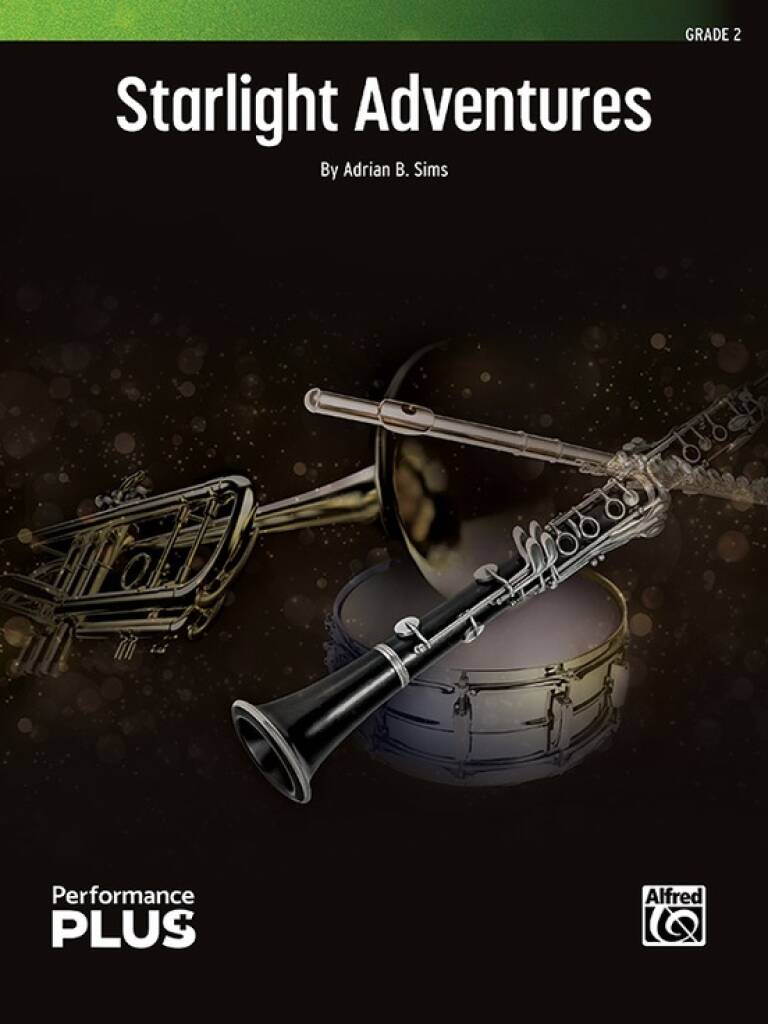
Starlight Adventures - Adrian B. Sims
Starlight Adventures, by Adrian B. Sims, begins with the twinkle of a single star on a quiet night and concludes with a blazing show of constellation patterns after a colorful musical adventure along the way. An engaging and harmonically interesting new work that is approachable by developing ensembles! (2:30) The PerformancePlus+ series is an innovative addition to the ever-expanding MakeMusic Cloud interactive library. These engaging selections are presented with educational resources designed to enrich the rehearsal process and create outstanding performances. Including:Assignment, recording, and assessment tools within MakeMusic CloudPiece-specific exercises focused on skills and techniquesPrintable sheet music (with a standard MakeMusic Cloud subscription)Educational tips and suggestions to support learningAvailable in print and digital formats.
Estimated dispatch 7-14 working days
-
 £124.99
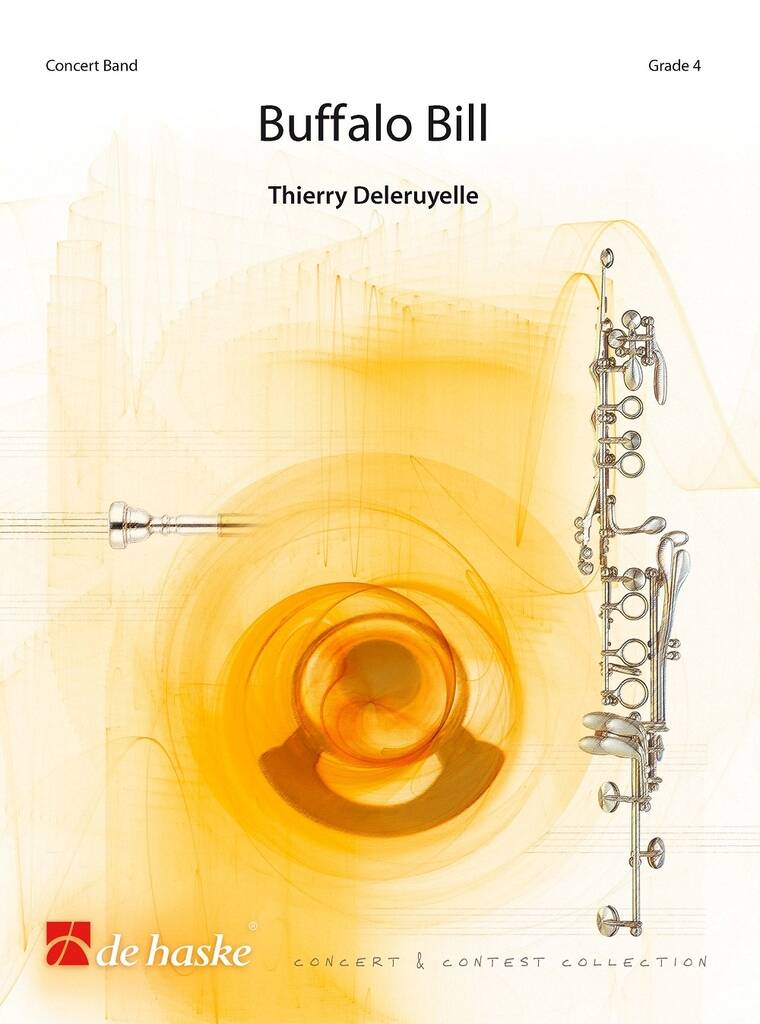
Buffalo Bill - Thierry Deleruyelle
Buffalo Bill takes us on a journey into the world of 19th-century American pioneers, cowboys and Native Americans, through a musical fresco combining an incantatory melody, a majestic theme and a faster section that plunges us into the heart of a buffalo hunt. This work was commissioned by the Orchestre d'harmonie de Montrouge, in France, the town that hosted Buffalo Bill's show at the 1889 Universal Exhibition and where the Buffalo district still stands.
Estimated dispatch 7-14 working days
 View Music